
Most visitors give Bangkok three days, spend two of them staring at the Grand Palace gates, and leave without ever watching anything get made. That is a genuine loss. The city's craft scene is still working — it just sits one street back from the tourist trail, behind half-open roller doors.
In shophouses across Bang Rak, Phra Nakhon and Thonburi, families are still hammering steel into alms bowls, throwing terracotta pots and weaving silk. Most of these places welcome visitors. Several are free. Almost none require a booking.
What they do require is a plan: early starts, decent shoes, and a rough idea of how the river boats connect. That is what this guide gives you.
Unlimited High-Speed International Travel eSIM
Connect in seconds across 180+ destinations. Instant QR code activation with zero roaming surcharges.

At a Glance: Bangkok Artisan and Heritage Basics
- Best time to visit: November to February for cooler walking weather. If you come in April, start at 8am and finish by noon.
- Daily budget: 1,500–2,500 THB (~$42–70) covers transit, one paid entry, food and a couple of coffees.
- Getting around: BTS Skytrain and MRT Blue Line for the long hops, Chao Phraya Express Boat for the river, Grab motorbike for the last mile.
- Vibe: Slow mornings, dusty courtyards, kilns and birdcages, temple bells at 6pm.
1. Ban Baat: The Monk's Bowl Village
Down a narrow lane off Bamrung Mueang Road, a handful of families still make bat — the alms bowls that monks carry at dawn. The technique is Mon in origin and roughly 200 years old in this spot: eight separate steel sheets, hammered and joined by hand, then lacquered black.
At its peak, the lane held dozens of workshops. Today you will find maybe three or four households still at it, which makes a visit short but genuinely rare. Expect to see someone squatting on a mat, tapping away. Expect them to look up and smile.
- Neighborhood: Pom Prap Sattru Phai, five minutes from Wat Saket (the Golden Mount).
- Cost: Free to visit. A finished bowl runs 1,500–3,000 THB (~$42–85); small donations are appreciated.
- Best time: Weekdays, 9:00–16:00. Weekends are hit and miss.
- How to get there: MRT Sam Yot, Exit 3, then a 12-minute walk up Maha Chai Road. Or Grab direct to Soi Ban Bat.
Insider tip: These are people's homes, not shops with a till. Say hello at the gate before stepping in, and ask before you take photos of anyone's face — a smile and a raised camera gets you a yes almost every time.
2. Wat Suthat and the Giant Swing
Wat Suthat is the heritage anchor of this whole walk. Started under King Rama I in 1807 and finished decades later, it holds Thailand's largest wihan, a bronze Buddha cast in the 14th century, and a cloister lined with faded, gorgeous mural panels that most visitors walk straight past.
Outside stands the Giant Swing, a 21-metre teak frame rebuilt in 2007. It once hosted a Brahmin ceremony where teams swung to grab a bag of coins with their teeth. The ritual was banned in the 1930s for obvious reasons, but the frame stayed and still defines the skyline here.
- Neighborhood: Sao Ching Cha, Phra Nakhon.
- Cost: 100 THB (~$3) for foreign visitors.
- Best time: 8:30–10:00, before the tour buses and the heat arrive together.
- How to get there: MRT Sam Yot, 10-minute walk. Pair it with Ban Baat in a single loop.
Insider tip: Walk the cloister clockwise and look up at the wall paintings rather than down at your phone. Then head south down Maha Chai Road to the amulet market near Tha Phra Chan — free to browse, and nobody will pressure you.
3. Ko Kret: The Pottery Island
A short ferry hop from Nonthaburi puts you on Ko Kret, an island of Mon descent where unglazed terracotta is still the local trade. The clay is dug from the riverbank, shaped by hand or foot-powered wheel, and dried in the sun along the paths.
It is not a theme park. It is a village with a 6km loop path, a handful of kilns, a leaning stupa at Wat Poramai Yikawat, and food stalls that mostly open on weekends. Go on a Saturday or Sunday and it hums; go midweek and half the workshops are shuttered.
- Neighborhood: Pak Kret district, Nonthaburi province (just north of Bangkok).
- Cost: Free to walk. Cross-island ferry 2 THB (~$0.06). A hand-building session runs 50–150 THB (~$1.50–4); a finished piece 100–300 THB.
- Best time: Saturday or Sunday, 9:00–15:00, before the afternoon sun gets brutal.
- How to get there: Chao Phraya Express Boat to Nonthaburi pier (N30, ~15–20 THB), walk five minutes to Wat Sanam Nuea pier, cross by ferry. Or Grab direct, roughly 250–350 THB from central Bangkok.
Insider tip: Rent a bicycle at the pier for about 50 THB — the island is flatter than it looks and the loop takes under two hours with stops. Bring water; shade is scarce.
4. Jim Thompson House
Jim Thompson was the American who more or less rebuilt the Thai silk industry after World War II, then vanished in Malaysia in 1967 without a trace. His home, six traditional teak houses joined together, is now a museum holding his Southeast Asian art collection.
It is the most polished stop on this list and the most crowded. The compulsory guided tour is actually good — 30 to 40 minutes, genuinely informative, no hard sell. The compound gardens are calm even when the tour groups surge through.
- Neighborhood: Soi Kasemsan 2, off Rama I Road, Pathum Wan.
- Cost: 200 THB (~$6) for adults.
- Best time: 10:00 sharp or after 15:30. The 11:00–15:00 window is wall-to-wall.
- How to get there: BTS National Stadium, Exit 1 — it is a two-minute walk from the stairs.
Insider tip: Skip the on-site restaurant if you are watching your budget; it is fine but overpriced. Walk back to Rama I and eat at the food court in MBK instead for a third of the price.
5. Baan Silapin: The Artist's House
Baan Silapin sits on a canal in Thonburi, a century-old wooden house with a gallery upstairs and a small puppet stage downstairs. Local artists work here, and the traditional hun lek puppet shows draw a small, happy crowd of mostly Thai families.
The building itself is the reason to come: dark teak boards, a riverside deck, fish food for sale at the counter, and a pace that feels about thirty years behind the rest of the city. It is the perfect counterweight to a morning of temple marching.
- Neighborhood: Klong Bang Luang, Thonburi, near Wat Kuhasawan.
- Cost: Free entry. Puppet show donations around 100 THB (~$3). Drinks 60–120 THB.
- Best time: Late afternoon. Shows have traditionally run around 14:00 on Wednesdays and Saturdays — check the board at the entrance, as schedules shift.
- How to get there: Grab to Soi Phetkasem 28 (about 100–150 THB from Silom), or a longtail boat from Tha Chang pier.
Insider tip: Buy a bag of fish food for 20 THB and feed the canal from the back deck. It sounds silly. It is the most relaxing ten minutes you will spend all day.
6. Talat Noi Heritage Quarter
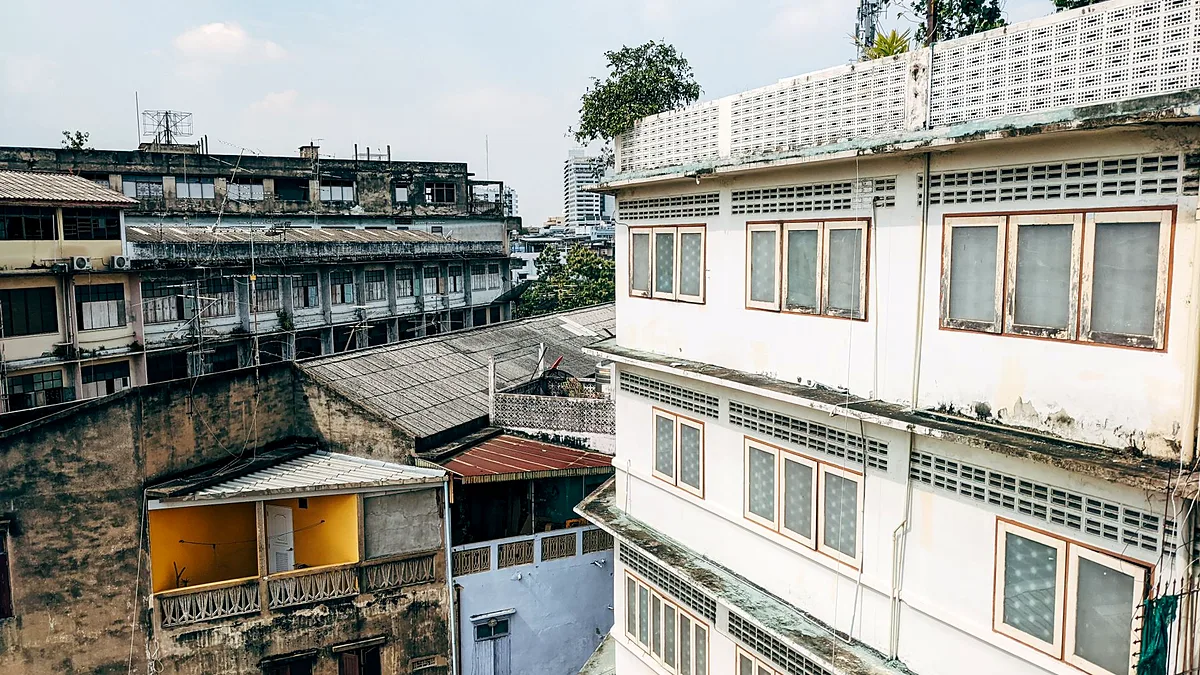
Talat Noi is a Chinese-Thai shophouse neighbourhood squeezed between Yaowarat and the river, and it has quietly become the best free heritage walk in Bangkok. Expect narrow lanes, mechanics rebuilding motorcycle engines on the pavement, faded murals, and shrines wedged between warehouses.
The standout is Hong Sieng Kong, a riverside house-cum-cafe with antique doors, birdcages and a wooden deck over the water. Nearby, Wat Pathum Khongkha gives you a quiet courtyard and a view back toward the river.
- Neighborhood: Talat Noi, Samphanthawong, off Charoen Krung Road.
- Cost: Free to wander. Coffee at Hong Sieng Kong 90–150 THB (~$2.50–4).
- Best time: 8:00–11:00 for photos and shade, or after 16:00 when the light softens.
- How to get there: MRT Hua Lamphong, Exit 1, then a 10-minute walk. Or Chao Phraya boat to Si Phraya pier.
Insider tip: Head upstairs at Hong Sieng Kong and take the window seat overlooking the courtyard. Tour groups rarely make it past the ground floor.
Where to Eat and Drink Nearby
Krua Apsorn on Dinso Road is a five-minute walk from Wat Suthat and the kind of family-run place locals book for birthdays. Order the crab omelette (about 350 THB / ~$10) and the yellow curry with crab. Open Monday to Saturday roughly 10:30–19:30, closed Sunday. Expect 250–450 THB per person.
Kuay Jab Nai Ek sits in Soi Texas off Yaowarat Road and has been serving rolled noodles in peppery broth for decades. A bowl with crispy pork costs 60–80 THB (~$2). It opens around 8:00 and sells out by late afternoon, so treat it as lunch, not dinner.
On Lok Yun at 72 Charoen Krung Road is a 90-year-old breakfast institution — kaya toast, soft-boiled eggs, strong coffee, about 100 THB (~$3) for the works. It opens at 5:30 and closes mid-afternoon. Combine it with the free Bangkokian Museum nearby (Charoen Krung Soi 43, Wednesday to Sunday, 9:00–16:00, donation only).
Practical Logistics and Money Tips
Getting around without bleeding cash
- Buy a Rabbit card (200 THB, including 100 THB credit) if you plan more than four BTS rides. The MRT has its own card, but contactless bank cards work on both now.
- The orange-flag Chao Phraya Express Boat is a flat 16 THB (~$0.45) per hop. The blue tourist boat's 150 THB day pass only pays off if you are doing four or more pier stops.
- Grab motorbikes are the fastest way to bridge the gap between the MRT and a workshop lane. Budget 40–120 THB per trip.
- Sidewalks in Bang Rak and Phra Nakhon are uneven and often blocked by stalls. Wear closed shoes, not flip-flops.
What a day actually costs
| Item | Typical cost |
|---|---|
| Wat Suthat entry | 100 THB (~$3) |
| Jim Thompson House entry | 200 THB (~$6) |
| Pottery session, Ko Kret | 50–150 THB (~$1.50–4) |
| Express boat, orange flag | 16 THB (~$0.45) |
| Grab motorbike across town | 60–120 THB (~$2–3.50) |
| Street lunch | 60–90 THB (~$2–2.50) |
| Coffee in Talat Noi | 90–150 THB (~$2.50–4) |
What to skip, honestly
- The Grand Palace at midday. 500 THB (~$14), shoulder-to-shoulder crowds, and very little shade. If you must go, be at the gate at 8:30.
- Damnoen Saduak floating market day tours. Two hours each way for a canal that is largely staged for cameras. Ko Kret gives you a real version closer to town.
- Any tuk-tuk driver offering a 'lucky Buddha tour' for 20 baht. That is the opening line of the gem scam, every time.
- Jay Fai. The food is genuinely good; the three-hour queue and 1,000+ THB crab omelette are not worth a short trip.
- 'Antique' alms bowls on Khao San Road. They are factory-made. Buy from the families at Ban Baat instead.
One honest heads-up: Ban Baat takes about twenty minutes, not a morning. Build your day around a cluster — Ban Baat and Wat Suthat together, Talat Noi and Yaowarat together — rather than chasing single stops across the city in traffic.
Frequently Asked Questions
Are there free artisan workshops in Bangkok?
Yes. Ban Baat, Talat Noi, Baan Silapin and the Bangkokian Museum all cost nothing to visit, and Ko Kret is free apart from a 2 THB ferry. You only pay if you buy a piece or leave a donation.
What is the best day to visit Ko Kret?
Saturday or Sunday, arriving by 9am. Most pottery families and food stalls open only on weekends, and the midweek island is quiet to the point of feeling closed.
How do I get to Ban Baat, the monk's bowl village?
Take the MRT Blue Line to Sam Yot, leave by Exit 3, and walk about 12 minutes up Maha Chai Road before turning into Soi Ban Bat. A Grab motorbike from the station costs around 40 THB if you would rather not walk.
Is the Jim Thompson House worth the 200 baht entry?
Yes, if you care about silk, teak architecture or mid-century Bangkok history — the guided tour is included and genuinely well done. Skip it if you are short on time and would rather spend the hours on the river.