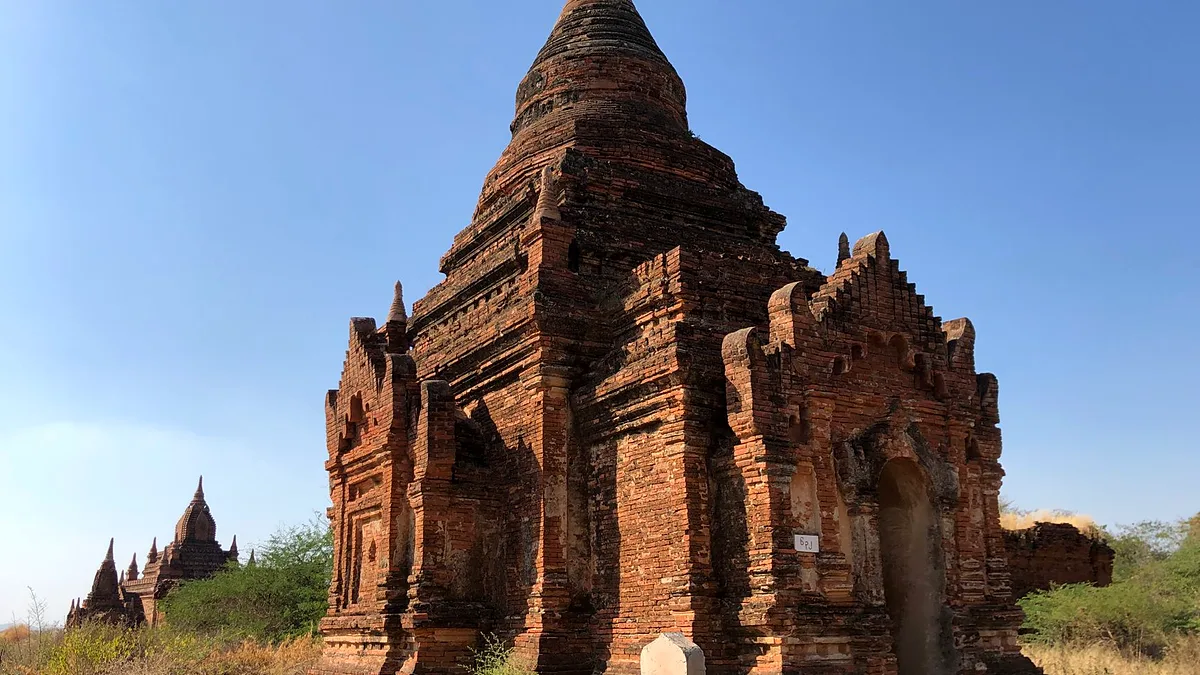

Bagan's best luxury is free. Two thousand-odd brick temples spread across a plain the size of a small city, and at 6am you can have an entire one to yourself. The rest of the day costs less than you'd guess.
A hot-air balloon flight here runs $320 and up. A private car with driver is around $45. But the things that actually make the trip — the sunrise spots, the village workshops, the teahouses where drivers eat — sit between 2,000 and 25,000 kyat. That's roughly $1 to $12.
This guide is built for that middle lane: comfortable guesthouse, e-bike under your own steam, one paid sight per day, and enough left over for a boat on the Irrawaddy at sunset.
Unlimited High-Speed International Travel eSIM
Connect in seconds across 180+ destinations. Instant QR code activation with zero roaming surcharges.

Bagan at a Glance
- Best time to visit: November to February (cool, dry, clear mornings). March to May hits 40°C by 11am and the dust gets serious.
- Daily budget: $30–45 solo, $55–70 for a couple — mid-range guesthouse, e-bike, two local meals, one ticket.
- Getting around: Electric scooter (e-bike), 8,000–12,000 MMK/day. No ride-hailing apps work here the way they do in Yangon.
- Vibe: Dusty, slow, deeply rural. Tourism thins out fast after 5pm, and dinner is usually over by 9.
- Currency note: Bring clean, unmarked USD notes to change in Nyaung-U. ATMs exist but fail often.
1. Sunrise from Lawkananda, Then the Empty Fields
Most sunrise photos you've seen of Bagan were taken from temple terraces that are now closed to climbing. That's not a loss — it pushes you somewhere better. Lawkananda Pagoda, on the riverbank south of New Bagan, is free, open early, and gives you a gold stupa, a working river, and a horizon full of temple spires.
Arrive at 5:30am. Sit on the river steps while the light comes up and the fishermen start moving. Then ride east into the fields between New Bagan and Myinkaba around 6:30, when the low sun rakes across the brick and there is genuinely no one there.
- Neighborhood: Lawkananda, about 4km south of New Bagan on the river road.
- Cost: Free. Zone ticket not required at the pagoda itself.
- Best time: 5:15–6:45am, November to February.
- Getting there: 20 minutes by e-bike from Nyaung-U. Roads are sandy in patches — go slow, use both brakes.
Insider tip: Skip the paid viewing towers charging $10–15 for a rooftop sunrise. You'll see less, and you'll be standing next to forty tripods.
2. The Big Four Temples, Timed Properly
Ananda, Thatbyinnyu, Dhammayangyi and Shwesandaw are the ones you've seen on every poster, and they still earn it. Ananda is the standout — a whitewashed cruciform with four standing Buddhas and corridors that stay cool at 10am. Dhammayangyi is the opposite: a sheer brickmass, deliberately unfinished inside, and quietly unsettling.
The difference between a great visit and a miserable one is timing. Do Ananda before 8am, Thatbyinnyu around 9, and save Dhammayangyi for late afternoon when the light hits the west face.
- Neighborhood: Old Bagan, all four within a 3km radius.
- Cost: Covered by the 25,000 MMK (~$10–12 USD) Bagan Archaeological Zone ticket, valid for your whole stay if you keep it.
- Best time: 7–9am, or 4–5:30pm. Avoid 11am–2pm; the brick radiates heat.
- Getting there: 10–15 minutes by e-bike from Nyaung-U, straight down Anawrahta Road.
Insider tip: Ananda's north entrance is far quieter than the main east gate, and the ticket checkers there are relaxed. Also: shoes come off at every temple, so wear slip-ons — the ground is genuinely hot at midday.
3. Myinkaba Village and the Lacquerware Workshops
Myinkaba, 4km south of Old Bagan, is where Bagan's lacquerware families still work. Several houses open their doors to visitors for free, and you can watch a bamboo frame get coiled, coated in sap, and engraved by hand over a period of months. Nobody rushes you toward a cash register.
This is the closest thing to genuine luxury on this trip: standing in a dim workshop while a woman in her sixties explains, in careful English, why the cheap shiny bowls in town crack after a year.
- Neighborhood: Myinkaba village, just off the Anawrahta Road.
- Cost: Free entry. Small bowls start around 15,000 MMK (~$6 USD); a good hand-etched piece is 40,000–90,000 MMK (~$17–38 USD).
- Best time: 9am–4pm, Monday to Saturday. Many workshops rest on Sunday.
- Getting there: E-bike, 15 minutes from Old Bagan; it's on every loop route.
Insider tip: Buy at the workshop, not at Nyaung-U market. The same bowl is often 30–40% cheaper direct, and you're paying the person who made it.
4. Mani Sithu Market and the Teahouse Morning
Before the heat, Nyaung-U's Mani Sithu Market is the best hour of people-watching in the region. Vendors sell thanaka bark, longyis, dried fish and jade chips under corrugated roofs, and nobody is performing for tourists. Arrive by 6:30am.
Then walk five minutes to a teahouse, order a paratha and a milk tea, and sit for as long as you like. Total spend: under $2. This is the morning routine that makes Bagan feel like a place rather than a sight.
- Neighborhood: Nyaung-U town centre, near the main bus stop.
- Cost: Market free; breakfast 1,500–3,000 MMK (~$0.70–1.40 USD).
- Best time: 6–10am. The market thins dramatically after 10:30.
- Getting there: Walkable from most Nyaung-U guesthouses.
Insider tip: Say "cho seh" if you want your tea strong and milky, "cho pwal" if you want it lighter. The default is sweet enough to strip paint.
5. A Boat on the Irrawaddy for the Price of Two Cocktails
The sunset boat from Bu Paya jetty in Old Bagan is the one splurge that pays off. You get 45–60 minutes on the water with sandbanks, herons, and the temple line going gold behind you. Small wooden boats are hired per boat, not per person, so two or three people split it cheaply.
Walk to the jetty and talk to the boatmen directly around 4pm. Expect to settle around 15,000–20,000 MMK (~$6–9 USD) for an hour if you negotiate politely. Hotel-arranged boats often run double that.
- Neighborhood: Bu Paya jetty, Old Bagan riverside.
- Cost: 15,000–25,000 MMK per boat (~$6–12 USD), regardless of headcount.
- Best time: Set off around 5pm in winter; 5:30pm in summer.
- Getting there: E-bike to Bu Paya, 10 minutes from Old Bagan, 25 from Nyaung-U.
Insider tip: Confirm the price is per boat and for a full hour before you step in. Agree on the return point too — some boats drop you at a different jetty to save fuel.
6. A Half-Day Cooking Class in Nyaung-U
Bagan's cooking classes are the best-value experience in town. Most run four to five hours, start at the market where you buy the ingredients, and end with a table of Burmese dishes you actually cooked: tea leaf salad, chicken curry, lentil fritters, coconut noodles.
Classes are small and often hosted by families in their own courtyards. You'll pay a fraction of what a similar class costs in Chiang Mai or Hoi An, and you'll leave knowing why the food here tastes different from restaurant versions.
- Neighborhood: Nyaung-U, with pick-up from most guesthouses.
- Cost: 25,000–40,000 MMK (~$10–17 USD) per person, market shopping included.
- Best time: Morning classes, 8am–1pm. Book one day ahead in high season.
- Getting there: Usually included in the price.
Insider tip: Ask whether the market visit is included before you book. A few cheaper classes skip it and hand you pre-bought ingredients.
7. Mount Popa: Honest Verdict
Everyone will tell you to go to Mount Popa. It's a monastery on a volcanic plug, 50km southeast of Bagan, reached by 777 covered steps. The views from the top are genuinely good. The steps themselves are covered in monkey droppings, and the whole place is a hard sell by mid-morning.
Go only if you have a spare half-day and need a break from temples. Go at 7am, before the heat and the crowds, and take the shared pickup rather than a private car.
- Neighborhood: Mount Popa, roughly 1.5 hours from Nyaung-U.
- Cost: Shared pickup 10,000–15,000 MMK (~$4–6 USD) return; entry 1,000 MMK.
- Best time: 6:30–9am. Skip it in March and April.
- Getting there: Pickups leave from Nyaung-U market area around 6am.
Insider tip: Do not carry food or plastic bags up the steps. The macaques are bold, and they will take things off you.
Where to Eat and Drink Nearby
Star Beam Tea House, Nyaung-U
A plain, busy teahouse a block from Mani Sithu Market, full of drivers and shopkeepers at 7am. Order the paratha with peas, a bowl of mohinga if they have it, and sweet milk tea. Breakfast for two lands around 4,000 MMK (~$2 USD).
Sanon, Nyaung-U
A training restaurant that puts local teenagers through hospitality school, which makes the food better than it needs to be. Tea leaf salad, Shan noodles, grilled river fish. Mains run 5,000–9,000 MMK (~$2–4 USD) and the courtyard is a nice place to sit at night.
Be Kind to Animals The Moon, Old Bagan
Vegetarian, tucked in a lane near Ananda, and reliably good after a hot morning of temples. Get the aubergine curry and the tamarind-leaf salad. Expect 4,000–7,000 MMK (~$1.70–3 USD) per dish.
Practical Logistics and Budget Tips
The zone ticket
Buy the 25,000 MMK archaeological zone ticket at the checkpoint booth on Anawrahta Road or at the airport on arrival. Keep it with you — spot checks happen at random temples, and the fine for not having one is more than the ticket.
Getting around
Rent your e-bike from your guesthouse rather than a roadside shop; you get a better rate and someone to call if the battery dies. Test the brakes and check the battery gauge before you ride off. Roads are sand in places, and there are almost no streetlights — be back before dark or bring a torch.
What a day actually costs
| Item | Cost (MMK) | Approx. USD |
|---|---|---|
| Guesthouse, private twin | 50,000–80,000 | $24–38 |
| E-bike rental, full day | 8,000–12,000 | $4–6 |
| Meals (teahouse breakfast + two local lunches/dinners) | 12,000–18,000 | $6–9 |
| Water and snacks | 2,000 | $1 |
| Beer or two | 5,000–7,000 | $2–3 |
| Zone ticket (one-off) | 25,000 | $10–12 |
What to skip
- The balloon flight, if money is tight. It's spectacular, but at $320+ it's most of a week's budget. Put it off for another trip.
- Full-day horse carts. Charming for an hour, expensive and slow for a day. The e-bike covers three times the ground.
- The archaeological museum. Dusty cases and faded labels; your time is better spent at the temples themselves.
- Restaurants on the main Old Bagan strip. Double the price, half the flavour. Ride ten minutes into Nyaung-U instead.
Money and connectivity
Change money in Nyaung-U rather than at the airport, and bring USD notes that are crisp and unmarked — torn bills get refused. Buy a local SIM at the airport or in town; coverage across the temple plain is decent and offline maps will save you.
Frequently Asked Questions
How much does a day in Bagan cost?
Most independent travellers spend $30–45 a day, covering a mid-range guesthouse, an e-bike, local meals and one paid sight. Add the one-off 25,000 MMK zone ticket on your first day and you're still well under $60.
Do you need a guide in Bagan?
No, but a half-day with a local guide at Ananda and Dhammayangyi is worth the roughly $25–35, because the history is invisible without it. For the rest of your stay, an e-bike and a map are enough.
Can you still climb the temples in Bagan?
Only a handful of structures have legal, open terraces — most were closed to protect the brickwork, and climbing restricted ones can get you fined. Use the designated viewing spots and riverside pagodas for sunrise and sunset instead.
What's the best way to get around Bagan?
An electric scooter, rented by the day from your guesthouse for around 8,000–12,000 MMK. It's cheaper than a car, faster than a bicycle in the heat, and lets you reach the quiet temples that tour buses never stop at.