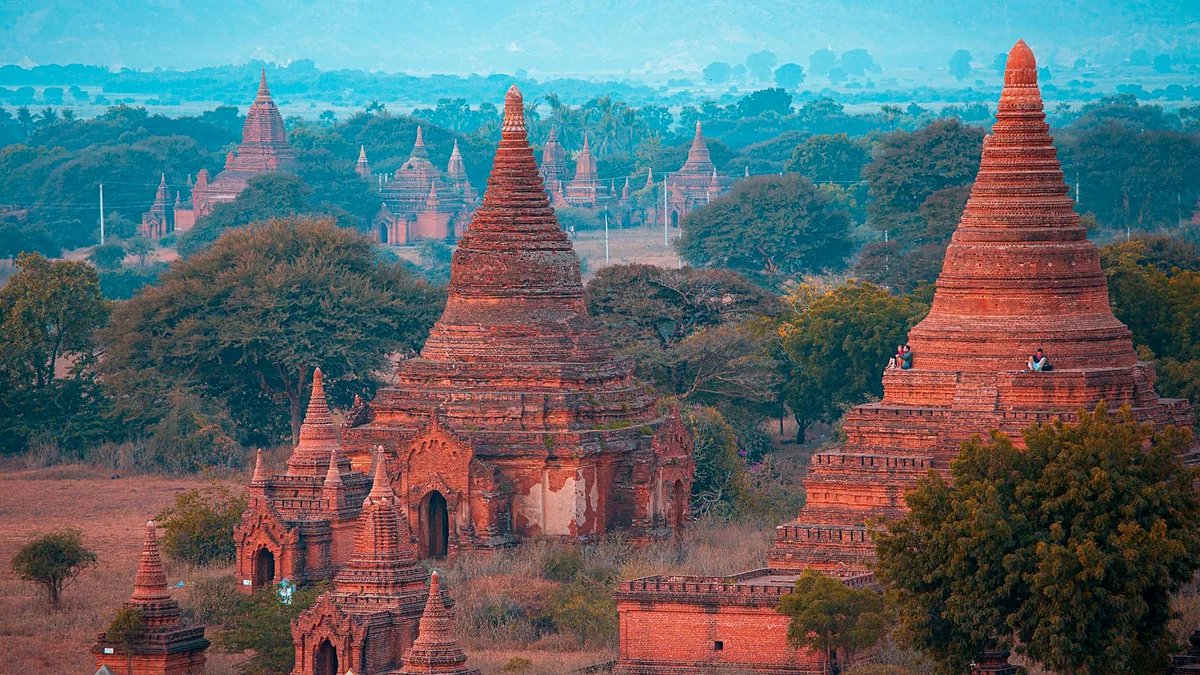

Most people arrive in Bagan with a list of 2,000 temples and one sunrise photo in mind. Fair enough — you will see extraordinary things. But that plan also means spending three days in the loudest, most photographed corners of the Archaeological Zone.
The quieter half of Bagan lives indoors: in lacquerware courtyards, locked fresco halls, and the handful of terraces where people sit for two hours without checking their phones. This guide is about what you do between 10am and 4pm, when the heat flattens everyone and the tour buses have gone to lunch.
At a glance
Unlimited High-Speed International Travel eSIM
Connect in seconds across 180+ destinations. Instant QR code activation with zero roaming surcharges.

- Best time to visit: November to February. March to May hits 40°C by late morning and the workshops close early.
- Typical daily budget: 45,000–90,000 MMK (roughly $14–27 USD) per person, excluding your hotel.
- Getting around: a rented e-bike at 8,000–12,000 MMK a day. Horse carts are lovely but slow between villages.
- Vibe: dusty, slow, silent after 9pm. You will remove your shoes about 15 times a day.
- Opening reality: galleries and workshops run roughly 9am–5pm and usually close one day a week. Zone temples generally open 7:30am–5:30pm.
1. Myinkaba Village: The Original Gallery Scene
Myinkaba sits on the road between Old Bagan and New Bagan and has been a lacquerware village for centuries. Families work in open-fronted courtyards where you can watch a bamboo frame get coated in thay-kyan sap, dried in the dark, then engraved by hand with an iron stylus.
Nothing here is staged for visitors. Someone hands you a half-finished bowl and points at a stool, and the next 40 minutes disappear. This is the closest thing Bagan has to a gallery district, and it costs nothing to walk through.
- Neighborhood: Myinkaba, about 1.5 km south of Old Bagan on the New Bagan road.
- Cost: free to browse. Small cups 8,000–15,000 MMK (~$2.50–4.50 USD); a proper 12-coat bowl 120,000–250,000 MMK (~$36–76 USD).
- Best time: 9–11am, before the tour groups arrive in waves.
- How to get there: 10 minutes by e-bike from New Bagan, or a 20-minute horse-cart ride from Old Bagan.
Insider tip: Buy from the courtyard where you actually watched the engraving, not the air-conditioned shop on the main road. Turn the piece over and look for a seam or a glossy plastic ridge — that is a painted import, not Bagan lacquerware.
2. Upali Thein and Nagayon: Rooms You Need a Key For
Bagan's best interiors are usually locked. Upali Thein, a 13th-century ordination hall just north of Ananda, is a long brick box with bodhisattva frescoes running along the upper walls and ceiling. Nagayon, a few minutes south, has a dark twin corridor lined with 11th-century painting that most visitors walk straight past.
The caretaker is almost always within 50 metres, sitting in the shade with a flask of tea. Ask politely and the key appears. That exchange is the whole experience: a door opening, a smell of old brick, and total silence behind you.
- Neighborhood: Upali Thein sits beside the Ananda road; Nagayon is 400 m south.
- Cost: covered by the 30,000 MMK (~$9–14 USD) zone pass. A 1,000–2,000 MMK tip for the caretaker is normal.
- Best time: 11am–2pm. The interiors are cool, the light rakes the walls, and everyone else is eating.
- How to get there: park at the east side of Ananda and walk — the lanes are too sandy to ride comfortably.
Insider tip: Bring a small torch or use your phone; flash photography is both useless and rude here. Say mingalaba before asking for the key, and never point your feet at a Buddha image while sitting.
3. Bagan House: The Showroom That Works Like a Club
In New Bagan, Bagan House is a family-run workshop with a full 12-stage demonstration room and a showroom stacked two floors high. You get the whole process in about 25 minutes: bamboo weaving, sap coating, drying in a dark cellar, then engraving that takes four days on a large piece.
The upstairs room is the part people miss. It is quiet, it holds the older stock, and staff will leave you alone as long as you like — which is the private-club feeling you came for, minus the membership fee.
- Neighborhood: New Bagan, a short ride from the market.
- Cost: free entry. Coasters from 5,000 MMK (~$1.50 USD); a museum-grade 14-layer piece can reach 400,000 MMK (~$120 USD).
- Best time: 4–5:30pm, when the workshop winds down and staff have time to talk.
- How to get there: e-bike from New Bagan or Nyaung-U; the road is paved the whole way.
Insider tip: The front table by the door is the tourist-priced tier. Ask specifically for the upstairs stock and the seconds shelf, where small imperfections knock 30–40% off.
4. Nyaung-U: Upstairs Galleries and Rooftop Rooms
Nyaung-U is the working town — market, bank, bus station, motorbike repair shops — and the small galleries cluster on the streets around the market and along the road toward the jetty. Most are one room above a shop, hung with watercolours of pagodas and the odd genuinely good oil of the Irrawaddy.
Then there are the rooftops, maybe four worth the stairs, all along Thi Ri Pyitsaya 4th Street. They fill up around 6:30pm with guides, e-bike mechanics and long-stay expats. It is the closest Bagan gets to a members' bar.
- Neighborhood: central Nyaung-U, around the market and Thi Ri Pyitsaya 4th Street.
- Cost: free to browse; beer on a rooftop 1,500–3,000 MMK (~$0.50–1 USD).
- Best time: 5:30–7pm for rooftops, 9am–noon for galleries.
- How to get there: walkable if you are staying in Nyaung-U, 15 minutes by e-bike from New Bagan.
Insider tip: Galleries shut for lunch around 12:30 and many close one weekday, usually Sunday or Monday. Ride over in the morning to check rather than turning up at 1pm to a locked door.
5. Minnanthu Loop: Galleries Without Walls
Head southeast of New Bagan and the crowds thin within ten minutes. Minnanthu is farmland dotted with smaller temples — Nandamannya, Payathonzu and a dozen unnamed brick mounds — where the only sound is sesame being harvested.
Nandamannya's frescoes are worth the stop on their own, but the real value is the ride: flat tracks, palm shade, and nobody selling you a sand painting. If you want to know what Bagan felt like before the buses, come here.
- Neighborhood: Minnanthu village and the lanes southeast of New Bagan.
- Cost: zone pass only; nothing else to pay.
- Best time: 3:30–5:30pm, when the light goes gold and the heat breaks.
- How to get there: 15 minutes by e-bike from New Bagan. Some tracks are deep sand — keep your speed up and do not brake hard.
Insider tip: Ask before photographing anyone working in the fields. A no costs you nothing; a yes gives you a far better picture than a snatched one.
6. The Private Club Question — and the Three Rooms That Deliver
Here is the honest version: Bagan has no members-only clubs. What it has are hotel terraces that work the same way if you are willing to buy a drink, and after a few days in the dust that is exactly what you will want.
Three that deliver: the riverside terrace at Thiripyitsaya Sanctuary Resort in Old Bagan, the bar beneath the Nan Myint viewing tower, and the garden courtyard at Hotel @ Tharabar Gate. All are shaded, quiet and a world away from the temple scrum.
- Neighborhood: all three sit in or beside Old Bagan.
- Cost: tower entry around 5,000 MMK (~$1.50 USD); terrace drinks 3,000–7,000 MMK; expect a 15,000–30,000 MMK minimum spend for pool access — call ahead, policies change.
- Best time: 4–6pm, or midday if you need to escape the heat.
- How to get there: e-bike, 5–10 minutes from either Old Bagan or New Bagan.
Insider tip: If you are on a night bus out of Nyaung-U, buy a hotel day pass for a shower and a pool. It is the best 20,000 MMK you will spend in Bagan, and you board the bus clean instead of crunchy.
Where to Eat and Drink Nearby
Weather Spoon (Nyaung-U, Thi Ri Pyitsaya 4th Street). Mains 4,000–8,000 MMK (~$1.20–2.50 USD). Order the tea leaf salad and the Shan noodles, and go at 6:30 or 8:30pm to dodge the 7pm crush.
Black Bamboo (Nyaung-U, a block off the main road). Mains 5,000–9,000 MMK (~$1.50–2.70 USD). Leafy courtyard, slow service, excellent pumpkin curry — a good long lunch after a morning of temples.
The Moon / Be Kind to Animals (New Bagan). Mains 3,500–7,000 MMK (~$1–2 USD). Vegetarian-friendly, profits go to local animal welfare, and the staff will know your order by day two.
Practical Logistics and Budget Tips
The Archaeological Zone pass costs 30,000 MMK and covers your stay in Bagan rather than a fixed number of days — confirm at the counter, since the rules have shifted over the years. Buy it at the airport, a road checkpoint or through your hotel, and keep it on you; spot checks at Ananda and Shwesandaw are routine.
Cash is the whole game. Nyaung-U has ATMs, but they run dry over holidays and sometimes refuse foreign cards. Bring clean, unmarked US dollar notes or change money at a market-rate counter in Nyaung-U or New Bagan, and always ask the rate before handing anything over.
| Item | Local price | Approx. USD |
|---|---|---|
| Zone pass (whole stay) | 30,000 MMK | $9–14 |
| E-bike rental, per day | 8,000–12,000 MMK | $2.50–4 |
| Horse cart, half day | 15,000–20,000 MMK | $5–6 |
| Lunch for two | 10,000–18,000 MMK | $3–5.50 |
| Lacquerware, small bowl | 10,000–25,000 MMK | $3–8 |
E-bikes are not optional if you want the quieter villages — the gaps between Old Bagan, New Bagan and Nyaung-U are too long to walk and too short to justify a taxi. Charge overnight; a full battery handles a normal day easily. Stay on vehicle roads, because e-bikes are not permitted inside many temple grounds.
What to Skip
- Climbing any temple. Banned since 2018, the fines are real, and the guards are patient. Use the Nan Myint tower or a designated viewing mound.
- The Bagan Golden Palace. A 2003 reconstruction in concrete and gold paint — 5,000 MMK you could spend on two bowls of noodles.
- Sunset at the biggest-name spots. You will be shoulder to shoulder with 200 people and a forest of selfie sticks. Pick a small mound near Minnanthu instead.
- The balloon flight, if money is tight. It is genuinely beautiful, but at roughly $300–400 USD it costs more than a week of everything else in this guide.
One honest heads-up: tourism in Myanmar is still well below its pre-2020 level, so services are thinner than the photos suggest. Check your government's travel advisory before booking, carry more cash than feels reasonable, and confirm opening hours by phone or through your hotel rather than trusting a five-year-old blog post — including this one.
Frequently Asked Questions
Can you still climb temples in Bagan?
No. Climbing on temple structures has been prohibited since 2018 and the ban is enforced. For elevated views, use the Nan Myint viewing tower in Old Bagan, a designated viewing mound, or a hot-air balloon flight.
How much is the Bagan Archaeological Zone fee?
It is 30,000 MMK, roughly $9–14 USD depending on the exchange rate you get, and it covers your stay rather than a set number of days. Buy it at the airport, a checkpoint or your hotel, and keep the ticket with you.
Where can I buy real lacquerware in Bagan?
Go to the family workshops in Myinkaba village or Bagan House in New Bagan, where you can watch the coating and engraving happen in front of you. Expect 10,000–25,000 MMK (~$3–8 USD) for a small genuine piece, and check the base for seams that reveal a cheaper painted import.
Is Bagan open to tourists right now?
The Archaeological Zone has stayed accessible to foreign visitors, but conditions and advisories vary by country. Check your foreign ministry's current advice, buy insurance that covers the region, and plan on carrying cash.