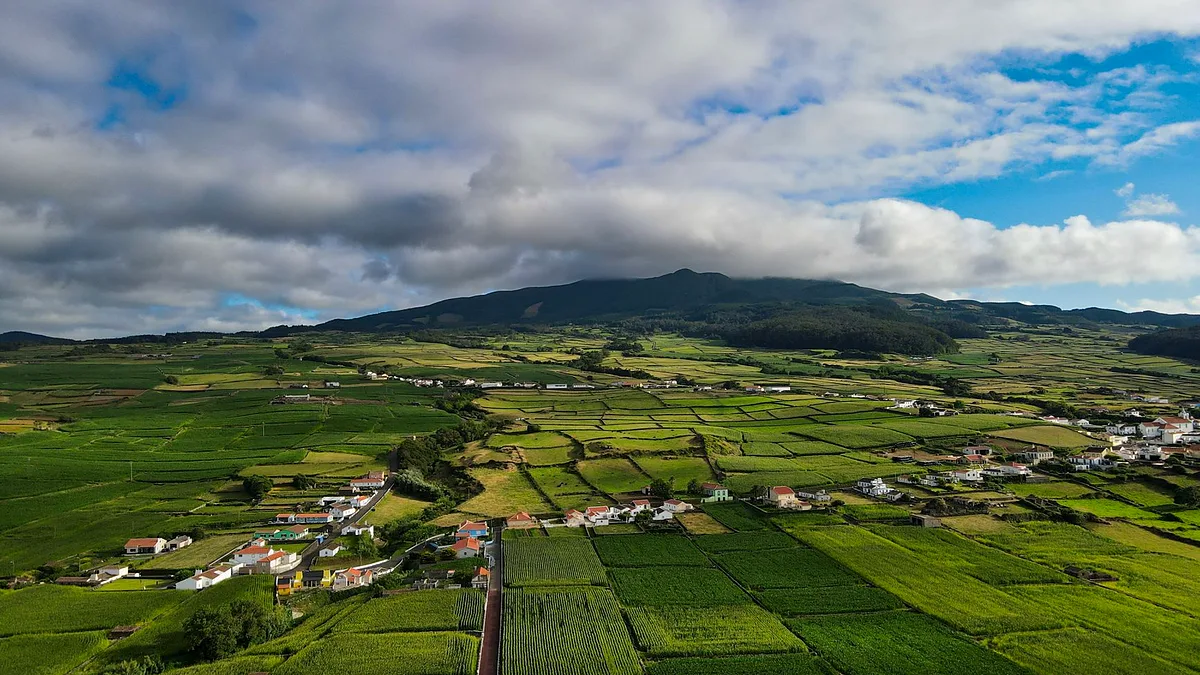

November is when the Azores quietly slash their prices and keep every bit of the scenery. Afternoons hover around 16°C, the tour buses thin out, hotel rates drop by roughly half, and the hillsides turn a deep, wet green that photos never quite capture. Sunset lands around 17:15, so you'll be eating dinner early — which is exactly what the locals do anyway.
The trick to doing this archipelago well without a big budget is simple: skip the packaged jeep tours, rent the smallest car that fits your bags, and put your money into the things these islands genuinely do better than almost anywhere — volcanic cooking, hot mineral water, and long coastal walks that cost nothing at all.
Late autumn also happens to be harvest season. Kiwis come off the vines in November, tangerines are everywhere, and São Martinho chestnut festivals pop up in village squares across the islands. You're not visiting in the off-season. You're visiting during the eating season.
Unlimited High-Speed International Travel eSIM
Connect in seconds across 180+ destinations. Instant QR code activation with zero roaming surcharges.

At a Glance
- Best time to go: Late October to the end of November — after the summer crowds, before the Christmas flight hikes.
- Typical daily budget: €70–110 / ~$75–120 per person, including a rental car split two ways, one paid attraction, and two restaurant meals.
- Local transport: A small rental car. Buses exist but run on school schedules. Inter-island flights on SATA start around €60–100 each way.
- Vibe: Damp, green, unhurried. Hot springs, woodsmoke, sea spray, and nobody queueing in front of you.
Furnas: The €20 Stew Cooked in the Ground
Furnas sits inside a volcanic crater where the earth steams through cracks in the pavement. The local dish, cozido das Furnas, is a pot of pork, beef, cabbage, taro and blood sausage lowered into hot earth near the lake at dawn and hauled out six hours later, grey with minerals and absurdly tender.
You don't need a tour or a tasting menu to eat it. Village restaurants dig out their own pots around 12:30, and lunch for two with a bottle of Pico white lands around €40 total. Add a free wander past the bubbling caldeiras afterwards and you've had the island's signature experience for the price of a mid-range lunch at home.
- Where: Furnas village center, Rua Dr. Frederico Moniz Pereira and the lanes off it.
- Cost: €18–22 / ~$20–24 per person for cozido; the lakeside cooking pits are free to visit.
- Best time: Arrive 11:45 to watch the pots come out of the ground at Caldeiras da Lagoa das Furnas.
- Getting there: 45-minute drive from Ponta Delgada on the EN1-1A; free parking behind the church.
Insider tip: Restaurante Miroma doesn't take lunch bookings and is full by 12:45 — either show up at 12:10 or eat at 14:00. And bring a jacket: the crater traps cloud, so it's often 5°C colder than Ponta Delgada.
Terra Nostra Garden: Iron Water and Camellias
Terra Nostra is the one paid attraction on São Miguel actually worth full price. The 18th-century estate holds a bathing pool of rust-brown, iron-heavy thermal water at around 38°C, plus 12 hectares of camellias, tree ferns and cycads that look genuinely prehistoric.
Late autumn is when the camellias start opening and the garden empties out. The pool stains light swimwear permanently — bring something dark and old. There are outdoor showers and changing rooms, and the water smells faintly of hot pennies.
- Where: Rua Padre José Jacinto Botelho, Furnas.
- Cost: €12 / ~$13 adult entry, which covers the pools; free if you're staying at the attached hotel.
- Best time: Right at 10:00 opening, or after 15:30 when the coach groups leave.
- Getting there: Five-minute walk from the village center.
Insider tip: The hotel's November doubles often drop to €120–140 a night and include garden access, breakfast and a natural hot spring — cheaper than the same standard of room in Ponta Delgada, and you get the garden after closing time.
Sete Cidades Without a Jeep Tour
The twin lakes of Sete Cidades — one blue, one green, depending on the light — are the image everyone comes for. A guided 4x4 tour costs €75–90 per person. The same road is drivable for the price of fuel, roughly €12 for the loop.
Drive to Miradouro da Vista do Rei first, then walk the 15 minutes to Boca do Inferno for the wider view. Loop down into the crater village, follow the lakeshore road, and stop at the church of São Nicolau for the postcard angle.
- Where: Western São Miguel, 25 km from Ponta Delgada.
- Cost: Free; parking at Boca do Inferno costs a couple of euros in high season.
- Best time: Before 09:30. Cloud rolls in fast after 11:00.
- Getting there: Drive via EN9 through Relva; the public bus has only one or two departures a day.
Insider tip: The view is clear maybe one morning in three in November. Check the SpotAzores webcams before you leave the hotel — it will save you a wasted drive. And skip the fenced-off abandoned hotel; it's guarded and the fine isn't worth the photo.
Gorreana Tea Plantation: Europe's Oldest, Free to Enter
Gorreana has been growing and processing tea on the north coast since 1883, and it's the oldest working tea plantation in Europe. Entry is free, you walk yourself through the 19th-century rolling machinery, and the tasting room sells a pot of orange pekoe and a slice of cake for about €2.
The rows of camellia bushes climb the hillside above the sea, and in November the pickers are still out on dry days. It's a strange, lovely hour — industrial heritage and green tea in the middle of the Atlantic.
- Where: Maia, Porto Formoso, north coast of São Miguel.
- Cost: Free entry and self-guided tour; tea €1.50–2.50 / ~$2–3.
- Best time: Late morning on a weekday; coach groups arrive around 11:30.
- Getting there: 30 minutes from Ponta Delgada on the EN1-1A coastal road.
Insider tip: Buy a box of Hysson or the Gorreana verde at the shop — it's €3 versus €9 at the airport, and it's the same tea. The nearby Moinhos beach is a good free stop for a picnic.
Ponta da Ferraria: The Free Hot Spring in the Sea
On the far west tip of São Miguel, a geothermal spring empties directly into a natural rock pool at the edge of the Atlantic. The result is a warm, salty bath that shifts from hot to cold depending on where you stand. Entry is free, and the timber boardwalk down the cliff is well maintained.
Timing is everything. Go within two hours either side of low tide; at high tide the pool is unsafe and closed off. Check a tide table the night before and plan your whole day around it.
- Where: Ponta da Ferraria, near Ginetes, western São Miguel.
- Cost: Free. The adjacent Termas spa charges about €15 / ~$16 if you want a proper changing room.
- Best time: Low tide, ideally early morning.
- Getting there: 30 minutes from Ponta Delgada; park at the top and walk down.
Insider tip: Wear old trainers or reef shoes — the basalt is sharp and slippery. The hottest current runs about five metres out from the spring outlet on the left-hand side.
Pico's Wine Landscape: A UNESCO Site for €3
A short SATA hop to Pico puts you in the middle of a UNESCO World Heritage landscape: thousands of low stone currais walls built to protect vines from salt wind, stretching to the sea. It's free to walk and almost empty in November, when the vines are bare and the walls go black with rain.
The Museu do Vinho in Lajido explains the whole strange history for about €3. Back in Madalena, the Azores Wine Company pours tastings of the volcanic verdelho for €12–20 and does excellent small plates.
- Where: Criação Velha and Lajido, north-west Pico.
- Cost: Free to walk; museum €3 / ~$3; tastings €12–20.
- Best time: Weekday afternoons, when the tasting room is quiet.
- Getting there: 20-minute drive from Madalena, or the Criação Velha walking trail from town.
Insider tip: The point-to-point walk from Criação Velha to Lajido takes about two hours; arrange a taxi back rather than retracing it, and check the ferry schedule — Atlânticoline crossings between Faial, Pico and São Jorge cost €5–12 and are a bargain compared with flying.
Angra do Heroísmo: A UNESCO City for the Price of a Coffee
Terceira's capital was rebuilt after the 1980 earthquake and is now a UNESCO-listed grid of black-and-white churches, cobbled lanes and painted merchant houses. Wandering it costs nothing. Coffee at a pastelaria runs about €0.80, and the Saturday market is the cheapest breakfast on the island.
Walk the Monte Brasil peninsula loop for two hours of volcanic craters and Atlantic views, then drive up to Algar do Carvão, a lava tube with a fern-covered chimney you can stand inside.
- Where: Angra do Heroísmo, central Terceira.
- Cost: City free; Algar do Carvão €10–12 / ~$11–13.
- Best time: Mornings for the city, afternoons for the cave.
- Getting there: 20 minutes from Lajes airport by car.
Insider tip: Algar do Carvão opens afternoons only and closes on some weekdays outside summer — check before driving up. Locals drink at the harbour bars on Rua de São João, not the squares.
Where to Eat and Drink
Bar Caloura (Caloura, south coast of São Miguel) grills fish on the terrace above a fishing cove. Grilled limpets, a whole wreckfish and wine for two: about €50. Lunch only, book ahead.
A Tasca (Rua do Aljube 26, Ponta Delgada) is the best-value modern Azorean cooking in the city — tuna, sweet potato, local cheese. Expect €25–30 a head with wine, and a queue if you arrive after 20:00.
Canto da Doca (Horta, Faial) is where locals go instead of the famous sailors' bar up the street. Fresh fish of the day, €12–16 a plate, no fuss. In Furnas, Restaurante Miroma does the same cozido as the fancier places for €20.
Practical Logistics and Money Tips
- Book the car early. A small manual from Auto Atlântida, Ilha Verde or ANC runs €30–45 a day in November. Automatics cost about 40% more and sell out.
- Skip the airport taxi if you can. The terminal is 3 km from Ponta Delgada center; a taxi is €10–12 and buses serve the terminal, but if you're renting, pick up at the airport and drive straight out.
- Plan two islands, not five. Inter-island flights add up. One week works beautifully as São Miguel plus Pico or Terceira.
- Eat lunch out, dinner in. Restaurant lunches are often half the dinner price. Mercado da Graça in Ponta Delgada on Saturday morning is where you buy cheese, tangerines and pineapple for €10.
- Tap water is drinkable across the islands. Bring a bottle and stop refilling at the village fountains.
What to skip, honestly: Whale watching in November — the season effectively ends in October and trips get cancelled for swell. Waterfront restaurants along Avenida Infante D. Henrique with photo menus, where you'll pay €22 for mediocre fish. And €85 jeep tours: every route they drive is a public road.
Pack for rain. November delivers showers in short, sharp bursts, plus wind that flips umbrellas. A proper waterproof shell, grippy shoes and a swimsuit are the whole kit.
Frequently Asked Questions
Is the Azores expensive to visit?
No — outside July and August it's one of the better-value Atlantic destinations. Budget around €70–110 / ~$75–120 per person per day in late autumn, with the rental car as your biggest fixed cost.
What's the weather like in the Azores in November?
Mild and wet: roughly 14–18°C, with frequent short showers and wind, and sunset by about 17:15. The upside is that the landscape is at its greenest and the viewpoints are empty.
Do you need a car in the Azores?
On São Miguel, Terceira and Pico, yes — buses run but mostly for school and work schedules. On Faial and tiny Corvo you can manage with taxis and your feet.
Can you island-hop the Azores on a budget?
Yes, if you mix ferries and flights. Atlânticoline crossings in the central group cost €5–12, while SATA inter-island flights run €60–100 each way, so keep your itinerary to two islands.