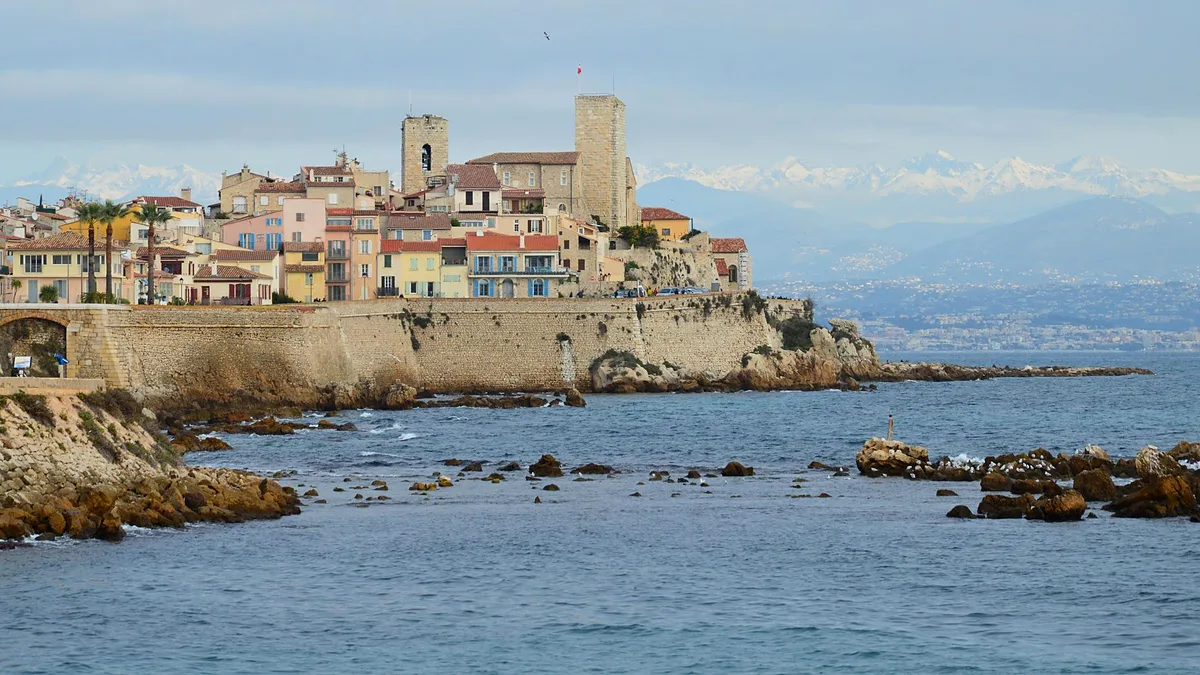

Antibes gets sold as a postcard: ramparts, blue water, and a marina where the boats cost more than your house. Fair enough — that view is real. But walk 200 meters inland, past the ice-cream queues on Cours Masséna, and the town changes pitch entirely.
What you find is a working French town with a serious art habit. Picasso spent a famous autumn here in 1946 and left work behind. Hans Hartung and Anna-Eva Bergman built a studio on the hill above town. Between them sits a lattice of tiny galleries, a three-room cartoon museum, and a neighborhood that once declared itself an independent commune and still acts like it.
This guide is about that layer. Expect reservation-only visits, doors with no signage, and a few honest warnings about what isn't worth your money.
Unlimited High-Speed International Travel eSIM
Connect in seconds across 180+ destinations. Instant QR code activation with zero roaming surcharges.

Antibes at a Glance
- Best time to visit: Late May to mid-June, or September through early October. Warm sea, thin crowds, galleries open. July and August are hot, packed, and priced accordingly.
- Daily budget: €90–€180 per person (~$98–$195 USD). You can do the art trail for under €30 if you lean on the free stops.
- Getting around: Walk the old town. Envibus handles the Cap and the beaches; the train station is a 10-minute walk from the ramparts.
- Vibe: Yacht money on the waterfront, gallery-quiet two streets back, workaday French everywhere else. Shops genuinely shut from 12:30 to 14:30.
1. Fondation Hartung-Bergman: The Studio Nobody Stumbles Into
Hans Hartung and Anna-Eva Bergman built this house and studio in the 1970s on the hills above Antibes, and it has been preserved almost exactly as they left it. The main studio is enormous, white, and filled with light — you understand their paintings differently standing inside it.
This is the closest thing Antibes has to a private club. Visits are by reservation only, in small guided groups, and there is no walk-in option. If you plan one art stop in advance, make it this one.
- Neighborhood: Quartier de la Brague, up the hill roughly 4 km from the old town.
- Cost: Around €12 (~$13 USD) for the guided visit.
- Best time: Weekday mornings. Book two to three weeks ahead in summer.
- Getting there: No convenient bus — a taxi from the old town runs about €15 (~$16 USD) each way, or cycle if you're comfortable with hills.
Insider tip: The visit covers the house, the studio and the archive, so allow 90 minutes — and ask about the English-language slots when you book, since not every session is bilingual.
2. Musée Picasso at Château Grimaldi: Do It Right
Yes, it's famous. Yes, you should still go — but the timing is everything. The museum sits in a Grimaldi castle on the ramparts, and the collection is small enough that a crowded room ruins it. The terrace alone, looking straight down at the sea, justifies the ticket.
Picasso worked in this building in 1946 and donated the work he made here. You also get the coastal sculpture collection and temporary shows in the lower rooms. It is not a hidden gem; it is a well-run museum that rewards an early start.
- Neighborhood: Vieil Antibes, entrance on Place Mariejol.
- Cost: €8 (~$9 USD) for the permanent collection; temporary exhibitions cost a little more.
- Best time: 10:00 at opening, or after 16:00. Closed Tuesdays.
- Getting there: A 6-minute walk from Cours Masséna, uphill through the old streets.
Insider tip: Head to the terrace first, photograph it empty, then come back down through the galleries. Most visitors do it in reverse and spend the whole visit queuing behind them.
While you're on the ramparts, walk 400 meters to Bastion Saint-Jaume for Jaume Plensa's Nomade — a huge white steel figure of letters sitting on the seawall. It's free, always accessible, and better than half the paid attractions in town.
3. The Gallery Lanes: Rue Sella, Rue des Revennes, Rue de la République
The old town's commercial galleries cluster on a handful of narrow streets just off the market, and they rotate constantly. One year it's contemporary photography, the next it's ceramics and screen prints. What stays consistent is scale — most are one room, one owner, one conversation.
Many operate on appointment or on whichever hours the owner feels like keeping. If a door is open and the lights are on, walk in and say bonjour. That's the whole system.
- Neighborhood: Vieil Antibes, between Cours Masséna and the Porte Marine.
- Cost: Free to browse. Prints and small works typically €40–€400 (~$43–$435 USD).
- Best time: Thursday and Saturday mornings, before the lunch shutdown.
- Getting there: On foot. Everything is within eight minutes of the market.
Insider tip: Never assume a gallery is closed because the shutters are half down at 12:35. Come back at 15:00 — that's when owners are relaxed and actually have time to talk about the work.
4. La Commune Libre du Safranier: The Neighborhood That Runs Itself
The Safranier quarter, tucked behind the old town near Place Safranier, declared itself a free commune decades ago as a joke — and then kept the joke going properly. It has its own honorary president, its own events calendar, and a tiny stone square with a fountain that stays empty even in August.
You can join the association for a few euros a year. It's mostly symbolic, but it gets you on the mailing list for street parties and exhibitions held in residents' doorways. This is the most genuinely local thing you can do in Antibes for the price of a coffee.
- Neighborhood: Quartier Safranier, eastern edge of the old town.
- Cost: Free to wander; association membership is under €10 (~$11 USD).
- Best time: Early morning, 7:30–9:00, when it's just cats and shutters.
- Getting there: Two minutes uphill from the Picasso museum.
Insider tip: Look for the small noticeboard near the square — that's where the commune posts its own events, and they almost never appear on any tourism website.
5. Cap d'Antibes: Villa Eilenroc and the Jardin Thuret
Villa Eilenroc, an 1860s mansion on the tip of the Cap, was designed by Charles Garnier — the man behind the Paris Opera. You can tour the villa on selected afternoons in season, and the gardens are open to walkers. It feels like a private estate precisely because it was one.
Ten minutes away in the other direction, the Jardin Thuret is a free botanical garden founded in 1856 and still run as a research station. It's quiet, slightly overgrown in the best way, and almost entirely full of locals on their lunch break.
- Neighborhood: Cap d'Antibes, along Avenue Mrs L. D. Beaumont and Chemin Gustave Thuret.
- Cost: Gardens free; villa guided tours around €5 (~$5.50 USD).
- Best time: Weekday mornings. Thuret is closed weekends.
- Getting there: Envibus services run out to the Cap; otherwise it's a 35-minute walk or a short taxi from the old town.
Insider tip: Parking near Plage de la Garoupe is a genuine nightmare in July and August. Take the bus, or go before 9:30 and leave by noon.
6. Musée Peynet: The Odd Little Museum Worth 30 Minutes
Raymond Peynet drew the "Peynet lovers" — a pair of cartoon sweethearts that got so famous in mid-century France that they ended up on stamps. This small museum near the old town holds his drawings and a wider collection of humorous illustration.
It's not prestigious and it's not big. It is charming, cheap, air-conditioned in summer, and almost always empty. If you've had your fill of serious art, this is the palate cleanser.
- Neighborhood: Vieil Antibes, a short walk from Place Nationale.
- Cost: Around €3–€4 (~$3–$4.50 USD).
- Best time: Any afternoon; it's rarely busy.
- Getting there: On foot from the market, five minutes.
Insider tip: It's closed Mondays and Tuesdays, and staff sometimes close early in low season. Check the door before you build a plan around it.
Where to Eat and Drink Nearby
Marché Provençal, Cours Masséna
Open daily until roughly 13:00, this covered market is where you should eat lunch, not the restaurants facing the port. Grab socca — a chickpea flatbread cooked on a huge copper pan — for €3–€4 (~$3–$4.50 USD), plus olives, goat cheese and a tomato that tastes like an actual tomato.
Le Figuier de Saint-Esprit
A Michelin-starred spot tucked in a side street off the market, run by chef Christian Morisse. The lunch menu lands around €48–€60 (~$52–$65 USD), which is a lot, but it's the best-value splurge in town. Book at least a week ahead.
Place Nationale Terraces
For a drink, skip the port. The cafés on Place Nationale pour a €2 espresso and a €6–€8 (~$6.50–$8.70 USD) pastis, and the people-watching is entirely local — kids on scooters, old men arguing about rugby.
Practical Logistics and Money Tips
- Buy an Envibus 24-hour pass if you're heading to the Cap or Juan-les-Pins more than twice. It's around €5 (~$5.50 USD) versus €1.50 single rides.
- Use the train for day trips: Antibes to Cannes takes 12 minutes and costs a few euros; Nice is 25 minutes. Buy at the machine, not the counter queue.
- Skip the tourist train and the little road train that loops the old town. It's €8 and covers ground you can walk in 20 minutes.
- Skip port-front restaurants on Quai Sabatier and around the marina. They're not terrible, just twice the price for half the cooking. Walk two streets inland.
- Budget the art properly: Picasso €8, Hartung-Bergman €12, Peynet €3, villa tour €5. Everything else on this list is free.
- Watch the clock: 12:30–14:30 is dead time. Plan museum visits around it, not through it.
Frequently Asked Questions
Are there free art galleries in Antibes?
Yes — the gallery lanes around Rue Sella and Rue de la République are free to browse, and the Nomade sculpture on the ramparts costs nothing. The Jardin Thuret is also free and open on weekdays.
Do you need to book the Fondation Hartung-Bergman in advance?
Yes, it's reservation-only with no walk-in entry, and groups are kept small. Book two to three weeks ahead in summer and confirm whether your session is in French or English.
What day is the Picasso museum in Antibes closed?
The Musée Picasso closes on Tuesdays, along with the Musée Peynet. Many small private galleries also shut on Sundays and Mondays, so plan that midweek.
Is Antibes walkable without a car?
The old town is flat and completely walkable, but the Cap d'Antibes involves serious hills and long stretches without pavements. Use Envibus or a taxi for the Cap and keep the center on foot.