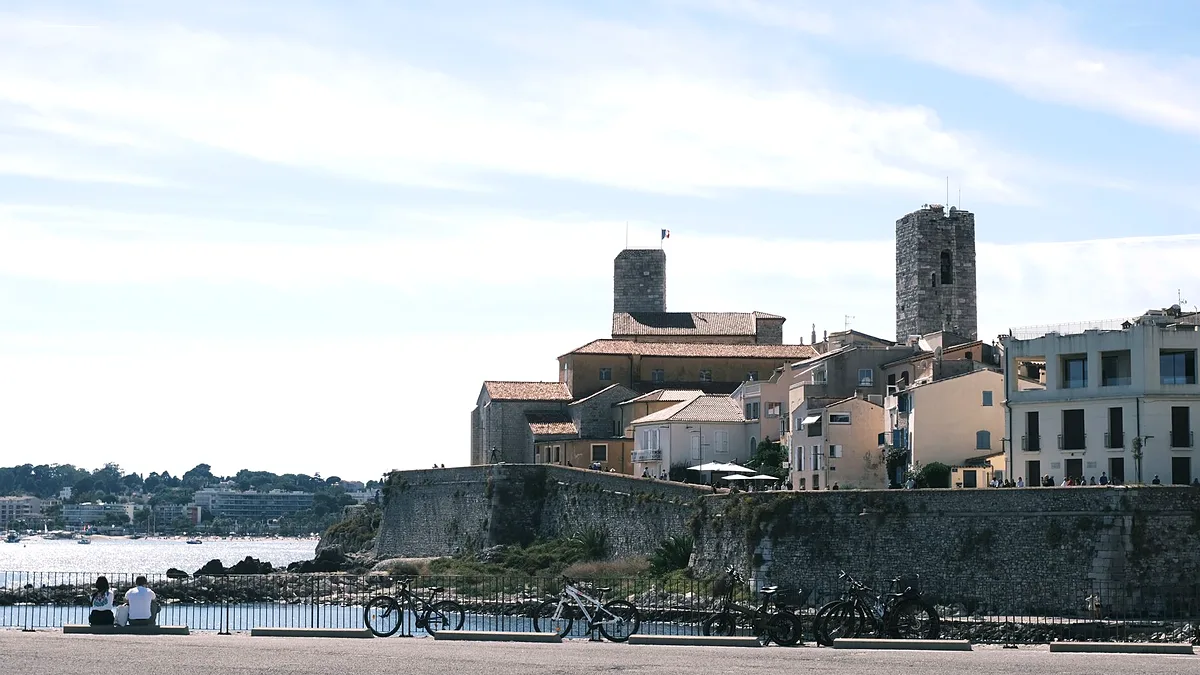

Antibes sells two stories. From the port you get the postcard: superyachts stacked three deep, a quay running out to Fort Carré, and prices to match. Two streets inland, behind the ramparts, the town tells a different story — of potters, chapel painters and glassblowers, and of a painter from Málaga who walked into a Vallauris workshop in 1946 and changed how the whole valley worked with clay.
This guide follows that second story. Every stop is walkable from the old town or a short bus or train ride away, and most of them cost less than a round of drinks on the port front.
- Best time to go: Late May to June, then September to early October. Studios are open, the light is good, and you are not queuing behind coach groups.
- Daily budget: €70–130 (~$76–140 USD) for a comfortable day with one workshop or museum, lunch and transport.
- Getting around: On foot inside the ramparts (15 minutes end to end), Envibus for Biot and Vallauris, TER train for Golfe-Juan.
- Vibe: A working French town with a yacht problem. Quiet at lunch, busy at aperitif, half asleep on Mondays.
Musée Picasso at Château Grimaldi
The Grimaldi family built this castle on the foundations of the Greek town of Antipolis, and Picasso rented the top floor for six months in 1946. He left 23 paintings and dozens of ceramics behind — and those ceramics were fired at Madoura in Vallauris, which is where you are heading later in this guide.
Unlimited High-Speed International Travel eSIM
Connect in seconds across 180+ destinations. Instant QR code activation with zero roaming surcharges.

It is a small museum that rewards slow looking. The terrace, with sea on three sides, is worth the ticket on its own, and the room of Picasso's personal collection (Miró, Léger, De Staël) is usually empty because everyone stops on the first floor.
- Neighbourhood: Vieil Antibes, at the top of the old town near the cathedral.
- Cost: €8 (~$9 USD); free on the first Sunday of the month.
- Best time: The 10am opening, or after 4pm once the day-trippers have gone.
- Getting there: 10-minute walk from Gare d'Antibes; come up through the old town, not along the ramparts.
Insider tip: The museum has run phased renovation closures in recent years, so check the website the day before. Turning up on spec and finding the doors shut is the most common disappointment in Antibes.
Marché Provençal on Cours Masséna
The covered market on Cours Masséna is where Antibes still shops. Half of it is produce — tomatoes, olives, chickpea flour for socca — and half is craft stalls actually worth buying from: Marseille soap cut to order, olive oil pressed from groves outside Vallauris, and ceramics from local studios rather than a warehouse abroad.
It is not undiscovered and it is not cheap, but it is real. Arrive before 10am and you get the version locals use.
- Neighbourhood: Cours Masséna, Vieil Antibes, five minutes from the port.
- Cost: Free to browse; soap €4–8 (~$4–9), olive oil from €12 (~$13), small ceramics €15–60.
- Best time: 8.30–10.30am, Tuesday to Sunday. The hall winds down around 1pm and is closed Mondays outside high season.
- Getting there: 10 minutes on foot from the station, 3 minutes from Port Vauban.
Insider tip: Walk past the front-row stalls facing the street and shop at the back of the hall — the same producers sell for 20–30% less when they are not paying for the view.
Vallauris: Picasso's Ceramics and Working Potters
Vallauris is the reason Antibes has a craft scene at all. Picasso produced roughly 4,000 ceramic pieces here between 1946 and 1973, and the town's potters shifted from cooking pots to art — a change you can still read in the shop windows along the main road.
Start at the Musée Magnelli–Musée de la Céramique, which pairs a modern art collection with a serious survey of local ceramics. Then walk five minutes to the Chapelle de la Guerre et de la Paix, where Picasso's vast murals fill a deconsecrated chapel and entry is free.
- Neighbourhood: Vallauris old centre, around Place de la Libération.
- Cost: Museum €6 (~$7 USD); chapel free; a two-to-three-hour pottery class €35–60 (~$38–65).
- Best time: Weekday mornings. Nearly everything closes 12.30–2.30pm, and the museum shuts on Tuesdays.
- Getting there: TER train Antibes to Golfe-Juan-Vallauris (4 minutes, about €2), then a 15-minute uphill walk; or Envibus from the bus station.
Insider tip: Ask at the museum desk for the list of studios that take drop-ins. Several working potters on the Golfe-Juan side will let you sit in for an afternoon if you call a day ahead, and they charge far less than the courses advertised along the coast.
La Verrerie de Biot
Biot has been blowing glass since 1956, when the workshop came up with verre bulle — glass with tiny bubbles trapped inside so every piece looks lit from within. You watch the whole process from behind a rope, a few metres from the furnace.
Entrance is free and the demonstration runs every 20 to 30 minutes. The shop is excellent and expensive; the seconds shelf near the till is where the value sits.
- Neighbourhood: Chemin des Combes, Biot, a 10-minute walk downhill from the village.
- Cost: Free entry; pieces €15–300 (~$16–325); half-day glass courses from around €90.
- Best time: Before 11am. Coach groups land mid-morning and the viewing platform gets tight.
- Getting there: Envibus line 10 from Antibes bus station toward Valbonne, about 25 minutes, then walk down through the village.
Insider tip: Stand on the left of the viewing area, closest to the furnace door — that is where the gaffer actually works, and the right side mostly gets his back.
Chapelle Saint-Bernardin and the Painted Old Town
Most people walk straight past this 16th-century chapel on the way to the Absinthe Bar. Go in. The barrel-vaulted ceiling is painted wood, the walls are bare stone, and it runs as a small exhibition space for local artists at no charge.
Pair it with the cathedral, Notre-Dame de la Platéa, two minutes away. The Bréa altarpiece behind the right-hand altar is a 15th-century piece that most visitors miss because they never walk past the font.
- Neighbourhood: Rue de la République, Vieil Antibes.
- Cost: Free; donations welcome.
- Best time: 11am–12.30pm, when it is usually empty and the light comes in low through the side door.
- Getting there: Five minutes from Cours Masséna. Look for a plain stone doorway — there is no large sign.
Insider tip: The chapel often shuts for a long lunch. If the door is locked, come back after 3pm instead of assuming it is closed for the day.
Fort Carré and the Plensa Sculpture
Fort Carré is a Vauban fort on the headland, four pointed bastions above the water, and the only way in is on a guided tour. It takes about an hour, it is entirely outdoors, and the view back over Antibes is the best in town.
On the way back, stop at Jaume Plensa's Nomade on the Bastion Saint-Jaume: an eight-metre steel figure built from letters, sitting on the quay among the yachts. It is free, and it is the one piece of public art in Antibes nobody argues about.
- Neighbourhood: Avenue du 11 Novembre, above Port Vauban.
- Cost: About €5 (~$5.50 USD) including the tour; Nomade is free.
- Best time: First tour of the morning, or late afternoon for the light. Closed Mondays and Tuesdays outside July and August.
- Getting there: A 20-minute walk from the old town along the port.
Insider tip: There is no shade on the tour and nowhere to buy water at the gate. Bring a bottle, and wear shoes with grip — the ramps are worn smooth.
Where to Eat & Drink Nearby
Chez Félix
A small bistro in a lane between the cathedral and the ramparts, with a chalkboard that changes daily and a handful of tables worth fighting for. Mains run €18–26 (~$20–28 USD) and the lunch formula is around €22. Book ahead for dinner in July and August.
Marché Provençal stalls
The cheapest good lunch in Antibes is at the market: a slice of socca for €3 (~$3.30), pissaladière for €2.50, fougasse for €4, and a punnet of olives. Eat standing up on the Cours Masséna steps like everyone else.
Le Bar des Absinthes
A vaulted stone cellar on Rue Sella with absinthe at €10–12 a glass and a cheese or charcuterie board for €12–14. It opens late afternoon and stays loud. The house ritual — pouring over a sugar cube — is explained if you ask.
Practical Logistics & Budget Tips
Inside the ramparts, everything is walkable; you will not need a car and should not rent one. Envibus singles cost €1.50 (~$1.60 USD) on board, and a day pass is around €5 — worth it the moment you make two trips. The TER train between Antibes, Golfe-Juan and Cannes is even cheaper and skips the traffic.
Municipal museums are free on the first Sunday of each month. That includes the Picasso, the archaeological museum and the Peynet. Outside that, the table below is what you should budget per person.
| What | Cost (EUR) | Approx USD |
|---|---|---|
| Musée Picasso entry | €8 | ~$9 |
| Fort Carré guided tour | €5 | ~$5.50 |
| Vallauris ceramics museum | €6 | ~$7 |
| Chapelle Saint-Bernardin | Free | Free |
| Biot glassblowing demo | Free | Free |
| 2-hour pottery class | €35–60 | ~$38–65 |
| Envibus day pass | €5 | ~$5.50 |
What to skip: the little tourist train, the €18 cocktails on the port front, and the lavender bags in port-side souvenir shops — the label usually says Bulgaria. The beach clubs at Juan-les-Pins are fine, but they have nothing to do with why you came.
Honest heads-up: Mondays are difficult. Many independent studios, the produce market and several museums close, and the old town feels like a stage set with the lights off. Also, Antibes' craft scene is smaller than Biot's glass or Grasse's perfume — plan on Vallauris and Biot carrying the day.
Frequently Asked Questions
Can you join a craft workshop in Antibes without booking far ahead?
Yes, in low and mid season — call a Vallauris studio or a Biot glass workshop two or three days before and you will usually get a slot. In July and August, book at least a week ahead or you will be watching through the window.
Is the Musée Picasso in Antibes open right now?
It has had phased renovation closures, so confirm on the official site or by phone the day before you visit. The Château Grimaldi building and its terrace are the draw either way, but the collection is the reason to pay.
Do you need a car to reach Vallauris and Biot?
No. Vallauris is four minutes by TER train plus a short uphill walk, and Biot is served by Envibus line 10 from Antibes bus station. Both trips cost under €3 each way.
What is the cheapest way to see Antibes' heritage sites?
Walk. The chapels, ramparts, cathedral and the Nomade sculpture are free, and the first Sunday of the month opens the municipal museums at no charge. Budget €10–15 total if you skip taxis and eat at the market.