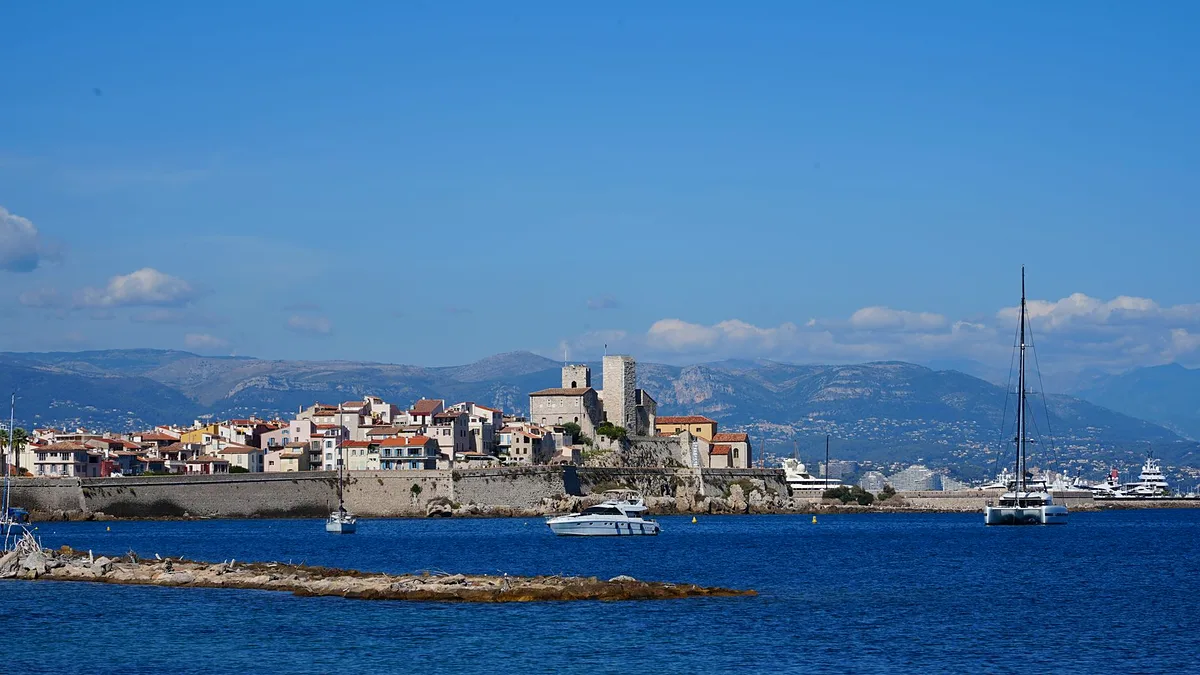

Antibes runs on contrast. On one side of the harbour, a 90-metre superyacht with a helicopter pad edges into its berth. Two streets back, a baker is pulling a €2.50 pissaladière out of the oven and a pensioner is arguing about the price of tomatoes.
You can have both, and that is the whole point of visiting. The trick is knowing which luxury moments cost €8 and which ones cost €400 for roughly the same view.
Antibes is also one of the few towns on the Côte d'Azur where the old town is still lived in rather than staged — laundry on the balconies, kids playing football against a 16th-century wall. That's what makes a cheap visit here feel generous instead of skimpy.
Unlimited High-Speed International Travel eSIM
Connect in seconds across 180+ destinations. Instant QR code activation with zero roaming surcharges.

At a Glance: Antibes on a Budget
- Best time to visit: May–June or September to mid-October. Same sea, 30–40% cheaper rooms, and you can walk the ramparts without queuing.
- Typical daily budget: €70–95 (~$76–103) for a comfortable shoestring day; €110–140 (~$119–152) if you add a museum, a sit-down lunch and one beach club drink.
- Getting around: On foot, mostly. The old town is 15 minutes end to end, and the train station to the market is a 10-minute walk.
- Vibe: A working Provençal town with a billionaire marina bolted on. Slow mornings, loud market, quiet evenings — nightlife lives next door in Juan-les-Pins.
Port Vauban and the Quai des Milliardaires
Port Vauban is the largest pleasure harbour in Europe, with around 1,600 berths, and the northern quay is where the boats get genuinely absurd. Nobody checks your bank balance to walk the dock. You just wander past crew polishing teak, and nobody minds.
It's the cheapest luxury in Antibes, and honestly one of the best people-watching spots on the coast. Go before the heat arrives and you'll have the place to yourself.
- Neighbourhood: Port Vauban, on the north side of the old town.
- Cost: Free. There's no ticket, no gate fee.
- Best time of day: 7–9am, when crews are hosing decks and the light is soft.
- Getting there: 8-minute walk from the old town, 5 minutes from the train station.
Insider tip: Look for the 8-metre white figure of Nomade by Jaume Plensa at the harbour entrance. Some sections of the quay have security barriers — stay on the public side rather than ducking through an open gate, and nobody will ask you to leave.
Musée Picasso in Château Grimaldi
Picasso worked in this building for six months in 1946, and he left paintings behind as payment for his studio. The result is a small museum where the art and the sea view compete for your attention, and both win.
The collection is not enormous — an hour is plenty — but the terrace over the ramparts is worth the ticket on its own. Sit on the wall, watch the Mediterranean, and remember that most Picasso museums cost three times this.
- Neighbourhood: Place Mariejol, at the far end of the old town.
- Cost: €8 (~$9 USD) for the permanent collection; temporary shows cost more.
- Best time of day: Right at opening, or 4pm onward when tour groups have thinned out.
- Getting there: A 10-minute walk from Gare d'Antibes, straight through the old town.
Insider tip: Closed Mondays, plus 1 January, 1 May and 25 December. Winter hours are split (roughly 10am–12:15pm and 2–6pm), so don't assume the summer schedule applies in January.
Sentier du Littoral: The Free Clifftop Walk
The coastal footpath around Cap d'Antibes is the single best free thing to do in the area. It runs about 3 km from Plage de la Garoupe to Port de l'Olivette, cut into the red rock above water so clear you can count the sea urchins.
Bring proper shoes — trainers are fine, flip-flops are not — and give yourself 90 minutes so you can stop. On a clear day you can see the Alps behind Nice, and the yachts in the bays look like toys.
- Neighbourhood: Cap d'Antibes, starting at Plage de la Garoupe.
- Cost: Free.
- Best time of day: Before 10am, or after 5pm in summer. The path has almost no shade.
- Getting there: Envibus line 2 toward Cap d'Antibes, roughly 15 minutes, about €1.50 (~$1.65 USD).
Insider tip: The path sometimes closes after winter storms or on high-wind days. If the gate at La Garoupe is shut, walk the residential lanes instead — the villa-spotting is nearly as good.
Quartier du Safranier
In the 1960s, this wedge of the old town was slated for demolition and redevelopment. The residents refused, declared themselves a free commune as a joke, and won. The painted sign still says Quartier Libre.
Today it's a handful of narrow lanes, a tiny square with a fountain, and a residents' association that runs low-cost events through the year. It takes 15 minutes to walk and zero euros to enjoy.
- Neighbourhood: Safranier, on the eastern edge of Vieil Antibes, above the port.
- Cost: Free.
- Best time of day: Late afternoon, when the shutters are open and cats own the doorsteps.
- Getting there: Two minutes on foot from the Marché Provençal.
Insider tip: Stay quiet and don't photograph doorways with people in them — these are homes, not a set. Locals are friendly but they've earned their privacy.
Fort Carré
Originally built in the 1550s and later upgraded by Vauban, Fort Carré guards the bay from a rocky point between the port and Juan-les-Pins. Entry is about the price of a coffee, and the view back over Antibes is the best in town.
You can only go in with a guided tour, which runs on a fixed schedule and lasts around an hour. It's genuinely informative rather than a hard sell, and the ramparts are a great spot for photos of the yacht harbour from above.
- Neighbourhood: Avenue du 11 Novembre, near Port Vauban.
- Cost: €3 (~$3.30 USD).
- Best time of day: Mid-afternoon, when the harbour light is best from the top.
- Getting there: 15-minute walk from the old town along the port.
Insider tip: Closed Mondays and off-season Tuesdays — call or check the tourist office board before walking out. The 1.5 km approach along the sea wall is scenic enough that a closure won't ruin your morning.
Villa Thuret Botanical Garden
This is a 150-year-old arboretum on Cap d'Antibes, filled with palms, eucalyptus and enormous ficus trees, and it is free to walk into. It was the private garden of a botanist who collected plants from every corner of the world's warm zones.
It's also the rare Antibes attraction that almost no tourist ever reaches, which means you'll hear birds instead of chatter. Bring water and take the loop slowly.
- Neighbourhood: Chemin Raymond, Cap d'Antibes.
- Cost: Free.
- Best time of day: Weekday mornings, opening time.
- Getting there: Envibus line 2 from the bus station, then a short uphill walk.
Insider tip: The garden is closed weekends and public holidays, and hours are roughly 8:30am–5pm on weekdays. That catches out plenty of visitors who turn up on a Saturday.
Plage de la Garoupe and the Beach-Club Drink
La Garoupe is the postcard beach of Cap d'Antibes: two stretches of sand, shallow water, a lifeboat station and a couple of legendary beach clubs. The public sections are free, and they're on the same sand as people paying €45 for a chair.
If you want a taste of the luxury side, book a €10–14 drink at a club bar rather than a sunbed. You get the terrace, the service and the view, and you keep your budget.
- Neighbourhood: Plage de la Garoupe, Cap d'Antibes.
- Cost: Beach free; sunbeds roughly €35–55 (~$38–59 USD); a spritz €10–14.
- Best time of day: Arrive by 9:30am in July and August to claim sand.
- Getting there: Envibus line 2, about 15 minutes from the centre.
Insider tip: Order at the bar and stand, not at a table — table service is where the price doubles. And skip the €60 lunch menus; eat back in town afterwards.
Where to Eat and Drink Nearby
Marché Provençal, Cours Masséna
The covered market runs every morning and it's where you should build your lunch. A slab of socca — the chickpea flatbread cooked on a big copper plate — costs about €3.50, and a wedge of pissaladière is €2.50.
Add olives, a hunk of cheese and a bottle of water and you've eaten well for €10. It is the single best money decision you'll make in Antibes.
- Prices: €2.50–10 (~$2.75–11 USD) per person.
- Signature dishes: Socca, pissaladière, tapenade, daube niçoise.
- When: Roughly 6am–1pm daily; closed Mondays outside high season.
Boulangerie Veziano, Old Town
A proper local bakery with a queue of residents that moves fast. Their tourte de blettes — a sweet-savoury Swiss chard tart with pine nuts and powdered sugar — is the regional thing to try at least once.
- Prices: €2–6 (~$2.20–6.60 USD) per item.
- Signature dishes: Tourte de blettes, pissaladière, ficelle.
- When: Morning, before the lunch rush.
Restaurant Le Safranier
A small, family-run spot in the Safranier lanes with a chalkboard menu that changes with the market. The two-course lunch formula lands around €22–26 (~$24–28 USD) and is the honest way to have a real Provençal sit-down meal here.
- Prices: Lunch formula €22–26 (~$24–28 USD); dinner mains €18–24.
- Signature dishes: Fish of the day, slow-braised beef, seasonal vegetable tian.
- When: Book for 12:30pm — the terrace is small.
Practical Logistics and Budget Tips
Trains beat buses for day trips. The TER regional line connects Antibes to Cannes (12 minutes, ~€3.50), Nice (20 minutes, ~€4.30 / $4.70 USD), Villefranche-sur-Mer and Monaco (~€8.50, 50 minutes). Buy from the machines, not the counter queue.
Envibus covers the town and the cape. A single ride is about €1.50, and a 24-hour pass is around €4 — worth it the moment you're doing two bus trips. The line 82 coach from Nice airport takes roughly 35–40 minutes for about €1.50, which undercuts a taxi by around €60.
Learn the two price tiers. Coffee standing at a bar is €1.50–2; the same coffee at a table on the port is €4–5. Order a free carafe d'eau with dinner and nobody will blink.
Walk the old town first. Antibes is 15 minutes across on foot, and every detour is free. Save the bus money for the Cap.
What to Skip
Marineland, the big marine park outside town, costs around €45 per adult and eats half a day. The little tourist train through the old town is expensive for what is essentially a slow loop you can walk faster.
Menus with photos along the port, in three languages with laminated pages, are almost always worse and pricier than anything two streets into the old town. And the sunbeds at the flashiest beach clubs? Walk past, buy a drink, keep the €50.
Honest Heads-Up
The town beaches are pebbly or on concrete platforms, and the water near the port is not the clearest on the coast. If swimming is the priority, take the bus to La Garoupe or walk to the Plage de la Gravette behind the ramparts.
Also: Antibes closes early. After 10pm, most of the old town is shut, and nightlife means a 15-minute walk or a short bus ride to Juan-les-Pins.
Frequently Asked Questions
Is Antibes expensive to visit?
Less than Nice or Cannes if you use the market and the free walks. A comfortable day lands around €70–95 (~$76–103 USD) per person including a mid-range room share, food and one paid attraction.
Can you walk around the superyachts in Port Vauban?
Yes — the public quays and the northern dock are open to anyone on foot, free of charge. Individual private pontoons have gates, so stay on the marked public paths and you'll be fine.
How many days do you need in Antibes?
Two full days covers the old town, the Picasso museum, the Cap d'Antibes coastal path and a beach afternoon. Three days lets you add a day trip to Nice or Cannes by train without rushing.
Is Antibes or Juan-les-Pins cheaper?
Antibes is cheaper for food, with the market and old-town bakeries doing the heavy lifting. Juan-les-Pins costs more in July during the jazz festival but often has better-value hotel rooms in May and September.