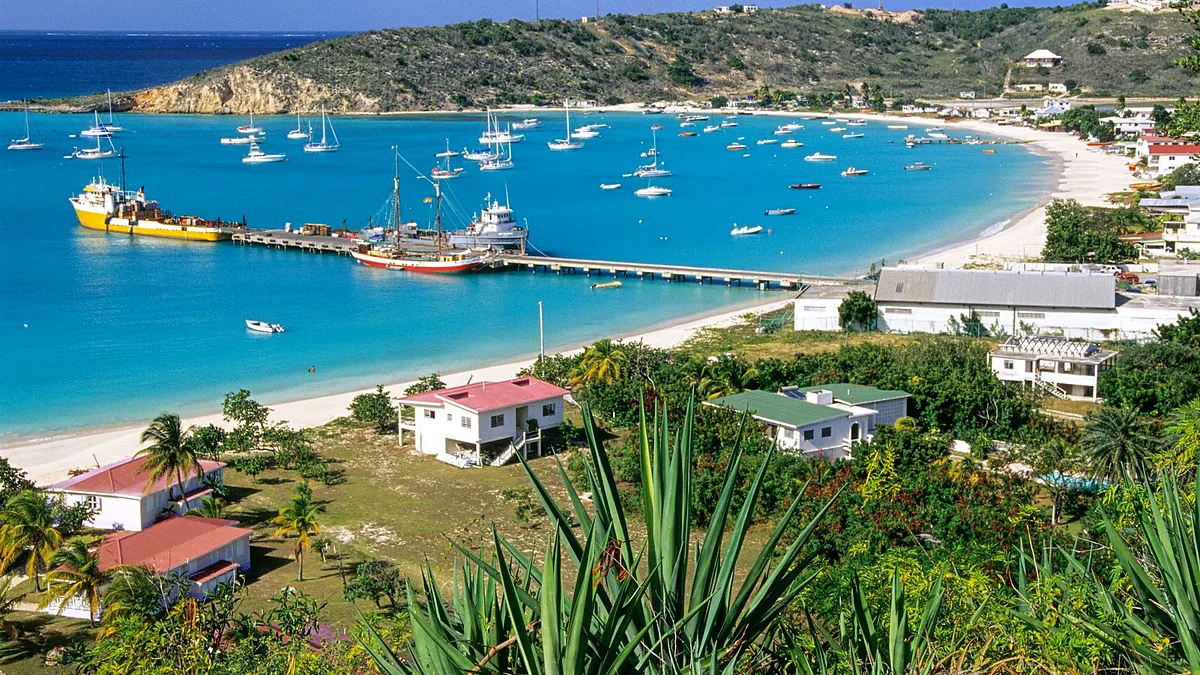

Anguilla is famous for 33 beaches and almost nothing taller than a palm tree. But the island's real character sits a few hundred yards inland, in a wooden plantation house, a one-room museum, and carvers' studios that smell like fresh lignum vitae. Spend a morning away from the sand and you will meet the people who actually keep this place's history alive.
Nothing here is staged. No cruise ships dock, no costumed cultural villages, no queues. The trade-off is that most sites are small, volunteer-run and keep island hours, so a little planning saves you a wasted drive.
Anguilla Heritage at a Glance
- Best time to go: January to April for dry weather and reliable opening hours. Late July to early August brings Carnival and boat racing, but it is hot and busy.
- Typical daily budget: US$120 to US$250 (EC$325 to EC$675) per person with a rental car, one museum and a proper lunch out. The sites themselves cost almost nothing.
- Getting around: Your own wheels, realistically. Rental cars run US$45 to US$75 a day; taxis charge US$20 to US$35 per cross-island hop and there is no rideshare app.
- Money: Eastern Caribbean dollar, pegged at about EC$2.70 to US$1. US cash is accepted nearly everywhere, but change comes back in EC.
- Vibe: Unhurried and genuinely local. Nobody performs for visitors, and nothing opens at 7am sharp.
Wallblake House: The Island's Oldest Standing Building
Built around 1787, Wallblake House is a rare survivor of Anguilla's plantation era: stone ground floor, wooden upper storey, deep hurricane shutters and a shaded courtyard. The Anguilla Archaeological and Historical Society pulled it back from collapse, and volunteer docents now walk you through rooms filled with period furniture and family records.
Unlimited High-Speed International Travel eSIM
Connect in seconds across 180+ destinations. Instant QR code activation with zero roaming surcharges.

Give it 30 to 40 minutes, then walk five minutes to the Old Well and the war memorial. It is the best single introduction to how this island lived before tourism.
- Neighbourhood: The Valley, immediately south of St. Gerard's Catholic Church.
- Cost: Free entry; a US$5 (EC$13) donation keeps the lights on.
- Best time: Weekday mornings, roughly 9am to noon, Monday to Friday.
- Getting there: An 8-minute drive from Wallblake Airport or a 15-minute walk from the Valley roundabout.
Insider tip: The house is staffed by volunteers, not a ticket office, so call or message ahead if you are making a special trip. Ask the docent about the 1967 Anguillian Revolution; you will get a far better story than any plaque gives you.
Heritage Collection Museum: A One-Room History of the Island
Historian Colville Petty has spent decades collecting the things nobody else wanted: Arawak pottery shards, sugar-estate ledger books, old boat-racing trophies, photographs from the revolution and the island's salt trade. The result is a small, dense museum in East End that takes an hour and stays with you for days.
It is not interactive or air-conditioned. It is better than that. Petty or a family member is often on hand and will answer almost any question about Anguilla's past.
- Neighbourhood: East End Village, on the main road near the salt pond.
- Cost: About US$5 (EC$13) per adult; children usually free.
- Best time: Monday to Saturday, roughly 10am to 4pm. Closed Sundays and public holidays.
- Getting there: A 20-minute drive east from The Valley; park on the roadside.
Insider tip: Buy one of Petty's self-published history books on the way out, usually US$15 to US$25 (EC$40 to EC$68). They cover island history you will not find online in that detail, and the money goes straight back into the collection.
Devonish Art Gallery: Sculpture Above Shoal Bay East
Courtney Devonish is one of Anguilla's most recognisable artists, working in carved wood, welded metal and printmaking. His gallery sits at the eastern end of Shoal Bay East, a few steps above the sand, so you can drift in with salty feet and spend 20 minutes among pieces made from salvaged iron and local timber.
Prints and small sculptures are genuinely affordable, which is rare in Caribbean galleries. Devonish is often there himself, happy to talk process without a sales pitch.
- Neighbourhood: Shoal Bay East, eastern end near the rocks.
- Cost: Free to browse; prints start around US$40 (EC$108), larger sculptures run into the hundreds.
- Best time: Mid-morning to late afternoon, roughly 10am to 5pm; hours flex with the season.
- Getting there: Drive or taxi to Shoal Bay East and walk the beach to the far end.
Insider tip: Ask whether a piece can be shipped before you fall in love with it. Carrying a metre-wide metal sculpture home as luggage is a common mistake.
Cheddie's Carving Studio: Working Wood in West End
Cheddie Richardson taught himself to carve and has been shaping local hardwoods for decades, from small birds to full-size figures. His West End studio also shows paintings by Lynne Bernbaum, and the whole place feels like a workshop first and a gallery second, with sawdust, chisels and half-finished pieces everywhere.
This is the stop where you actually see work being made. Come with questions, not a shopping list, and you will get a carving demonstration for free.
- Neighbourhood: West End Village, a few minutes' drive from Meads Bay.
- Cost: Free; small carvings from about US$30 (EC$81).
- Best time: Monday to Saturday, roughly 9am to 4pm; mornings are cooler and quieter.
- Getting there: Take the West End road and look for the studio signs before the Meads Bay turn.
Insider tip: Bring cash in EC dollars. Card machines are unreliable out west, and small studios appreciate not paying card fees on a US$40 sale.
Fountain Cavern National Park: Anguilla's Arawak Sacred Site
Fountain Cavern holds petroglyphs carved by the island's Indigenous inhabitants around a freshwater spring, making it one of the most significant archaeological sites in the Eastern Caribbean. You view it from a shaded platform and walking loop; the cave floor itself is usually fenced off for conservation.
Do not expect a visitor centre. Expect 15 quiet minutes, a bit of context from signage, and a strong sense of how much water mattered on a flat limestone island.
- Neighbourhood: Inland from The Valley, about five minutes' drive from Wallblake House.
- Cost: Free; donations to the Anguilla National Trust are welcome.
- Best time: Early morning, before the heat. There is almost no shade.
- Getting there: Easier by car; the access track is unmarked in places, so ask your rental host for directions.
Insider tip: Wear closed shoes, not sandals. The path is rough limestone and there are no lights, no toilets and no water on site.
Sandy Ground: Boatyards, Boat Racing and the Old Salt Pond
Sandy Ground is where Anguilla's two oldest industries meet: salt and sailing. The shallow pond behind the beach was raked for salt for centuries, and the village's boatyards still turn out the wooden racing sloops that are the national sport. On race days the whole bay fills with spectators, coolers and commentary.
Come on Anguilla Day, August Monday or Boxing Day for the biggest races. Any other afternoon, walk the shoreline and look at the hulls being patched.
- Neighbourhood: Sandy Ground, on the south coast.
- Cost: Free to watch; rum punch runs US$6 to US$8 (EC$16 to EC$22).
- Best time: Race afternoons, usually from about 1pm; otherwise late afternoon light.
- Getting there: A 10-minute drive from The Valley; park at the eastern end of the beach.
Insider tip: Skip the front-row bars and stand near the boatyard instead. That is where the crews, the arguing and the real race talk happen.
Island Harbour: A Working Fishing Village
Island Harbour is not an attraction with a sign. It is a harbour full of painted wooden boats, men mending nets and traps, and smoke drifting from fish houses. Go early, keep your voice down, and treat it as a working space rather than a photo set.
It is the closest thing on the island to watching an artisan economy in real time, and it pairs well with a morning on the northeast coast.
- Neighbourhood: Island Harbour, northeast coast.
- Cost: Free.
- Best time: 6:30am to 8:30am, when boats come in.
- Getting there: A 20 to 25-minute drive from The Valley along the north road.
Insider tip: Ask before photographing people at work. A quick hello and a question about the catch gets you a much warmer response than a lens in someone's face.
Where to Eat and Drink Nearby
Tasty's in The Valley is the reliable local pick after Wallblake House, serving saltfish, johnny cakes, peas and rice and grilled fish. Mains run US$12 to US$22 (EC$32 to EC$59), and it is busiest at weekday lunch.
E's Oven in South Hill is a roadside grill worth detouring for: ribs, chicken and johnny cakes for US$8 to US$15 (EC$22 to EC$40). Mostly takeaway, so plan to eat in the car or at the beach.
Ken's BBQ on Shoal Bay East grills crayfish and chicken on picnic tables in the sand, US$20 to US$35 (EC$54 to EC$95) for a proper plate. For a drink, Johnno's Beach Stop at Sandy Ground pours a strong rum punch for US$6 to US$8 and has live music on Sunday afternoons.
Getting Around and What It Really Costs
Transport hacks
- Rent the smallest car you are comfortable with. Roads are narrow, and a temporary Anguillian driving permit costs about EC$25 (US$9) at the rental desk.
- Drive on the left. Villages have speed bumps, goats and almost no street lighting, so avoid driving after dark on your first day.
- Public vans leave from The Valley when full, with fares around EC$2 to EC$4 (US$1 to US$1.50). They are cheap and cheerful but useless for hitting multiple heritage sites in one morning.
- Negotiate a flat taxi rate before you get in, not after. Airport to Shoal Bay East is usually US$26 to US$30.
Money-saving tips
- Most heritage sites are free or US$5. Budget roughly US$30 total for entry fees across the whole itinerary; transport is your real expense.
- Carry EC cash for studios and roadside food. ATMs cluster in The Valley and run out on holiday weekends.
- Restaurant bills often add 10 to 15 percent service. Check before tipping twice.
- Pack a refillable bottle. There are few shops near Fountain Cavern or Island Harbour.
What to skip
- Bundled island tours that charge US$80 or more to drive you to free sites you can reach yourself.
- Resort gift-shop art marketed as local. Buy from the studios where the maker is standing in front of you.
- Sunday and public holiday attempts. Almost everything closes, including many restaurants.
- Visiting in September or October. Several small museums and galleries shut for hurricane season and staff holidays.
Frequently Asked Questions
Are Anguilla's heritage sites open every day?
No. Wallblake House generally opens weekdays only, and the Heritage Collection Museum runs Monday to Saturday but closes on Sundays and public holidays. Because both are volunteer-run, message ahead if you are travelling a long way.
How much does it cost to visit Anguilla's artisan workshops?
Galleries and carving studios are free to enter, and the two main museums charge around US$5 (EC$13) each. Realistically, budget US$20 to US$30 for entry fees plus your transport and lunch.
Do I need a rental car to see these places?
Yes, if you want to see more than one site in a day. The stops stretch from West End to East End, taxis cost US$20 to US$35 per hop, and there is no rideshare service on the island.
When is the best time to visit Anguilla for heritage and craft?
January to April offers dry weather and dependable opening hours. If you want boat racing and Carnival energy, come for late July and early August, and accept the heat and higher room rates.