
Amman's oldest hill carries a Roman temple, an Umayyad palace and a Byzantine church inside one walled compound. Ten minutes downhill, the same city keeps its crafts alive in family workshops, gallery courtyards and a Friday street market. You can cover both in one unhurried day.
What makes this pairing work is scale. The Citadel sits at the edge of downtown, so you are never more than a short walk or a 2 JOD taxi ride from a potter, a weaver or a cooking class. This guide follows that loop, using prices and opening hours I checked on my last visit.
Amman at a Glance
- Best time to visit: March to May, or late September to November. Summer afternoons hit 35°C and the Citadel has almost no shade.
- Typical daily budget: 35–60 JOD (~$50–85 USD) per person, covering entry fees, a workshop, taxis and three meals.
- Local transport: Careem and Uber are cheap and everywhere. The Amman Bus and BRT cost 0.50 JOD per ride; service taxis (white cars) charge 2–3 JOD for short downtown hops.
- Vibe: Scruffy, warm and fast-moving. Crafts here are working trades, not staged displays, so expect workshop floors covered in clay dust.
1. The Amman Citadel (Jabal al-Qal'a)
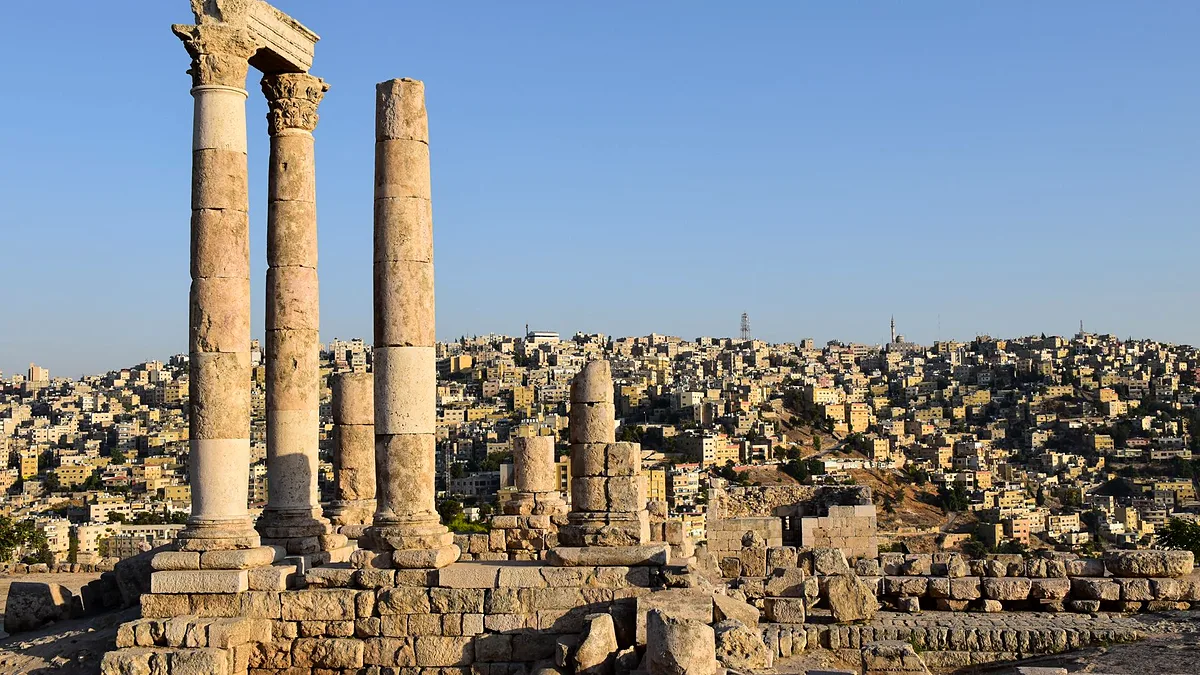
Start here, because everything else in the old city makes more sense once you have seen the view. The Temple of Hercules columns, the Umayyad Palace audience hall and the Byzantine basilica floor all share one rocky plateau, and you can walk between them in 45 minutes.
Unlimited High-Speed International Travel eSIM
Connect in seconds across 180+ destinations. Instant QR code activation with zero roaming surcharges.

Do not skip the small Jordan Archaeological Museum at the back of the compound. It holds the Ain Ghazal plaster statues, made around 8,000 BC and among the oldest human figures ever found. Most visitors walk straight past the door.
- Neighborhood: Jabal al-Qal'a, directly above downtown.
- Cost: 3 JOD (~$4.20 USD). A combined Citadel + Roman Theatre ticket is 6 JOD (~$8.50 USD).
- Hours: Roughly 8am–7pm in summer, 8am–4pm in winter; last entry one hour before closing.
- Getting there: A 20-minute uphill walk on stone stairs from Al-Hashemi Street, or a 2 JOD Careem from downtown.
Insider tip: Arrive at 8am or after 4pm. Midday sun turns the limestone into a reflector, and the site has almost no shade trees. Also bring 1 JOD coins for the on-site toilet attendant, who rarely has change.
2. Roman Theatre and Hashemite Plaza
The theatre was cut into the hillside in the 2nd century AD and seated about 6,000 people. Climb to the top row and say something at normal volume — the acoustics still work perfectly, and you will hear it come back off the stage wall.
Two tiny museums sit inside the theatre's side buildings: the Jordanian Museum of Popular Tradition and the Folklore Museum. They are included in your ticket and take 15 minutes each, with mannequins in rural dress and a good collection of old coffee pots.
- Neighborhood: Downtown, on Al-Hashemi Street beside Hashemite Plaza.
- Cost: 3 JOD (~$4.20 USD), or free with the 6 JOD combined ticket.
- Best time: 5–6pm, when the stone turns honey-coloured and the plaza fills with local families.
- Getting there: Walk downhill from the Citadel in 15 minutes; any downtown bus stops on Al-Hashemi Street.
Insider tip: Men at the gate will offer a "guide" who walks you around for a few minutes and then asks for 10 JOD. A polite "la shukran" is fine. Walk 100 metres north afterwards to peek at the smaller Odeon, which is free.
3. Darat al Funun and the Jabal al-Lweibdeh Galleries
Three restored 1920s villas on a quiet lane hold one of the region's best contemporary Arab art collections, and entry is free. The gardens contain actual Byzantine church remains and a Roman stairway, which you can walk on.
From here you can do a proper gallery loop on foot. Nabad Gallery and Dar Al-Anda are both within five minutes, and the Jordan National Gallery of Fine Arts sits a short walk away with a modest entry fee of around 5 JOD (~$7 USD).
- Neighborhood: Jabal al-Lweibdeh, off Nadim Al-Mallah Street.
- Cost: Free at Darat al Funun; donations welcome.
- Hours: Saturday to Thursday, 10am–6pm. Closed Fridays.
- Getting there: 3 JOD Careem from downtown, or a 15-minute uphill walk via Paris Circle.
Insider tip: Ask at reception about the cave exhibition space carved into the hillside below the main villa. It is easy to miss and often holds the most interesting installation.
4. Beit Sitti Cooking Workshop
Beit Sitti means "my grandmother's house," and that is exactly what it is: a 1940s family home in Jabal al-Weibdeh where local women teach you to cook the dishes they grew up on. You chop, you stuff vine leaves, and then you sit on the terrace and eat what you made.
Classes run about three hours and cost roughly 55 JOD (~$78 USD) per person, including the meal. There is an optional market walk beforehand where you buy the vegetables yourself, which is worth the extra hour.
- Neighborhood: Jabal al-Weibdeh, a few minutes' walk from Paris Circle.
- Cost: About 55 JOD (~$78 USD) per person; cash or card.
- Best time: Book the evening session; the terrace is cooler and the light is better.
- Getting there: Walkable from downtown in 25 minutes, or 2–3 JOD by Careem.
Insider tip: Book three or four days ahead and request maqluba, the upside-down rice dish. It needs a group of six to justify making it, so ask when you reserve rather than on the night.
5. Souk Jara and the Wild Jordan Craft Shop
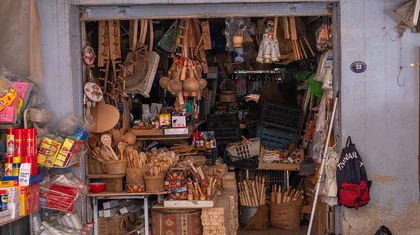
Every Friday from June to September, a stretch of Fawzi Al-Qawuqji Street in Jabal Amman turns into an open-air craft market. You will find olive-wood bowls, embroidered cushions, second-hand books and a lot of grilled corn, all with free entry.
Out of season, head to the Wild Jordan Center on Othman bin Affan Street. The shop sells verified Jordan River Foundation crafts, including Bani Hamida rugs woven by women in the Madaba hills, and the rooftop café looks straight at the Citadel.
- Neighborhood: Jabal Amman, near the First Circle.
- Cost: Souk Jara is free; crafts run 5–80 JOD (~$7–113 USD).
- Hours: Souk Jara, Fridays 10am–8pm, June–September. Wild Jordan, daily 9am–10pm.
- Getting there: 10 minutes on foot from the First Circle, or 2 JOD by taxi from downtown.
Insider tip: Get to Souk Jara before 11am. By 1pm the lanes are packed and the best ceramics are gone. Bring small notes — most stallholders struggle to break a 50 JOD bill.
6. Iraq Al-Amir Women's Cooperative
Thirty kilometres southwest of Amman, a village cooperative run by local women produces handmade paper, pottery and mosaics. You can join a short workshop on site, and the money goes directly to the households that make the pieces.
The setting is half the reason to come. The cooperative sits near Qasr al-Abd, a Hellenistic palace from the 2nd century BC built from massive limestone blocks, with almost no other visitors.
- Neighborhood: Iraq Al-Amir village, Wadi Seer district, about 35 minutes from central Amman.
- Cost: Workshops 15–25 JOD (~$21–35 USD); paper and ceramics from 3 JOD.
- Hours: Weekdays roughly 9am–4pm; call ahead so the women can set up.
- Getting there: Careem is 12–18 JOD each way (~$17–25 USD), or join a half-day tour from the city.
Insider tip: Go on a weekday morning when production is actually running. On Fridays you get the shop but not the workshop, and the palace site is at its hottest by noon.
7. Optional Add-On: Al-Salt Heritage Town
If you have a spare half-day, Al-Salt is 40 minutes northwest and became a UNESCO World Heritage Site in 2021. The old town is a tight grid of yellow stone Ottoman houses, small craft shops and a restored merchant's home, the Abu Jaber Museum.
- Neighborhood: Al-Salt old town, around Hammam Street.
- Cost: Abu Jaber Museum around 2 JOD (~$3 USD); walking the old town is free.
- Best time: Saturday morning, when the market street is busiest.
- Getting there: JETT coaches from Abdali station for about 2 JOD (~$3 USD), or a 12–15 JOD taxi.
Insider tip: Follow the painted "Historic Salt" route markers rather than your phone map — the lanes dead-end constantly and the signs are far more reliable.
Where to Eat and Drink Nearby
Hashem Restaurant (King Faisal Street, downtown) is the city's most famous falafel counter and still cheap: falafel, hummus and fuul for around 4–6 JOD (~$6–8 USD) per person. It opens around 6am and runs past midnight, with plastic chairs on the pavement.
Al Quds Restaurant (King Hussein Street) does a properly generous hummus with lamb and pine nuts for about 5–8 JOD (~$7–11 USD). It is a two-minute walk from the Roman Theatre and far better value than the tourist restaurants facing the plaza.
Habibah Sweets (Al-Hashemi Street) serves the city's benchmark kunafa, warm and salty-sweet, for 1.50–2.50 JOD (~$2–3.50 USD) a portion. For coffee afterwards, Rumi Café in Jabal al-Weibdeh charges 2.50–3.50 JOD and has a courtyard worth lingering in.
Practical Logistics and Budget Tips
- Buy the Jordan Pass before you fly. The 70 JOD version (~$99 USD) waives your visa fee and covers the Citadel, Roman Theatre and Petra. It pays for itself on day one.
- Use Careem, not street taxis, for cross-town trips. The price is shown upfront and downtown to Weibdeh rarely costs more than 3 JOD. White service taxis are shared, so they are cheaper but slower.
- Walk the downtown core. The Citadel, Roman Theatre, Hashemite Plaza and the gold souk all sit within 1.5 kilometres of each other, but the streets are steep. Wear shoes with grip.
- Carry cash. Workshops and small craft stalls are often cash-only, and ATMs near the Citadel run out on Fridays.
- Ask where the mosaic came from. Plenty of "handmade" pieces sold near major sites are machine-cut and imported. Buy from cooperatives or the Jordan River Foundation shop if authenticity matters to you.
- Skip the fixed-price tourist buffets around Hashemite Plaza, which charge 20–25 JOD for food that costs a third of that two streets away.
Frequently Asked Questions
How much does it cost to visit the Amman Citadel?
Entry is 3 JOD (about $4.20 USD) for foreign visitors, and a combined ticket with the Roman Theatre costs 6 JOD. The Jordan Pass covers both, so it is free at the gate if you already bought one.
Are there artisan workshops in Amman I can join without booking far ahead?
Yes. Beit Sitti usually has space if you call three or four days ahead, and the Iraq Al-Amir cooperative can arrange a short session with a day's notice. Weekend slots in spring fill up fastest.
What is the best day to see the craft markets in Amman?
Friday, between June and September, when Souk Jara runs from 10am to 8pm in Jabal Amman. Note that most galleries, including Darat al Funun, close on Fridays, so plan your Citadel and museum visits for other days.
How do I get between the Citadel and Jabal al-Weibdeh?
The two are about 3 kilometres apart and a Careem ride takes 10 minutes for 2–3 JOD. Walking takes 30 minutes uphill, which is pleasant in the evening but punishing at midday in summer.