
The Faroe Islands do not do blockbuster museums or velvet-rope clubs. The art scene fits into converted warehouses, schoolrooms, and front rooms, while the nightlife often means a back room with a local band and a fridge full of beer. If you want galleries and private-club energy, base yourself in Tórshavn and take day trips.
This is a small country with short opening hours and weather that changes fast. Many galleries close on Sundays and in winter, and buses thin out on weekends. The reward for planning around that is real conversation with artists, gallerists, and bartenders who will point you to the next room.
At-a-Glance Snapshot
- Best time to visit: May to early September for long days and reliable gallery hours; late September for fewer crowds, but call ahead.
- Typical daily budget: DKK 700–1,200 (~$100–$175) for a midrange day; DKK 450 (~$65) if you self-cater and use free city buses.
- Local transport style: Walk central Tórshavn, use free city buses, and take SSL intercity buses or ferries for village studios. Rent a car for one or two days if you want cliff-side stops.
- General vibe: Low-key, weather-proof, and word-of-mouth. Ask at a gallery or bar and you will get the next address.
1. Listasavn Føroya: The National Gallery That Makes the Small Rooms Make Sense
Start here, even though it is not secret. The National Gallery sits in Gundadalur and holds the country’s best collection of Faroese landscapes and modern art. It gives you the visual language for every tiny gallery you will see later.
Unlimited High-Speed International Travel eSIM
Connect in seconds across 180+ destinations. Instant QR code activation with zero roaming surcharges.

The building is calm, the labels are in Faroese and English, and the permanent collection is stronger than the temporary shows. Give it 90 minutes, not a full afternoon.
- Neighborhood: Gundadalur, Tórshavn, a 10-minute walk from Tinganes.
- Cost: About DKK 90 (~$13) for adults; check the desk for student and child rates.
- Best time: Tuesday to Sunday, 11:00–17:00; go before noon on weekdays. Closed Mondays.
- How to get there: Walk from Vaglið or take the free Tórshavn city bus toward Gundadalur.
Insider tip: Go upstairs first. The older landscape rooms are easy to rush, but they explain why so many local artists are obsessed with weather, sea light, and small houses.
2. Steinprent: A Working Print Studio With Ink on the Floor
Steinprent is a print workshop and gallery near Tórshavn’s harbor, not a polished museum. You may see presses, drying racks, and an artist pulling proofs. That is the point: it is a working room, and visitors are usually welcome to look.
Prints range from small affordable pieces to larger editions. This is the best place for an original souvenir that is not a puffin magnet. Ask before photographing works or the artist at the press.
- Neighborhood: Áarvegur and the harbor edge, central Tórshavn.
- Cost: Free entry; prints from about DKK 300 (~$45), larger works DKK 2,500 (~$360) and up.
- Best time: Weekdays 10:00–16:00; hours can shift, so check the door sign or call ahead.
- How to get there: A 5-minute walk from Vaglið square along the harbor.
Insider tip: Do not ask for a discount on a numbered print. Ask if there is an unframed proof or a smaller edition instead. That is the local way to buy without insulting the maker.
3. Norðurlandahúsið: The Nordic House’s Free Gallery and Flyer Board
The Nordic House sits on a hill above Tórshavn with a grass roof and a small, free exhibition space. Shows rotate between Faroese and Nordic artists, and the building also hosts concerts, readings, and film nights. It feels like a cultural living room.
The gallery is not huge, so pair it with the library and café. The real find is the notice board by the entrance, where small gigs and private events are posted before they hit social media.
- Neighborhood: Norðari Ringvegur, a 15-minute uphill walk from central Tórshavn.
- Cost: Free for exhibitions; concerts often DKK 100–250 (~$15–$36).
- Best time: Weekday afternoons; check the event calendar for evening shows.
- How to get there: Walk uphill from the center or take a city bus toward Norðari Ringvegur.
Insider tip: Photograph the flyer board. That is where you find the week’s word-of-mouth gigs, often in spaces that never appear on tourist lists.
4. Galleri Focus: The Small Commercial Room With Back-Room Racks
Galleri Focus is a compact commercial gallery in central Tórshavn, a short walk from Vaglið. It shows rotating local artists, from paintings to small sculptures, and the person behind the desk is usually happy to talk about who made what.
The front room gets the wall pieces. The back room often holds unframed works and flat files. It is not a major museum, and that is why it works: you can buy a real piece without a gallery performance.
- Neighborhood: Central Tórshavn, about 2 minutes from Vaglið square.
- Cost: Free entry; small works from about DKK 500 (~$72).
- Best time: Weekdays 10:00–17:00, Saturday 10:00–14:00; winter hours are shorter.
- How to get there: Walk from the harbor; city buses stop at Vaglið.
Insider tip: Ask to see the flat files. The best small prints are often kept out of the light, not hung on the wall.
5. Sirkus Bar: Tórshavn’s Back-Room Music Room
Sirkus Bar is a tiny bar on Vaglið with dark wood, local beer, and posters for gigs that may or may not start on time. On weekends it becomes the closest thing Tórshavn has to a private club, with live music in the back and a crowd of musicians, artists, and regulars.
There is usually no cover. You order at the counter, pay per round, and stand where you can. Early evening is quiet and good for conversation; after 22:00 it gets loud and loose.
- Neighborhood: Vaglið, central Tórshavn.
- Cost: No cover most nights; beer DKK 70–90 (~$10–$13).
- Best time: Thursday to Saturday after 21:00; live sets often start late.
- How to get there: Walk from the harbor or take any free city bus to Vaglið.
Insider tip: Ask the bartender who is playing and what time they actually go on. That one question gets you more useful info than any tourist map.
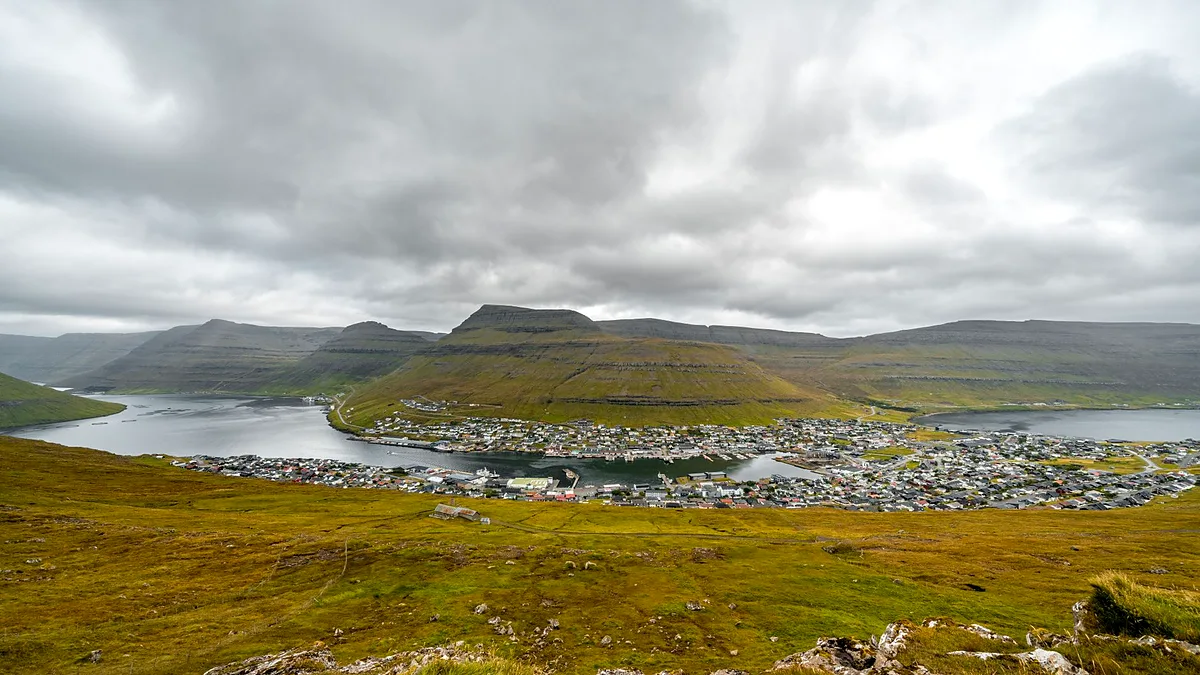
6. Klaksvík’s Cliff-Side Art Room
Klaksvík sits on Borðoy under steep mountains, and the town’s volunteer-run gallery is a good reason to leave Tórshavn. It is a small room with changing shows by Faroese artists, often run by the local art association rather than a professional staff.
Check hours before you go, because volunteer galleries open when someone can cover the desk. Even if it is closed, the harbor walk and the Klakkur hike make the trip worthwhile. This is the cliff-side art stop, not a shopping stop.
- Neighborhood: Klaksvík town center, a short walk from the harbor.
- Cost: Free; some shows ask for a DKK 50 (~$7) donation.
- Best time: Weekday afternoons; call or check local listings first.
- How to get there: SSL bus from Tórshavn via the Eysturoy tunnel, or drive; about 1 hour 15 minutes to 1 hour 30 minutes.
Insider tip: Do not make the gallery your only stop. If the door is locked, check the notice board for a nearby studio open by appointment, then go hike Klakkur while you wait.
Where to Eat and Drink Nearby
Hamborgarastovan
A local burger spot in central Tórshavn that does fish burgers and beef burgers without fuss. It is good for lunch before gallery hours and cheaper than the harbor seafood rooms. Expect DKK 95–150 (~$14–$22) for a burger and a drink.
Áarstova
A traditional Faroese restaurant in an old house, with lamb, fish, and root vegetables. This is a splurge, not a daily stop: set menus run about DKK 350–450 (~$50–$65). Book ahead for dinner, especially in summer.
Kaffihúsið
A central café for coffee and cake between stops. Coffee is about DKK 40–50 (~$6–$7), and the cakes are better than the sandwiches. It is a useful rain shelter when the weather turns.
Practical Logistics and Budget Tips
Tórshavn’s city buses are free, so use them for the National Gallery and the Nordic House. For intercity travel, buy SSL point-to-point tickets through the app or at the terminal; there is no single tourist pass that pays off for a short trip.
A rental car makes sense for one or two days if you want village studios and cliff stops. Expect DKK 400–700 (~$58–$100) per day plus fuel and tunnel tolls. Book early in summer, and check whether the car can use the subsea tunnels.
Many small galleries are closed on Sundays and in winter. Email or check Facebook before crossing an island. The Faroese art scene runs on part-time hours, not museum schedules.
What to skip: the packaged Viking dinner shows if you want real local food, and the souvenir shops selling imported puffin merchandise. Also skip Múlafossur at midday in July if you want a photo without a crowd.
Honest heads-up: private clubs in the Faroes are not a tourist product. Do not expect a secret door and a password. Expect a bar back room, a Facebook event, and a local who invites you because you asked politely.
Frequently Asked Questions
Are there free galleries in Tórshavn?
Yes. Norðurlandahúsið, Steinprent, and Galleri Focus are free to enter, while the National Gallery charges about DKK 90 (~$13). Check seasonal hours before you go.
Can tourists get into Faroese private clubs?
Mostly no, and that is fine. The scene runs on invites and small bar back rooms, so start at Sirkus Bar or a gallery opening and ask what is on that week.
Do I need a car to see cliff-side galleries?
Not for Tórshavn, but a car helps for village studios in Klaksvík and other outlying areas. Buses and ferries work, but weekend schedules are thin.
What should I pack for gallery-hopping in the Faroes?
Layers, a waterproof shell, and shoes with grip. Weather changes fast, and many small galleries are in converted houses with uneven steps.