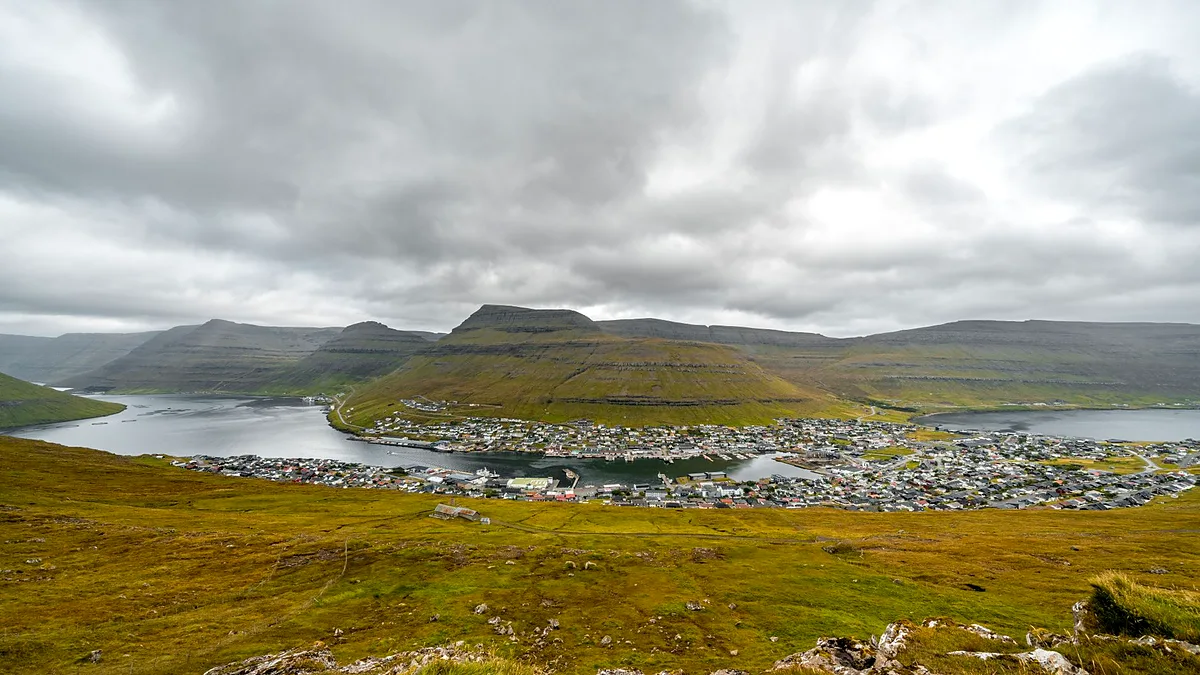

Eighteen islands, 54,000 people, and more sheep than residents. The Faroe Islands sit in the North Atlantic between Iceland and Scotland, and the thing that surprises most first-timers is the quiet — a single-lane road with grass growing down the middle, a village of twelve houses, nobody in your rear-view mirror for twenty minutes.
The second surprise is the bill. The Faroes have a reputation for being brutally expensive, and a sit-down dinner really does run 250–350 DKK (~$36–51). But the parts that feel luxurious — the empty cliff road, the hot tub looking down at a fjord, the grass roof over your head — are free or close to it.
Plan on 700–900 DKK (~$100–130) a day if you self-cater, or 1,400–1,800 DKK (~$200–260) if you want a hotel room and one proper restaurant meal. This guide is for people who would rather spend on the boat trip than the hotel minibar.
Unlimited High-Speed International Travel eSIM
Connect in seconds across 180+ destinations. Instant QR code activation with zero roaming surcharges.

Faroe Islands at a Glance
- Best time to go: mid-May to early September for puffins and 20-hour daylight; late May and early June beat July on both price and crowds.
- Daily budget: 700–1,800 DKK (~$100–260) per person, depending on how often you eat out.
- Getting around: a small rental car at 450–700 DKK (~$65–100) a day, free city buses in Tórshavn, and inter-island coaches.
- Money: the Faroese króna, pegged 1:1 to the Danish krone. Cards work almost everywhere, including village petrol pumps.
- Vibe: slow and weather-led. You will change the day's plan at breakfast because of one cloud.
Tinganes: the turf-roof lanes of Tórshavn
Tórshavn is one of the smallest capitals on earth, and its old quarter, Tinganes, is a peninsula of tarred red timber houses with grass on top. The Faroese parliament, the Løgting, has been meeting on this spit of rock since roughly 825 AD, which makes it one of the oldest in the world.
The houses are still lived in, so treat the lanes as someone's street rather than a film set. Ten minutes uphill, the 16th-century fort at Skansin gives you a free panorama of the harbour and the ferry to Suðuroy.
- Where: Tinganes peninsula, a 5-minute walk from the harbour bus terminal
- Cost: free; the National Museum nearby is 75 DKK (~$11)
- Best time: before 09:00 or after 20:00 in summer, when the light is long and the streets empty out
- Getting there: Tórshavn's city buses are free — hop on any route heading to Steinatún
Insider tip: keep walking past the Løgting to the far tip of the peninsula. Nearly everyone photographs the first red house and turns back, and there is a bench at the end with open sea on three sides.
Kirkjubøur: a 900-year-old farmhouse under grass
Fifteen minutes south along the coast, Kirkjubøur was the islands' medieval power centre. The ruins of Magnus Cathedral still stand unfinished and open to the sky, black basalt walls with grass growing in the window ledges, and entry is free.
Beside it sits Kirkjubøargarður, a log farmhouse the Patursson family has occupied for 17 generations — by most counts the oldest inhabited wooden house in Europe. The smoke-blackened front room, Roykstovan, opens for short summer hours only.
- Where: Kirkjubøur, 12 km south of Tórshavn
- Cost: ruins and beach free; farmhouse around 60 DKK (~$9), posted at the door
- Best time: 14:00–17:00 for light on the cathedral walls; roughly June to August for the house
- Getting there: the free city bus runs a handful of times a day from Steinatún — check the return time or you are walking 12 km
Insider tip: walk three minutes past the ruins to the black-sand bay. It is the part everyone skips, and you will usually have it entirely to yourself.
Gásadalur and Múlafossur: the waterfall over the edge
Múlafossur is the shot you have seen a hundred times — a stream tipping off a cliff straight into the Atlantic, with a hamlet of seven houses behind it. Until a tunnel was drilled in 2004, Gásadalur had no road link at all, and standing there you understand why.
It costs nothing to visit, which is also why it is the one spot in the Faroes where a coach party might appear in July. Go late.
- Where: Gásadalur, Vágar, 20 minutes' drive from the airport
- Cost: free; coffee in the old schoolhouse café is about 45 DKK (~$6.50)
- Best time: 20:00–23:00 in June and July, when the sun only grazes the horizon
- Getting there: a couple of village buses run from Sørvágur daily; realistically this is why you rent a car
Insider tip: do not scramble down to the rocks beneath the falls. The spray keeps them slick and the swell picks up fast — the signed path 150 metres above gives you the better angle anyway.
Trælanípa and Sørvágsvatn: the floating lake hike
Sørvágsvatn sits 30 metres above sea level and hangs over the cliffs at Trælanípa, so from the right angle the lake appears to float above the ocean. The two-hour round walk to the viewpoint is the most photographed hike in the country.
You pay for it now: 200 DKK (~$29) per adult at the gate, going to the farmers who own the grazing land. Fair enough, but it is not refundable if the weather turns.
- Where: trailhead on Route 10 between Miðvágur and Sandavágur, Vágar
- Cost: 200 DKK (~$29) per adult, card reader at the gate, no cash needed
- Best time: after 18:00 for fewer people and light from the right direction
- Getting there: car only, 15 minutes from the airport
Insider tip: check the cloud forecast before you tap your card. In fog you walk 7 km of bog for a view of grey. July and August midges are vicious, so buy a head net at Bónus for roughly 30 DKK (~$4.50).
Gjógv and the tunnel under the Atlantic
Gjógv, on Eysturoy's north tip, is built around a natural sea-filled gorge that serves as the village harbour — a stone slipway, a dozen grass-roofed houses, and a cliff path above it. It is the Faroes in miniature, and walking around it costs nothing.
The drive is half the point. The Eysturoy subsea tunnel has a roundabout midway under the ocean, lit by Tróndur Patursson's ring of figures holding hands, and it costs 100 DKK (~$14.50) each way.
- Where: Gjógv, Eysturoy, about 75 minutes' drive from Tórshavn
- Cost: village free; tunnel 100 DKK (~$14.50) each way; coffee at Gjáargarður around 45 DKK
- Best time: before 11:00 or after 17:00, when the day-trippers have thinned out
- Getting there: drive the tunnel, or take the free Streymoy–Eysturoy bridge and add 30 minutes to save 200 DKK round trip
Insider tip: take the old fjord road back through Eiði instead of the tunnel. You get the Risin and Kellingin sea stacks from the shoreline and it does not cost a króna.
Vestmanna bird cliffs: the splurge that earns it
A two-hour boat from Vestmanna harbour runs beneath 500-metre cliffs, into sea caves and past ledges thick with puffins, guillemots and razorbills. At 450–495 DKK (~$65–72) it is the priciest thing in this guide, and the one I would book first.
Be realistic about the water. The North Atlantic is not a lake, the boats are small, and sailings get cancelled in high wind — so book early in your trip and leave room to be rebooked.
- Where: Vestmanna harbour, west coast of Streymoy, 35 minutes from Tórshavn
- Cost: 450–495 DKK (~$65–72) per adult
- Best time: the morning departure, usually calmer and emptier
- Getting there: drive; the coach timetable does not line up reliably with the boats
Insider tip: bring binoculars. The puffins are the size of a teapot and stay well below deck level, and the crew's blankets only cover so much.
Where to eat and drink nearby
Fiskastykkið in Tórshavn's old fish factory on the harbour is where locals go for a working lunch. Fish soup is around 90 DKK (~$13) and the pan-fried catch of the day with potatoes lands at 120–180 DKK (~$17–26). The room is a canteen with shared tables, and that is exactly the point.
Áarstova, in a 200-year-old timber house near the harbour, is the place to spend your one big dinner. Order the lamb or the skerpikjøt (wind-dried mutton) and expect 250–320 DKK (~$36–46) for a main, or about 450 DKK (~$65) for three courses.
Sirkus Bar on the square is the closest Tórshavn gets to a scene — craft beer at 80–95 DKK (~$12–14) a pour, light plates, and a crowd that arrives late. It is also the cheapest way to meet Faroese people rather than other tourists.
For everything else, Bónus in the SMS shopping centre is the money-saver: bread, cheese, smoked salmon, skyr and a Thermos flask of coffee will cover breakfast and lunch for about 150–200 DKK (~$22–29) a day.
Practical logistics and budget tips
Rent the car at Vágar Airport and book four to six weeks ahead for June through August, when the small fleets sell out. A basic hatchback handles every paved road here; you do not need four-wheel drive, and the extra height just costs you fuel.
Inside Tórshavn, the red city buses are free — no ticket, no card, just get on. Long-distance coaches are reasonable (Tórshavn to Klaksvík is roughly 90 DKK / ~$13), and the airport bus into town is about the same.
- Alcohol: buy it on arrival at Vágar airport duty-free. The state monopoly shops are few, expensive, and closed at awkward hours.
- Tolls: the Eysturoy tunnel is 100 DKK each way and the Sandoy tunnel around 175 DKK. Budget 300–500 DKK if you are island-hopping, or use the free bridges.
- Helicopter: Atlantic Airways runs subsidised flights to outlying islands for roughly 300–500 DKK a seat, released a few weeks out with locals first. Cheaper than the boat tour and a bigger thrill.
- What to skip: the packaged sightseeing-bus day tours at 600–900 DKK — you can drive the same route for a fraction of it, on your own clock.
- Honest heads-up: summer bed capacity is genuinely small, so July accommodation in Tórshavn sells out weeks ahead. Fog also closes mountain roads with no notice.
| Typical cost | DKK | Approx. USD |
|---|---|---|
| Guesthouse double, Tórshavn | 850–1,200 | $123–174 |
| Small rental car, per day | 450–700 | $65–100 |
| Petrol, per litre | 13–14 | $1.90–2.00 |
| Restaurant main course | 200–320 | $29–46 |
| Coffee / draft beer | 45 / 80 | $6.50 / $11.60 |
| Bónus groceries, per day | 150–200 | $22–29 |
| Paid hike (Trælanípa) | 200 | $29 |
Frequently Asked Questions
How much does a trip to the Faroe Islands cost per day?
Travellers who cook and stay in guesthouses or campsites spend about 700–900 DKK (~$100–130) a day. Add a hotel room and a restaurant dinner and you land at 1,400–1,800 DKK (~$200–260).
Do you need a rental car in the Faroe Islands?
Not for Tórshavn, where the city buses are free and the old town is walkable. Yes if you want the cliffs and villages, because a small car at 450–700 DKK (~$65–100) a day opens up the whole road network.
When is the best time to see puffins in the Faroe Islands?
Puffins nest from roughly early May to mid-August, with the biggest colonies at Mykines and along the Vestmanna cliffs. Late May and June give you near-endless daylight with noticeably fewer visitors than July.
Are the Faroe Islands cheaper than Iceland?
Somewhat cheaper on food and clearly cheaper on accommodation outside Tórshavn. Both are pricey by European standards, but the Faroes have far fewer paid attractions — the landscape itself is the ticket.