
Cape Town has a reputation problem. Everyone assumes it is expensive, and the five-star hotels clinging to the Atlantic Seaboard are happy to keep that myth alive. But the city's best days cost almost nothing: a sunrise on Lion's Head, a R60 toll road that out-pretties most paid viewpoints in Europe, and a plate of snoek and chips eaten off a harbour wall.
The trick is knowing which splurges are worth it and which are pure tourist tax. This guide splits it that way. You will spend real money on three or four things, then coast through the rest on free hikes, cheap buses and produce markets that feel far more exclusive than they are.
Prices below are in South African rand with rough US dollar conversions at around R18.5 to the dollar.
Unlimited High-Speed International Travel eSIM
Connect in seconds across 180+ destinations. Instant QR code activation with zero roaming surcharges.

- Best time to visit: Late February to May, or September to November. Warm, dry, and 30–40% cheaper than the December/January crush.
- Typical daily budget: R1,100–1,900 (~$60–105) per person, covering a mid-range guesthouse, transport, food and one paid activity.
- Transport style: MyCiTi buses in the city bowl, Bolt or Uber for short hops, and one day of car hire for the peninsula.
- Vibe: Big-mountain scenery, small-town prices. Dress down, eat well, walk a lot.
1. Table Mountain: walk up, cable car down
The cableway return ticket runs about R420 (~$23) for adults, and the queue in peak season can eat two hours of your morning. The smarter play is to hike Platteklip Gorge for free — it is a steep, relentless staircase of a trail, roughly 1.5 to 2.5 hours depending on your legs — and then buy a one-way ticket down at the top station for around R240 (~$13).
It is genuinely hard work, not a gentle stroll, but you get the same summit photos, the same view over the City Bowl and the Atlantic, and you save enough for a proper dinner. If the wind is howling, the cableway shuts and hikers get blown around, so check the forecast before committing.
- Neighbourhood: Table Mountain National Park, trailhead off Tafelberg Road.
- Cost: Free to hike; R240 (~$13) for the one-way cable car down.
- Best time: Start by 7am. Earlier means cooler air and shorter queues.
- Getting there: MyCiTi bus to Kloof Nek, then a 20-minute walk up Tafelberg Road.
Insider tip: Buy the down-ticket at the top station kiosk, not online in advance. If clouds roll in and you end up walking back down, you have not wasted a cent.
2. Lion's Head at sunrise or full moon
This is the best free experience in Cape Town and it is not close. The spiral path takes most people 45 minutes to an hour up, includes a few chains and steel ladders near the top, and delivers a 360-degree view of the city waking up. Go at sunrise in summer (around 6:30am) or join the full-moon crowd — it is busy enough to feel safe without being unpleasant.
Skip it if you have vertigo. The final stretch is exposed, and people do freeze on the ladders. Signal Hill, five minutes away, gives you 80% of the view for 5% of the effort, plus a free sunset spot with paragliders landing overhead.
- Neighbourhood: Signal Hill / Lion's Head, above Bantry Bay.
- Cost: Free. Parking is free too.
- Best time: Sunrise, or 6pm onward for the full-moon walk (check the lunar calendar).
- Getting there: Bolt from the City Bowl is roughly R70–90 (~$4–5). Walking from Kloof Street takes 40 minutes.
Insider tip: Take a headlamp. Half the people doing the sunrise hike end up using their phone torch on the scrambles, and it shows.
3. Kirstenbosch, then a Constantia wine tasting
Kirstenbosch National Botanical Garden charges around R250 (~$14) and is worth every rand — especially the elevated Boomslang canopy walkway, which threads through the treetops and costs nothing extra. Go early, take a picnic, and give it two hours minimum.
Then head over Constantia Neck, 15 minutes away, where some of the oldest wine estates in the Southern Hemisphere pour tastings for less than a cocktail in London. Groot Constantia's historic cellar does a five-wine flight from about R130 (~$7), while Klein Constantia (home of the famous Vin de Constance) sits closer to R250–300. Book nothing. Just walk in, sit on the lawn, and order the cheapest flight on the list.
- Neighbourhood: Newlands / Constantia, southern suburbs.
- Cost: Kirstenbosch R250 (~$14); tastings R130–300 (~$7–16).
- Best time: Weekday mornings. Summer sunset concerts on Sundays are a local institution (roughly R250).
- Getting there: Bolt from the CBD is about R150–180 (~$8–10). A one-day hire car (~R450 / ~$24) works out cheaper for two or more people.
Insider tip: Ask for a table on the Groot Constantia terrace facing the vines rather than the indoor tasting bar. Same price, completely different afternoon.
4. Bo-Kaap on foot and the CBD's cheap eats
The candy-coloured houses on Wale and Chiappini Streets are free to look at, and the neighbourhood is best explored without a plan. Start at the Bo-Kaap Museum (around R30 / ~$2), then wander uphill towards Signal Hill for the best framing of Table Mountain. Remember these are people's homes — photographing straight through front windows is the fastest way to get a cold stare.
From there, walk 15 minutes downhill into the CBD. A free walking tour (pay a R100–200 tip) runs most mornings from Greenmarket Square and will save you hours of confused wandering later in the trip.
- Neighbourhood: Bo-Kaap, just west of the city centre.
- Cost: Free to walk; museum R30 (~$2).
- Best time: 8am–10am for soft light and empty streets.
- Getting there: A 15-minute walk from the MyCiTi Civic Centre station, or a short Bolt.
Insider tip: Skip the paid 'Cape Malay cooking experience' sold at the top of Wale Street. Walk two blocks to Biesmiellah instead and eat the same food for a fifth of the price.
5. Zeitz MOCAA and the Silo District
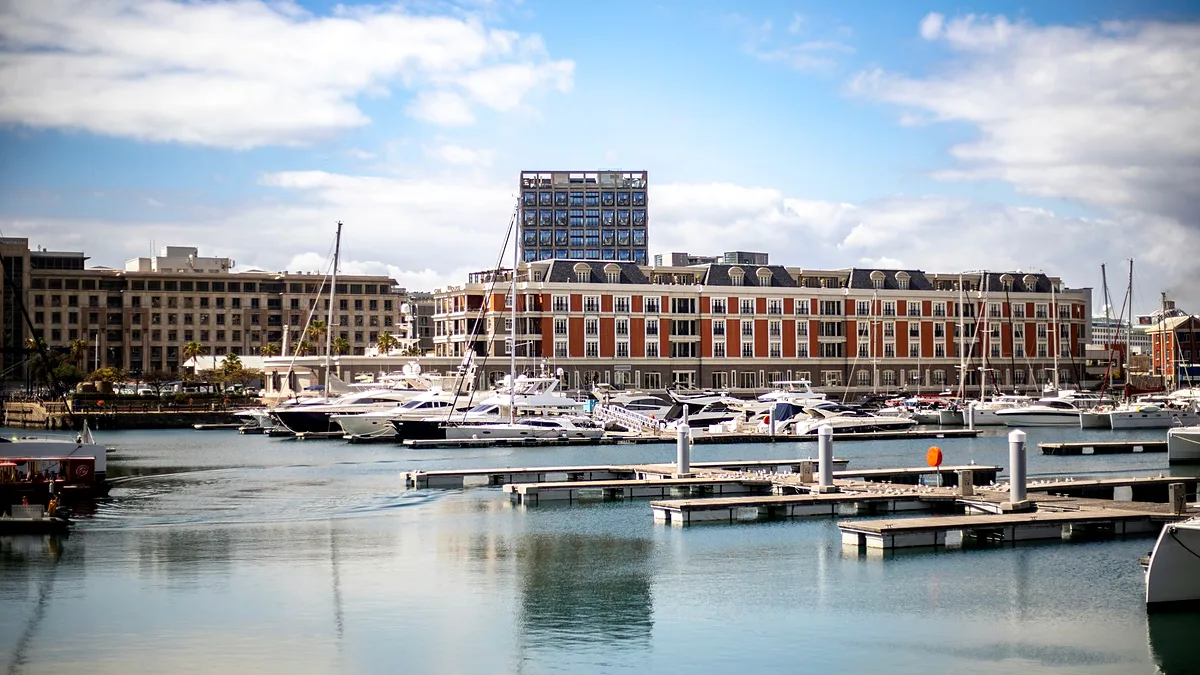
The converted grain silo on the V&A Waterfront waterfront holds the biggest collection of contemporary African art on the continent, and the building alone justifies the ticket. Adult entry is around R250 (~$14); under-18s go free, and the museum runs reduced or free entry windows for African passport holders, so check the website before you pay. It is closed on Tuesdays.
Budget a full two hours, then walk the surrounding Silo District for free: the Battery Park playground, the rooftop viewpoints and the Waterfront swing bridge cost nothing. The Cape Wheel (around R150) is a skip — 15 minutes in a glass box for the price of a good lunch.
- Neighbourhood: Silo District, V&A Waterfront.
- Cost: R250 (~$14) adult entry.
- Best time: Right at 10am opening, before tour groups arrive.
- Getting there: MyCiTi bus routes 1 and 2 from the CBD drop you at the Waterfront in 15 minutes.
Insider tip: Eat before you arrive. Waterfront restaurant prices are roughly double what you will pay three kilometres inland.
6. Chapman's Peak Drive and the Deep South
The 9-kilometre cliff road between Hout Bay and Noordhoek costs about R61 (~$3.30) per car at the toll booth, and it is the single best value drive in the country. Pull into the designated lookouts, take the obligatory photo of the Sentinel, and carry on to Muizenberg where the water is warmer and the surf is beginner-friendly.
Group surf lessons with the long-running schools on Muizenberg Beach run R450–600 (~$24–33), board and wetsuit included. If you have no car, the Metrorail Southern Line from Cape Town to Muizenberg costs about R15–20 and takes 40 minutes; do it in daylight only and keep your phone out of sight.
- Neighbourhood: Hout Bay, Noordhoek, Muizenberg, Kalk Bay.
- Cost: R61 (~$3.30) toll; surf lesson R450–600 (~$24–33).
- Best time: Weekday mornings — the toll road jams badly on sunny Sundays.
- Getting there: Car hire or the Southern Line train to Muizenberg, then a Bolt to the toll road.
Insider tip: Park at Kalk Bay harbour afterwards and watch the seals bully the fishermen for scraps. Free entertainment, guaranteed.
7. Saturday markets in Woodstock and Granger Bay
The Neighbourgoods Market at the Old Biscuit Mill in Woodstock has become famous enough to be crowded, but entry is free and Saturdays from 9am to 2pm it is still the best single food crawl in the city. Think wood-fired pizza, biltong, oysters and a lot of excellent coffee, all eaten at shared trestle tables.
The Oranjezicht City Farm Market at Granger Bay is the calmer alternative — Saturday 8:15am to 2pm and Sunday 9am to 3pm, free entry, with a view of the harbour and produce from farms within 100 kilometres. Budget R100–150 (~$6–8) and you will eat very well.
- Neighbourhood: Woodstock (Old Biscuit Mill) and Granger Bay (OZCF).
- Cost: Free entry; budget R150 (~$8) for food and coffee.
- Best time: Arrive by 9am. By 11am the Old Biscuit Mill is shoulder-to-shoulder.
- Getting there: Bolt to Woodstock is about R80–100 (~$5); the Granger Bay market is a 15-minute walk from the Waterfront station.
Insider tip: Take cash. A few of the best stalls still run card machines that fail in the wind.
Where to Eat & Drink Nearby
Eastern Food Bazaar — CBD
A sprawling hall of Indian, Pakistani and Turkish counters on Longmarket Street where a generous plate of biryani or a stuffed naan costs R70–110 (~$4–6). It is loud, bright and open daily from about 10am to 9pm. This is the single best calorie-per-rand in the city centre.
Kalky's — Kalk Bay harbour
A scruffy institution serving snoek and chips with a view of the fishing boats for around R150 (~$8). Open daily from late morning; order at the counter, grab a plastic chair outside, and don't dress up. The queue moves fast.
Biesmiellah — Bo-Kaap
A halal Cape Malay restaurant on Wale Street where bobotie, denningvleis and koesisters come out for R100–160 (~$5–9) a plate. Closed on Sundays, so plan it for a weekday lunch. Sit upstairs by the window if you can.
Practical Logistics & Budget Tips
Get a MyCiTi card first
The myconnect card costs R35 (~$2) from any station kiosk, then you load cash and tap in. Fares in the City Bowl run R10–30 a trip, and the airport route to the Civic Centre is about R120 (~$6.50) — a fraction of the R350–450 an Uber will cost you. Buses stop around 10pm, so late nights are Bolt territory.
Know when a car is worth it
For the Cape Peninsula and the winelands, a one-day rental at roughly R450 (~$24) plus petrol beats four separate Ubers. For the City Bowl, Waterfront and Bo-Kaap, do not bother — parking is the real cost, not the car.
What a day actually costs
| Item | Cost (ZAR) | Approx. USD |
|---|---|---|
| myconnect transport card | R35 | ~$2 |
| Table Mountain cableway, one way | R240 | ~$13 |
| Kirstenbosch entry | R250 | ~$14 |
| Zeitz MOCAA entry | R250 | ~$14 |
| Wine tasting, Groot Constantia | from R130 | ~$7 |
| Surf lesson, Muizenberg | R450–600 | ~$24–33 |
| Saturday market entry | Free | $0 |
What to skip
The Cape Wheel, the V&A Waterfront's chain restaurants and any 'township tour' that drives past poverty without stopping. Also skip the cableway on a clear Saturday — go at opening or not at all. And ignore anyone at the cableway station offering to 'guide' you up the mountain for cash.
Honest heads-up
Do not leave anything visible in a parked car, including a phone cable. Do not walk on quiet streets after dark outside the busy City Bowl and Waterfront strips — take a Bolt, they are cheap. Tap water is safe to drink, and the load-shedding blackouts that once defined Cape Town have largely eased, but it's worth checking a schedule if you rely on power for work.
Where to sleep for less
Guesthouses in Tamboerskloof, Gardens and De Waterkant give you the same mountain views as the Waterfront for R1,200–1,800 (~$65–100) a night instead of R4,000-plus. Book direct by email and ask about a cash discount — it often works.
Frequently Asked Questions
Is Cape Town expensive to visit?
Not if you skip the obvious tourist traps. A comfortable day of hiking, markets, museums and good local food usually lands between R1,100 and R1,900 (~$60–105) per person including accommodation.
How much should I budget per day in Cape Town?
Backpackers can manage on R700–900 (~$38–49) a day with hostel dorms and self-catering. Add R400–600 a night for a private guesthouse room and you are firmly in the budget-luxury bracket.
Do I need a car in Cape Town?
Only if you want the Cape Peninsula or winelands in one go. The City Bowl, Bo-Kaap and Waterfront are quicker by MyCiTi bus or Bolt than by car, mostly because of parking.
When is the cheapest time to visit Cape Town?
May to August is the low season, with accommodation discounts of 30–50%, but expect rain and wind. Late February to April is the sweet spot: good weather, fewer crowds, and shoulder-season rates.