
Tbilisi is not Bali, and anyone who tells you otherwise has never tried to swim in the Mtkvari. There is no ocean, no rice-terrace sunrise, and no 30°C January. But if what you actually want from Bali is carved-wood architecture, courtyard guesthouses, cheap long-stay living and a food scene that rewards aimless wandering, Tbilisi hands you roughly 70% of that feeling for about a third of the money.
What you give up: beaches, tropical heat, and the specific social scene that makes Canggu feel like a floating coworking campus. What you get instead: a walkable capital where a decent one-bedroom flat costs less than a Bali hostel dorm, wine that predates most modern nations, and a metro ride for 1 lari (about $0.37). If your Bali plan was really "cheap living plus interesting streets," Tbilisi wins on pure math.
Side-by-Side Comparison Scorecard
| Feature | Bali | Tbilisi |
|---|---|---|
| Average Daily Cost (Stay + Meals) | $65–110 for a mid-range day in Canggu or Ubud (private room, three meals, scooter) | $40–65 for the same standard in Sololaki or Vera (guesthouse, three meals, metro + Bolt) |
| Atmosphere & Aesthetic | Tropical, temple gates, moss-covered stone, volcanic coast, constant scooter traffic | Layered ornament, carved wooden balconies, sulfur-bath domes, Art Nouveau, Soviet concrete |
| Crowd Density & Seasonality | Heavy July–August and mid-December in Canggu and central Ubud; quiet in Sidemen and Munduk | Busy May–June and September–October; genuinely empty January–February |
| Flight & Transit Accessibility | DPS airport; 16–20 hours from Europe with a stop, 14+ from the US East Coast | TBS airport; direct from most European hubs in 3–5 hours, clean metro, cheap Bolt rides |
| Best For | Surf, diving, yoga retreats, beach holidays, families with kids | Architecture walks, wine, food, month-long budget stays, mountain day trips |
Scenery & Atmosphere: How Similar Are They Really?
The "architectural twins" label is about ornament, not copies. Both places build with carved wood, layered roofs and courtyards that hide a private world behind a plain door. In Bali that means candi bentar split gates, meru towers and open-air bale pavilions. In Tbilisi it means Sololaki's vine-draped balconies, the leaning houses of Betlemi Street, and the brick domes of the Abanotubani sulfur baths.
Unlimited High-Speed International Travel eSIM
Connect in seconds across 180+ destinations. Instant QR code activation with zero roaming surcharges.

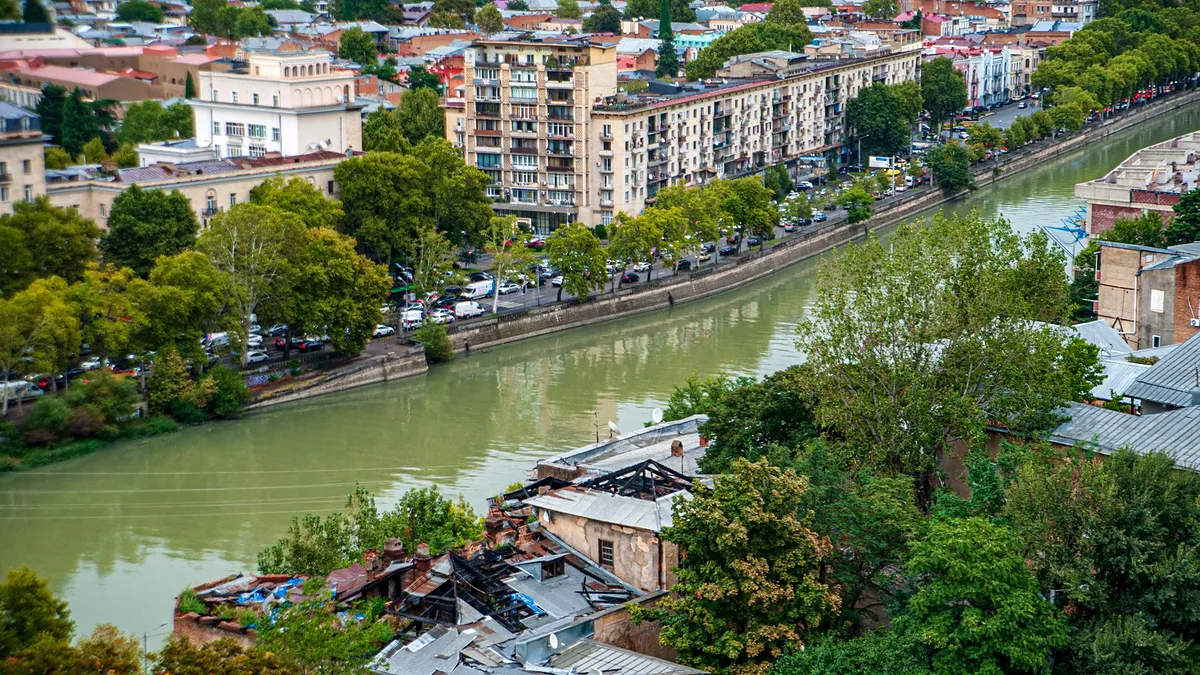
Where Bali gives you rice terraces and black-sand coastline, Tbilisi gives you a canyon in the middle of town. The Leghvtakhevi waterfall sits a five-minute walk from the Old Town, and the Narikala fortress cable car lifts you over the rooftops for 2.5 lari (~$0.90). It is a different kind of drama, built from cliffs and river rather than palms and surf.
Be honest about the grit. Tbilisi's pavements are uneven, stray dogs are common, and half the façades wear peeling Soviet plaster next to a freshly renovated wine bar. That contrast is the appeal, but it is not the manicured tropical ease Bali sells. If you need soft edges, this swap will irritate you.
The Wallet Test: Real Cost Breakdown
Here is where Tbilisi pulls ahead, and it is not close on housing. A private room with a pool in Canggu runs IDR 450,000–700,000 (~$28–45) a night, and a nicer Ubud guesthouse is $50–80. A boutique guesthouse in Sololaki costs GEL 90–150 (~$33–55) a night, and a one-bedroom flat in Vera rents for GEL 1,100–1,600 (~$400–590) per month.
Food is closer than you'd expect, because Bali's warungs are extraordinarily cheap. A nasi campur plate costs IDR 30,000–50,000 (~$2–3), though a Canggu café brunch is IDR 90,000–150,000 (~$6–10). In Tbilisi, khachapuri and a glass of wine set you back GEL 12–20 (~$4.50–7.50), and a full supra with friends lands around GEL 40–60 per person (~$15–22).
Drinks tilt clearly toward Georgia. A large Bintang in Bali is IDR 35,000 (~$2.20) and a Seminyak cocktail is IDR 120,000 (~$7.70). A good glass of Saperavi in Tbilisi is GEL 8–12 (~$3–4.50) and a proper cocktail on Aghmashenebeli Street runs GEL 20–28 (~$7.50–10.50).
Excursions flip the pattern. A Nusa Penida day trip in Bali costs $45–60 and the Mount Batur sunrise hike $35–50. A shared tour to David Gareji from Tbilisi is GEL 60–90 (~$22–33), Kazbegi is GEL 70–100 (~$26–37), and a marshrutka to Mtskheta is 2 lari (~$0.75). Transport is the quiet hero: the metro is 1 lari per ride with a Metromani card, and a Bolt across the centre is GEL 6–10 (~$2.20–3.70).
One overlooked win: Georgia grants many nationalities 365 days visa-free on arrival. Indonesia's tourist visa is 30 days, extendable once for about IDR 500,000 (~$32). For slow travellers, that single rule is worth more than any hotel discount.
Crowds, Authenticity, and Tourist Footprint
Bali's problem is concentration, not size. Canggu is genuinely saturated and central Ubud is a queue at 9am, but Sidemen, Munduk, Amed and West Bali National Park remain quietly wonderful. The island rewards anyone willing to drive two hours away from the Instagram radius.
Tbilisi's tourism is younger and smaller, so the spillover is easier to dodge. The Old Town and the Fabrika block on Egnate Ninoshvili Street absorb most visitors. Vera, Vake, Chugureti's backstreets and the courtyard blocks of Nadzaladevi are still local, and you can be the only foreigner in a bakery in Samgori at 8am.
Both places have hustle. In Bali it's the scooter rental upsell and the beach-club minimum spend. In Tbilisi it's the unmetered taxi at the airport and the padded bill on Rustaveli Avenue. Use Bolt, check the menu prices, and the annoyance disappears. Georgian hospitality itself is real — expect to be handed wine you didn't order and toasted by a stranger's grandfather.
How to Experience the Best of Tbilisi
Where to Stay
- Sololaki: the prettiest district, walkable to Liberty Square, GEL 90–150 (~$33–55) for a good guesthouse. Hilly and noisy at night.
- Avlabari: cheaper, on the red metro line, 10 minutes from the Old Town, more local and a little rough around the edges.
- Vera & Chugureti: café-and-coworking territory near Fabrika, a converted Soviet sewing factory. Best for solo travellers and remote workers.
- Vake: leafy and family-friendly, pricier, good for month-long stays.
Signature Activities That Rival Bali
Trade the Balinese spa for a private sulfur bath room in Abanotubani at GEL 60–100 per hour (~$22–37) — the scrub is aggressive and unforgettable. Walk Rustaveli Avenue for the Art Nouveau façades, then ride the funicular up Mtatsminda for GEL 3 (~$1.10) at sunset.
Do the day trip to Kazbegi via the Georgian Military Highway and hike to Gergeti Trinity Church. For wine, skip the tourist cellars and take a private driver to Kakheti (Sighnaghi and Telavi) for GEL 150–200 (~$55–74) for the day. Locals drink Saperavi and Rkatsiteli from qvevri clay jars, and the tastings are generous.
What to Order
- Khinkali: GEL 1–1.50 each (~$0.40–0.55). Order 8–10, hold by the twisted top, bite, slurp the broth, leave the knot.
- Adjaruli khachapuri: the boat-shaped one with egg and butter, GEL 12–18 (~$4.50–6.50). Stir it before you tear the crust.
- Chkmeruli: garlic chicken in a clay pot, best shared.
- Pkhali trio and lobio with mchadi cornbread for a lighter lunch.
- Tarkhun — the bright green tarragon lemonade. Try it at Lagidze Waters.
For value, Pasanauri (several branches) does solid khinkali at about GEL 1.20 each, and Sakhli #11 near the river serves a full spread for around GEL 40 per person (~$15).
Who Should Still Choose Bali?
Choose Bali if you want a beach. Tbilisi is landlocked, and the nearest sea is Batumi, five hours away by train for GEL 25–40 (~$9–15) — pebble shoreline, different vibe entirely. Choose Bali if you surf, dive, or want 30°C in February.
Bali also wins on wellness infrastructure and family travel. The yoga retreat network, the villa-with-pool rental market and the kids' clubs are mature in a way Tbilisi's handful of studios can't match. If you're already flying long-haul to Asia, the airfare is sunk cost and Bali is the sensible call.
And be warned about a Tbilisi winter. January hovers around 0°C with a damp wind, and cheap guesthouses can be cheap because the heating is weak. Book a place with verified central heating or go in May, June, September or October.
Frequently Asked Questions
Is Tbilisi actually cheaper than Bali?
Yes, decisively on housing, transport and wine. A comfortable mid-range day runs $40–65 in Tbilisi versus $65–110 in Canggu. Food is roughly comparable if you eat in tourist zones, but local Georgian canteens are cheaper than Canggu cafés.
Does Tbilisi have beaches or a tropical climate?
No. It has a continental climate: dry summers of 30–35°C in July and August, and winters near 0°C in January. The Black Sea coast at Batumi is about five hours by train for GEL 25–40 (~$9–15).
How long can I stay in Georgia visa-free?
Many nationalities receive 365 days on arrival — check Georgia's foreign ministry list before booking. That dwarfs Indonesia's 30-day tourist visa, extendable once for roughly IDR 500,000 (~$32).
Which is better for remote work, Tbilisi or Bali?
Tbilisi wins on cost, a GMT+4 time zone that overlaps European hours, and fibre internet at GEL 60–80 (~$22–30) per month. Bali wins on coworking culture, climate and community. Pick based on whether you value your bank balance or your morning swim.