
The Quick Verdict
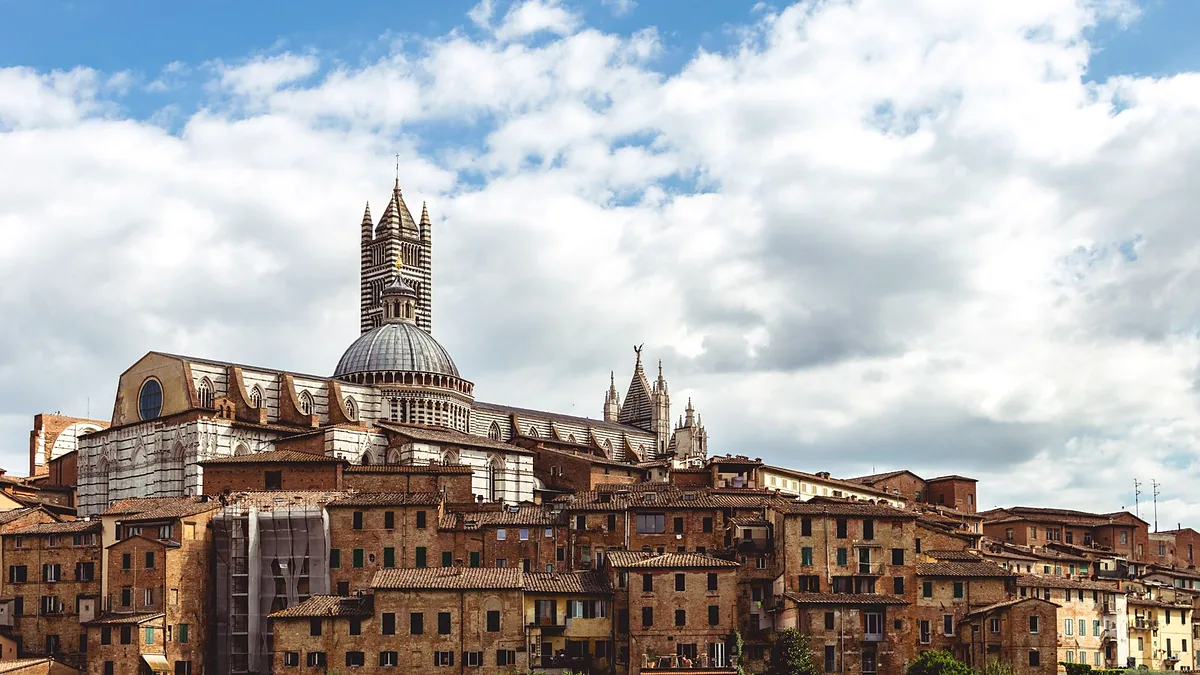
Siena is the closest thing Europe has to a Prague you can hear yourself think in. Both cities hand you a medieval maze of stone lanes, a skyline of towers and terracotta roofs, and a historic core protected end to end by UNESCO. Siena just does it at one-fortieth the scale, with far fewer tour groups and a much better glass of red at the end of the day.
Here is the honest trade. You give up Prague's big-city energy, its beer culture, its late nights and its direct flights from almost everywhere. You get silence, a 400-step tower climb with nobody queuing behind you, and evenings on Piazza del Campo after the day-trippers have gone. On money the two are closer than the "budget alternative" label suggests — Siena is cheaper only if you book outside the walls and eat away from the Campo.
Side-by-Side Comparison Scorecard
| Feature | Prague | Siena |
|---|---|---|
| Average Daily Cost (Stay + Meals) | €110–150 / ~$120–165 per person (mid-range double, two meals, drinks) | €120–170 / ~$130–185 per person; drops to €90–120 with a B&B just outside the walls |
| Atmosphere & Aesthetic | Grand Habsburg-Bohemian. Baroque spires, art nouveau cafés, a wide river and stone bridges. | Tuscan Gothic in brick and travertine. A shell-shaped piazza, steep alleys, olive-covered hills on the horizon. |
| Crowd Density & Seasonality | Around 8 million visitors a year. Charles Bridge is shoulder-to-shoulder from April to October. | Around 2 million. Packed 11am–4pm with Florence day-trippers, then near-empty by 6pm. Brutal around the Palio (2 July and 16 August). |
| Flight & Transit Accessibility | Direct flights from 150+ cities. Airport to Old Town in 30–45 minutes via bus 119 plus metro A. | No airport. Fly Florence (1h15 by bus), Pisa (~2h) or Rome (~3h). The train station sits 2km outside the walls. |
| Best For | First-timers, beer lovers, nightlife, Christmas markets, 4–5 day city breaks. | Couples, slow travellers, food and wine people, anyone doing Tuscany without a rental car. |
Scenery & Atmosphere: How Similar Are They Really?
Both cities deliver the same core pleasure: turning a corner, losing your bearings, and not minding. Prague's drama is vertical and northern — Gothic spires, a castle on the ridge, thirty baroque statues lining Charles Bridge, and the Vltava cutting a wide silver line through it all. Siena's is warmer and more enclosed, built across three hills that force every walk into a stairway.
Unlimited High-Speed International Travel eSIM
Connect in seconds across 180+ destinations. Instant QR code activation with zero roaming surcharges.

The centrepiece in Siena is Piazza del Campo, a brick-paved shell that tilts downhill toward the Palazzo Pubblico and the 102-metre Torre del Mangia. Sit on the slope at 8pm in September and you'll have most of it to yourself. Prague's equivalent, Old Town Square, is beautiful and almost never quiet.
There is one fair criticism of Siena: it is monochrome. Nearly everything is the same burnt sienna brick, and after three days some travellers find the palette repetitive. Prague's mix of styles, river light and hilltop views gives it more visual range. Siena wins on intimacy; Prague wins on variety.
The Wallet Test: Real Cost Breakdown
Prague is no longer the bargain it was a decade ago, but on food and drink it still undercuts Tuscany comfortably. A pub lunch of svíčková with bread dumplings costs 220–280 CZK (about €9–11 / $10–12), and a half-litre of Pilsner runs 55–75 CZK (€2.30–3 / $2.50–3.30). A mid-range double room in Vinohrady or Nové Město is €90–130 a night, though anywhere with an Old Town Square view jumps to €180–250.
Siena flips the script on drinks and flips it back on dinner. Espresso at a bar counter is €1.30, a glass of Chianti Classico €6–8, and a panino with wine for lunch €10–14. But an osteria dinner for two with a €20 bottle of house Chianti lands at €55–80, which is roughly 30–40% above a comparable Prague meal.
Lodging is where the swap gets interesting. A decent double inside Siena's walls is €120–180, but an agriturismo ten minutes out or a B&B just beyond Porta Camollia drops to €85–120 — often with breakfast and a view. Sightseeing is modest either way: Prague Castle's main circuit is 350 CZK (~€14 / $15), while Siena's Opa Si Pass covers the Duomo, Piccolomini Library, baptistery and Facciatone for about €15–20.
The single biggest money trap in Siena: restaurants with photographed menus ringing Piazza del Campo charge €18 for pici that costs €11 four streets away. Walk five minutes to Via Pantaneto, Piazza San Francesco or Sant'Ambrogio and the bill falls by a third.
Crowds, Authenticity, and Tourist Footprint
Prague's historic core has largely been handed over to visitors, and locals will tell you so. The people who actually live there now cluster in Vinohrady, Karlín, Letná and Žižkov — which is genuinely useful information, because it tells you where to sleep and where to eat. Charles Bridge between 10am and 6pm in July is a shuffle, not a stroll.
Siena has its own version of this problem, just smaller. The centro storico holds maybe 20,000 residents, and the seventeen contrade — neighbourhood districts with their own churches, museums and centuries-old rivalries — keep real community life running. The Palio is not staged for tourists; it is a civic argument with a horse race attached.
What Siena does suffer from is the Florence day-trip wave. Buses and trains dump thousands of people between 10:30 and 16:00, and the Campo feels like a queue for those hours. Stay overnight inside the walls and the city empties out beautifully at dinnertime. Visit in November, February or early March and you'll wonder where everyone went — though a handful of restaurants close in January.
How to Experience the Best of Siena
Where to Stay
- Terzo di Città — the south-west third around Via di Città and the Duomo. Quietest streets, best for couples, five minutes from the Campo.
- San Martino and Sant'Ambrogio — the south-east. More local, close to Piazza San Francesco and the Wednesday morning market around La Lizza.
- Camollia — north, near Porta Camollia and the Florence bus stops. Cheapest rooms, most authentic bars, and a 12-minute walk downhill to the centre (uphill on the way back).
- Skip hotels directly on Via Banchi di Sopra unless you like the sound of shopping crowds at 9am.
What to Do Instead of Charles Bridge
- Torre del Mangia — around €10 and roughly 400 steps, with timed entry and a 360° view over the Crete Senesi.
- The Facciatone — the Duomo's abandoned nave façade, now the best viewpoint in the city, included in the Opa Si Pass.
- Orto de' Pecci — a free community garden with a resident donkey and the postcard view of the tower.
- Santa Maria della Scala — the former hospital turned museum, and reliably near-empty even in August.
- Day trips — Monteriggioni by bus 130A (25 minutes, about €3), San Gimignano by bus 130 (1h15), or a half-day Chianti tour from Piazza Gramsci.
What to Order
- Pici alle briciole — thick hand-rolled pasta with breadcrumbs, garlic and olive oil. Siena's signature dish.
- Ribollita in winter, panzanella in summer — both are bread-based and both are better than they sound.
- Crostini neri — chicken liver on toast, the Tuscan answer to tapas.
- Cinta Senese salumi and pecorino di Pienza from a butcher or the market.
- Ricciarelli and panforte for the bus ride home; a glass of Vernaccia di San Gimignano while you wait.
Who Should Still Choose Prague?
Prague remains the better choice if you want a full week of city. It has museums, a river, several distinct neighbourhoods, live music and bars that stay open past 2am. Siena's core is genuinely finished in two or three days, and the surrounding countryside needs a car or patience with rural buses.
Choose Prague if you're travelling solo or in a group that likes late nights, if you're chasing Christmas markets in December, or if you fly from a city with no easy route to Florence or Pisa. Prague's direct-flight network is its most underrated advantage. And if beer matters to you, Siena simply cannot compete.
One sensible compromise: if you have ten days, do both. The Rapida bus from Florence to Siena takes 1 hour 15 minutes and costs around €9, making Tuscany an easy two-night add-on rather than a separate trip.
Frequently Asked Questions
Is Siena actually cheaper than Prague?
Not automatically. Siena's in-wall hotels and its restaurant dinners both run higher than Prague's. You save real money by booking a B&B just outside the walls (€85–120) or an agriturismo in the hills, and by eating two streets off Piazza del Campo. Do that and a Siena day lands 10–20% below a Prague day. Book a Campo-view room and eat on the piazza and Siena costs more.
Is Siena a good alternative to Prague for a medieval city break?
Yes, if what you want from Prague is the medieval architecture and the wandering rather than the nightlife, the beer or the big-city buzz. Siena's historic centre is denser, more intact and largely car-free, and it comes with a fraction of the crowd. It is a poor substitute if you want a five-day city with multiple districts and a river.
How many days do you need in Siena compared with Prague?
Two full days covers Siena comfortably: the Duomo, the Campo, the Torre, one museum and a long evening wander. Three or four days lets you add Monteriggioni, San Gimignano or a Chianti winery. Prague rewards four to five days. With a week, split it — Florence is 1 hour 15 minutes away on a direct bus.
How do you get to Siena without a car?
Fly into Florence and take the Rapida bus from the terminal near Santa Maria Novella; it takes about 1 hour 15 minutes and costs roughly €9. Trains also run from Florence but require a change at Empoli and take longer. Siena's station is 2km outside the walls — hop on a city bus to Piazza Gramsci or walk it in 25 minutes uphill. Pisa and Rome are reachable by train in about 2 and 3 hours.