
The Quick Verdict
Sarajevo is the closest thing Europe has to a Marrakech do-over, and it runs roughly 35–45% cheaper on a mid-range trip. Both cities grew up around a walled Ottoman bazaar. Both have cobbled lanes, minarets, courtyard houses, hammams and coffee served in small copper pots. Walk into either old town and the muscle memory is the same.
What you gain: breathing room, no haggling gauntlet, cold beer on tap, and a comfortable day that costs €60–75 instead of €100–130. What you sacrifice: scale, heat, the Atlas Mountains on the skyline, and the full postcard hit of a riad courtyard with a fountain. Sarajevo's Ottoman core is a few hundred metres across. Marrakech's medina is a 12-kilometre maze.
Side-by-Side Comparison Scorecard
| Feature | Marrakech | Sarajevo |
|---|---|---|
| Average Daily Cost (Stay + Meals) | €100–130 / ~$110–145 mid-range; €50–60 / ~$55–66 budget | €60–75 / ~$66–83 mid-range; €35–45 / ~$38–50 budget |
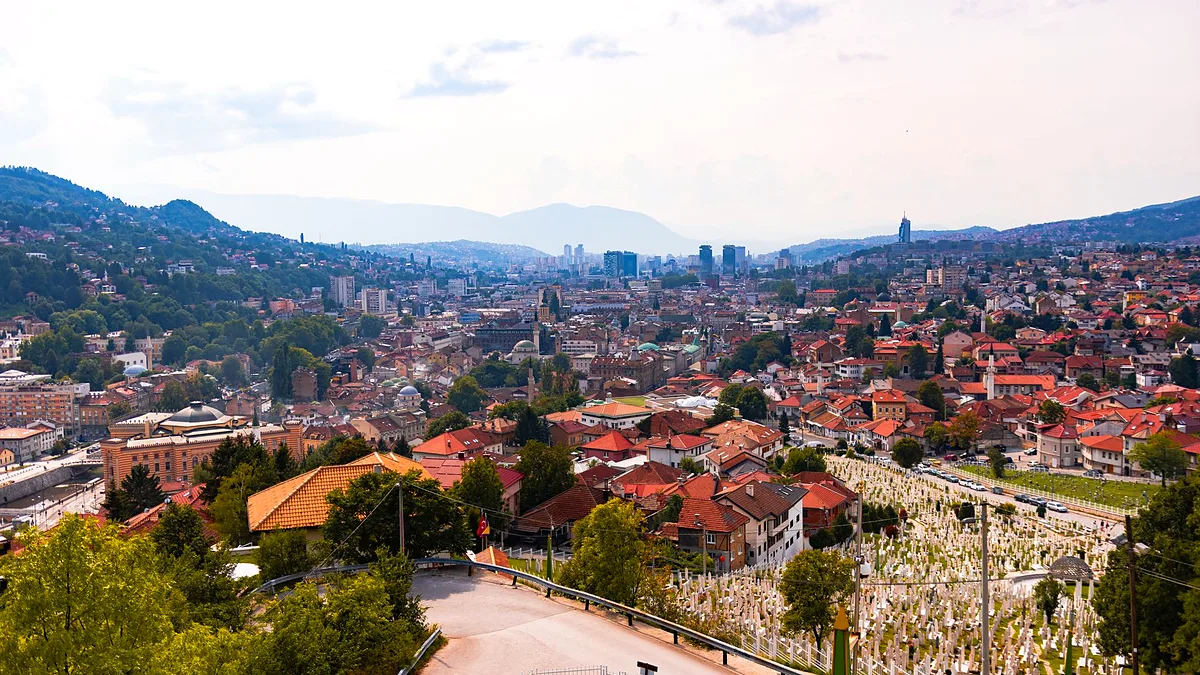
| Atmosphere & Aesthetic | Flat ochre medina, souks sorted by trade, riad courtyards with plunge pools, snow-capped Atlas backdrop | Valley city, Ottoman bazaar core under Austro-Hungarian facades, hillside fortresses, five centuries of architecture in 500 metres |
| Crowd Density & Seasonality | Peak October–April; roughly 3 million visitors a year; Jemaa el-Fnaa is shoulder-to-shoulder at dusk | Peak May–September; far thinner crowds year-round; November–February is cold, grey and smoggy |
| Flight & Transit Accessibility | Direct low-cost flights from most of Europe; 20 minutes from RAK to the medina; walkable core | Direct flights from around 20 European cities; 20 minutes from SJJ to Baščaršija; trams, cheap taxis, walkable core |
| Best For | First-time Morocco, photographers, riad romance, desert and Atlas day trips | Budget culture trips, food-and-coffee people, slow three-day city breaks |
Scenery & Atmosphere: How Similar Are They Really?
Marrakech is horizontal. You enter through a gate in a nine-metre ochre wall and the city flattens out in front of you: the Koutoubia's 77-metre minaret on the skyline, souks radiating off Jemaa el-Fnaa, and the Atlas range visible on clear winter mornings. The drama comes from repetition — thousands of shopfronts, hundreds of riad doorways, the same rose-coloured render everywhere.
Unlimited High-Speed International Travel eSIM
Connect in seconds across 180+ destinations. Instant QR code activation with zero roaming surcharges.

Sarajevo is vertical and layered. The Miljacka river runs through a narrow valley, and the hills are close enough that you can see the whole old town from the Yellow Fortress in twenty minutes of walking. That's the real difference: Marrakech gives you one long, gorgeous uniform texture, while Sarajevo stacks an Ottoman bazaar, an Austro-Hungarian boulevard and a Yugoslav concrete neighbourhood into a single afternoon.
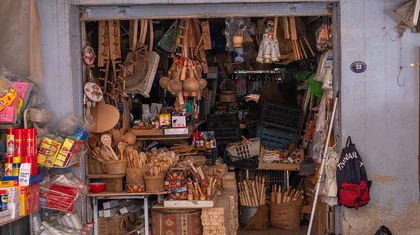
The overlap sits in the details. Kazandžiluk, the coppersmith street off Baščaršija, is a straight swap for a Marrakech souk lane — same hammering noise, same hand-beaten trays, far fewer people asking you to step inside. The Gazi Husrev-beg Mosque (1531) and its covered bezistan market are the Sarajevo version of the Ben Youssef Madrasa: courtyard, arcade, fountain, cool stone. Sarajevo even has its own Marrakech-style set piece in the Sebilj, the wooden kiosk fountain at the centre of the bazaar.
Where Marrakech Wins the View
Nothing in Sarajevo matches the Agafay desert at sunset, 45 minutes from the medina, or a rooftop breakfast looking at the Atlas. Marrakech's light is also a category of its own — that late-afternoon ochre glow is why photographers keep paying the premium. Sarajevo's views are green and grey, not gold.
The Wallet Test: Real Cost Breakdown
Quick currency note before the numbers. Sarajevo uses the convertible mark (KM), pegged to the euro at 1 EUR = 1.95583 KM, so 1 KM ≈ $0.55. Marrakech uses the dirham, at roughly 10.7 MAD to the euro, so 100 MAD ≈ $10.
Rooms
- Sarajevo: a mid-range double in a restored Ottoman house in Baščaršija runs 120–180 KM (€60–90 / ~$66–100). A decent hotel near Marijin Dvor is 90–120 KM. Hostel dorms start around 25 KM (~$14).
- Marrakech: a mid-range riad inside the medina runs 800–1,300 MAD (€75–120 / ~$80–130). Gueliz hotels drop to 500–700 MAD. A riad with a pool and a proper courtyard pushes past 2,000 MAD in high season.
This is where the gap actually lives — accommodation, not food. You get roughly twice the room for the same money in Sarajevo, and breakfast is usually included in both cities.
Food & Drink
- Sarajevo: a portion of ćevapi with somun and onion is 7–9 KM (~$4–5). Burek by the piece is 3–4 KM. Bosnian coffee is 2–3 KM. A sit-down dinner for two with beer and rakija lands at 60–90 KM (€30–46 / ~$33–50).
- Marrakech: a tagine in a local medina spot is 50–70 MAD (~$5–7). Mint tea or a fresh orange juice at Jemaa el-Fnaa is 10–20 MAD. A sit-down dinner for two in a tourist-facing restaurant is 400–700 MAD (€37–65 / ~$40–70), and alcohol is only served in licensed venues.
Street food is surprisingly close in price — maybe 30% cheaper in Sarajevo, not 50%. The blowout is drinks. A round of Sarajevsko in a Baščaršija bar costs 5–7 KM (~$3–4) each; a glass of wine in a Marrakech riad can run 90 MAD (~$9).
Tickets & Excursions
- Sarajevo: Trebević cable car 20 KM return (~$11). Tunnel of Hope 10 KM. War Childhood Museum and Gallery 11/07/95 about 12 KM each. Yellow Fortress and the old bobsled track: free. A train to Mostar is roughly 14 KM (~$8) one way.
- Marrakech: Jardin Majorelle 150 MAD (~$15). Bahia Palace 70 MAD. Ben Youssef Madrasa 50 MAD. A hammam session is 250–450 MAD. An Agafay desert dinner runs 500–800 MAD, and an Atlas day trip 350–500 MAD.
Tally it up and a three-day mid-range trip in Sarajevo costs around €200 per person before flights. The same shape of trip in Marrakech lands near €350. That's a real flight's worth of difference.
Crowds, Authenticity, and Tourist Footprint
Marrakech is a heavily touristed city, and it shows. Jemaa el-Fnaa at dusk is a performance, complete with snake charmers and henna artists who charge for photographs. Expect to be approached, redirected and sold to several times an hour in the souks. It's not dangerous — it's just relentless, and it wears some travellers down by day three.
Sarajevo's old town is genuinely lived-in. Baščaršija fills with locals doing their Friday shopping, pensioners on the benches outside the mosque, and students queuing for burek at lunch. You can walk from the cathedral to the synagogue to an Orthodox church to a mosque in under ten minutes and nobody will try to sell you a tour of it.
The honest caveat: Sarajevo's authenticity comes with real-world grit. November through February the valley traps smog and the air quality is genuinely poor — among the worst winter readings in Europe. If you have respiratory issues, aim for May, June or September. Also stay on marked paths on the Trebević hills above the bobsled track; some slopes off the trail still carry old mine warning signs.
How to Experience the Best of Sarajevo
Where to Stay
Baščaršija is the obvious base for a two- or three-night trip — you're inside the bazaar within a two-minute walk of everything. Kovači and Vratnik, up the hill behind the old town, are quieter, cheaper and give you rooftop views over the minarets. Marijin Dvor suits anyone who wants a modern hotel and the tram line at the door.
What to Actually Do
- Order Bosnian coffee in a džezva at a courtyard café off Kazandžiluk, and drink it slowly — it's the direct equivalent of Marrakech's mint tea ritual.
- Ride the Trebević cable car from Bistrik (20 KM return) and walk twenty minutes to the graffiti-covered 1984 Olympic bobsled track.
- Climb to the Yellow Fortress for sunset. It's free, it's a fifteen-minute walk from the bazaar, and it beats any paid viewpoint in the city.
- Visit the Tunnel of Hope in Butmir and the War Childhood Museum on the same day. Together they explain the 1990s siege better than any single site.
- Take the morning train to Mostar (roughly two hours, about 14 KM one way) and come back the same evening.
What to Order
Start with ćevapi — ten small skinless sausages in warm somun bread with raw onion and kajmak. Then work through burek, sirnica and zeljanica from a dedicated buregdžinica, begova čorba (a slow-cooked chicken and okra soup), sogan-dolma, and tufahija for dessert. Reliable names include Hodžić and Željo on Bravadžiluk, Buregdžinica Bosna, and Dveri for a sit-down meal. Wash it down with Sarajevsko beer or a glass of Žilavka from Herzegovina.
Who Should Still Choose Marrakech?
Book Marrakech if spectacle is the point of the trip. Nothing in Sarajevo replaces a night in the Agafay desert, a riad courtyard with a plunge pool, or a proper two-hour hammam. Marrakech also wins on winter sun — Sarajevo in January is cold, damp and smoggy, while Marrakech sits at a pleasant 20°C.
Choose Marrakech too if you're travelling on a five-day long-haul trip where every hour has to deliver a postcard. And if your home airport has a cheap direct flight to RAK but not to SJJ, the fare gap can swallow the savings — though Sarajevo is now served direct by Ryanair, Wizz Air, flydubai and others from around 20 European cities, so check before assuming.
Pick Sarajevo if you have three or four days, you want Ottoman market lanes without the sales pressure, and you'd rather spend the difference on food, coffee and a train to Mostar.
Frequently Asked Questions
Is Sarajevo really cheaper than Marrakech?
Yes — about 35–45% cheaper on a mid-range trip. Rooms are the biggest saving (roughly half the price for equivalent quality), followed by alcohol, museum tickets and day tours. Street food prices are closer than most people expect.
How similar are the two old towns?
Similar in flavour, not in size. Both are Ottoman-era bazaars with cobblestones, minarets, covered markets and copper workshops. Baščaršija is a compact few hundred metres; the Marrakech medina is a full-day maze. Expect the same atmosphere at a tenth of the scale.
How many days do you need in each?
Three full days covers Sarajevo well, plus one more for a Mostar day trip. Marrakech needs four to five days once you add the Atlas Mountains or Agafay desert. Sarajevo rewards a shorter, slower visit.
Which is better in winter?
Marrakech, clearly. December to February gives you 18–22°C days, dry skies and the Atlas snow on the horizon. Sarajevo in the same months is 0–8°C with heavy valley smog, short daylight and slippery old-town cobbles. Travel to Sarajevo between May and September instead.