
The Quick Verdict
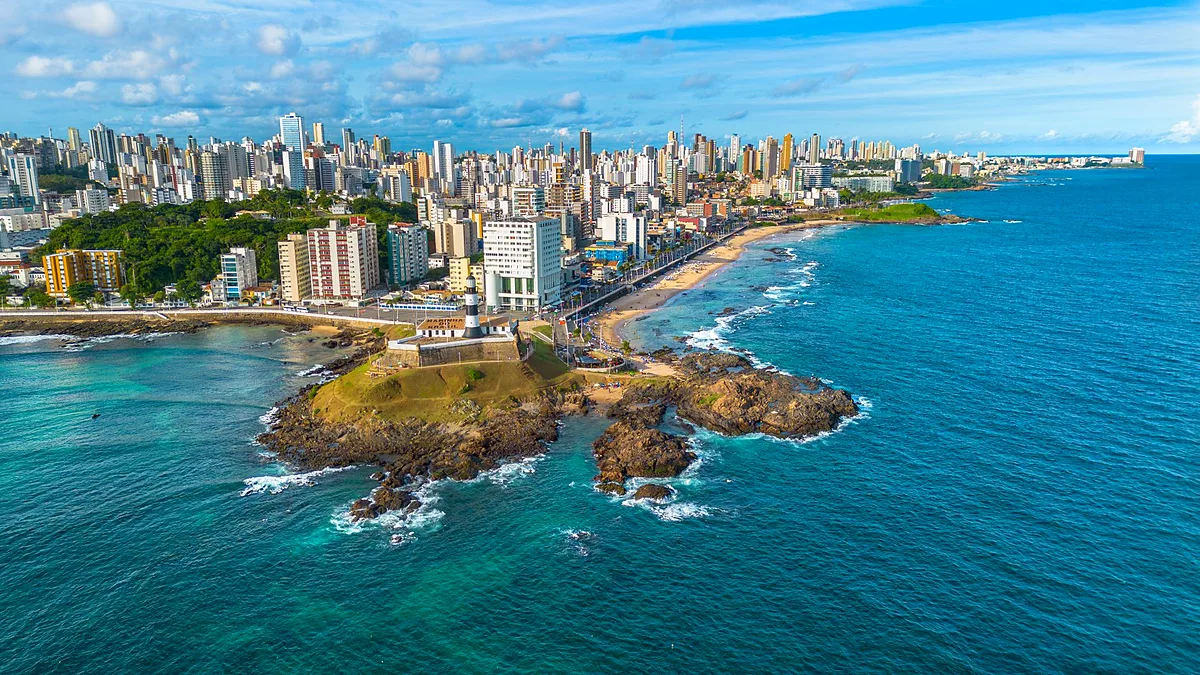
Salvador is not Machu Picchu. Anyone who says otherwise hasn't stood in the Sacred Valley at 6 a.m. But the trade is honest and often smart: Salvador da Bahia, Brazil's first capital, holds the largest collection of colonial stone architecture in the Americas, sitting on cliffs above a bay so big it looks like open sea. You get UNESCO-listed monumentality, a dramatic setting, and a living city instead of a roped-off ruin.
The price gap is the headline. A realistic three-day Machu Picchu run from Cusco costs $450–650 per person once you add the train, the timed-entry ticket, the shuttle bus, and a hotel in Aguas Calientes. The same three days in Salvador runs $200–280, including a comfortable pousada, restaurant meals, a capoeira class, and every church ticket you can buy. No permit lottery, no months-ahead booking, no altitude headache.
What you sacrifice is specific: Inca dry-stone masonry, the Huayna Picchu silhouette, and that cold Andean cloud-forest light. Salvador's stone is Portuguese baroque, laid between the 17th and 19th centuries, and it smells of dendê oil and sea air rather than eucalyptus. If your reason for going is archaeology, book Peru. If your reason is the feeling of standing in front of something built by hand and utterly impossible, Salvador delivers.
Unlimited High-Speed International Travel eSIM
Connect in seconds across 180+ destinations. Instant QR code activation with zero roaming surcharges.

The Scorecard at a Glance
| Feature | Machu Picchu | Salvador |
|---|---|---|
| Average Daily Cost (Stay + Meals) | $150–220 per person | $70–100 per person |
| Atmosphere & Aesthetic | Inca dry-stone citadel in cloud forest; silent, controlled, one-way circuits | Baroque churches, cobblestones, drum rehearsals, ocean cliffs and 16th-century street plans |
| Crowd Density & Seasonality | Roughly 4,500 timed tickets per day; June–August is a crush; Inca Trail closes in February | Cruise-ship spikes by day in Pelourinho, quiet after 6 p.m.; Carnival in February is total chaos |
| Flight & Transit Accessibility | Fly Lima–Cusco (~$100–180 return), then a 3.5-hour train (~$130–190 return) | Direct flights to Salvador (SSA) from Rio, São Paulo, Lisbon; 25 km to the historic centre |
| Best For | Archaeology lovers, bucket-list hikers, Andean scenery | Colonial architecture, Afro-Brazilian culture, seafood, beaches, tight budgets |
Scenery & Atmosphere: How Similar Are They Really?
The Stone Itself
Machu Picchu's genius is engineering. Blocks were cut so precisely that a knife blade won't slide between them, terraces were stepped into a ridge, and the Temple of the Sun lines up with the June solstice. It's 15th-century Inca work at 2,430 meters, and nothing else in the Americas quite matches it.
Salvador's stone is decorative and loud. The Church of São Francisco has a nave lined with Portuguese azulejo tiles and an interior sheathed in gold leaf; you walk in and your eyes need a second to adjust. It's a different achievement — craft and ornament rather than structural wizardry — but both make you slow down and touch the wall.
The Setting
Machu Picchu sits in a saddle above the Urubamba gorge, with Huayna Picchu spiking up behind it and cloud pouring over the ridges by mid-morning. Salvador sprawls across a cliff line above the Bay of Todos os Santos, and the art deco Elevador Lacerda drops 72 meters from the upper city to the waterfront for a fare of R$0.15 (under 5 cents). One view is vertical wilderness. The other is a working port city seen from a balcony.
Street Life vs. Ruin Life
At Machu Picchu you follow a marked circuit, keep your voice down, and eat nothing on site. In Pelourinho, drum rehearsals spill out of doorways on Sunday nights, capoeira rodas form in the Terreiro de Jesus, and someone is always grilling skewers on a corner. Salvador is inhabited. That's the whole point.
The Wallet Test: Real Cost Breakdown
Numbers below use R$5.5 to $1 (Brazilian real) and S/3.7 to $1 (Peruvian sol) as rough 2025 rates. Prices shift, but the ratio between the two destinations holds steady.
| Item | Machu Picchu area | Salvador |
|---|---|---|
| Double room, mid-range | S/330–500 (~$90–135) | R$280–450 (~$50–80) |
| Hostel dorm bed | S/70–100 (~$19–27) | R$70–100 (~$13–18) |
| Street food or set lunch | S/15–25 (~$4–7) | R$12–30 (~$2–5.50) |
| Dinner for two | S/110–160 (~$30–45) | R$120–170 (~$22–31) |
| Beer | S/14 (~$4) | R$10 (~$1.80) |
| Signature entry ticket | Machu Picchu S/152 (~$41) | São Francisco Church R$10 (~$1.80) |
| Local transport | Shuttle bus to ruins, ~S/90 return (~$24) | Uber across town, R$25 (~$4.50) |
Where the Money Actually Goes
Peru's hidden cost is logistics. The train from Ollantaytambo to Aguas Calientes alone runs $130–190 return, more than two nights in a Salvador pousada. Add the timed ticket, the mandatory bus up the switchbacks, and Aguas Calientes restaurant prices (a plain menu del día costs S/30 instead of S/15 in Cusco), and the day quietly hits $200.
Salvador's costs stay low because nothing requires a monopoly transport link. The airport is a R$80–110 Uber ride from Pelourinho. Museums charge R$10–20. A two-hour capoeira class with a real mestra costs R$70–100, and a catamaran to Morro de São Paulo runs about R$250 return for a full day out.
Drinks and Extras
In Salvador, a caipirinha at a bar in Rio Vermelho costs R$20 (~$3.60) and comes with a view of locals arguing about football. In Aguas Calientes, the same drink in a tourist bar is $9–12 and comes with a laminated menu in four languages. Over five days, that difference funds a domestic flight.
Crowds, Authenticity, and Tourist Footprint
Machu Picchu: A Queue With a View
Entry is capped at roughly 4,500 people a day and split into timed circuits, which keeps the site from feeling like a stadium. It still means buses loading at 5:30 a.m., a slow shuffle past the Guardhouse for the postcard shot, and rules about tripods, backpacks, and eating. In July and August, you'll share the classic viewpoint with several hundred people.
The upside of the permit system is that the citadel is genuinely protected. The downside is spontaneity. Decide in March that you want to go in June and you may find only 2 p.m. slots left, or none.
Salvador: Cruise Ships and Empty Evenings
Pelourinho absorbs cruise-ship groups between 10 a.m. and 3 p.m., when the cobbles get thick with guides holding paddles. By 6 p.m. the ships leave and the neighbourhood flips — restaurants fill with Brazilians, church doors open for evening mass, and the streets become yours.
Be honest about the downside: Salvador has real street crime, and wandering Pelourinho or Comércio alone after dark with a phone out is a bad idea. Take Ubers after 9 p.m., keep jewellery at home, and you'll be fine. Carnival in February is the opposite problem: two million people and hotel rates tripled. Skip it or plan a year ahead.
How to Experience the Best of Salvador
Where to Stay
- Santo Antônio Além do Carmo: the best base right now — colonial townhouses, quiet nights, 10 minutes' walk to Pelourinho. Pousadas run R$300–500 (~$55–90).
- Pelourinho: maximum atmosphere, maximum noise. Perfect for two nights, less so for a week.
- Barra: beachfront, safer at night, 25 minutes by bus or Uber to the historic centre.
- Rio Vermelho: where locals eat and drink. Best food access in the city.
What to Do Instead of the Inca Trail
Swap the trek for the cliff walk between Barra and Porto da Barra at sunset, ending at the Farol da Barra lighthouse. Book a capoeira class in Santo Antônio, then catch a Sunday-night Olodum drum rehearsal in Pelourinho — free to watch, and louder than anything in Peru.
For a full day out, take the catamaran to Morro de São Paulo (about 2 hours 15 minutes) or the bus north to Praia do Forte for the TAMAR sea turtle project. Inland, the Recôncavo town of Cachoeira shows off colonial churches with almost no tourists at all.
What to Order
Start with acarajé — a black-eyed pea fritter split and stuffed with vatapá, shrimp, and hot pepper, about R$12 (~$2) from a baiana de acarajé on any street corner. Acarajé da Dinha in Rio Vermelho is the famous stop. Then order moqueca baiana, fish stewed with coconut milk, palm oil, and peppers, served with rice and pirão (R$120–160 for two, ~$22–29).
Finish with tapioca ice cream at Sorveteria da Ribeira, scooping since 1931, or a shot of cachaça from the Recôncavo. Dinner for two with drinks lands around $35, which barely covers a starter in Aguas Calientes.
Who Should Still Choose Machu Picchu?
Book Peru without hesitation if Inca architecture is the actual goal. No amount of gold-leafed baroque substitutes for the Intihuatana stone, the Temple of the Sun, or walking the last stretch of the Inca Trail through the Sun Gate at dawn. That specific experience exists in one place.
Choose Machu Picchu too if you want mountains and altitude, if you're traveling May through September for the dry season, or if a bucket-list hike is part of the plan. Families with teenagers studying pre-Columbian history will get more out of Peru, and photographers chasing that specific morning mist over Huayna Picchu should not compromise.
And if you have three weeks and a flexible budget, do both. Fly Lima–Cusco, finish the Andes, then take a Lima–Salvador or São Paulo connection for the coastal half. They complement each other far better than they compete.
Frequently Asked Questions
Is Salvador really cheaper than Machu Picchu?
Yes, by roughly two-thirds. Salvador averages $70–100 per person per day for a mid-range room and three meals. A Machu Picchu visit averages $150–220 once the train, shuttle bus, and Aguas Calientes hotel pricing are included.
Is Salvador actually an architectural substitute for Machu Picchu?
Only in the broad sense of monumental UNESCO stone in a dramatic setting. Salvador's historic centre is Portuguese colonial baroque from the 1600s–1800s; Machu Picchu is 15th-century Inca engineering. If you love ornament, churches, and city life, Salvador satisfies. If you want archaeology, it won't.
Do I need to book Salvador in advance?
No timed tickets exist for Salvador's churches or museums — you walk in and pay R$10–20. The exceptions are Carnival week in February and New Year's Eve, when accommodation sells out months ahead and prices triple.
How many days do you need in each place?
Allow two full days in Salvador for Pelourinho, Santo Antônio, and Barra, plus two more for beaches or Morro de São Paulo. Machu Picchu itself takes one long day, but the surrounding Cusco and Sacred Valley logistics usually eat four to five.