
The Quick Verdict
Swapping London for Pokhara isn't a like-for-like trade, and anyone who says otherwise has not walked both cities. London hands you two thousand years of built history stacked shoulder to shoulder; Pokhara hands you a 7,000-metre mountain skyline and a lake you can circle on foot in an afternoon. What they genuinely share is a walking-first rhythm, a serious food culture and enough crooked side streets to keep you curious for a week.
Here's the blunt version. If museums, theatre, Gothic stonework and Michelin tasting menus are the point of your trip, London wins and it isn't close. If you want that same wander-and-stumble feeling for about a fifth of the money, Pokhara delivers — provided you can live without the architecture and accept a little dust. Below is the honest trade-off, with real prices.
Side-by-Side Comparison Scorecard
Figures below are mid-range, per person, based on two travellers sharing a room. London numbers use Zone 2 hotels; Pokhara numbers use a lake-view guesthouse in Baidam.

| Feature | London | Pokhara |
|---|---|---|
| Average Daily Cost (Stay + Meals) | £150–£240 (~$190–$300) for a hotel room, two pub meals and transport | $35–$60 for a lake-view room, three local meals, coffee and a beer |
| Atmosphere & Aesthetic | Georgian terraces, Gothic Revival churches, brutalist estates, glass towers, dense street life | Low-rise concrete and Newari brick, pagoda roofs, prayer flags, Himalayan backdrop |
| Crowd Density & Seasonality | Peaks July–August and mid-December; busy year-round, timed tickets essential | Peaks October–November and March–April; quiet, wet and cheap June–August |
| Flight & Transit Accessibility | Six airports, Tube plus Overground and Elizabeth line, no car needed | 25-minute flights from Kathmandu or a 6–8 hour bus; walkable Lakeside, taxis and scooter hire |
| Best For | Culture, nightlife, shopping, world-class free museums | Trekking, lake days, paragliding, slow budget travel |
Scenery & Atmosphere: How Similar Are They Really?
London's beauty is man-made and relentless. You get Georgian crescents in Notting Hill, the Gothic Revival pile of St Pancras, the Barbican's raw concrete and the City's glass towers inside a 40-minute walk. The payoff is density: cross the South Bank between Tate Modern and Westminster Bridge and the view changes completely.
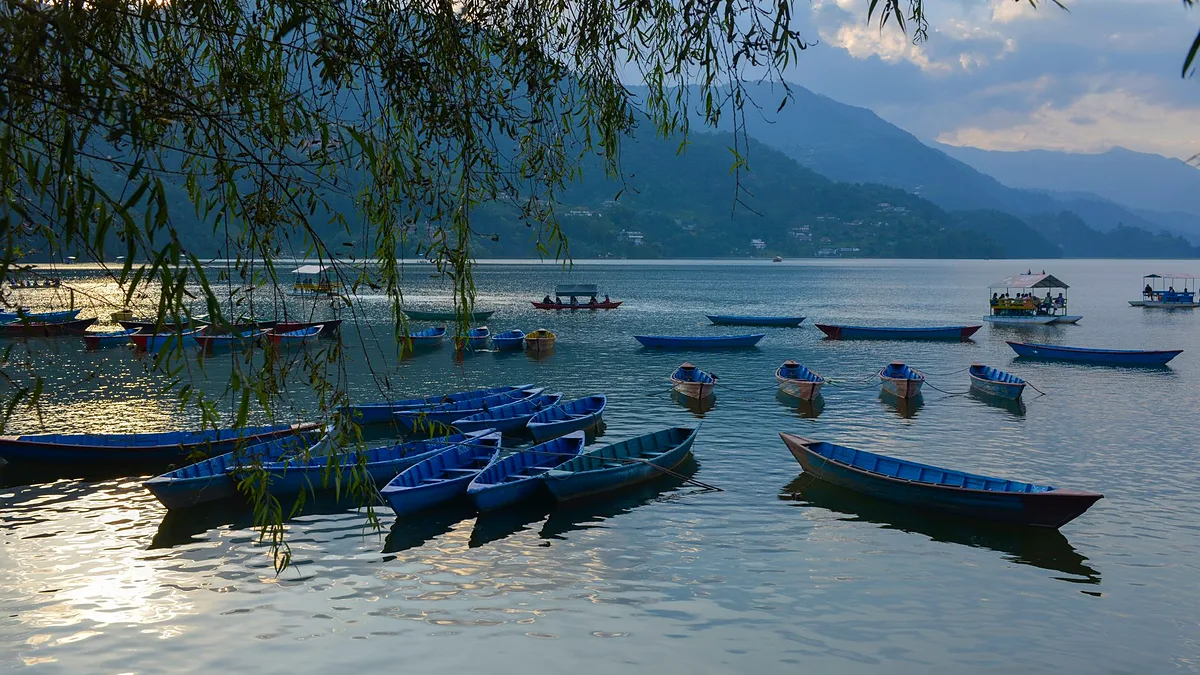
Pokhara's beauty is geological. Machhapuchhre, the Fishtail Mountain, sits at 6,993 m and on a clear morning appears to float directly above Phewa Lake. The Annapurna range spreads behind it, and the 6:30 am light from Sarangkot or the World Peace Pagoda is the kind of thing London simply cannot manufacture.
The built environment is a different story, and I won't pretend otherwise. Pokhara is low-rise by law because of the airport flight path, so you get two and three-storey concrete blocks, Newari-style brick facades with carved wooden windows around the Old Bazaar, tangled power lines and half-finished rebar. It is messy, and the mess is part of the appeal.
Where Pokhara wins on atmosphere is scale. Lakeside Road runs from Hallan Chowk south to Khahare, roughly 3 km of cafés, trekking shops and boat docks. Old Pokhara, around Bindhyabasini Temple and the bazaar lanes, still feels like a working Nepali town rather than a resort. London gives you grandeur; Pokhara gives you breathing room.
The Wallet Test: Real Cost Breakdown
This is where the comparison stops being close. A comfortable double room with a lake view in Pokhara costs less than a dorm bed in a London hostel. Food widens the gap further.
London, per person:
- Hostel dorm, Zones 1–2: £30–£45 (~$38–$57) per night
- Three-star hotel double, Zone 2: £120–£180 (~$150–$230) per night
- Pub main — fish and chips, pie or burger: £15–£19 (~$19–$24)
- Flat white: £3.60–£4.20 (~$4.50–$5.30)
- Pint of lager: £6.50–£7.50 (~$8–$9.50)
- Tube single in Zone 1: £2.80; daily cap Zones 1–2: £8.90 (~$11)
- Tower of London £34.80 (~$44); Westminster Abbey £30 (~$38); British Museum, Tate Modern and National Gallery free
Pokhara, per person:
- Lake-view guesthouse double: NPR 1,800–3,000 (~$13–$22) per night
- Mid-range hotel with breakfast: NPR 5,000–8,000 (~$37–$60) per night
- Dal bhat thali with refills: NPR 350–550 (~$2.60–$4)
- Plate of steamed momo: NPR 250–400 (~$1.90–$3)
- Thakali set with timur pepper: NPR 600–900 (~$4.50–$7)
- Masala tea NPR 80–150; espresso NPR 250–350 (~$1.90–$2.60)
- Bottle of Gorkha or Nepal Ice beer: NPR 350–450 (~$2.60–$3.40)
- Paragliding from Sarangkot: NPR 8,000–12,000 (~$60–$90)
- International Mountain Museum: NPR 500 (~$3.80)
Add it up and London lands around £150–£240 (~$190–$300) a day once you eat, move and pay for one attraction. Pokhara lands at $35–$60 for the same rhythm, beer included. A two-week Pokhara trip costs less than a five-day London one.
The honest catch is that you are not buying the same thing. London's £34.80 Tower ticket buys a thousand years of documented royal history. Pokhara's NPR 500 museum ticket buys a very good overview of Himalayan mountaineering. Both are worth it; only one is a bargain.
Crowds, Authenticity, and Tourist Footprint
London absorbs roughly 20 million overnight visits in a normal year and still functions. The catch is that Zone 1 in August becomes a slow-moving queue, and the big museums need timed bookings. Locals respond by retreating to Peckham, Walthamstow and Crouch End, which is useful intel if you want a quiet afternoon.
Pokhara's tourist zone is smaller but far more concentrated. Lakeside is almost entirely built for visitors: trekking gear shops, Italian menus, happy hour chalkboards and agencies selling the same three treks. It can feel transactional, especially around Hallan Chowk where touts work the corners.
Walk 15 minutes inland to Baidam's back lanes, or take a short taxi to Prithvi Chowk and the Old Bazaar, and that feeling disappears. Book treks directly with TAAN-registered agencies rather than hotel middlemen and expect to pay 10–15% less. Compare three offices before you commit to anything.
Seasonality matters more here than in London. Pokhara peaks in October–November and March–April, when the mountains are clearest. June–August brings monsoon rain, leeches on lower trails and washed-out roads, along with the year's cheapest room rates.
How to Experience the Best of Pokhara
Where to stay
- Lakeside north (near Hallan Chowk): most walkable, best coffee, noisiest at night. Good for a first visit.
- Lakeside south (Khahare): quieter, cheaper guesthouses and backpacker bars, 10 minutes further from the boats.
- Old Pokhara / Prithvi Chowk: local life, market food, no lake view. Best value in town.
- Sarangkot: 25 minutes up the hill, sunrise from your window, very little to do after dark.
- Begnas Lake: 30 minutes east, a fraction of the crowd, ideal for two slow nights.
Signature experiences that rival London's
Pokhara does not have a British Museum, but it has equivalents in spirit. The sunrise run to Sarangkot replaces a trip up the Shard, the World Peace Pagoda hike stands in for Hampstead Heath, and a rowboat on Phewa Lake does what Regent's Park boating does for roughly a tenth of the price.
Rent a wooden boat from Lakeside for NPR 600–900 (~$4.50–$7) an hour and row to Tal Barahi Temple on its island. Hike or take a taxi up to the Peace Pagoda for late-afternoon light. Book paragliding from Sarangkot for a 30-minute flight and expect cancellations when the thermals refuse to cooperate.
The International Mountain Museum is genuinely good, so allow two hours and go before the bus groups arrive. And if you have a week to spare, the Annapurna Base Camp trek, 7–10 days, is the one thing on this list London cannot answer at any price.
What to order
Start with dal bhat, Nepal's fuel: rice, lentil soup, seasonal tarkari and unlimited refills. Then work through a Thakali set with timur pepper, steamed buff momo dunked in sesame achar, gundruk made from fermented leafy greens, and sel roti for breakfast.
Around the Tibetan settlement at Tashiling and Hyangja, order thukpa and gyathuk. In winter, hunt down tongba, a hot millet beer served in a wooden vessel you sip through a straw. Pokhara's coffee scene is real too, with beans from Gulmi and Palpa showing up in Lakeside roasters at NPR 250–350 a cup.
Who Should Still Choose London?
Plenty of travellers should. If you have four or five days and want maximum cultural density, London's museum-and-theatre combination has no equivalent in Nepal. West End tickets, the British Museum's free permanent collection, live music in Camden and 70-plus Michelin-starred kitchens cannot be replicated on a lakeside road.
Choose London if architecture and heritage are the actual reason you travel, or if you need step-free access and predictable infrastructure. Pokhara's pavements are uneven, hot water is inconsistent and roads get dug up without warning. Travelling with a stroller or a wheelchair is genuinely hard here.
Also pick London if you are visiting in June–August and cannot handle monsoon humidity, or if you want a winter city break with central heating and reliable transport. Pokhara is an excellent value swap, but it is not a substitute for a European capital, and pretending otherwise helps nobody.
Frequently Asked Questions
Is Pokhara really cheaper than London?
Yes, dramatically. A comfortable day in Pokhara with a lake-view room, three meals, coffee, a beer and one activity runs $40–$65. The same standard in London costs $190–$300. Budget travellers can push Pokhara under $30 a day without much sacrifice.
Can I get a London-style heritage fix in Pokhara?
Not at the same scale. Pokhara's history lives in the Old Bazaar around Bindhyabasini Temple, the Newari facades with carved windows, and the monasteries at Tashiling and Matepani Gumba. That is a satisfying half-day of wandering, not a week of cathedrals and palaces.
When is the best time to visit each?
Pokhara is best in October–November and March–April, when the skies clear and the Himalayan views are sharpest. London is best in May–June and September, when the weather is mild and the summer crowds have not fully landed. Avoid Pokhara in peak monsoon if you plan to trek.
How do I get to Pokhara, and how long does it take?
Fly from Kathmandu to Pokhara International Airport in about 25 minutes for NPR 7,000–12,000 (~$50–$90). Tourist buses take 6–8 hours for NPR 1,200–2,000 (~$9–$15) and are comfortable enough in daylight. Once there, Lakeside is walkable and short taxi hops cost NPR 300–500 (~$2.30–$3.80).