
If you want the soft-focus island honeymoon — whitewashed alleys, a fishing port that turns gold at 8 p.m., long lunches that quietly become dinner — Paros delivers it for roughly half of what a comparable week on Maui costs. The two islands share more than you would expect: both are dry, sun-bleached, wind-combed places where the best days are built around swimming, seafood, and doing very little.
What you give up is scale. Maui has a 10,000-foot volcano, rainforest waterfalls on the Road to Hana, and a resort corridor in Wailea that Paros cannot match at any price. What you gain is a village life you can walk straight into. Naoussa and Parikia are real towns with winter populations, not visitor bubbles. If your version of quiet luxury is a €170 stone suite above a harbor instead of a $780 cabana beside a pool, the swap holds up.
Side-by-Side Comparison Scorecard
| Feature | Maui | Paros |
|---|---|---|
| Average Daily Cost (Stay + Meals) | $520–$900 per person/day at resort level; $280–$380 for a condo-and-plate-lunch trip | €130–€220 (~$140–$240) per person/day for a boutique room and taverna meals; €80–€110 in shoulder season |
| Atmosphere & Aesthetic | Resort-modern West Side, plantation-town Upcountry, jungle Hana. Big skies, Pacific drama | Cycladic white-and-blue villages, small coves, working fishing harbors. Dry, bright, understated |
| Crowd Density & Seasonality | Busiest Dec–Apr (whales) and July–Aug. Kaanapali and Kihei can feel full; Hana and Upcountry stay calm | Busiest late July–August and around Greek Easter. May–June and September–October are close to perfect |
| Flight & Transit Accessibility | Direct from LAX, SFO, SEA, DEN, DFW (5–6 hrs). Long haul from Europe (~18+ hrs) | 40-min flight or 3–4 hr ferry from Athens; easy connections from most of Europe. No direct long-haul |
| Best For | Families with young kids, hikers, snorkelers, whale watchers, golfers, US West Coast weekenders | Couples, food-and-wine travelers, sailors, windsurfers, anyone who wants to walk to dinner |
Scenery & Atmosphere: How Similar Are They Really?
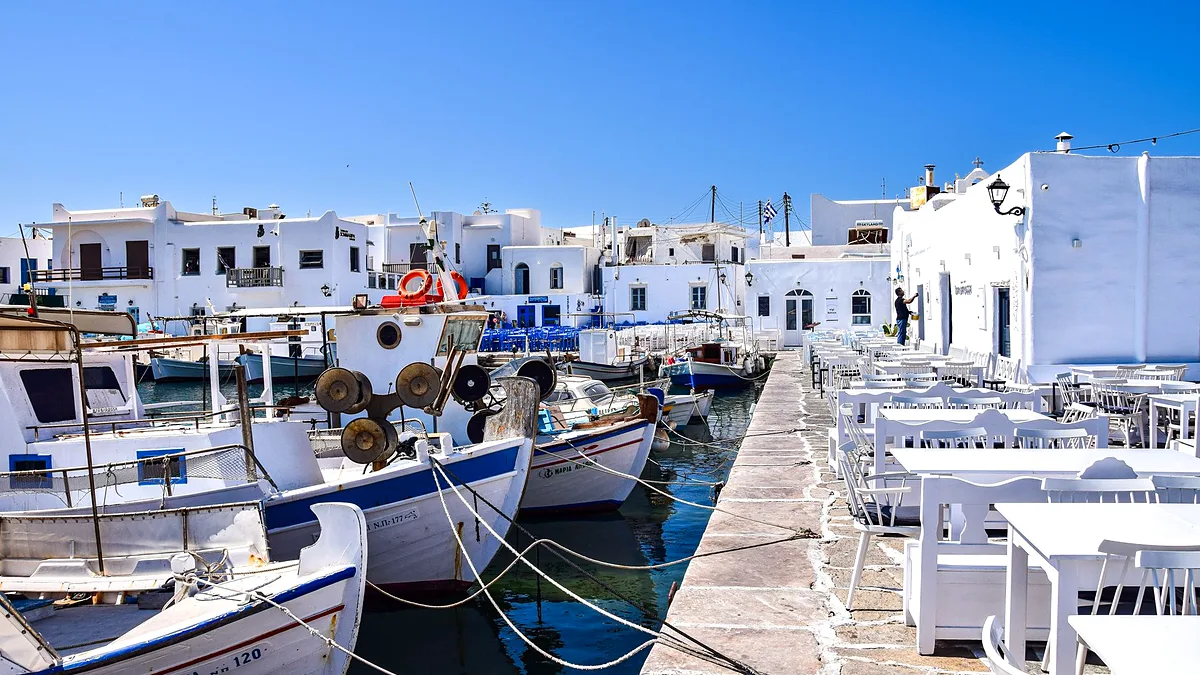
Paros is Cycladic to its bones: cubic white houses with blue shutters, bougainvillea spilling over stone walls, and a coastline that flips from sand to pebble within a few hundred meters. Naoussa's harbor is the postcard — caïques tied up beside tables, octopus drying on a line — and it is still a working port, not a film set. Inland, the villages of Lefkes and Prodromos sit in olive terraces where you will hear more Greek than English.
Unlimited High-Speed International Travel eSIM
Connect in seconds across 180+ destinations. Instant QR code activation with zero roaming surcharges.

Maui reads completely differently. The West Side is polished resort country: low-rise hotels, manicured lawns, black lava rock against turquoise water. Upcountry is old plantation towns with wooden storefronts and tin roofs, and Hana is 600 curves of jungle, waterfall, and one-lane bridge.
So they do not look alike, and it is worth being blunt about that. Paros trades Maui's tropical green for Mediterranean scrub and salt. If rainforest and waterfalls are the reason you booked Hawaii, Paros will disappoint you by day two.
Where the two converge is mood. Both islands reward slow mornings. Both have a wind that shapes the schedule — the meltemi in the Aegean, the trade winds in Hawaii — and both look best from the water, whether that is a sailboat off Antiparos or a snorkel boat at Molokini.
Architecture Is the Real Swap
Maui's built environment is horizontal and spread out. You drive between things. Paros is vertical and compressed: you park once in Naoussa and then walk through a maze of alleys, courtyards, and church domes for the rest of the evening. That walkability is the quiet luxury most people are actually chasing when they book a Hawaii trip.
The Wallet Test: Real Cost Breakdown
Numbers below are realistic mid-range figures for two people, gathered from 2024–2025 rates. Assume they swing ±25% with season. Book direct and you will usually beat these.
| Item | Maui | Paros |
|---|---|---|
| Boutique / mid-range double room | $450–$700 (Wailea, Kaanapali); $280–$400 (Kihei condo) | €140–€240 (~$150–$260) in June or September; €90–€150 in Parikia |
| Hotel tax added at checkout | ~18% (GET + TAT) | Included in quoted rate; small municipal fee |
| Rental car per day | $60–$100 plus $30–$45 resort parking | €35–€55 (~$38–$60); free street parking in most villages |
| Casual lunch for two | $45–$70 (plate lunch, poke bowl) | €22–€35 (~$24–$38) with house wine |
| Dinner for two with wine | $160–$260 | €60–€95 (~$65–$105) |
| Coffee | $6–$8 | €2.50–€3.50 (~$3–$4) |
| Signature excursion | Molokini snorkel $170–$210 pp; Haleakalā sunrise $30 per vehicle + $1 reservation | Antiparos boat trip €60–€85 (~$65–$92); ferry to Antiparos ~€3 (~$3) each way |
Run a seven-night trip and the gap is genuinely large. A comfortable Maui week for two — Kihei condo, rental car, one splurge dinner, one boat tour — lands around $5,200–$7,000. The equivalent Paros week (Naoussa guesthouse, small car, two taverna dinners a day, a boat day) runs €2,400–€3,400, or roughly $2,600–$3,700.
The one line that can flip the math is airfare. From Los Angeles, Maui is a $300–$500 round trip and five hours. Paros means a transatlantic flight plus a €50–€120 hop from Athens, so European travelers save big while US travelers may spend the savings on getting there.
Crowds, Authenticity, and Tourist Footprint
Paros has a real August problem. In the first two weeks, Naoussa's alleys become a slow-moving queue, sunbeds at Santa Maria fill by 10:30 a.m., and dinner without a reservation becomes a hunt. Cruise ships also dock at Parikia several mornings a week, which floods the port for about four hours and then empties out.
The fix is simple and most people ignore it. Go in June or September and the island feels like a different place — same water temperature, half the people, rooms 30–40% cheaper. Base yourself in Aliki or Ambelas and you can largely skip the Naoussa crush altogether.
Maui's situation is more complicated and deserves plain talk. The August 2023 fires destroyed most of Lahaina town, displacing thousands of residents, and rebuilding is still ongoing and uneven. Some Front Street businesses have reopened, many have not. Check current conditions before you plan around Lahaina, and be aware that housing pressure on local families remains a live issue.
Elsewhere Maui absorbs visitors well. Kihei and Wailea are purpose-built for it, Hana stays quiet if you sleep there rather than day-tripping, and Upcountry is mostly locals going about their week. Paros feels more like a place that happens to accept visitors. Maui feels more like a place built to host them — neither is automatically better, but it changes how the trip feels.
How to Experience the Best of Paros
Where to Stay
- Naoussa: The best-looking base and the most expensive. Book a courtyard room 200–400 m back from the harbor for €160–€240 (~$175–$260) and walk everywhere.
- Parikia: Port town with the ferry, a lovely old quarter, and rooms from €90. Handy if you are island-hopping.
- Aliki: Sleepy south-coast fishing village, sandy beach, tavernas on the sand. Best value for couples.
- Lefkes: Mountain village, cooler nights, zero beach traffic. Ideal for two or three nights mid-trip.
Activities That Rival Maui's
Take the ten-minute ferry from Pounda to Antiparos and rent a boat or join a day trip to the uninhabited islet of Despotiko — the swimming and the archaeology both beat most organized tours. Kolymbithres on the north coast has wind-sculpted granite formations that photograph like sculpture.
Swap the Road to Hana for the Byzantine Road, a paved 3.5 km walking path from Lefkes to Prodromos through olive groves, then lunch in the village square. Windsurfers should head straight to Chrissi Akti (Golden Beach) — it hosts a World Cup stop and lessons run about €60 for two hours.
What to Order
Start with gouna, the island's sun-dried mackerel grilled with herbs, and revithada, chickpea stew baked overnight in a wood oven and traditionally eaten after church on Sunday. Order the local Parian wine — Moraitis is the best-known winery and a tasting costs €15–€25 (~$16–$27). Finish with thyme honey over yogurt, and skip the frozen daiquiri stands on the waterfront.
Who Should Still Choose Maui?
Choose Maui if you are traveling with kids under eight and want a pool, a kids' club, and a beach with lifeguards. Choose it if you want to watch humpbacks in February, snorkel inside a volcanic crater, or drive to 3,000 m for sunrise without a passport.
It is also the better pick if your time is short. A four-night trip from California is realistic on Maui and punishing for Paros. And if anyone in your group has mobility limitations, Maui's resort infrastructure is far more accommodating than a Cycladic village built from stairs.
Finally, choose Maui if you want a road trip. The island rewards driving — Hana, Upcountry, the lava fields south of Makena. Paros is small enough that you could see most of it in a day, which is either the point or the problem, depending on your temperament.
Frequently Asked Questions
Is Paros actually cheaper than Maui?
Yes, substantially — typically 40–55% less for a week of comparable comfort. Rooms, meals, wine, and excursions all cost less, and there is no 18% lodging tax shock at checkout. The exception is airfare from North America, which is the one line where Maui wins.
Are Paros beaches as good as Maui's?
They are different, not lesser. Paros has clear, calm water and excellent sand at Santa Maria, Faragas, and Golden Beach, but the beaches are smaller and some are pebbly. Maui wins on dramatic settings — black sand at Waiʻānapanapa, turtles at Maluaka — and on snorkeling straight from shore.
When should I visit Paros instead of Maui?
Aim for late May to mid-June or September into early October. You get 24–26°C water, open tavernas, and rooms at 30–40% below August rates. Avoid the first two weeks of August unless you enjoy queues, and note that the meltemi wind can cancel ferries in high summer.
Do I need a car in Paros?
Not strictly. Buses connect Parikia, Naoussa, Aliki, and the main beaches, and Naoussa itself is entirely walkable. That said, a small car at €35–€55 (~$38–$60) a day unlocks the quiet coves, and parking in the villages is free — unlike Maui, where resort parking alone can run $40 nightly.