
The Quick Verdict
Muscat is not Tulum, and anyone who says otherwise has not been to both. But it comes closer than almost any other warm-water city we can name: sand-colored stone, low-rise buildings against dry mountains, fort walls above a bright blue harbor, and light so clean your phone camera stops struggling. You get that whole backdrop for roughly half the daily spend.
What you give up is specific and worth naming. No cenotes, no jungle, no barefoot beach clubs, no mezcal at midnight. Muscat is a quiet, ordered, car-based Gulf capital where the best evenings involve grilled skewers and a corniche walk, not a DJ. If that trade sounds fine, you will save real money. If it sounds like a downgrade, pay for Tulum.
Side-by-Side Comparison Scorecard
Here is the two-minute version before we get into the details.
Unlimited High-Speed International Travel eSIM
Connect in seconds across 180+ destinations. Instant QR code activation with zero roaming surcharges.

| Feature | Tulum | Muscat |
|---|---|---|
| Average Daily Cost (Stay + Meals) | $200–350 for a mid-range boutique; $120 if you hostel and eat local | $90–160 mid-range; $300+ if you book a beach resort |
| Atmosphere & Aesthetic | Limestone ruins on a cliff, jungle behind, beach clubs in front, humid air, loud nights | Forts and whitewashed low-rise, dry mountains meeting the Gulf, quiet nights, car-based |
| Crowd Density & Seasonality | Peak Dec–Apr; sargassum May–Oct; busy year-round, packed in high season | Peak Nov–Mar; June–Sept is 40°C+ and genuinely brutal; low density even in peak |
| Flight & Transit Accessibility | TQO airport 15 min from town; CUN about 2 hours; short hops from the US and Canada | MCT with direct flights from Europe, the Gulf and Asia; 18–22 hours from North America with one connection |
| Best For | Beach-club energy, cenote swimming, ruin photos, a serious food scene | Fort architecture, calm clean water, desert-and-coast day trips, quiet luxury on a budget |
Costs assume two people sharing a room in shoulder-to-high season. Muscat numbers use 1 OMR = about $2.60 USD, which is pegged and stable.
Scenery & Atmosphere: How Similar Are They Really?
The visual link is real, and it is narrower than the marketing suggests. Both places build in pale limestone and coral stone. Both keep buildings low — Tulum by economics and jungle, Muscat by law and tradition, with height caps and a white-or-cream palette across much of the city. Both put monument walls directly above open water.
Tulum's icon is El Castillo inside the walled ruins, sitting about 12 meters above the Caribbean on a limestone bluff. Muscat answers with Al Jalali and Al Mirani, the twin forts that guard the harbor in Old Muscat, and the 1970s Al Alam Palace between them. Stand on the Mutrah corniche at sunset and you get the same feeling the Tulum ruins give you: old stone, bright water, nothing taller than the sky.
Where they part is texture. Tulum is humid and green, with jungle pressing in from behind the hotel zone and the 8-kilometer Boca Paila road lined with boutiques and beach bars. Muscat is dry and spare. The Hajar Mountains sit brown and bare behind the city, the sea is glassy rather than surf-pounded, and the coastline runs for roughly 40 kilometers from Al Mouj to Yiti.
One practical detail travelers forget: Tulum faces east, so you get sunrise over the sea and sunset over the jungle. Muscat's corniche faces the Gulf of Oman, and Mutrah gets a soft, early light. Plan your photography around that and you will not waste a morning.
The Wallet Test: Real Cost Breakdown
This is where the swap earns its keep. Tulum has spent a decade pricing itself like a design destination, and the beach road is now among the most expensive stretches of sand in Mexico. Muscat, meanwhile, has a strong mid-range that almost nobody talks about.
| What You're Buying | Tulum | Muscat |
|---|---|---|
| Boutique double room | $180–350 (MXN 3,300–6,400) | OMR 45–70 / $115–180 |
| Beachfront or resort room | $450+ in high season | OMR 120–250 / $310–650 |
| Hostel dorm bed | $25–40 | OMR 7–12 / $18–31 (limited supply) |
| Breakfast | $8–12 | OMR 2–4 / $5–10 |
| Casual lunch | $12–18 | OMR 2–5 / $5–13 |
| Dinner for two, mid-range, no alcohol | $70–100 | OMR 15–25 / $39–65 |
| Beer or glass of wine | $6–9 in a shop; $15 at a beach club | OMR 3–5 / $8–13, hotel bars only |
| Museum or fort entry | Tulum ruins about MXN 95 (~$5) | OMR 1–2 / $2.60–5; Grand Mosque free |
| Signature excursion | $60–90 cenote-and-ruins day | OMR 25–35 / $65–90 Daymaniyat snorkel trip |
| Getting around | Bike $12/day; cross-town taxi $15–25 | Uber or Otaxi OMR 3–6 / $8–16; rental OMR 15–20 / $39–52 |
Run the totals and a couple spending moderately lands near $180–300 a day in Tulum and $85–150 in Muscat. That gap holds as long as you stay out of the five-star beach resorts, where Oman can match Mexico dollar for dollar.
Alcohol is the honest asterisk. Oman serves drinks in licensed hotels and some standalone restaurants, but there is no beach-bar culture and no cheap sundowner. Budget roughly $10 a beer and treat it as a treat, not a habit. Tulum will happily sell you a $16 margarita at 4pm and another at 6pm.
Crowds, Authenticity, and Tourist Footprint
Tulum's resident population sits around 50,000, and high-season visitor numbers dwarf that comfortably. The Boca Paila road jams most afternoons, taxis quote whatever they think you will pay, and several beach clubs enforce minimum spends of MXN 500–1,000 before you touch a lounger. It is still beautiful. It is also a machine.
Muscat is a working city of about 1.5 million people, and tourism has not yet reshaped its daily rhythm. The Grand Mosque is busy mid-morning and the Mutrah Souq fills after 6pm, but step two streets back and you are among shopkeepers buying frankincense and household goods. You will not queue for a photo. You may not see another obvious tourist for an hour.
Both have real downsides worth stating plainly. Tulum battles sargassum from May through October, worst in July and August, and the smell and brown water ruin plenty of beach days. Muscat's summer is a genuine dealbreaker — June to September regularly hits 42°C, and the city empties into air conditioning. Neither place is a year-round destination.
Muscat has its own authenticity problem, just a milder one. It is spread thin, unwalkable in the heat, and the malls and marina development at Al Mouj feel imported. This is not a city with a chaotic old quarter; it is a city with museums.
How to Experience the Best of Muscat
Where to Stay
Pick your base by how you want to move. Mutrah puts you in the old town near the souq and corniche, with budget hotels from OMR 25 ($65) and everything on foot. Qurum is the mid-range sweet spot, close to the beach and good restaurants. Al Mouj is the closest thing to Tulum's hotel zone, all marina and resort polish. Al Ghubrah is the value play, ten minutes from the Grand Mosque and fifteen from the airport.
What to Do Instead of Cenotes
Book a snorkel or dive day to the Daymaniyat Islands (OMR 25–35 / $65–90), where the water is clear enough to see turtles and reef fish without a wetsuit crowd. Take a two-hour dolphin cruise from Marina Bandar Al Rowdha for OMR 15–20. Drive the coastal road to Sifah for a swim, or hike Wadi Shab, about two hours out, where you swim through a slot canyon to a hidden waterfall pool.
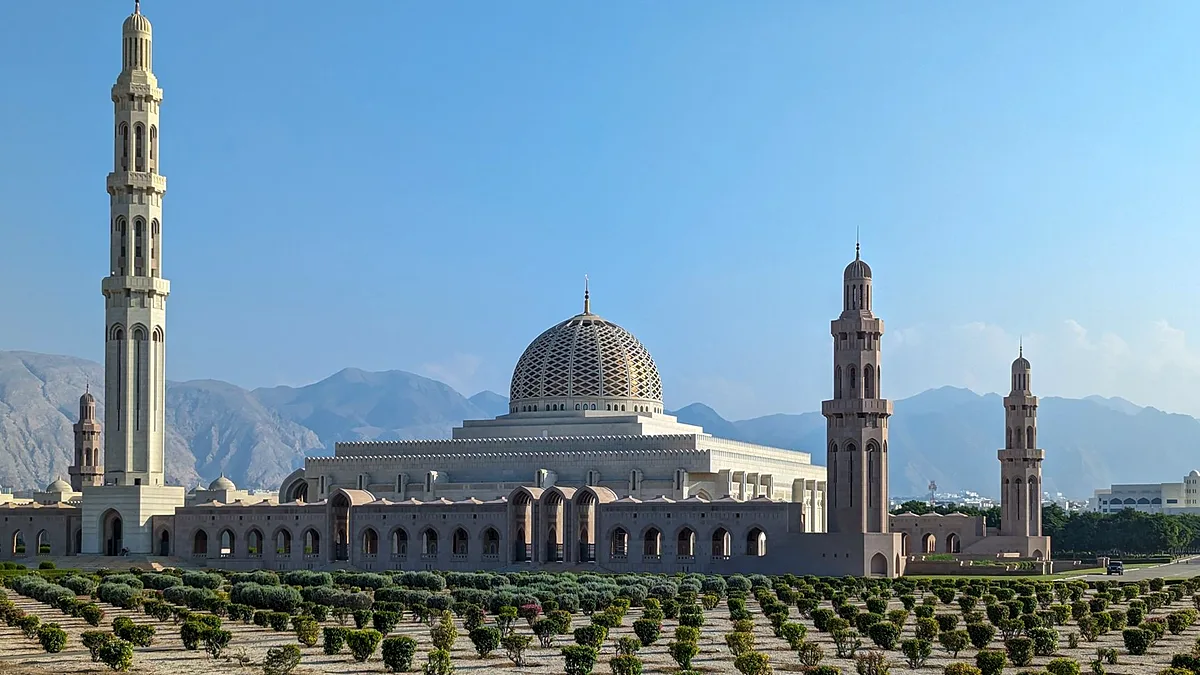
In town, do the Grand Mosque (free, non-Muslim visitors usually 8–11am, Saturday to Thursday), the National Museum (OMR 5), Bait Al Zubair (OMR 2), and the Royal Opera House, which runs guided tours most mornings for a small fee. Friday is quiet — many sights close or shorten hours.
What to Order
- Shuwa — lamb slow-cooked in a pit for days, served with rice. Find it at Bait Al Luban in Mutrah, mains around OMR 8–12.
- Mishkak — grilled skewers sold from Mutrah stalls at OMR 0.50–1 each. Dinner for under $8.
- Majboos — spiced rice with chicken or fish, the everyday Omani plate. Bin Ateeq does it for OMR 3–6.
- Omani halwa and karak tea — the sweet, saffron-heavy finish, best bought from the souq.
Who Should Still Choose Tulum?
Choose Tulum if cenote swimming is the point of your trip. Muscat has no freshwater sinkholes, no jungle, and no equivalent of swimming in a limestone cave at 8am before the crowds. Choose it too if you want Caribbean color, a Spanish-speaking culture, live music, and a food scene that runs from cochinita pibil to natural wine.
It also wins on logistics and timing. From the US East Coast, Tulum is a 3.5–4 hour flight; Muscat is a long connection through Europe or the Gulf. And if your only window is July or August, Tulum's seaweed problem is annoying while Muscat's heat is disqualifying.
Book Tulum if you are traveling with people who want to walk out of the room and into the water without renting a car. Muscat rewards drivers and planners; it punishes improvisation.
Frequently Asked Questions
Is Muscat actually cheaper than Tulum?
Yes, by roughly 40–50% on a mid-range trip. Rooms, meals and transport all come in lower, and the gap widens because Muscat has no beach-club minimum spends. The exception is luxury resorts, where both cities charge similar rates.
Are Muscat's beaches as good as Tulum's?
The water is cleaner and calmer, with no sargassum, but the city beaches at Qurum are modest and conservative rather than resort-styled. For a proper beach day, drive to Yiti or Sifah, or stay at a beach resort in Al Mouj or Barr Al Jissah.
When is the best time to visit each?
Muscat runs November to March, when days sit around 25–28°C. Tulum runs December to April, though that is also its busiest and priciest window. Avoid Muscat from June to September and Tulum from July to September if seaweed bothers you.
Can you drink alcohol in Muscat?
Yes, in licensed hotel bars and some restaurants, typically from OMR 3–5 ($8–13) for a beer. There are no beach bars, no public drinking, and no bottle shops for visitors. Tulum, by contrast, sells alcohol everywhere and prices it accordingly.