
The Quick Verdict
Malaga is not Singapore, and pretending otherwise wastes everyone's time. There is no 21st-century skyline built on reclaimed sand, no hawker centre running at 2 a.m. under fluorescent tubes, no MRT that flings you across the island in 22 minutes flat.
What Malaga does have is an 11th-century Moorish fortress you can walk into for €3.50 (~$4 USD), sardine skewers grilled over driftwood on the beach, and a decent old-town hotel room for less than a hostel bunk in Singapore. If you want roughly 70% of Singapore's history-plus-food buzz at about a third of the daily spend, this swap genuinely works. The sacrifice: less polish, thinner late-night options, and an August crowd that will test your patience.
Side-by-Side Comparison Scorecard
| Feature | Singapore | Malaga |
|---|---|---|
| Average Daily Cost (Stay + Meals) | S$380–450 (~$285–335 USD) mid-range; add S$60+ if you drink alcohol | €140–180 (~$150–195 USD), wine included |
| Atmosphere & Aesthetic | Glass towers over colonial shophouses, Peranakan tiles, tropical green, everything climate-controlled | Moorish fortress walls, baroque stone, whitewashed alleys, dry ochre hills, open-air everything |
| Crowd Density & Seasonality | Steady year-round; peaks at Christmas and Chinese New Year; constant humidity | Brutal July–August and on cruise-ship days; genuinely quiet November–February |
| Flight & Transit Accessibility | 12–13 hours from Europe; Changi is superb; MRT reaches nearly everything | 2–3 hours from most of Europe; €1.80 airport train; historic centre fully walkable |
| Best For | Food obsessives, design lovers, families who want zero friction | Budget travellers, architecture fans, beach-plus-city trips, winter sun |
Scenery & Atmosphere: How Similar Are They Really?
Both cities grew rich on trade and both carry layers of colonial history, which is why the comparison feels natural at first. Then you look up. Singapore builds vertically and deliberately — Marina Bay is a designed landscape of light and steel, and the Supertrees at Gardens by the Bay are essentially architecture pretending to be botany.
Unlimited High-Speed International Travel eSIM
Connect in seconds across 180+ destinations. Instant QR code activation with zero roaming surcharges.

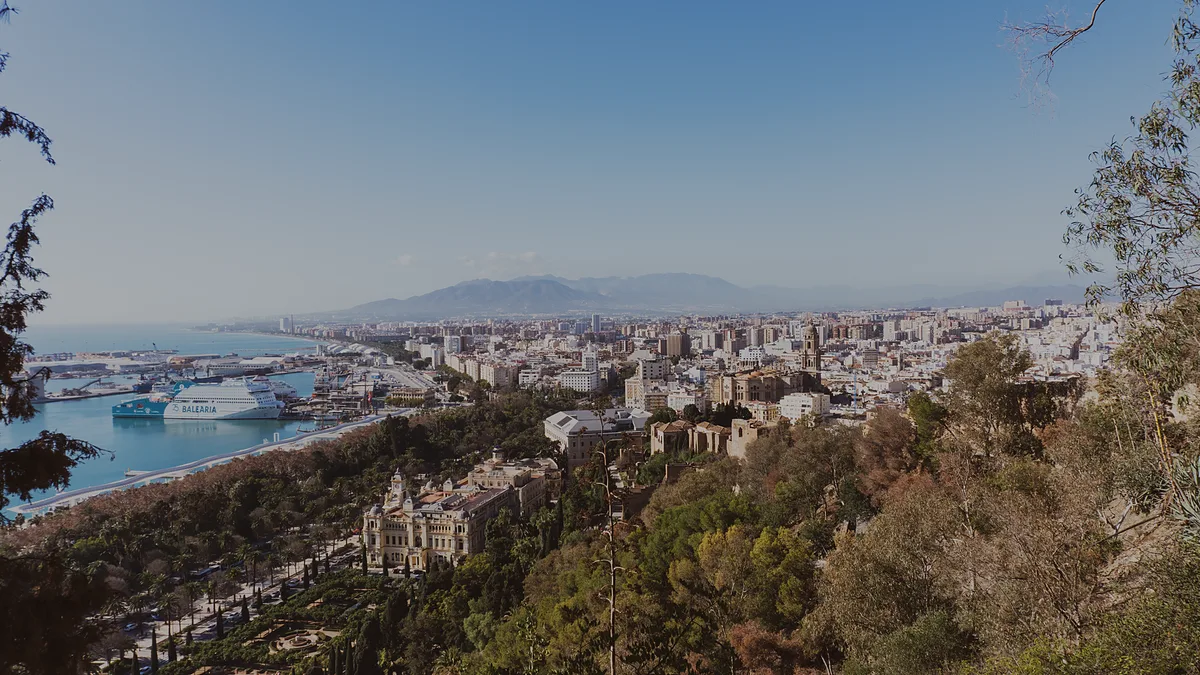
Malaga builds horizontally and lets time erode it. The Alcazaba climbs the hill in stacked sandstone terraces, the Roman theatre sits half-sunk beside it, and the cathedral's second tower was never finished, so locals call it La Manquita — the one-armed lady. Nothing here is optimised. That's the appeal.
Singapore's real charm lives at eye level, not skyline level. Wander Joo Chiat and Emerald Hill for Peranakan shophouses with glazed tiles and pastel shutters, or Tiong Bahru for 1930s Streamline Moderne curves. The Botanic Gardens, a UNESCO site, is free and open until midnight — a genuinely world-class hour that costs nothing.
Malaga answers with Calle Larios, a 19th-century boulevard of pale stone and wrought-iron balconies, plus the Soho district's mural-covered walls and the Atarazanas market, where a 14th-century Moorish gate was bolted onto a 19th-century iron hall. Both cities reward walking. Malaga's version smells of orange blossom and diesel; Singapore's of rain on hot pavement and frangipani.
The Wallet Test: Real Cost Breakdown
This is where the swap earns its keep. Singapore is not absurdly expensive by Western standards — it's the hotel room and the alcohol that break budgets. Malaga's weakness is summer pricing, when a €95 double becomes €190.
| Item | Singapore | Malaga |
|---|---|---|
| Mid-range double room (Centro / Tiong Bahru) | S$250–350 (~$185–260) | €95–150 (~$105–165) |
| Cheap, excellent lunch | S$5–8 hawker (~$4–6) | €12–16 menú del día (~$13–18) |
| Dinner for two, mid-range | S$70–110 (~$52–82) | €40–55 tapas crawl (~$44–60) |
| Beer or glass of wine | S$14–18 at a bar (~$10–13) | €1.80–3 (~$2–3.30) |
| Big-ticket attraction | Gardens by the Bay conservatories S$32 (~$24) | Picasso Museum €13 (~$14) |
| Public transport | S$1–2.50 per MRT ride | €1.35 metro ride (~$1.50) |
Run a five-day trip and the gap gets ugly. Singapore lands around S$2,200 (~$1,650 USD) per person including a paid attraction most days. Malaga comes in near €800 (~$870 USD) doing the same things, wine with dinner. Flights flip the maths, though — from London, return fares to Malaga start around €60 (~$65) in shoulder season versus S$1,000+ (~$750) to Singapore.
If you're flying from Asia rather than Europe, reverse everything. Singapore becomes the cheap hub and Malaga becomes the long-haul splurge. The comparison only holds if your starting point is Europe or the Mediterranean.
Crowds, Authenticity, and Tourist Footprint
Singapore's problem isn't overcrowding — it's staging. Marina Bay Sands and the Merlion precinct feel like a beautifully maintained film set, and you'll share them with thousands of people taking the same photograph. Step two streets into Kampong Glam or Little India and the city goes back to being a real place where people queue for bak chor mee at 7 a.m.
Malaga's problem is cruise ships. When three dock at once, Calle Larios and Plaza de la Constitución turn into a slow-moving river of lanyards. The centre has also been hit hard by short-term rentals, and locals in La Trinidad and El Perchel will tell you exactly how they feel about it.
The escape is easy and fast. Walk ten minutes uphill to the El Ejido side of the centre, or take bus 11 east to Pedregalejo and El Palo, where families still eat fried fish at plastic tables on the sand. Between November and February, Malaga sheds the crowds entirely and behaves like a working Andalusian city of 580,000 people.
Honest downsides worth naming: Malaga's city beaches are dark sand, urban, and busy, with water cooler than the postcards suggest. Singapore's Sentosa beaches are engineered and slightly soulless. Neither city wins that round.
How to Experience the Best of Malaga
Where to stay
- Centro Histórico (€110–150 / ~$120–165): everything walkable, but ask for a room off Calle Granada or Plaza de Uncibay if you value sleep.
- Soho (€90–130 / ~$100–145): street-art murals, quieter nights, five minutes from the port and the Pompidou cube.
- La Malagueta (€130–180 / ~$145–195): beach on your doorstep, 15 minutes on foot to the Alcazaba.
- Pedregalejo / El Palo (€80–110 / ~$90–120): local seafood strips, bus 11 into town, best value in the city.
What to do that rivals Singapore
Buy the combined Alcazaba and Gibralfaro ticket for €5.50 (~$6) — fortress walls, gardens and a harbour view that does the job of Singapore's Marina Bay observation decks for a tenth of the price. Add the Picasso Museum (€13) in the Buenavista Palace, since Picasso was born a few streets away.
For green space, swap Gardens by the Bay for the Jardín Botánico La Concepción, a subtropical garden around €5 (~$5.50) with tropical palms and a 19th-century villa. If you want the food-hall hit, the Atarazanas market runs Monday to Saturday, roughly 8 a.m. to 3 p.m. — go before 11 a.m. for the full stalls.
Day trips are Malaga's trump card. Granada and the Alhambra are under two hours by bus (€12–18), Ronda is 1h45 (€13), and the Caminito del Rey gorge walkway costs about €10 (~$11) with entry booked weeks ahead. Singapore has no equivalent — Johor Bahru is the only real border hop.
What to order
- Espetos de sardinas — sardine skewers grilled on boat-shaped canes in El Palo, €2.50–3 each.
- Porra antequerana — thick, garlicky cold soup with jamón and egg; €4–6.
- Pescaíto frito — mixed fried fish, €9–14 a plate.
- Croquetas de puchero — ham-and-broth croquettes, €2.50–3.50 per tapas portion.
- A glass of Málaga Virgen — local sweet Muscatel, €2.50–3.50. And a nube at any bar: a shot of coffee in a tiny glass of milk.
For breakfast, Casa Aranda on Calle Herrería del Rey has been frying churros since 1932. Go before 10 a.m., order thick chocolate, and skip the tourist-facing terraces on Calle Larios.
Who Should Still Choose Singapore?
Plenty of people should. If food range matters more than food price, Singapore wins outright — hawker culture is UNESCO-listed intangible heritage, and no single Andalusian city matches the Chinese, Malay, Indian and Peranakan spread available within three MRT stops.
Choose Singapore if you want zero friction: English everywhere, tap water, air-conditioned transit, a city that functions like a Swiss watch with tropical weather. Families with young kids and anyone travelling in a monsoon-agnostic way will find it easier. It's also the obvious base for a wider Southeast Asia trip — Bali, Kuala Lumpur and Ho Chi Minh City are all short hops.
Finally, Singapore delivers guaranteed 30°C in January. Malaga in winter sits around 17°C with rain showers. If you're chasing actual beach weather in December, the swap fails and you should pay the Singapore premium.
Frequently Asked Questions
Is Malaga actually cheaper than Singapore?
Yes, by roughly 45–55% on a like-for-like mid-range trip. Hotels cost about 40% less, restaurant meals about 50% less, and alcohol is dramatically cheaper — a €2 beer in Malaga versus S$16 in a Singapore bar. The only time the gap narrows is July and August, when Malaga hotel rates double.
Can Malaga replace Singapore for a food-focused trip?
Partly. Both are graze-all-day cities built on snacks and small plates, and both have excellent markets. But Singapore's culinary range is genuinely wider — four cuisines in one hawker centre versus Malaga's deep but narrow Andalusian focus. Go to Malaga for tapas culture, not for variety.
How many days do I need in each city?
Malaga needs 3–4 days for the city itself, plus 2–3 more if you want Granada, Ronda or the Caminito del Rey. Singapore needs 3–4 days to cover hawker centres, the Botanic Gardens, Kampong Glam and one big-ticket attraction without rushing.
Is Malaga safe and easy to get around?
Very safe, with the usual pickpocket caution around Calle Larios and the port on cruise days. The historic centre is flat and walkable, the Cercanías C1 train reaches the airport in 12 minutes for €1.80 (~$2), and metro lines L1 and L2 cover the rest for €1.35 a ride.