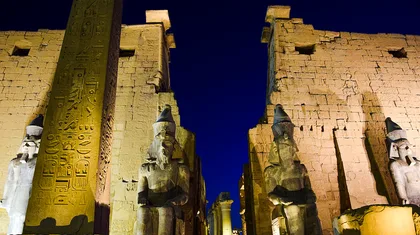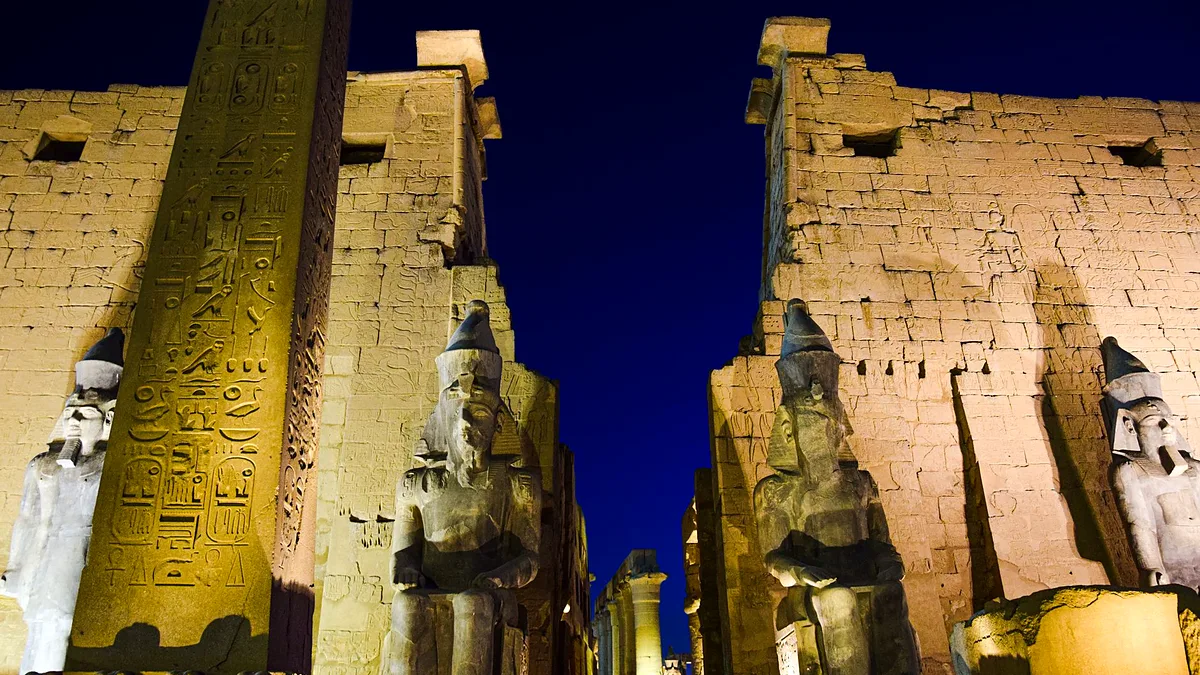

Short answer: yes. Luxor runs roughly 55–60% cheaper per day than Istanbul at a comparable comfort level, and the gap widens once you start looking at five-star hotels. A West Bank guesthouse with a Nile-view roof costs less than a dorm bunk in Beyoğlu, and the temple tickets that anchor your whole trip cost £E180–600 (about $4–13) rather than the €25–45 you now pay at Istanbul's headline sights.
But this is not a like-for-like swap. Istanbul hands you 16 million people, two continents, sunset ferries and a food scene that runs from a ₺15 simit cart to a tasting menu. Luxor hands you half a million people, one river, and the densest concentration of ancient monuments on earth — with the streets quiet by 9pm. You gain space and silence; you give up the city's pulse.
Where Luxor genuinely wins is the quiet-luxury bracket. Around $120–180 a night buys a five-star hotel with a pool, a 1907 colonial terrace and staff who learn your name. The same money in Istanbul buys a small boutique double in Galata with a view of somebody else's air-conditioning unit.
Unlimited High-Speed International Travel eSIM
Connect in seconds across 180+ destinations. Instant QR code activation with zero roaming surcharges.

The Scorecard: Istanbul vs Luxor at a Glance
| Feature | Istanbul | Luxor |
|---|---|---|
| Average Daily Cost (Stay + Meals) | €95–150 / ~$105–165 mid-range double plus three meals | €38–65 / ~$42–70 at the same comfort level |
| Atmosphere & Aesthetic | Domes, minarets, ferry horns, hills stacked with apartment blocks, grey-blue Bosphorus light | Ochre sandstone, palm groves, hot silence, hot-air balloons drifting over the Theban hills at dawn |
| Crowd Density & Seasonality | 17M+ visitors a year; peak April–May and September–October; genuine queues at Hagia Sophia by 10am | Cruise-ship surges 7–9.30am, then it empties; peak October–March; 42°C+ in July–August |
| Flight & Transit Accessibility | IST is a global hub with direct flights from 300+ cities; tram T1, M2 metro, Marmaray and ferries on one Istanbulkart | LXR mostly connects via Cairo, plus seasonal European charters; taxis, feluccas, a walkable historic core |
| Best For | Food, nightlife, museums, urban energy, short breaks from Europe | Ancient sites, winter sun, slow mornings, balloon flights, big hotel value |
Scenery & Atmosphere: How Similar Are They Really?
Both cities are built around water, and both put their monuments almost at the waterline. In Istanbul the Bosphorus and the Golden Horn split the city into pieces you cross by ferry; in Luxor the Nile is narrower and the temples sit right on the bank. Both give you a soundtrack of calling to prayer, and both reward anyone willing to be outside at 6am.
After that they part company. Istanbul is vertical, layered and loud: domes stacked on domes, taxi horns, cats on every wall, a skyline that keeps rearranging itself as you climb. Luxor is horizontal, dusty and ochre, its skyline made of papyrus-topped columns instead of minarets. Istanbul's beauty is made by people; Luxor's is made by stone and light.
One honest caveat: Luxor's modern town is not attractive. The Corniche is unfinished brick and concrete hotel blocks, and the good architecture is mostly along the river and on the West Bank. The beauty sits at the edges — Karnak at dawn, the Theban hills, the banana fields across the water. Istanbul, by contrast, is handsome almost everywhere, and that is the thing Luxor cannot copy.
The Wallet Test: Real Cost Breakdown
Prices below are 2025 estimates. Turkey's lira and Egypt's pound both move fast, so treat these as ranges rather than quotes.
Sleeping. Istanbul: dorm bed €20–30 (~$22–33), mid-range double in Sultanahmet or Cihangir €80–130 (~$90–145), design boutique in Galata €150–220. Luxor: West Bank guesthouse double with rooftop $18–35, solid East Bank three-star $40–70, five-star with pool $110–220.
Eating. Istanbul: simit from a cart ₺10–15 (~$0.30), balık ekmek at Eminönü ₺120 (~$3.50), a proper kahvaltı for two ₺700–1,000 (~$20–30), meyhane dinner for two with drinks ₺1,200–1,800 (~$35–50). Luxor: a plate of koshari £E70–100 (~$1.50–2), ful and ta'meya breakfast £E60–90 (~$1.30–2), mixed grill £E300–450 (~$6–9), Nile-view restaurant main £E400–600 (~$8–12).
Drinking. This is where the two diverge hardest. Istanbul has a real bar culture, from ₺80 corner-shop Efes to ₺300 cocktails with a Bosphorus view. Luxor barely drinks: alcohol is mostly confined to hotel bars and a few West Bank spots, with a Stella around £E180–250 (~$4–5) and Egyptian wine from £E350.
Doing. Istanbul's big sights now cost real money: Hagia Sophia €25, Topkapı around €45, Basilica Cistern ₺800 (~€17), museum pass near €105. Luxor's do not: Karnak £E220 (~$4.50), Luxor Temple £E180, Valley of the Kings £E600 (~$12, plus £E500 extra for Tutankhamun), Hatshepsut £E140, Luxor Museum £E200. A private felucca is about £E400 an hour (~$8).
Budget reality check: a week in Luxor on a comfortable mid-range budget lands near $400–500 per person before flights. The same week in Istanbul, at the same standard, lands near $900–1,200.
Crowds, Authenticity, and Tourist Footprint
Istanbul took in more than 17 million foreign visitors in 2024, and you feel it. By 10am the queue for Hagia Sophia wraps the square, the Grand Bazaar is more performance than market, and the T1 tram is standing room only. The escape valves are real, though: Kadıköy on the Asian side, the backstreets of Balat and Fener, the Tuesday market in Fatih.
Luxor's crowds arrive in surges. A few hundred Nile cruise ships run the Luxor–Aswan leg, and their passengers hit Karnak and the Valley of the Kings in tight guided clusters between about 7am and 9.30am. By 11am those same sites are half-empty, and by mid-afternoon you can have Medinet Habu nearly to yourself.
The trade-off is hassle. Luxor's touts are more persistent than Istanbul's and less polished — calèche drivers, gift-bearing strangers, anyone offering to unlock a tomb for you. In Istanbul you can be anonymous; in Luxor you are always a customer, because tourism is most of the local economy.
What Luxor has that Istanbul has lost is discovery. Walking into Karnak's hypostyle hall at 7am with twenty other people, sun raking across 134 columns, is not an experience Istanbul can match at any price.
How to Experience the Best of Luxor
Where to stay: East Bank vs West Bank
The East Bank is the working city: restaurants, Luxor Temple on your doorstep, the airport 20 minutes away. Stay within a few blocks of the Corniche for convenience. The West Bank — El Gezira, Ramla and Gourna — is a village of mud-brick lanes, banana fields and cheap guesthouses, with the temples lit up across the water at night. The public ferry costs £E10–25; a private crossing is about £E100.
Signature experiences that hold their own
- Sunrise balloon flight over the West Bank, $80–130 booked direct (hotels charge $120–160). The best-value luxury move in Egypt.
- Karnak at opening, then the Luxor Temple after dark — lit columns, cool air, a fraction of the daytime crowd.
- Valley of the Kings at 6.30am with a guide, so you are in the first wave and out before the coaches arrive.
- A private felucca at sunset with mint tea, £E400–500 an hour (~$8–10).
- Dendera and Abydos by private car, $90–120 for the day — two of Egypt's finest painted temples with almost nobody there.
- Afternoon tea in the Sofitel Winter Palace garden, £E500–800 (~$10–17), where the 1907 version of quiet luxury still works.
What to order
Start with koshari — rice, lentils, pasta and spiced tomato sauce — then work through ful medames, ta'meya, molokhia and grilled bolti from the Nile. Try hamam mahshi (pigeon stuffed with rice) once. Drink fresh mango or sugarcane juice, finish with Om Ali, and know that Sofra on the East Bank and Aboudi Coffee Break on the West Bank are the two most reliable affordable tables in town. Skip the Karnak sound-and-light show, the papyrus museums and any calèche ride; put that money into a good guide instead.
Who Should Still Choose Istanbul?
Choose Istanbul if food is the point of the trip. Luxor's kitchen is honest and cheap but narrow; Istanbul's is a 500-year argument between Ottoman, Anatolian, Levantine and modern cooking, and it wins on variety at every price point.
Choose Istanbul if you need nightlife, wine lists, galleries or serious shopping — Luxor's best evening plan is a rooftop and a book. Choose it too if you are travelling in July or August, when Luxor hits 42–44°C and sightseeing becomes a 6am–10am sport.
And choose Istanbul if you have one base and ten days. Luxor gives up its best material in three or four full days; after that you will want a Nile cruise to Aswan or a Cairo add-on. Istanbul can absorb a week without repeating itself, and it is far easier to reach on a direct flight.
Frequently Asked Questions
Is Luxor actually cheaper than Istanbul?
Yes — roughly 55–60% cheaper per day. A comfortable week in Luxor costs about $400–500 per person excluding flights. The same standard in Istanbul runs $900–1,200, driven mostly by accommodation and sight tickets.
Is Luxor a good substitute for Istanbul's history?
For scale and age, yes: Karnak and the Valley of the Kings outclass anything in Istanbul. For living history — Byzantine churches, Ottoman mosques, bazaars — no. Luxor is archaeology with a town attached; Istanbul is a city that happens to be ancient.
How many days do I need in each?
Three to four full days covers Luxor's East and West Banks properly. Istanbul needs five to seven to justify the flight and the ticket prices.
When is the best time to swap Istanbul for Luxor?
October to March. Luxor sits at 25–30°C with clear skies while Istanbul turns cold, wet and grey. Book ahead for Christmas and the February half-term weeks, when charter flights and cruise ships peak at the same time.