
The Quick Verdict
Lucca works as a Serengeti stand-in only if you're honest about what you're actually buying. The two places share a rhythm — dawn light on old stone, long walks with no traffic noise, a silence that resets your ears — but they share almost no materials. The Serengeti's architecture is granite kopjes, termite spires, and acacia silhouettes. Lucca's is a 4.2 km ring of Renaissance ramparts, brick towers, and a Roman amphitheater footprint turned piazza.
What you gain by swapping: roughly $700 per person per day, dinner that isn't served buffet-style at 7pm sharp, and the ability to book on a Thursday for the following week. What you sacrifice: every animal, the scale of the plains, and the specific thrill of being four hours from the nearest tarmac. If wildlife is the point of the trip, book Tanzania. If what you actually craved was space, stone, and slow mornings, Lucca delivers at about a fifth of the price.
Side-by-Side Comparison Scorecard
| Feature | Serengeti | Lucca |
|---|---|---|
| Average Daily Cost (Stay + Meals) | $550–$1,100 per person, full board plus park fees | $150–$260 per person, boutique room plus three meals |
| Atmosphere & Aesthetic | Open grassland, kopjes, dust haze, canvas-and-teak camps, zero light pollution | Walled medieval core, ochre plaster, terracotta roofs, brick towers, tree-topped Guinigi |
| Crowd Density & Seasonality | Peak July–September (river crossings) and February (calving); vehicle queues at big sightings | Peak June–August day-trippers; streets empty after 6pm; Comics & Games floods late October |
| Flight & Transit Accessibility | Fly to Kilimanjaro or Arusha, bush plane to Seronera (~$300–$450 each way), then 1–3 hrs game-drive transfer | Fly to Pisa, 30-min train (€3.70), or Florence in 1h20 (€8–€10); station is 400 m from the walls |
| Best For | Wildlife photographers, milestone trips, travelers who want remoteness | Walkers, architecture obsessives, food-and-wine travelers on a mid-range budget |
Scenery & Atmosphere: How Similar Are They Really?
Let's be blunt: they are not architectural twins. Anyone selling you Lucca as a literal substitute for the Serengeti is selling you something. But the structural echoes are real. Both places reward the same behavior — getting up before 7am, walking slowly, and looking up rather than down at a phone.
Unlimited High-Speed International Travel eSIM
Connect in seconds across 180+ destinations. Instant QR code activation with zero roaming surcharges.

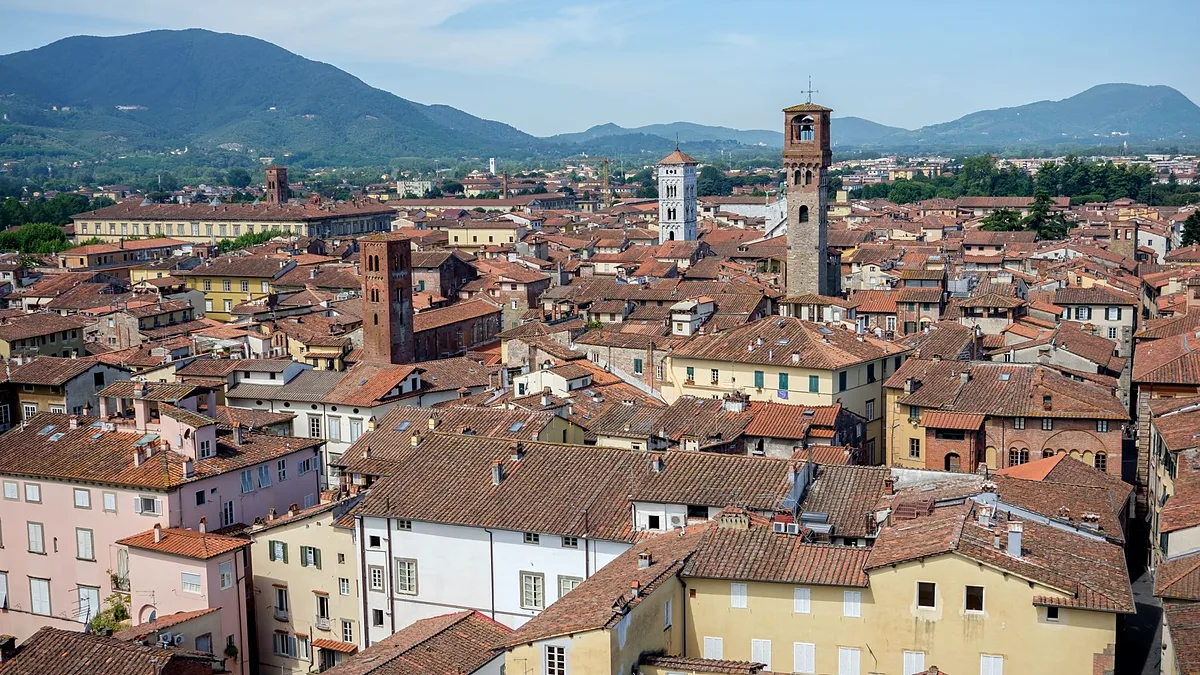
In the Serengeti, that means the Seronera Valley at first light, when the granite kopjes look like ruined fortresses and the grass holds the night's cold. The scenery is monumental but repetitive; what changes it is weather, migration, and whether a lion has decided to sleep on the track. In Lucca, the equivalent walk is the wall circuit itself. You climb at Porta San Donato, the plane trees close overhead, and the whole city appears as roofs and bell towers rather than streets.
Lucca's built detail is where it wins on texture. Piazza dell'Anfiteatro follows the exact oval of a Roman arena, entered through four low arches. The Guinigi Tower carries seven holm oaks on its roof, planted by a family who wanted a garden you could see from the hills. There are more than 100 churches inside the walls, most of them unlocked and empty on a Tuesday morning.
One is a landscape you drive through. The other is a city you walk through. If your legs and your mornings matter more than your lens, Lucca holds up.
The Wallet Test: Real Cost Breakdown
Serengeti, per person per day
- Mid-range tented camp: $450–$750, usually including all meals. Luxury camps run $900–$1,500.
- Park and concession fees: roughly $150–$185 per adult per 24 hours with VAT, unless your camp bundles them. Always ask — many do.
- Drinks: $5 local beer, $8–$12 for a G&T or a glass of South African wine.
- Balloon safari: about $650 per person for an hour aloft.
- Guide tip: $20–$30 per day, in cash.
- Bush flight: $300–$450 each way to Seronera or Kogatende.
Realistic all-in figure: $700–$1,000 per person per day once transfers, tips, and fees land. A week-long mid-range safari commonly totals $6,000–$8,000 per person.
Lucca, per person per day
- Boutique hotel inside the walls: €120–€190 (~$130–$205); shoulder season drops to €90.
- Guesthouse outside the walls: €85–€120 (~$92–$130).
- Coffee: €1.30 standing at the bar, €3.50 seated at a table.
- Lunch: €12–€18 for tordelli and water at a trattoria.
- Dinner with house wine: €28–€40.
- Aperitivo: €7–€9, snacks included.
- Bike rental: €5 per hour, €13 for the day.
- Sights: Guinigi Tower €6, Palazzo Pfanner €4.50, Puccini Museum €7, cathedral nave €3. The walls are free.
Realistic all-in figure: $150–$260 per person per day. A week in Lucca costs less than two nights in a Serengeti luxury camp.
Crowds, Authenticity, and Tourist Footprint
The Serengeti receives roughly 350,000 visitors a year across 14,750 square kilometres, which sounds gloriously empty until you learn how sightings work. Drivers radio each other, so a leopard in a tree can pull 20 vehicles within 15 minutes. July to September in the northern Serengeti is genuinely congested; the central plains in May are not.
Lucca has the opposite problem at a smaller scale. Its core is about four square kilometres with a resident population near 90,000 across the wider comune, and most visitors are day-trippers arriving from Florence or a Pisa cruise between 10am and 4pm. Walk Via Fillungo at 11am and you'll swear it's a theme park. Come back at 7pm and it's people buying groceries.
Two honest warnings. The Lucca Comics & Games festival in late October draws over 250,000 attendees and books out every room for 60 km — avoid unless that's your reason for going. And outside the walls, the ring road and the station district are plain, functional Italian suburbia. The charm stops at the ramparts.
How to Experience the Best of Lucca
Where to stay
Inside the walls, aim for the San Martino or San Paolino quarters — quiet lanes, five minutes' walk from Piazza dell'Anfiteatro, and far enough from Via Fillungo to sleep. Borgo Giannotti, just outside Porta Santa Maria, is cheaper and has a proper neighbourhood bakery scene. Skip the strip of hotels near the train station in San Concordio: convenient, but you'll be walking 20 minutes each way for any atmosphere.
Activities that earn their place
- Wall circuit at 7am: free, 4.2 km, about an hour at an easy pace. Locals jog it with espresso in hand.
- Guinigi Tower: 233 steps, €6, best before 10am when the light comes in low from the west.
- Piazza dell'Anfiteatro at 8am: empty, with the shutters still down and the coffee machines warming up.
- Villa Reale di Marlia: €12, 20 minutes by car, gardens that outclass anything inside the walls.
- Garfagnana day trip: drive an hour north to Barga for chestnut woods and hill villages that feel nothing like the postcard.
What to order
Tordelli lucchesi first — meat-filled ravioli under a slow ragù, the city's signature plate at €12–€15. Then zuppa di farro, a thick farro-and-bean soup that's better in October than July. Buy buccellato, the anise-and-raisin ring bread, from a bakery rather than a souvenir shop, and drink a glass of Montecarlo Bianco or Colline Lucchesi red at €5–€7.
One thing to skip: the cafés ringing Piazza dell'Anfiteatro. You'll pay double for the postcode. Order at the bar two streets away and take your coffee to a wall bench instead.
Who Should Still Choose Serengeti?
If animals are the reason you're traveling, no swap exists. Lucca has pigeons and a few cats. Nor should you trade if this is a milestone trip — a honeymoon, a retirement marker, a first safari — because the Serengeti's value isn't proportional to its cost per night.
Choose the original if you want genuine remoteness and the rare experience of no phone signal. Choose it if you're traveling with children fixated on wildlife, or if you're a photographer working with long glass and low light. And don't swap if you've already ticked off Europe's walled towns — Lucca will feel like a rerun of Ávila or Carcassonne rather than a revelation.
The reverse is equally true. If a safari would mean stretching a credit card to breaking point and skipping the second half of the trip, take Lucca and put the difference toward a proper return to East Africa later.
Frequently Asked Questions
Is Lucca really cheaper than a Serengeti safari?
Yes, by a wide margin. Budget $150–$260 per person per day in Lucca against $550–$1,100 in the Serengeti once park fees, transfers, and tips are counted. A full week in Lucca can cost less than three nights in a mid-range Tanzanian camp.
How many days do you need in each place?
Lucca deserves two to three nights — enough for the walls, the towers, and one day trip. The Serengeti needs a minimum of four nights, purely because bush flights and transfers eat half a day on each end.
When should I visit Lucca instead of the Serengeti?
Late April to May, or September into early October. The weather holds around 22–26°C, hotel rates drop 25–35%, and the day-tripper tide thins out. Avoid late October's Comics & Games unless you're attending.
Does Lucca have anything comparable to the Great Migration?
Not remotely, and it's worth saying plainly. The closest analogue is the Luminara di Santa Croce on 13 September, when the whole city processes by candlelight. It's beautiful. It is not two million wildebeest.