
The Quick Verdict
If what you actually want from Tokyo is the temple-roof, lantern-lit, early-morning half of it, the Yanaka and Asakusa side rather than the Shibuya side, Luang Prabang delivers that feeling for about a third of the money. It is a UNESCO-protected town of roughly 55,000 people on a bend of the Mekong, with more than 30 gilded wats, monks on bicycles at dawn, and a night market that smells of charcoal and lemongrass. Two weeks of Tokyo cash stretches to six weeks here.
What you give up is real, though. Luang Prabang has no 24-hour pulse, no Michelin-starred ramen counters, no rail network that swallows a million commuters without a hiccup, and no easy long-haul flight. The town goes quiet by 11:30pm and stays quiet. Come for atmosphere, food, and Mekong sunsets. Skip it if you need museums, shopping, or nightlife to feel like a trip actually happened.
Side-by-Side Comparison Scorecard
| Feature | Tokyo | Luang Prabang |
|---|---|---|
| Average Daily Cost (Stay + Meals) | $130–$190 (¥19,000–28,000) | $35–$55 (720,000–1,150,000 kip) |
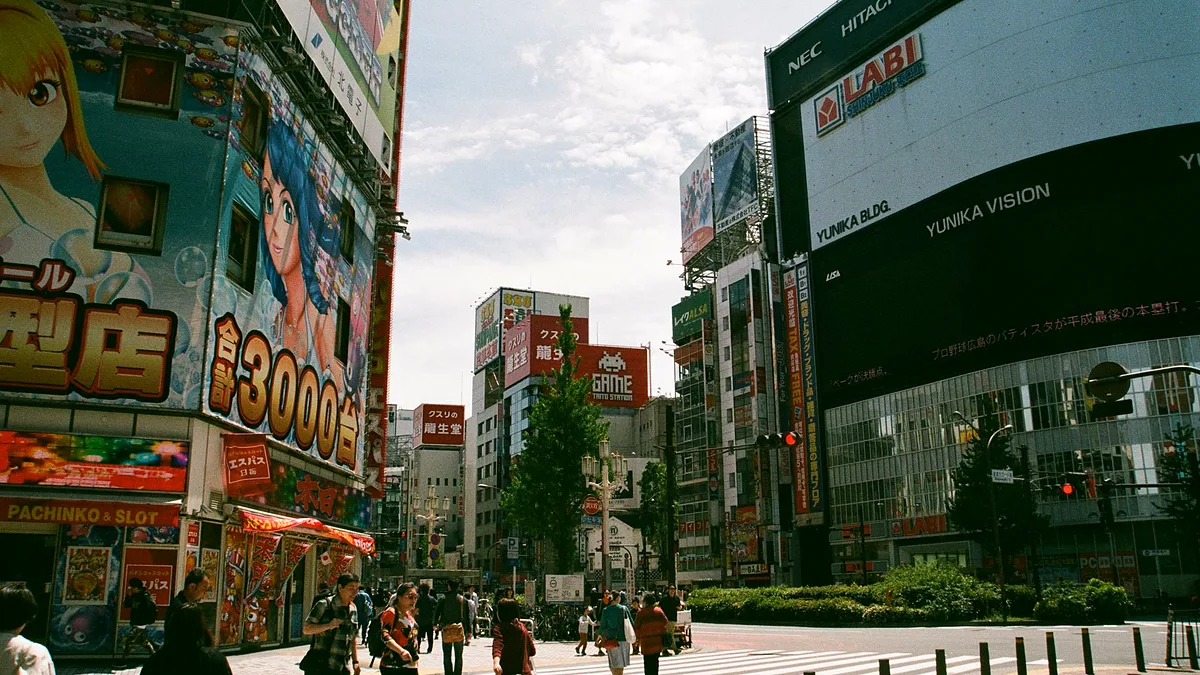
| Atmosphere & Aesthetic | Dense neon-and-concrete metropolis with pockets of wooden shitamachi charm | Low-rise temple town, French-Lao shophouses, river mist, jungle hills |
| Crowd Density & Seasonality | Heavy year-round; peak late March–early April (cherry blossom) and November | Busy November–February; smoky and hot March–April; green, cheap, quiet May–October |
| Flight & Transit Accessibility | Direct long-haul flights worldwide; 13 metro lines plus JR | Regional flights only (Bangkok, Hanoi, Vientiane, Siem Reap, Kunming); walkable core, tuk-tuks |
| Best For | Food depth, museums, nightlife, shopping, sheer efficiency | Slow mornings, temple architecture, Mekong sunsets, long low-cost stays |
Scenery & Atmosphere: How Similar Are They Really?
Tokyo's old face survives in low-rise districts like Yanaka, Kagurazaka, and the lanes behind Senso-ji, where two-storey wooden houses lean over narrow streets and shopkeepers still sweep their own doorsteps. Luang Prabang runs that same script for entire blocks. The peninsula's main streets are lined with teak shophouses and faded French colonial villas, and the temple roofs sweep low and wide rather than pointing sharply skyward like Thai wats.
Unlimited High-Speed International Travel eSIM
Connect in seconds across 180+ destinations. Instant QR code activation with zero roaming surcharges.

The landscapes differ completely, though. Tokyo is a flat concrete plain sliced by rivers and stitched together by elevated expressways. Luang Prabang sits where the Mekong meets the Nam Khan, ringed by jungle hills that go blue-grey in the late-afternoon haze. Mornings here are genuinely misty. In Tokyo you get a sunrise over a skyline. In Luang Prabang you get one over water buffalo.
Street life is the closest match. Tokyo's shotengai and izakaya alleys (Omoide Yokocho near Shinjuku, Harmonica Yokocho in Kichijoji) are tight, sociable, and lit by hand-painted signs. Luang Prabang's night market on Sisavangvong Road runs the same way — low tents, no hard sell, families eating at plastic tables behind the stalls. Climb Mount Phousi at dusk (20,000 kip entry, roughly $1) and you get a 360-degree view of temple spires and river that no Tokyo rooftop can match.
The Wallet Test: Real Cost Breakdown
These are honest mid-range numbers, not hostel-scraping or luxury splurges. Exchange rate assumed at roughly 21,000 kip to the dollar, which is close to what the BCEL ATMs and gold-shop counters actually give you.
Tokyo, per person per day
- Business hotel double (APA, Sotetsu, Tokyu Stay): ¥10,000–16,000 (~$65–105)
- Hostel dorm bed: ¥3,500–5,500 (~$23–36)
- Ramen or soba lunch: ¥900–1,300 (~$6–9)
- Convenience-store dinner: ¥700–1,000 (~$5–7)
- Craft beer at an izakaya: ¥700–900, plus a ¥300–500 seat charge (~$5–9 total)
- Tokyo Subway 24-hour ticket: ¥800 (~$5)
- Senso-ji and Meiji Jingu: free; teamLab Planets: ¥3,800–4,800 (~$25–32)
Luang Prabang, per person per day
- Old Town guesthouse double with AC: 150,000–350,000 kip (~$7–17)
- Boutique hotel with pool: 500,000–900,000 kip (~$24–43)
- Bowl of khao piak sen from a morning market stall: 20,000–30,000 kip (~$1–1.50)
- Sit-down Lao dinner for two with Beerlao: 120,000–200,000 kip (~$6–10)
- Large Beerlao at a riverside bar: 25,000–35,000 kip (~$1.20–1.70)
- Kuang Si Falls entry: 50,000 kip (~$2.40); shared tuk-tuk round trip 60,000–100,000 kip (~$3–5)
- Wat Xieng Thong entry: 20,000 kip (~$1); half-day cooking class: 400,000–600,000 kip (~$20–30)
One hidden cost to budget for: the Laos visa. Most nationalities pay $30–$42 on arrival (plus a $1 informal stamp fee) or around $50 for the e-visa. It is still cheaper than a single Tokyo museum-and-dinner evening.
Crowds, Authenticity, and Tourist Footprint
Luang Prabang is small — the historic peninsula is about 1.5km end to end and you can walk it in 25 minutes. That means the tourist footprint is concentrated. Mount Phousi at sunset is genuinely packed, and the dawn alms-giving ritual has become a photo scrum in places, with tour groups flashing cameras inches from monks' faces. Do it properly: stand back across the road, keep your head below theirs, and buy sticky rice from the vendors on Sakkaline Road (about 20,000 kip) rather than from a tour desk.
Kuang Si Falls, 30km out of town, is the other choke point. Coach groups arrive from 10am to 2pm. Go at 8am or after 3pm and you'll have the lower pools largely to yourself. The night market is busy but refreshingly low-pressure — nobody will chase you down the street.
Tokyo's crowding is a different beast. Senso-ji's Nakamise arcade is shoulder-to-shoulder by 10am, but shift two streets east into the back lanes and it empties out. Yanaka Ginza is calm on a weekday afternoon. Tokyo absorbs crowds because it has an enormous amount of city to absorb them into. Luang Prabang does not, so the trick is timing rather than escaping.
How to Experience the Best of Luang Prabang
Where to stay
Base yourself on the Old Town peninsula. Sisavangvong Road and the parallel Sakkaline Road put you within a five-minute walk of the night market, the Royal Palace Museum, and most of the good restaurants. Ban Wat That, just north of the centre, is quieter and still walkable. The Nam Khan riverside near the seasonal bamboo bridge is the sweet spot for sunset views, though the bridge is rebuilt each dry season and gone in the floods.
If you want rural silence, cross the Mekong by ferry (about 20,000 kip) to Ban Xieng Maen. Just know that you'll be committing to a boat ride every time you want dinner. Staying outside the centre also means giving up the evening stroll, which is half the reason you came.
Signature activities that rival Tokyo
- Dawn alms giving (5:30–6:15am). Free to watch, respectful if you participate quietly. This is Luang Prabang's answer to a Tokyo morning market.
- Kuang Si Falls. Turquoise terraced pools, a 45-minute tuk-tuk ride out. Bring cash for entry and skip the bear sanctuary if you're short on time.
- Pak Ou Caves. A two-hour slow boat up the Mekong to two limestone caves packed with Buddha images. Shared boats run roughly 150,000–250,000 kip (~$7–12).
- The morning market on Pha Kham alley. Live fish, riverweed, and grilled river snails. Free, and far more real than the night market.
- UXO Lao Visitor Centre. Small, free, and the most sobering hour you'll spend in Laos. Donations welcome.
What to order
Start with khao piak sen, a silky rice-noodle soup with pork broth that locals eat for breakfast. Then try laap — minced meat tossed with lime, fish sauce, mint, and toasted rice powder — scooped up with sticky rice. Lao khao soi is not the Thai curry you're picturing; it's a clear pork-and-tomato broth over noodles, and it's excellent.
Order or lam, a thick stew of buffalo, wood ear mushroom, and bitter aubergine, if you want the dish locals are proudest of. Add sai oua (herbed Lao sausage), tam mak hoong (pounded papaya salad), and a khao jee pâté baguette from a street cart for about 25,000 kip. Chase it all with Lao coffee, which is strong, chocolatey, and roughly $1.
Who Should Still Choose Tokyo?
Choose Tokyo if your trip is built around food at the highest level — omakase counters, ramen shops with hour-long queues, depachika food halls — because Luang Prabang simply cannot compete on range or technique. Choose Tokyo if you want nightlife past midnight, world-class museums, retail therapy, or a base for Kyoto and Hakone.
Tokyo also wins on friction. Accessibility is dramatically better for wheelchairs and strollers, signage is in English everywhere, and you can land at Haneda and be at your hotel in 40 minutes. Luang Prabang has uneven pavements, patchy English outside the centre, and limited flights that route through Bangkok or Hanoi.
And be honest about the smoke. March and April in northern Laos are burning season. Temperatures hit 38°C and the haze can flatten the hills entirely. If those are your only travel dates, Tokyo is the better call.
Frequently Asked Questions
Is Luang Prabang actually cheaper than Tokyo?
Yes, dramatically. A comfortable day in Luang Prabang — guesthouse, three meals, a beer, and a tuk-tuk — runs about $40. The equivalent in Tokyo is $130 or more. The gap widens on accommodation, where a pool hotel in Laos costs less than a business-hotel room in Tokyo.
How many days do you need in Luang Prabang?
Three full days covers the temples, Kuang Si, Mount Phousi, and the markets without rushing. Five days lets you add Pak Ou Caves, a cooking class, and a genuinely idle afternoon by the Mekong. Past a week, most people start craving city energy.
Is Luang Prabang safe for solo travellers?
Yes. Violent crime against visitors is rare, and the town is small enough to walk at night. Watch for bag snatching near the night market, avoid unlit riverbanks after dark, and don't rent a motorbike unless you're confident — the roads north are not forgiving.
Does Luang Prabang really feel like old Tokyo?
It feels like the part of Tokyo that survived. Wooden shophouses, temple gates, low-rise streets, and a market culture that runs on routine rather than performance. If you loved Yanaka and Asakusa and found Shibuya exhausting, Luang Prabang is your town.