
The Quick Verdict
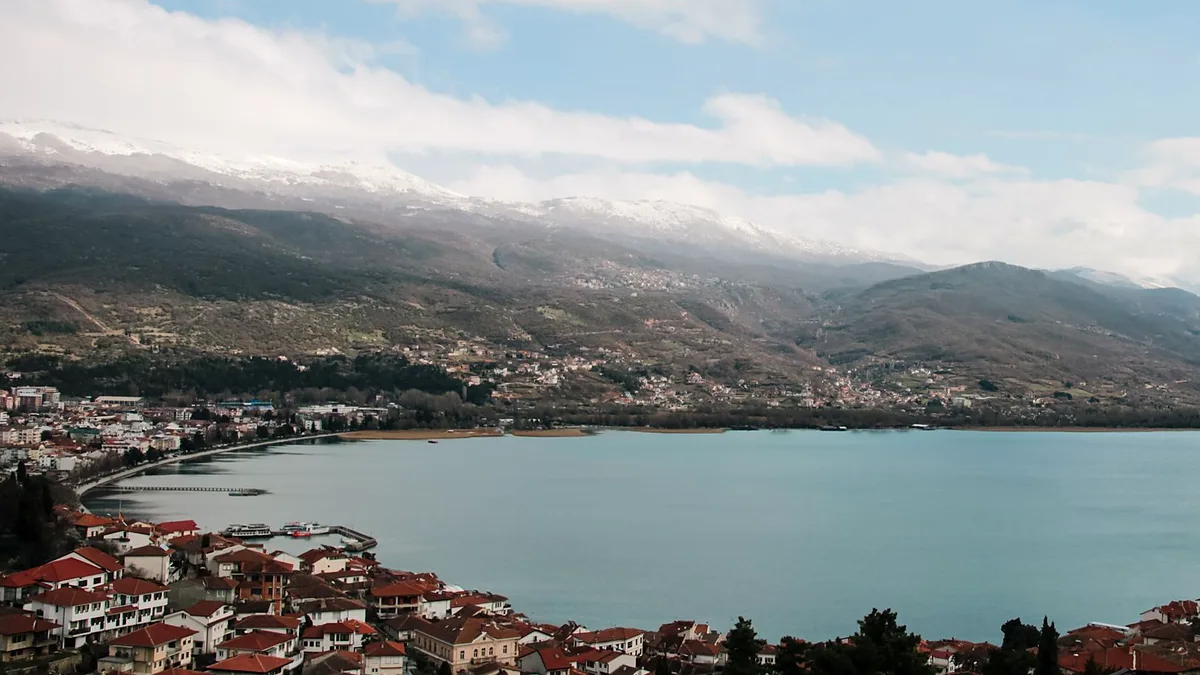
If you want to walk through very old religious architecture without paying Angkor Wat prices or sharing sunrise with a few thousand strangers, Lake Ohrid is the smarter trip. North Macedonia's lakeside town packs 4th-century basilica floors, 11th-century frescoes, and a hilltop fortress into a place you can cross on foot in 25 minutes.
What you sacrifice is scale. Nothing at Ohrid matches the moat at Angkor Wat or the tree roots swallowing Ta Prohm. What you gain is quiet, water you can swim in by mid-afternoon, and a town where the tourist economy still behaves like a local one. Chasing superlatives? Book Cambodia. Chasing a calm, cultured, affordable week? Keep reading.
Side-by-Side Comparison Scorecard
Prices below are for a mid-range solo traveler, or a couple splitting a double room, priced in early 2025. I've rounded them honestly rather than flatteringly.
Unlimited High-Speed International Travel eSIM
Connect in seconds across 180+ destinations. Instant QR code activation with zero roaming surcharges.

| Feature | Angkor Wat (Siem Reap) | Lake Ohrid (North Macedonia) |
|---|---|---|
| Average Daily Cost (Stay + Meals) | $55–100 (~$95 mid-range). The Angkor pass adds $12–37 per day on top. | $45–80 (~$70 mid-range). No entry pass, no tuk-tuk required, churches cost €1–3. |
| Atmosphere & Aesthetic | Khmer sandstone under jungle canopy. Wide moats, bas-reliefs, monsoon heat, dust, tuk-tuk engines. | Byzantine churches above clear limestone water. Ottoman lanes, red rooftops, pine hills, cool evenings. |
| Crowd Density & Seasonality | Roughly 2 million visitors a year in normal times. Sunrise at the main temple is shoulder-to-shoulder. May–June is hot and emptier. | A fraction of that. July–August fills with European and Balkan holidaymakers. May–June and September–October are calm. |
| Flight & Transit Accessibility | Siem Reap Angkor (SAI) sits 50 km out — 60–75 minutes, $35–40 by taxi. Direct regional flights from Bangkok, Singapore, Hanoi, KL. | Ohrid (OHD) has seasonal European routes only. Most fly to Skopje (SKP) then a 3-hour bus (~€10), or to Tirana (TIA) plus a 2.5-hour drive. |
| Best For | Bucket-list scale, photographers, multi-day temple deep dives, families with teens. | Slow travelers, swimmers, church-art fans, couples who want a €60 day not a $160 one. |
Scenery & Atmosphere: How Similar Are They Really?
Angkor Wat is a city-sized religious complex built between the 9th and 13th centuries, and it feels like it. You move between temples by tuk-tuk across 400 hectares, through doorways sized for gods, past walls of carved apsaras that took masons decades. The heat becomes a physical presence by 10am.
Ohrid works at the opposite scale. The old town climbs a small hill above a lake roughly 30 km long and nearly 290 m deep, one of the oldest in Europe. You walk everywhere: past the 11th-century Church of St. Sophia with its intact frescoes, up to Samuel's Fortress on the ridge, then down to the Church of St. John at Kaneo, sitting on a cliff above the water like something from an icon painting.
The parallel is real but specific. Both are UNESCO sites where living faith and old stone overlap, and both reward being there at 7am with nobody around. The difference is that Angkor overwhelms you with volume while Ohrid lets you sit with one building for an hour.
One honest note: if you're picturing jungle temples, you won't find them here. There are no roots swallowing towers. This is a small Balkan town inhabited for over 2,000 years, built around a lake rather than a lost empire.
The Wallet Test: Real Cost Breakdown
Siem Reap is cheaper on the ground than most people expect. Getting there is the expensive part, and the temple pass is the second biggest line item.
| Cost Item | Angkor Wat (Siem Reap) | Lake Ohrid |
|---|---|---|
| Mid-range double room | $35–60 (~$45) | €45–75 / ~$50–82 |
| Street or market meal | $2–4 | €2–4 / ~$2–4.50 |
| Sit-down dinner for two | $15–25 | €25–40 / ~$27–44 |
| Local beer or coffee | $0.75–1.50 | €1.50–2.50 / ~$1.60–2.75 |
| Signature paid entry | $37 one-day pass; $62 for three days | Samuel's Fortress €2; St. Sophia €2; Bay of Bones €4 |
| Main excursion | Tuk-tuk day with driver, $20–25 | Boat to Sveti Naum, €15–20 (~$16–22) return |
| Return airfare from Western Europe | $700–950 to SAI with a connection | €60–200 to Skopje or Ohrid, low-cost carrier |
Add it up and five days at Angkor from Europe lands around $1,300–1,600 per person with airfare. The same five days at Ohrid — mid-range hotel, fish dinners, a boat trip, a few church entries — comes in nearer $700–950.
The daily gap is smaller than the flight gap, and that's the part people get wrong. Siem Reap is not a rip-off once you're there; a $1.50 draft beer and a $3 bowl of noodles are genuinely cheap. The savings come from the pass, the flights, and the fact that Ohrid has almost nothing you must pay to see.
Crowds, Authenticity, and Tourist Footprint
Angkor's crowds are concentrated and predictable, which actually helps. Sunrise at the main temple is the worst of it — several hundred people lining the same reflecting pond for the same photo. By 9am the tour buses shift to Ta Prohm and Bayon, and the smaller temples sit nearly empty.
Ohrid's crowds are seasonal and far thinner. July and August bring German, Dutch, Serbian, and Bulgarian holidaymakers who mostly stay on the lakefront promenade. Outside those two months you can walk the old lanes and pass a dozen people, with church interiors often unattended and a €2 donation sign by the door.
The honest downside: Ohrid's waterfront has not escaped tourist-town drift. Souvenir stalls crowd the lower bazaar, some lake-view restaurants charge double for the same fish, and the shoreline has been hit by unregulated construction for years. The town is also genuinely small — no big-city energy if you want nightlife.
Siem Reap's version of that trap is Pub Street, an overpriced neon strip locals avoid. Skip it and eat at the road stalls around Wat Bo Road instead, where the food is better and half the price.
How to Experience the Best of Lake Ohrid
Where to Stay
Old Town (Varoš) is the pick for a first visit. You're walking distance from Samuel's Fortress, St. Sophia, and Kaneo, with cobbled lanes and €50–70 doubles. Book a room with a terrace and skip the lakefront hotels, which charge a view premium and collect the evening noise.
Kaneo, ten minutes below the fortress, is quieter and has the best swim spots at the cliff base. For a resort feel, look at Dolno Konjsko or St. Stefan 6–8 km south — nicer water, less charm. Struga, 15 km north, is cheaper still, and Pogradec across the Albanian border is the real budget option at €25–35 a night.
Signature Activities That Rival Angkor Wat
- Sunrise at Kaneo. Arrive by 6:30am in summer. The church, cliff, and water go gold and there's nobody else there.
- Climb Samuel's Fortress. €2 entry, 15 minutes uphill, whole-lake views from the walls. Go before 9am to beat the heat.
- Plaošnik. The early Christian basilica complex has 5th-century mosaic floors under protective cover — Ohrid's most serious archaeological site.
- Boat to Sveti Naum. Two hours each way on the lake, €15–20 return, plus €1 monastery entry. The springs behind it hold the clearest water in the region.
- Bay of Bones. A reconstructed stilt-house settlement on the water. Slightly theme-park, but the underwater archaeology story is real.
- Swim. This is the thing Angkor cannot give you. Kaneo, Gradište, and Ljubaništa all have easy access points.
What to Order
Ohrid trout is the dish, though wild stocks are protected and most plates are farmed — ask, and expect €15–22 for a whole grilled fish. Otherwise hunt down pastrmajlija (flatbread baked with pork and eggs), tavče gravče (white beans in a clay pot), and a shopska salad with local white cheese.
Drink Skopsko or Zlaten Dab at €2 a glass, or switch to Tikveš Vranec red at €4–6 in restaurants. Finish with rakija, which locals will offer you at 10am without irony.
Who Should Still Choose Angkor Wat?
Go to Cambodia if scale is the entire point. Angkor Wat is not overrated — the moat is 190 m wide, the bas-reliefs run for hundreds of metres, and the first walk up the west causeway genuinely lands. Ohrid cannot replicate that and doesn't try.
Choose Angkor if you're already in Southeast Asia, if you're traveling with teenagers who want the adventure-film version of history, or if you shoot wide lenses at dawn. Choose it too if you take one big trip a decade — some things are worth the airfare.
Choose Ohrid if you have a week in Europe, want culture without queueing, and would rather spend €60 a day than $160. It's the better trip for a certain kind of traveler, not the better monument. That distinction matters.
Frequently Asked Questions
Is Lake Ohrid actually cheaper than Angkor Wat?
Yes, but mostly because of flights and entry fees, not hotels or food. A mid-range day at Ohrid runs $60–80, while Siem Reap runs $85–100 once the $37–62 Angkor pass is spread across your stay. From Europe, airfare alone can be $500 cheaper.
Can Lake Ohrid really replace the Angkor Wat experience?
It replaces the quiet-temples-and-old-stone part well, and adds swimming plus a walkable historic town. It does not replace the jungle, the monumental scale, or Khmer architecture. Treat it as a different trip with a similar mood.
What's the best time to visit Lake Ohrid to avoid crowds?
Late May to mid-June, then September to early October. The lake is warm enough to swim, days sit around 22–26°C, and hotel rates drop 20–30% below August peaks. July and August are busy and the waterfront gets loud.
How do I get to Lake Ohrid without an expensive flight?
Fly to Skopje (SKP) on a low-cost carrier, then take the bus from the main station — about 3 hours, roughly €10, several departures daily. Flying into Tirana (TIA) works too, with a 2.5-hour road transfer to the lake's southern shore.