
Short answer: yes, Himarë works as an Interlaken stand-in. Not because it copies Switzerland, but because it delivers the same core photograph — steep gabled roofs stacked against a mountain wall, water at the bottom of the frame, and a town centre small enough to cross on foot in twenty minutes. You get that on the Albanian Riviera for roughly a third of the price.
The trade-off is real, though. Interlaken runs like a Swiss watch: trains every few minutes, trails signposted to the metre, tap water you'd happily pay for. Himarë runs on improvisation — a rental car with a quarter tank, a coast road that narrows without warning, a taverna that opens when the owner wakes up. If you want the machine, pay for Interlaken. If you want the view plus the salt, Himarë wins on value by a mile.
Side-by-Side Comparison Scorecard
| Feature | Interlaken | Himarë |
|---|---|---|
| Average Daily Cost (Stay + Meals) | CHF 250–400 per person (€235–380 / ~$265–425) | €60–100 per person (~$65–108), car rental extra |
| Atmosphere & Aesthetic | Manicured chalet village: carved timber balconies, geranium boxes, jade lakes, year-round polish | Whitewashed stone and slate lanes: dry limestone, olive groves, warm Ionian water, a little ragged around the edges |
| Crowd Density & Seasonality | Busy all year; peaks July–August and Christmas–New Year; heavy day-tripper traffic off the GoldenPass line | Sleepy October–May; packed 1–20 August; June and September are the sweet spot; mostly regional visitors |
| Flight & Transit Accessibility | Zurich Airport 2h05 by direct train; Bern 1h; car-free arrival is easy, with dense rail, bus and funicular links | Tirana Airport 4.5–5h by car; or Corfu plus a 1h ferry to Sarandë then 1h drive; direct buses from Tirana ~7h; a car is strongly advised |
| Best For | Glaciers, flawless hiking infrastructure, families who want zero friction, winter sports | Beach and mountain in one day, budget slow travel, seafood-led trips, shoulder-season swimmers |
Scenery & Atmosphere: How Similar Are They Really?
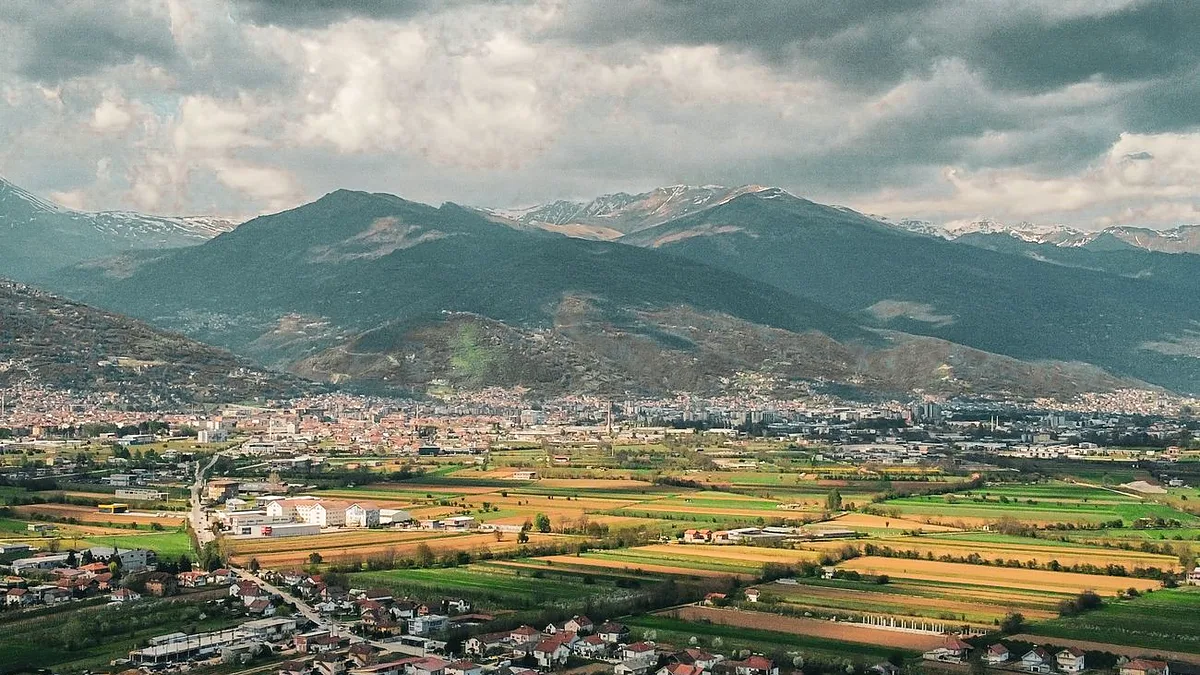
Both towns sit in the same geological trap: a narrow floor of buildable land squeezed between water and near-vertical rock. Interlaken has the Aare River and two lakes, with the Harder Kulm ridge standing directly behind the rooftops. Himarë has a small bay on the Ionian, with the Ceraunian mountains dropping almost straight into the sea.
Unlimited High-Speed International Travel eSIM
Connect in seconds across 180+ destinations. Instant QR code activation with zero roaming surcharges.

The building logic matches, too. Heavy snow and heavy rain both demand steep roofs with deep eaves — so Interlaken's chalets wear wide gables, dark timber balconies and window boxes of red geraniums. Himarë's old town uses the same steep pitch in local limestone slab over whitewashed or bare-stone walls, with grapevines doing the job of the flower boxes.
Walk the Marktgasse in Unterseen, Interlaken's old quarter, then the lanes inside Himarë's Kastro. The family resemblance is obvious: narrow alleys, doors opening directly onto the street, laundry strung between shutters, and elderly men on plastic chairs watching nothing in particular. Even the bilingual signage in Himarë — Albanian and Greek — feels like a cousin of Switzerland's four-language street signs.
Then the two diverge hard. Interlaken is green: wet, lush alpine meadow green, with lakes that sit around 15°C even in August. Himarë is dry — limestone, olive, cypress, oregano growing out of wall cracks — and the sea is warm enough for a two-hour swim by early June.
That is the actual difference in one line. Interlaken gives you postcard scenery you look at. Himarë gives you postcard scenery you swim in.
The Wallet Test: Real Cost Breakdown
This is where the comparison stops being close. Figures below are peak season (July–August) and use roughly 1 CHF ≈ €0.95 / $1.05, and 100 lek ≈ €1.
| What You're Paying For | Interlaken | Himarë |
|---|---|---|
| Mid-range double room, high season | CHF 220–320 (€210–305 / ~$245–355) | €60–110 (~$65–119) |
| Hostel dorm bed | CHF 55–75 (€52–71) | €18–25 (~$20–27) |
| Casual sit-down lunch | CHF 24–28 (rösti with egg) | €8–12 (grilled fish, salad, bread) |
| Dinner for two with wine | CHF 120–180 (fondue runs CHF 70–90 for two before drinks) | €35–55 (seafood platter, wine, rakí on the house) |
| Coffee / 0.5L beer | CHF 5.50 / CHF 7.50 | €1.30 / €2.50 |
| Signature excursion | Jungfraujoch return CHF 224.60 (~$235) or tandem paragliding CHF 180–210 | Full-day boat to Grama Bay €30–45, or tandem paragliding at Llogara Pass €70–90 |
Run the maths on a week for a couple. Mid-range Interlaken lands somewhere around CHF 3,500–4,500 all in. The same week in Himarë lands near €800–1,200 — and that figure already includes a rental car at €30–45 a day, which you will want.
The Jungfraujoch ticket is the number that shocks people most. One train ride costs more than three nights in a Himarë guesthouse, and you'll be sharing the summit terrace with a few thousand other people who all booked the same morning slot.
Crowds, Authenticity, and Tourist Footprint
Interlaken is not a village that happens to receive tourists. It's a tourism machine with a town attached — around a million overnight stays a year, plus coach loads and GoldenPass day-trippers. In July the Höheweg promenade becomes a slow-moving queue, and you'll hear more Hindi, Mandarin and Gulf Arabic on the main strip than Swiss German.
Himarë is heading the same direction, faster than most travellers expect. The pressure point is 1–20 August: the road south from Vlorë turns into a crawling line of cars, the pebble beaches at Livadh and Jalë are full by 10am, and apartment rates triple. The crowd is mostly regional — Albanians and Kosovars on summer break — plus Italians arriving by ferry from Bari and Corfu.
Step one street back from the seafront and it empties out completely. The old town keeps year-round residents, the bakeries still sell byrek to people who actually live there, and in June or September you can have an entire cove to yourself before 9am.
Honest downsides: Himarë has half-finished concrete shells on the hillsides, occasional water-pressure problems in peak August, and beaches made of pebbles rather than sand. Interlaken's downside is the mirror image — everything works perfectly, everything costs money, and every viewpoint comes with forty other people holding up the same phone.
How to Experience the Best of Himarë
Where to Stay
Spile is the beach strip just south of the centre — renovated rooms, sea views, five minutes' walk to the sand and the seafood tavernas. The old town and Kastro suit anyone who'd rather hear church bells than beach bars, with a steep ten-minute walk down to the water. Livadh, two kilometres north, is quieter and better value. Skip the rooms directly on the SH8 highway — the traffic noise starts at 7am and doesn't stop.
Activities That Rival Interlaken
- Paraglide the Llogara Pass. The road switchbacks above the coast 40 minutes north, and tandem flights run €70–90 — a direct swap for Interlaken's CHF 200 Harder Kulm launch.
- Hike or boat into Gjipe Canyon. A 30–40 minute walk down from the main road, or a short water taxi from Jalë. White cliffs, fresh water meeting salt, and no lift ticket.
- Climb to Porto Palermo Castle. An 18th-century fortress on its own peninsula about 12 km south, built for Ali Pasha. Entry is a couple of euros and the swim off the far side is superb.
- Take a full-day boat to Grama Bay. €30–45 buys you the Karaburun cliffs, a cave, and water so clear it looks edited. Bring cash for lunch.
- Walk up to Cika e Himarës. The ridge trail above town gives you the full valley-and-sea view that Interlaken sells on postcards, minus the funicular queue.
What to Order
Start with grilled levrek (sea bass) or cipura (sea bream), sold by weight and priced around €10–14 a plate. Order the octopus in olive oil, the mussels, and a plate of fërgesë — baked peppers, tomato and cottage cheese. Finish with gliko, the spoon-sweet fruit preserve, and a shot of local rakí that will almost certainly be free.
Who Should Still Choose Interlaken?
Pay the premium if your trip depends on a glacier. The Jungfraujoch, Schynige Platte and the Lauterbrunnen valley are genuine world-class sights with no Albanian equivalent, and no amount of Himarë charm replaces standing at 3,454 metres.
Choose Interlaken if you're travelling with young children or older relatives and cannot absorb friction: unpredictable buses, steep unlit stairs, and restaurants that close without notice. Choose it if you want to arrive by train and never touch a steering wheel, or if you're skiing in winter, when Himarë's hotels are largely shuttered.
Choose it, finally, if two weeks of improvisation would exhaust rather than energise you. Switzerland's real product is not the mountains — it's the guarantee that everything will work.
Frequently Asked Questions
Is Himarë actually cheaper than Interlaken?
Dramatically. A mid-range double room costs roughly a quarter to a third of Interlaken's rate, and restaurant bills land around 60–70% lower. Budget around €90–160 a day for a couple in Himarë versus CHF 450–600 in Interlaken.
Does Himarë have mountains and hiking like Interlaken?
Yes, but with a different character. The Ceraunian range rises straight from the coast, with trails to Cika e Himarës and the Llogara Pass. You get steep, dry, sea-view hiking rather than glacier walks and cable cars — fewer facilities, far fewer crowds.
When is the best time to visit Himarë compared with Interlaken?
June and September for Himarë: warm sea, open restaurants, and rates 30–40% below August. Avoid 1–20 August if you dislike traffic. Interlaken's best window is late May to early July and September, when the trails are open but the summer coach traffic hasn't peaked.
Do I need a car to enjoy Himarë?
Not strictly, but it helps a lot. Local minibuses link Himarë with Vlorë (about €3–4) and Sarandë (€2–3), and the town itself is walkable. For Gjipe, Porto Palermo, Llogara and the quieter beaches, a rental at €30–45 a day pays for itself quickly.