
The Quick Verdict
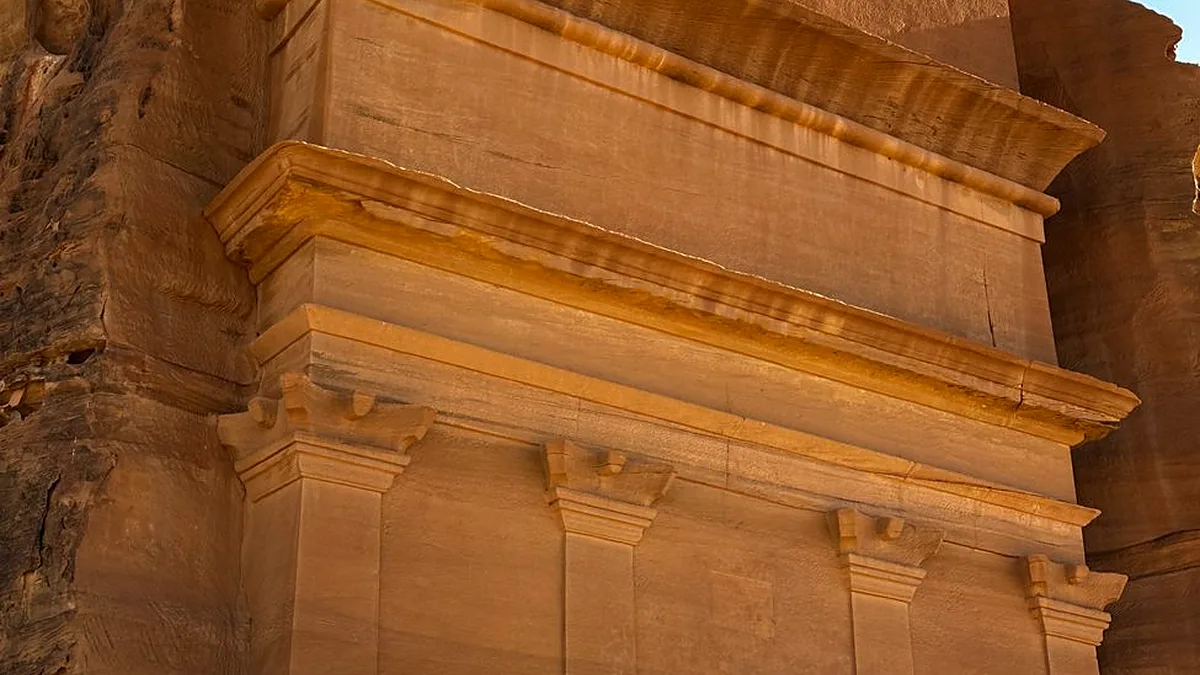
Swap the Serengeti for Hegra and you trade lions for carved stone: 111 monumental Nabataean tombs cut into sandstone outcrops about 25 km north of AlUla, in northwest Saudi Arabia. The trade knocks roughly two-thirds off your daily spend and removes the $300 bush-plane charter. What it does not do is put a leopard in a tree.
That is the honest deal. If your reason for flying to Tanzania was to stand in front of something ancient and enormous, Hegra delivers it, and you will photograph it without a fleet of Land Cruisers in the frame. If your reason was to watch a cheetah hunt, no amount of Nabataean masonry will fill that hole.
Timing matters more than either destination will tell you. AlUla's season runs October to April; by July the mercury sits at 44°C and several outdoor tours shut. Hegra's daily slots are capped, so in winter book two to three weeks ahead through Experience AlUla or you will be photographing the visitor centre instead.
Unlimited High-Speed International Travel eSIM
Connect in seconds across 180+ destinations. Instant QR code activation with zero roaming surcharges.

Side-by-Side Comparison Scorecard
| Feature | Serengeti | Hegra |
|---|---|---|
| Average Daily Cost (Stay + Meals) | ~$450–900 per person, park fees built in | ~$150–260 per person, tours and car rental included |
| Atmosphere & Aesthetic | Open grassland, granite kopjes, dust, tented camps, animal noise at 5 a.m. | Carved sandstone facades, basalt desert, palm oasis, near-total silence |
| Crowd Density & Seasonality | Peak July–October and January–February; 20+ vehicles at a big sighting | Guided groups only, capped at a few dozen people per slot; best October–April |
| Flight & Transit Accessibility | Fly to Kilimanjaro (JRO) or Arusha (ARK), then a 1–2 hour charter to Seronera | Fly to AlUla (ULH) via Riyadh, Jeddah or Dubai, then 25 km by road |
| Best For | Wildlife photographers, families, birders, anyone chasing the Migration | History lovers, budget travellers, stargazers, quiet-landscape seekers |
Scenery & Atmosphere: How Similar Are They Really?
Both places make you feel small, but for opposite reasons. The Serengeti shrinks you with distance and movement: short-grass plains rolling to a flat horizon, a sky that takes up 80 percent of the frame, and something always walking across it. Hegra shrinks you with craft — facades 20 metres tall, chiselled by hand 2,000 years ago, with doorways that make a full-grown adult look like a child.
The Seronera valley in central Serengeti is the classic image: riverine trees along a seasonal river, granite kopjes you can climb, and cats using the shade. Drive two hours north and the landscape flattens toward the Mara River, where the crossings happen in July and August. It is a working ecosystem, not a view.
Hegra is architecture you walk up to. Qasr al-Farid, the lone unfinished tomb that sits apart from the main clusters, is the postcard shot, but the real punch comes from the smaller details: the Nabataean capitals, the eagle and snake reliefs above the doors, the inscription naming Lihyan son of Kuza. Jabal Ithlib, a short drive away, holds a narrow siq and a carved dining hall that once hosted religious banquets.
The wider AlUla landscape is the part most visitors underestimate. The oasis holds more than two million date palms and a working farm grid you can walk through. Elephant Rock rises out of the dunes 11 km from town, and the volcanic plateau to the east gives you black basalt against red sand at sunset. There is even a hot-air balloon operation in season, which is the closest thing here to a Serengeti balloon flight — except you float over tombs and palm groves instead of wildebeest.
Street life is a lopsided comparison. The Serengeti has none; it is a national park, and your evening is a campfire and a guide's stories. AlUla Old Town has hundreds of restored mud-brick houses, a café lane, a handicraft market and families out after sunset prayer. If you like wandering on foot after dark, Hegra's base town wins by a mile.
The Wallet Test: Real Cost Breakdown
This is where the swap makes sense. Tanzania's park fees are the single biggest reason a safari empties an account: non-residents pay roughly $70–85 per person per 24 hours, plus a vehicle fee of about $50 a day, plus concession fees if you sleep inside the park. Those fees keep ticking whether you see anything or not.
| Line Item | Serengeti | Hegra / AlUla |
|---|---|---|
| Site entry | $70–85 pp per 24 hrs + vehicle fee | SAR 95–125 (~$25–33) per guided Hegra tour |
| Mid-range room | $250–400 per night, half board | SAR 300–500 (~$80–135) per night |
| Mid-range meal | $15–30 | SAR 40–70 (~$11–19) |
| Guide / driver day | $250–350 per vehicle | Included in tour price |
| One-off costs | Tanzania visa $50–100 | Saudi e-visa SAR 480 (~$128), one year, multiple entry |
A comfortable mid-range Serengeti day lands around $450–600 per person once you add a shared game drive, tips and drinks. A comfortable mid-range AlUla day lands around $150–260, car rental included. Do four days of each and the gap is not a rounding error — it is another holiday.
Skip the extras that do not earn their price. The Serengeti balloon flight is spectacular but runs $500–600 per person; the AlUla version is a fraction of that. Conversely, the Hegra vintage Land Rover tour costs SAR 350+ (~$93) and covers the same ground as the standard bus tour, so pay for it only if the vehicle itself is the thrill. Both destinations punish you for booking luxury lodges out of habit: a $1,200 night in the Serengeti buys location, a $1,000 night at Banyan Tree AlUla buys a pool.
Crowds, Authenticity, and Tourist Footprint
Serengeti's crowding problem is concentrated and predictable. In July and August, the Seronera area can see 20 or more vehicles stacked around a single leopard, radios crackling as everyone converges. Head to the southern Ndutu plains in January and February for the calving season and you can go an hour without seeing another car.
Hegra's numbers are structurally different because access is controlled. You cannot drive yourself to the tombs; every visitor arrives on an approved tour from Winter Park, in a group of roughly 20, with a Rawi (a trained local storyteller-guide). AlUla as a whole drew somewhere around a quarter of a million visitors in a recent year — roughly what the Serengeti absorbs in a busy season, spread across a much larger site.
The honest downside of AlUla is that it is a heavily curated destination. The Royal Commission for AlUla controls the hotels, the tours and much of the town, so the experience is polished and slightly managed. Independent travellers who like turning up and figuring things out will find that frustrating. Alcohol is banned, nightlife is festival-driven, and outside Winter at Tantora or the AlUla Skies festival the evenings are quiet.
Serengeti's authenticity problem is the opposite: the wildlife is genuinely wild, but the experience around it is a packaged product. You will be on a fixed schedule, in a vehicle, with a guide who knows exactly where the radio says the lions are. Neither place is a secret. Both reward travellers who go in shoulder season and stay more than three nights.
How to Experience the Best of Hegra
Where to base yourself
Stay in AlUla Old Town if you want to walk to dinner — Cloud7 Residence is the practical mid-range pick, while Dar Tantora puts you in a restored mud-brick house with no televisions and a rooftop view. Budget-conscious travellers should look at the guesthouses and apartments in AlUla town proper, where rooms run SAR 250–400 (~$67–107) a night. The splurge options, Habitas AlUla and Banyan Tree AlUla, sit in the Ashar valley and require a car for everything.
The experiences that rival a safari
- The Hegra guided tour: about two hours, morning or late afternoon. Take the sunset slot if you can; the facades turn copper at 5 p.m.
- Dadan and Jabal Ikmah: the Dadanite capital and an open-air library of inscribed stones, both older than Hegra. Book as a combined ticket, roughly SAR 50–70 (~$13–19).
- Elephant Rock at golden hour: free, chaotic parking, worth it once.
- Stargazing: AlUla runs dark-sky programming and the desert outside the oasis is genuinely black at night. This is the closest thing to a Serengeti night sky.
- Maraya: the mirrored concert hall in the canyon. Catch a show if the calendar lines up; otherwise the building itself is a 15-minute stop.
What to order
Start with kabsa, the spiced rice-and-lamb dish that is Saudi Arabia's national plate, then work through jareesh (crushed wheat with slow-cooked meat) and mataziz, a tangy AlUla staple of meat and wheat simmered until it falls apart. Saleeg, a creamy rice porridge, shows up on breakfast tables. Finish with AlUla's own dates — Barni and Sukkari varieties — alongside qahwa poured from a dallah. For a blowout dinner, Maraya Social is the fine-dining address; for everything else, the cafés along Old Town's main lane do the job for SAR 40–70 a head.
Who Should Still Choose Serengeti?
Book Tanzania without hesitation if animals are the entire point. Hegra has no wildlife beyond the occasional camel and a resident owl, and no amount of archaeology replaces the moment a lioness walks past your bumper. Families with children who want to see big mammals will be bored at Hegra within an hour.
Choose the Serengeti if you are travelling between June and October, when the Migration and the Mara River crossings are running and the weather is dry. Choose it if you want a beach add-on — Zanzibar is a 90-minute flight from Arusha. And choose it if you cannot handle being tied to a scheduled tour, because Hegra's guided-only access gives you far less freedom than a private safari vehicle.
Choose Hegra instead if you are travelling October to April, if your budget is genuinely tight, if you have already done a safari, or if ancient architecture moves you more than wildlife does. It is also the easier trip for solo travellers and anyone who wants a hot shower and a good coffee at the end of the day.
Frequently Asked Questions
Is Hegra a real alternative to a Serengeti safari?
Only for the sense of awe, not for wildlife. Hegra offers monumental 2,000-year-old tombs, desert landscapes and stargazing at roughly a third of the daily cost. If you are going specifically to see animals, it is not a substitute.
How much cheaper is Hegra than the Serengeti?
A mid-range Serengeti day runs $450–900 per person including park fees, vehicle and lodging. A mid-range AlUla and Hegra day runs $150–260. The Saudi e-visa (SAR 480, ~$128) is a one-off cost that eats into the savings on very short trips.
How many days do I need in each place?
Give AlUla three to four days: one for Hegra, one for Dadan and the oasis, one for Old Town and Elephant Rock. The Serengeti needs a minimum of four nights to justify the flights and park fees — five or six is better.
Can you visit Hegra without a tour?
No. Access is by approved guided tour only, departing from Winter Park in AlUla, and slots are capped daily. Book through Experience AlUla at least two to three weeks ahead in the October–April high season.