
The Quick Verdict
Formentera is not a cheaper Marrakech, and anyone who says otherwise has never priced an August rental car on the island. In peak season a plain double room in Es Pujols costs more than a riad with a courtyard pool and breakfast, and one lobster stew can equal a week of tagines. Treat this as a lateral swap on money, not a downward one.
What you actually trade is noise and density for salt and space. Formentera gives you whitewashed lanes, dry-stone walls, charcoal-grilled fish and a skyline with nothing tall in it — a Mediterranean echo of the medina's best pleasures, minus the haggling, the scooters clipping your heels and the 40°C afternoons. Go in June or late September and the swap finally makes financial sense.
Side-by-Side Comparison Scorecard
| Feature | Marrakech | Formentera |
|---|---|---|
| Average daily cost (stay + meals) | €75–110 / ~$82–120 per person, mid-range riad and two restaurant meals | €150–220 / ~$165–240 in July–August; €100–140 / ~$110–155 in June and September |
| Atmosphere & aesthetic | Ochre rammed-earth walls, tiled courtyards, minaret silhouettes, dense souk lanes | Whitewashed flat-roofed houses, dry-stone walls, pine scrub, sea at the end of every road |
| Crowd density & seasonality | Busy year-round; peak October–April and Easter; the medina is packed daily | Almost empty November–March; extreme in August; calm in May, June and September |
| Flight & transit accessibility | Menara Airport (RAK) with direct flights from most of Europe; 15–20 minutes to the medina | No airport; fly to Ibiza (IBZ), then a 30–35 minute ferry; bikes and seasonal buses on the island |
| Best for | Craft shopping, winter sun, riad luxury on a budget, Atlas and Agafay day trips | Beach-and-bike days, seafood, quiet small-scale hotels, travellers who hate bargaining |
Scenery & Atmosphere: How Similar Are They Really?
In Marrakech the architecture raises its voice. You pass through a 12-metre rammed-earth gate and land in lanes where cedar doors are studded with iron, zellige tiles throw light back at you, and the Koutoubia's 77-metre minaret hangs over the rooftops. Everything is vertical, patterned and built to impress.
Unlimited High-Speed International Travel eSIM
Connect in seconds across 180+ destinations. Instant QR code activation with zero roaming surcharges.

Formentera whispers. Its houses are white cubes with flat roofs, small windows and dark green shutters, kept low so the heat can pass straight over them. The real architecture here is the dry-stone wall — kilometres of it, laid without mortar, dividing fields and holding the soil down so the whole island looks hand-drawn.
The two places smell and sound nothing alike. Marrakech is charcoal, cumin, leather and orange blossom, with calls to prayer and drums bouncing off walls. Formentera is pine resin, hot dust, salt and grilled fish, with cicadas, bicycle brakes and outboard motors as the soundtrack.
Here's the honest gap: Formentera has no monumental architecture. There is no Bahia Palace (MAD 70 / ~€6.50), no Ben Youssef Madrasa with its carved plaster, no courtyards with fountains. Its history is domestic and defensive — the fortified 18th-century church of Sant Francesc Xavier, the watchtowers at Punta Prima and La Gavina built against Barbary pirates, and the low stone navetas scattered across the fields.
The Wallet Test: Real Cost Breakdown
Numbers beat adjectives, so here is what a day actually costs in each place for a mid-range traveller, priced per person unless stated.
Sleeping
Marrakech: €38–85 (~$42–93) buys a decent riad double inside the medina with breakfast, and €150+ gets you a courtyard, plunge pool and rooftop. Hotels in Gueliz run cheaper still, around €45–70 (~$49–77) for a modern double.
Formentera: expect €95–160 (~$105–175) in June or September and €180–320 (~$195–350) in August for the same standard of room. Apartments often impose a four- or seven-night minimum in peak season, which is where budgets quietly break.
Eating and drinking
- Marrakech street breakfast — bissara, msemen, mint tea: MAD 25–40 (~€2.50–4).
- Marrakech sit-down tagine in the medina: MAD 70–110 (~€6.50–10); a Nomad or Plus61 lunch runs MAD 180–250 (~€17–23).
- Formentera menú del día at lunch: €18–25 (~$20–27); dinner mains €20–32; caldereta de llagosta €55–75 per person.
- Coffee is about MAD 12 (~€1) in Marrakech versus €2–2.50 on the island, and a beer lands at €3.50–5 in Formentera.
Doing things
- Marrakech: Majorelle Garden MAD 170 (~€16), hammam MAD 150–400 (~€14–37), shared Atlas day trip MAD 400–700 (~€37–65).
- Formentera: e-bike €15–25 a day, small hire car €55–95 a day in peak season, return boat to Espalmador €25–35, sunbed at Ses Illetes €40–45, a single dive €55–75.
Add it up and a realistic mid-range day is €75–110 in Marrakech and €150–220 in August Formentera, dropping to €100–140 in the shoulder months. The swap only beats the original on a short-haul, self-catering trip: a cheap seat from Barcelona or Madrid, a studio in Sant Francesc, and dinners built from the produce market rather than restaurant menus.
Crowds, Authenticity, and Tourist Footprint
Marrakech absorbs huge visitor numbers because it is a working city of around a million people. The souks still have leather tanners and metalworkers, and neighbourhoods like Gueliz, the Mellah and Sidi Ghanem carry on with barely a tourist in sight.
Formentera is the opposite shape: roughly 7,500 residents, and a summer population that multiplies many times over. The pressure is concentrated and seasonal — the Ses Illetes car park is full by 10am in August, and Es Pujols turns into a beach strip after dark.
Both places have their touts. Jemaa el-Fnaa at dusk means henna artists and snake charmers who expect payment for photos, and the Majorelle Garden queue can hit 45 minutes by 10am. In Formentera the annoyance is logistical rather than personal: ferry queues at La Savina, booked-out bike shops, and beach clubs charging €45 for a lounger.
For genuine local life, skip the beachfront and sleep in Sant Francesc or Sant Ferran, shop at the produce stalls behind Plaça de la Constitució, and eat where the menu is in Catalan first. That is the closest this island gets to the everyday Marrakech you find two streets behind the main square.
How to Experience the Best of Formentera
Where to Stay
- Sant Francesc Xavier: the capital, all white lanes and cafés around Plaça de la Constitució. Best off-season base, five minutes from the port.
- Es Pujols: the busiest village, walkable beach, most restaurants and the only real nightlife. Noisier and pricier in August.
- Es Caló de Sant Agustí: a tiny boat-house harbour on the south side, two excellent restaurants, Migjorn beach a short walk away, better value than Es Pujols.
- Sant Ferran de ses Roques: bohemian, cheap eats, live music at the legendary Fonda Pepe. Good for cyclists.
- La Mola: rural and cliff-top, near the lighthouse and the craft market. You will want wheels.
What to Do That Rivals a Medina Wander
The nearest thing to a souk is the evening craft market at El Pilar de la Mola, held Wednesdays and Sundays from roughly 5pm to 9pm in summer. Vendors sell esparto sandals, silver, leather and hierbas liqueur, and half the island turns up.
Cycle the green route from La Savina through Sant Francesc to Es Caló — flat, signposted and about 30km end to end on e-bikes. Time sunset at the Cap de Barbaria lighthouse, where the land ends in a cliff of scrub and wind.
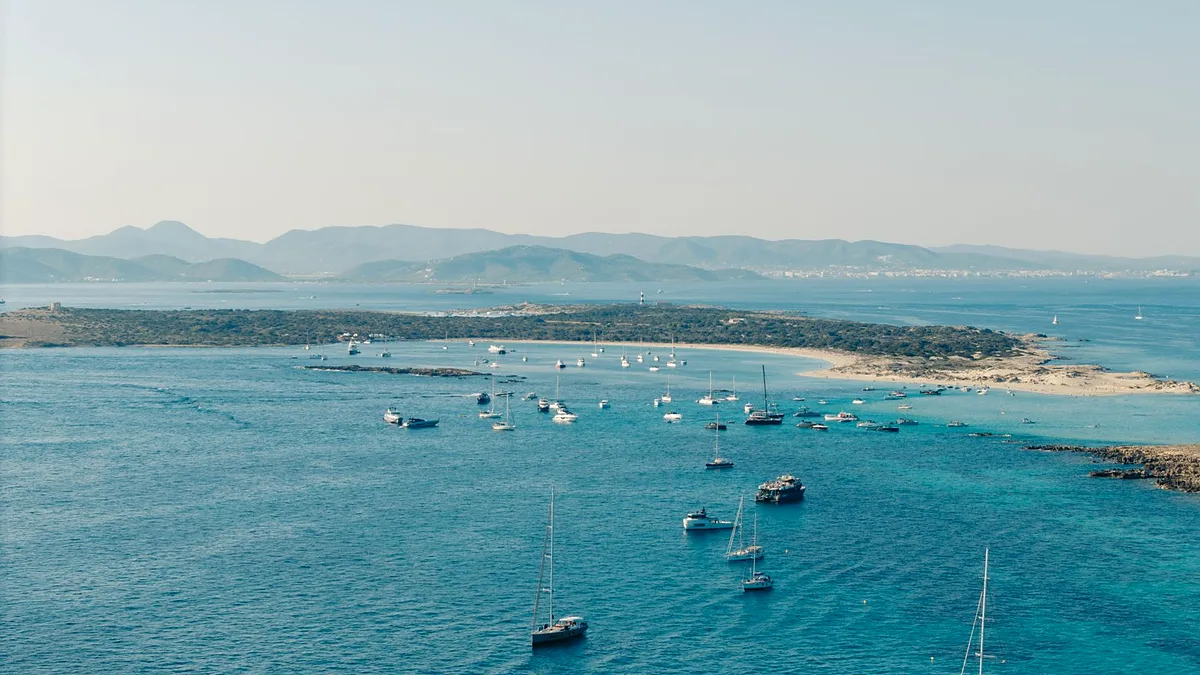
For water, swim off Ses Illetes in the morning before the boats arrive, then take a small taxi boat to Espalmador for the day. The seagrass meadows between Ibiza and Formentera are part of a UNESCO World Heritage listing, which is why the water reads that improbable turquoise.
What to Order
- Bullit de peix: a potato-and-fish stew served as two courses — the stew first, then rice cooked in the same broth. €22–30 per person.
- Caldereta de llagosta: the island's splurge lobster stew at €55–75 per person. Order it at Can Rafalet in Es Caló or Juan y Andrea on Ses Illetes.
- Peix sec: salt-dried fish dressed with tomato, pepper and olive oil, the local answer to preserved-fish culture.
- Flaó and greixonera for dessert, with a glass of Terramoll or Cap Blanc wine and hierbas ibicencas to finish.
Who Should Still Choose Marrakech?
Choose Marrakech if you want monumental architecture and craft depth — carved cedar, tilework, spice stalls, coppersmiths, and a souk system you could spend three days learning. Formentera simply cannot match that, and pretending otherwise serves nobody.
Choose it too if you travel between November and February. Marrakech gives you 20°C afternoons and sunny rooftops; Formentera gives you shuttered hotels and a lot of wind.
And choose it on budget. €75 a day in Marrakech buys a riad bed, two proper meals and a hammam, with change for the bus. The same money in August Formentera buys a room share and a bowl of pasta, and that is before the ferry.
Frequently Asked Questions
Is Formentera cheaper than Marrakech?
In high season, no — Formentera is often 40–80% more expensive per day. In late May, June and September the gap narrows sharply, and if you fly from mainland Spain on a €40–80 return seat to Ibiza and self-cater, the totals come out close.
Can Formentera replace Marrakech architecturally?
Only for vernacular architecture: whitewashed cubes, flat roofs, lime plaster and dry-stone walls. If your reason for visiting Marrakech is palaces, madrasas and tilework, Formentera will feel underdressed and you should book the flight to RAK instead.
Do you need a car in Formentera?
No. E-bikes and the seasonal buses linking La Savina, Sant Francesc, Sant Ferran, Es Pujols and La Mola cover most trips, and hiring a car adds €55–95 a day. Note that vehicle numbers arriving on ferries are capped in July and August, so pre-book if you must bring one.
When is the best time to visit each?
Marrakech is best in October–November and March–April, when days sit around 22–26°C. Formentera is best in June and September: warm sea, open restaurants, and rooms at roughly half the August rate.