
The Quick Verdict
Yes, the Faroe Islands can stand in for Miami, but not for the reasons you'd guess. The overlap isn't beaches or nightlife. It's architecture: two coastal places that built their whole identity out of color, weather, and a skyline that never rises past five floors. Miami paints its Art Deco blocks pastel pink and mint so the sun bounces off them. The Faroes tar their timber houses black and paint the doors blood-red so you can find them in fog.
What you gain is space. Roughly 130,000 people visit the Faroes in a year; Miami-Dade gets about 27 million. You also gain a lower hotel bill, no tipping, no resort fees, and a landscape so quiet you can hear a waterfall 800 meters away. What you lose is heat, sand, late-night food, and a nonstop flight from almost anywhere. Be honest with yourself about that last part before you book.
Side-by-Side Comparison Scorecard
| Feature | Miami | Faroe Islands |
|---|---|---|
| Average Daily Cost (Stay + Meals) | $280–$420 per person, February | $190–$270 per person, July |
| Atmosphere & Aesthetic | Neon, pastel Art Deco, palm canyons, glassy bayfront towers | Turf roofs, tarred black timber, fog, sea cliffs, painted doors |
| Crowd Density & Seasonality | ~27M visitors a year; Nov–Apr peak crush, summer hot and cheap | ~130K visitors a year; July–Aug busiest, May and September near-empty |
| Flight & Transit Accessibility | MIA nonstop from 130+ cities; you'll still want a car or Uber | 2 hours from Copenhagen, seasonal New York Stewart; rental car essential |
| Best For | Beach days, nightlife, Latin food, art fairs, people-watching | Hikers, photographers, slow travelers, anyone escaping noise |
Scenery & Atmosphere: How Similar Are They Really?
Miami's signature look lives between 5th and 15th Street on Ocean Drive, where roughly 800 buildings from the 1920s to the 1940s survive in one unbroken stretch. Look for the eyebrow ledges above the windows, the portholes, the glass block, and the neon that clicks on around 7pm. Inland the register changes: Mediterranean Revival in Coral Gables, coral rock walls, and Vizcaya's Italian stone sitting directly on Biscayne Bay.
Unlimited High-Speed International Travel eSIM
Connect in seconds across 180+ destinations. Instant QR code activation with zero roaming surcharges.

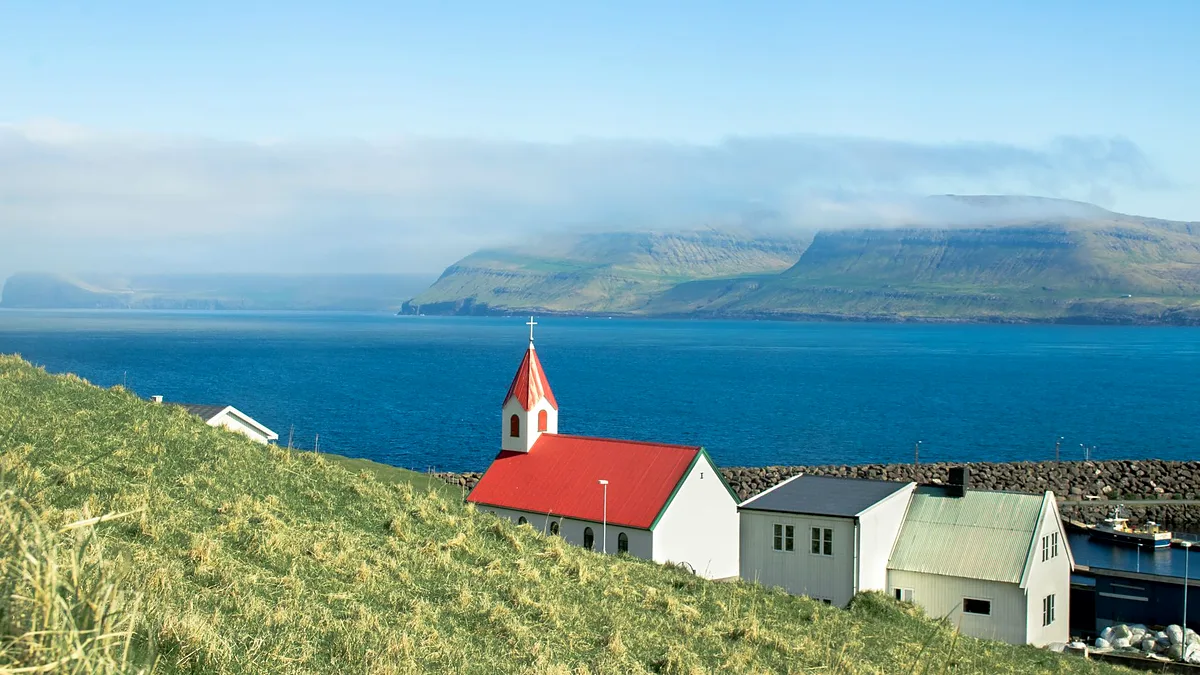
The Faroes answer with something quieter but just as deliberate. Tinganes, the red-tarred peninsula in the middle of Tórshavn, has hosted the Løgting since roughly 825 AD, making it one of the oldest parliamentary sites on earth. At Kirkjubøur, the Roykstovan farmhouse has a black tarred facade, a turf roof, and has been lived in by the same family line since the 1550s. The windows are small and set deep, because heat was expensive long before anyone invented a design award.
Here's the actual shared DNA: both places use color as wayfinding and weather as a design brief. Miami's palette is extroverted, built to be read at night from a moving car. The Faroes' palette is introverted, built to vanish into a hillside until the light hits it. Neither place lets a building beat the horizon, and both make you look at the water more than you look at the town.
Photographers chase both for the same reason. Miami's light is flat and glaring and turns hard at 6pm. The Faroes' light is low, sideways, and changes every eleven minutes.
The Wallet Test: Real Cost Breakdown
Miami prices are seasonal and honest about it. A decent boutique room in South Beach runs $340 to $520 a night in February, which is $170 to $260 per person if you're splitting it. Move to Brickell or Wynwood and it falls to $210 to $320. Food is where the sneaky costs hide.
- Cuban sandwich and a cafecito, Little Havana: $13–16 (~$14 USD). Best-value meal in the city.
- Dinner for two in Wynwood, one drink each: $110–160, before the 18–20% auto-grat on most South Beach bills.
- Cocktail on Ocean Drive: $18–24. The two-for-one boards are usually watered down.
- Beach chair and umbrella at a South Beach hotel: $40–75, sometimes credited against a food minimum.
- Transit: Metromover is free, Metrorail is $2.25, and an Uber from MIA to South Beach runs $25–35.
The Faroes flip the pattern. Lodging is reasonable, food is the shock, and nothing ambushes you afterward.
- Double room in Tórshavn, July: DKK 1,400–1,900 (~$200–275), so roughly $100–140 per person. Guesthouses sit at DKK 700–1,000.
- Restaurant dinner in Tórshavn: DKK 250–420 (~$36–60) per person before wine. A glass of wine is DKK 80–120.
- Groceries at Bónus: DKK 120–180 (~$17–26) covers a full day of self-catering. It's how locals eat.
- Car rental: DKK 450–700 daily (~$65–100) plus fuel. Split two ways, that's $35–50 each.
- Sub-sea tunnel tolls: DKK 100–175 one way (~$14–25). Budget for two or three.
- Guided hikes and boat trips: DKK 350–600 (~$50–86). Drangarnir and the Mykines ferry need booking weeks ahead.
Total it and the Faroes come in 25 to 35 percent cheaper per day on the ground. The flight is the equalizer. Miami is $120 to $280 return from most of the US East Coast. The Faroes run $650 to $1,100 return from the US, usually through Copenhagen, plus a seasonal summer route from New York Stewart. From Copenhagen it's a two-hour hop for €150–250 return, which makes this a genuine budget swap for European travelers and a stretch for Americans on a short trip.
Crowds, Authenticity, and Tourist Footprint
Ocean Drive is a machine. Touts hand out mojito flyers, menus are laminated in six languages, and the food is priced for people who will never return. The escape routes are close: North Beach around Normandy Isle, Surfside, and the side streets off Calle Ocho where the ventanitas still serve construction crews at 7am.
The Faroes have honeypots too, just smaller. Gásadalur's parking lot fills between 11am and 3pm in July when coach tours arrive, Saksun's single-track road turns into a queue, and the Mykines ferry sells out months in advance. Tórshavn gets busy on cruise days, and you can check the harbour schedule before planning a Tinganes walk.
Go in May or September and the arithmetic changes completely. Both months sit at 7 to 11°C, prices drop, ferries have space, and the days are still long. June 21 gives you close to 20 hours of daylight, which is spectacular and also exactly why July is the most crowded and expensive window.
One honest note the brochures skip: the grindadráp, the traditional pilot whale hunt, still happens, mostly in summer, in specific bays. It's legal, it's contentious, and Faroese people will discuss it openly if you ask respectfully. If witnessing it would ruin your trip, plan around the summer months. That's the trade-off of a place that hasn't staged itself for visitors.
How to Experience the Best of the Faroe Islands
Where to Base Yourself
Stay in Tórshavn for your first two nights. Hotel Føroyar sits above town with the best view in the capital, Hotel Hafnia is walkable to everything, and the guesthouses in Argir are cheaper without being remote. Then move to Vágar for two nights in Miðvágur or Sørvágur, which puts Múlafossur and the Mykines ferry on your doorstep. A night in Gjógv, at the northern tip of Eysturoy, is worth the detour for the natural harbour alone. Book July and August four to six months out, because the island's hotel inventory is tiny and sells out.
Signature Experiences That Rival Miami's Beach Days
- Múlafossur waterfall, Gásadalur: free, a 20-minute walk, and best before 9am when the coaches haven't landed.
- Lake Sørvágsvatn: the hike to Trælanípa cliff creates the illusion of a lake floating above the ocean. Three hours, a modest private-land fee, and zero shade.
- Drangarnir sea arch: guided only, DKK 500–600, and the single best half-day on the islands.
- Mykines: puffins from June to August, reached by a ferry that cancels in wind. Build in a buffer day.
- Kirkjubøur: 15 minutes from Tórshavn, with the ruins of Magnus Cathedral and a turf-roofed farmhouse you can tour.
- Tórshavn itself: Tinganes, Skansin fort, and the Nordic House, the closest thing here to a design statement.
What to Order
Start with skerpikjøt, wind-dried fermented lamb that's chewy, funky, and best eaten with butter on dense rye. Ræstur fiskur is the fish version and divides people hard. Kjötsúpa, a lamb and root vegetable soup, is the comfort dish you'll want after a wet hike. For a proper sit-down meal, book Ræst in Tórshavn, which holds a Michelin star and serves the fermentation tradition as a tasting menu, or Áarstova for a set menu in a 200-year-old wooden house. Beer comes from Föroya Bjór in Klaksvík, brewed since 1888, sold at the state monopoly shop, Rúsdrekkasøla Landsins.
Who Should Still Choose Miami?
Choose Miami if you want warm water. The Faroese sea sits at 9 to 11°C in summer, which is wetsuit territory, and there is no beach culture to speak of. Choose Miami if you only have a long weekend, because the Faroes reward seven days and punish three; weather eats a day or two.
Choose Miami if you're traveling with kids who need a pool, or a group that wants dinner at 10pm, or anyone who refuses to book a connecting flight. Choose it if you want a city: Wynwood's murals, the Pérez Art Museum, Frost Science, Art Basel in December, a Heat game. And choose Miami if five straight days of rain and fog would wreck your mood. That isn't a weakness. It's just a different holiday.
Frequently Asked Questions
Is the Faroe Islands actually cheaper than Miami?
On the ground, yes, by roughly 25 to 35 percent per day. But the flight from the US costs $650 to $1,100 return versus $120 to $280 to Miami, which erases the savings on any trip under about eight days. From Copenhagen, where return fares run €150–250, it's a straight-up budget swap.
Do I need a rental car in the Faroe Islands?
Realistically, yes. Buses run but infrequently and rarely to the trailheads. A car costs DKK 450–700 a day (~$65–100), which is $35–50 each if you split it. Book an automatic transmission early because they sell out first. If you're staying only in Tórshavn, the airport bus plus two guided tours is workable.
When is the best month to swap Miami for the Faroe Islands?
May and September. Both sit around 7 to 11°C, both are quiet, and both keep long days without the July crush. June to August brings puffins and nearly 20 hours of light, along with peak prices and full ferries. December to February shuts down several tours and boat routes entirely.
Is the Faroe Islands good for a sun-and-beach trip like Miami?
No, and it's worth being blunt. There are black-sand coves at Tjørnuvík and Sandvík, but the water is cold and rain falls on more than 200 days a year. Pack wool, a waterproof shell, and broken-in boots. Leave the swimsuit at home.