
The Quick Verdict
Yes, Chefchaouen works as an Istanbul stand-in — with conditions. You get the same architectural language: Moorish arches, tiled courtyards, hammams, minarets, and medina lanes where shopkeepers learn your face by day two. You pay roughly 55–65% less for a room and a meal.
What you give up is scale and depth. There is no Bosphorus, no Hagia Sophia, no 4,000-shop Grand Bazaar, no two-continent ferry commute. Chefchaouen is a town of about 45,000 people in the Rif Mountains, and you can walk its entire historic core in 90 minutes. Want a big, layered city? Book Istanbul. Want Ottoman texture, mountain air and a $60-a-day budget? Chefchaouen is the smarter trade.
Side-by-Side Comparison Scorecard
| Feature | Istanbul | Chefchaouen |
|---|---|---|
| Average Daily Cost (Stay + Meals) | $110–150 mid-range, per person | $45–70 mid-range, per person |
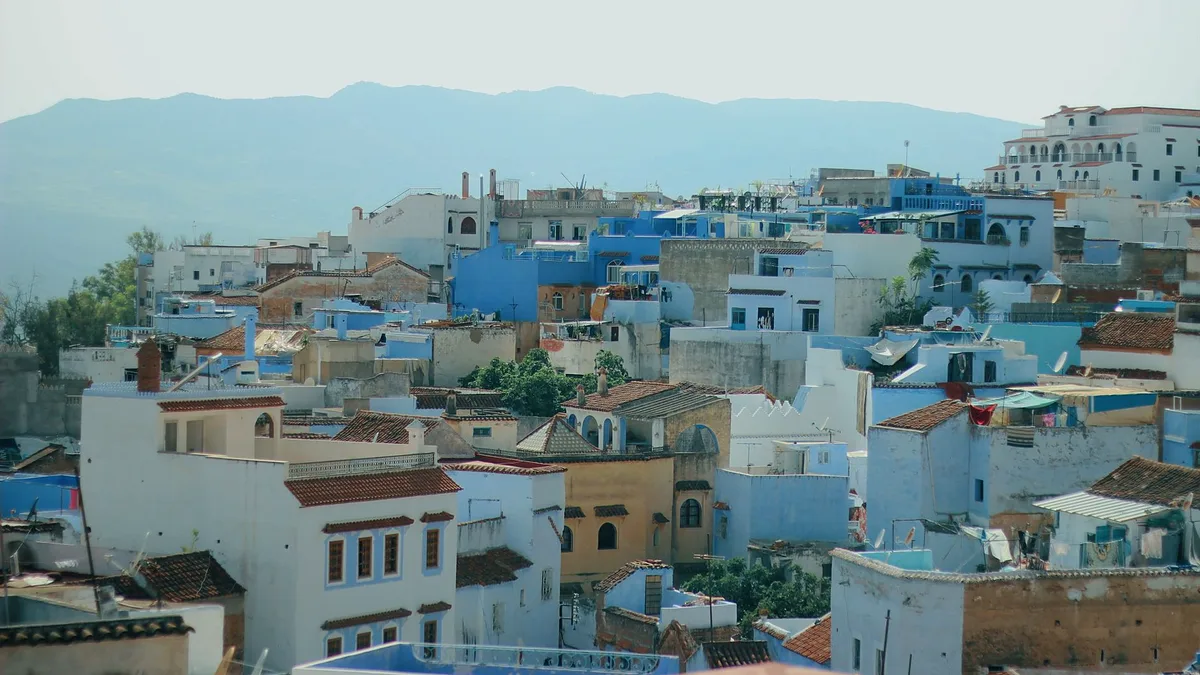
| Atmosphere & Aesthetic | Imperial waterfront capital: domes, Iznik tile, ferries, urban rush | Small Andalusian-Rif medina: blue lime-washed lanes, red-tile roofs, mountain light |
| Crowd Density & Seasonality | 15m+ international visitors a year; busy every month, heaviest April–May and Sept–Oct | Day-tripper surge 11am–4pm; quiet mornings and evenings; worst late July–August |
| Flight & Transit Accessibility | Two major airports (IST, SAW) with direct flights worldwide; metro, tram, ferry network | No airport. Fly to Tangier (TTU) then 3 hrs by road, or Fes (FEZ) then ~4 hrs |
| Best For | First-timers, monument-heavy sightseeing, food depth, nightlife, shopping | Budget travellers, photographers, hikers, couples, slow travel |
Scenery & Atmosphere: How Similar Are They Really?
More similar than you would expect, because both places grew from the same building tradition. Chefchaouen was founded in 1471 by Moulay Ali ibn Rashid al-Alami, then settled heavily by Andalusian Muslims and Jews pushed out of Spain. That is why the lanes read unmistakably Moorish: horseshoe arches, hand-cut zellige tile, cedar lintels, and interior courtyards built to keep summer heat out.
Unlimited High-Speed International Travel eSIM
Connect in seconds across 180+ destinations. Instant QR code activation with zero roaming surcharges.

The Kasbah on the main square is the clearest proof. Built in the 1470s, it holds a quiet Andalusian garden, a small ethnographic museum, and a former prison tower you can climb for the best rooftop view in town. Give it fifteen minutes and any Istanbul traveller will feel the family resemblance.
Istanbul plays the same notes at a completely different volume. The Süleymaniye complex has the domes, courtyards and hammam layout you will recognise from Chefchaouen, just twenty times the size and sitting above the Golden Horn. Balat and Fener have the crooked pastel houses and laundry lines that Chefchaouen has in abundance.
The real split is setting. Istanbul is a water city: ferries, gulls, tankers, and the call to prayer stacking across seven hills. Chefchaouen is a mountain city: goat herds on the ridge, red-tile roofs, and sunset light hitting the whitewashed Spanish Mosque above town. Chefchaouen is prettier per square metre. Istanbul is more cinematic overall.
The Blue: What Is Actually Going On
Every wall in the old town is lime-washed blue, and nobody fully agrees why. The strongest theory ties it to the Jewish community that settled here in the 1930s, for whom blue carries spiritual meaning. Others credit mosquito repellent, heat reflection, or a 1970s tourism push. Locals repaint after the winter rains, which is why the colour stays so intense.
The practical result: at 7am the medina is empty, blue and silent apart from brooms. By noon it is a photo queue. Go early.
The Wallet Test: Real Cost Breakdown
Figures below are spring 2025 estimates, mid-range, per person unless noted. Exchange rates move fast, so treat these as ratios rather than gospel.
Sleeping
In Istanbul, a decent double in Sultanahmet or Beyoğlu runs $70–120 a night; a design hotel in Karaköy or Galata starts nearer $150. In Chefchaouen, the same standard of restored riad — tiled patio, rooftop terrace, breakfast included — costs 350–600 MAD ($35–60). Budget guesthouses start around 200 MAD ($20).
Eating
A sit-down dinner in Istanbul runs 350–500 TRY ($9–13) at a neighbourhood lokanta, more in Sultanahmet. In Chefchaouen, a full tagine with bread and olives is 50–80 MAD ($5–8), and a three-course riad dinner rarely breaks 120 MAD ($12).
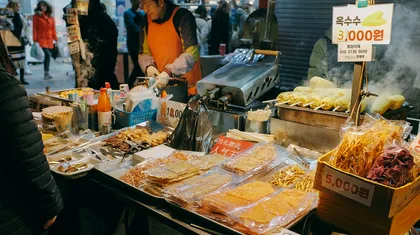
Street food is where Chefchaouen wins outright. Bissara (fava bean soup) with a drizzle of olive oil, a wedge of msemen and a mint tea costs about 25 MAD ($2.50) total, eaten at a plastic table off Place Outa el Hammam. The Istanbul equivalent — simit, çay, maybe a balık ekmek — lands nearer $6–8.
Coffee, Tea and Drinks
Mint tea in Chefchaouen costs 10–15 MAD ($1–1.50). Turkish çay in Istanbul is 25–40 TRY ($0.60–1). Alcohol is the big split: Istanbul has it everywhere, with wine at $8–12 a glass and a beer around $5–7. Chefchaouen is dry in practice. A few riads quietly serve wine to guests, but do not plan a night out around it.
Sights and Excursions
This is the widest gap. Istanbul's headline sights now cost real money: Hagia Sophia charges foreign visitors around €25, Topkapı Palace is over $40, and the Basilica Cistern is roughly $20. Spending $100 on tickets across two days is easy.
Chefchaouen's Kasbah Museum is 60 MAD ($6) and the Spanish Mosque hike is free. A grand taxi to the Akchour waterfalls in Talassemtane National Park runs 400–500 MAD return ($40–50), split between up to six people — a full day of river pools and the God's Bridge trail for under $10 each.
Rough daily totals: Istanbul $110–150 all-in for a mid-range traveller. Chefchaouen $45–70 for the same comfort level. That is a 55–65% saving before flights enter the maths.
Crowds, Authenticity, and Tourist Footprint
Istanbul is a working metropolis of 15 million, so tourism sits on top of a real city rather than replacing it. The trade-off is that Sultanahmet feels like an airport terminal by 10am and the Grand Bazaar's touts are professionals. Cross to Kadıköy, Fatih or Fener and you are back in normal life within 20 minutes.
Chefchaouen has the opposite problem, but only for six hours a day. Coach tours from Tangier and cruise groups from Ceuta fill the medina between 11am and 4pm. In that window the Kasbah queue is long and the sales pressure near Bab Souk is genuine. Before 10am and after 5pm, the town belongs to residents again.
Two honest warnings. Chefchaouen sits in the Rif, Morocco's hashish-growing region, and men will offer you kif openly on the street — persistent, but harmless if you keep walking. And the blue is a living village aesthetic, not a film set: families live behind every painted door, so keep your voice down in the residential lanes north of Place Outa el Hammam.
How to Experience the Best of Chefchaouen
Where to Stay
Stay inside the medina walls. Rue Souika and the alleys around Place Outa el Hammam put you two minutes from the Kasbah and the main cafés. Bab Souk, at the top of the old town, is quieter and closer to the Spanish Mosque path. For space, look at Aïn Haouzi outside the walls — cheaper rooms with mountain views, but a 15-minute walk to dinner.
What to Do Instead of a Bosphorus Cruise
Climb to the Spanish Mosque for sunset: 20 minutes uphill, free, and the moment everyone remembers. Walk to Ras El Maa, the spring where women still wash wool and rugs in the river. Book a medina hammam (around 150 MAD / $15 for a scrub) and a cooking class (250–350 MAD / $25–35).
Give Akchour a full day. The trail to God's Bridge takes about two hours each way, much of it on wooden walkways over turquoise water. In summer, start before 9am.
What to Order
Start with jben, the local fresh goat cheese, served with honey and warm bread. Move on to bissara for breakfast, rghaif (layered flatbread) with amlou, and a slow-cooked tagine with prunes and almonds. Pastilla is a Fes specialty, but the chicken version here is honest. Finish with mint tea poured from a height.
Who Should Still Choose Istanbul?
Choose Istanbul if museums matter. Chefchaouen has one modest museum; Istanbul has world-class collections, Byzantine cisterns, Ottoman palaces and 1,500 years of history you can reach by tram.
Choose Istanbul for food range too. One week gets you Kurdish, Armenian, Syrian, Georgian and modern Turkish cooking. Chefchaouen's food is good but narrow — tagines, couscous, grilled meat, repeat.
Also choose Istanbul if you need infrastructure: direct long-haul flights, real nightlife, alcohol, widely spoken English, and day trips by high-speed train. Travelling with kids who want ferries and big boats? Chefchaouen will feel sleepy fast.
Frequently Asked Questions
Is Chefchaouen actually cheaper than Istanbul?
Substantially. Expect $45–70 per day in Chefchaouen against $110–150 in Istanbul for the same mid-range comfort — roughly 55–65% less. The gap widens because Chefchaouen's main sights are free or under $10, while Istanbul's run $20–50 each.
How do I get to Chefchaouen without a direct flight?
Fly to Tangier (TTU), then take a CTM or Supratours bus (about 3 hours, 75 MAD) or a shared grand taxi. Alternatively fly to Fes (FEZ) and drive 4 hours. From Casablanca it is roughly 6 hours by bus. There is no commercial airport in Chefchaouen itself.
Does Chefchaouen actually feel like Istanbul?
Architecturally, yes — both share Andalusian and Ottoman building DNA: horseshoe arches, zellige or Iznik tile, courtyards, hammams, minarets and a medina you get lost in. In scale and energy, no. Chefchaouen is a 90-minute town; Istanbul needs a week.
When is the best time to visit Chefchaouen?
April to June and September to October, when daytime highs sit around 22–28°C. Avoid late July and August, when domestic tourists flood in and the medina turns hot and loud. Winter is quiet and cheap, but the Rif gets cold rain.