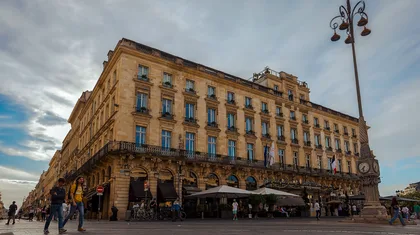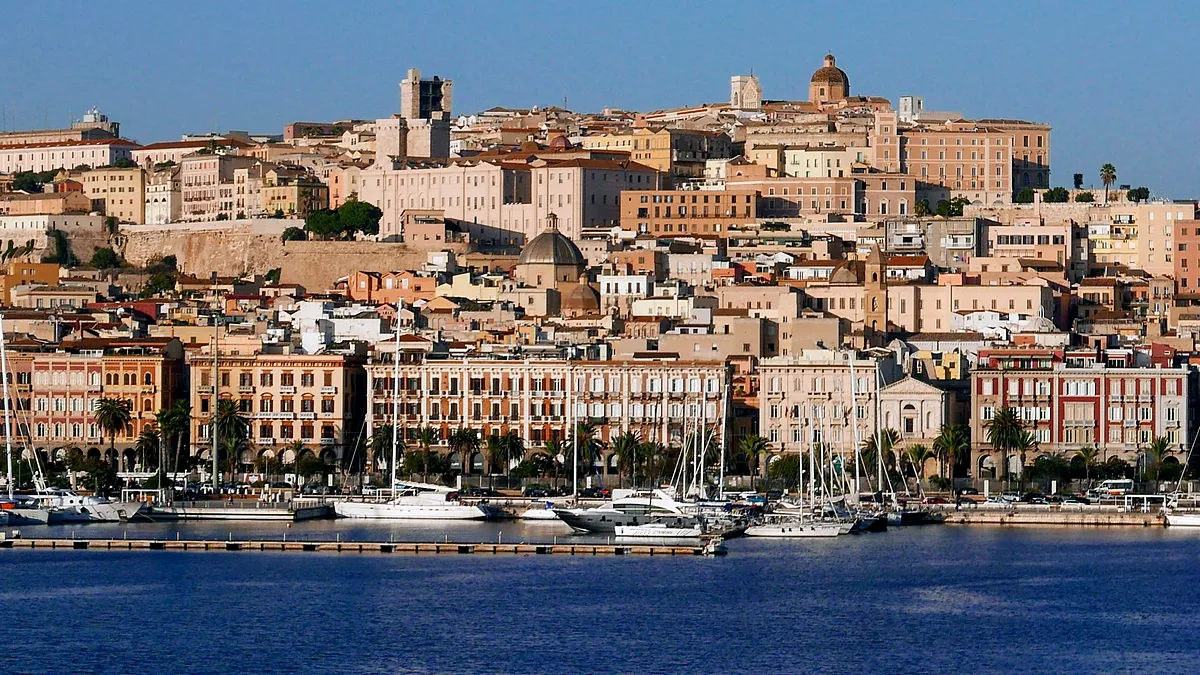

Cagliari is the better-value stand-in for Venice if what you're chasing is medieval stone lanes, sea light, and long lunches. You trade canals and Gothic palazzi for a limestone hilltop old town, Pisan towers, and an 8-kilometre beach you can reach by city bus in 15 minutes. The bill drops by roughly half.
What you genuinely lose is the water. No European city replicates Venice's 118 islands and 400-plus bridges, and Cagliari doesn't try. If your dream is drifting past faded frescoes on a vaporetto, book Venice and pay for it. If your real craving is a walkable historic port with serious food and no queue to cross a bridge, Cagliari is the smarter buy.
Cagliari vs Venice: The Scorecard
| Feature | Venice | Cagliari |
|---|---|---|
| Average Daily Cost (Stay + Meals) | €280–€400 / ~$300–$435 per couple, mid-range | €130–€190 / ~$140–$205 per couple, mid-range |
| Atmosphere & Aesthetic | Byzantine and Gothic palazzi rising straight from the lagoon; no cars, all boats and footbridges | White limestone hilltop Castello, Catalan-Gothic churches, a working port, sea on three sides |
| Crowd Density & Seasonality | Around 25 million visitors a year; avoid July–August and Carnival week | Busy on Italian holidays and in August; calm and cheap April–June and September–October |
| Flight & Transit Accessibility | Marco Polo (VCE) plus a €10 bus or €15 boat into town, 20–60 minutes | Elmas (CAG) plus a 6-minute train to the centre for €1.30; overnight ferries from Civitavecchia |
| Best For | A once-in-a-lifetime romantic trip, world-class art, canal photography | Budget city breaks, seafood, beach plus old town in a single afternoon |
Scenery & Atmosphere: How Similar Are They Really?
Venice hits you before you've left the station. The Grand Canal opens up in a single wide gesture, with peeling plaster, water-stained marble, and light bouncing off the lagoon in a way no photograph captures. It is operatic and slightly unreal, and it stays that way for the entire visit.
Unlimited High-Speed International Travel eSIM
Connect in seconds across 180+ destinations. Instant QR code activation with zero roaming surcharges.

Cagliari works differently. You arrive at a normal Italian port, walk up Via Roma past the ferry ticket offices, then climb staircases into Castello, the old town on the hill. Halfway up, the streets narrow into white limestone alleys and the whole city drops away behind you.
The architecture is a genuine surprise. Cagliari spent time under Pisan and then Catalan-Aragonese rule, so you get squat defensive towers like the Torre dell'Elefante (1307) sitting a few streets from the Cattedrale di Santa Maria, with its Romanesque facade and heavily baroque interior. It's not Venetian Gothic, but it is properly medieval and it is not a reconstruction.
Be honest with yourself about the trade-off: Cagliari is beautiful in patches, not in every direction. Post-war apartment blocks ring the historic core, and the ring roads are unglamorous. Venice is relentlessly gorgeous — and that relentlessness is exactly why it costs what it costs.
The compensation is the sea. From the Bastione di Saint Remy terrace you look out over the Golfo degli Angeli, and behind the city sits the Molentargius salt marsh, where flamingos feed in shallow water a 20-minute walk from the centre. Venice has lagoon light; Cagliari has lagoon wildlife.
The Wallet Test: Real Cost Breakdown
These are realistic 2025 figures for two people, shoulder season, booked a few weeks out. Venice hotel prices double in Carnival and spike hard during the Biennale opening weeks.
| Item | Venice | Cagliari |
|---|---|---|
| Double room, central 3-star | €160–€260 (Mestre: €90–€130) | €75–€130 |
| Espresso at the bar | €1.20–€1.50 (€5–€7 seated in Piazza San Marco) | €1.00–€1.30 |
| Spritz or aperitivo | €5–€8 | €4–€5, usually with free snacks |
| Lunch at a trattoria | €25–€40 per person | €15–€25 per person |
| Dinner with house wine | €45–€70 per person | €25–€40 per person |
| Public transport | €9.50 single vaporetto; €25 for 24 hours | €1.30 single bus ticket; day pass under €4 |
| Signature paid activity | Gondola, €90 for 30 minutes (€110 after 7pm) | Boat trip around the Golfo degli Angeli, €25–€35 |
| City tax per night | €3.50–€5 per person | €1.50–€5 per person, by hotel category |
Add Venice's day-tripper access fee, which runs €5–€10 depending on how early you book, charged on selected spring and summer dates. It doesn't apply if you're staying overnight, but it tells you something about the pressure the city is under.
Two people eating and sleeping well in Cagliari for four nights will spend roughly what three nights in Venice costs. That's the whole argument in one sentence — and it buys you a beach day the Venetian lagoon can't offer.
Skip the gondola comparison entirely. Cagliari's equivalent splurge is a half-day boat out to the Sella del Diavolo headland and the coves beyond Poetto, and it costs a quarter of the price.
Crowds, Authenticity, and Tourist Footprint
Venice's historic centre is home to around 50,000 people, down from roughly 175,000 in the 1950s. You feel that in small ways: shuttered bakeries, souvenir stands where a butcher used to be, and a slightly hollow quiet in the residential corners of Cannaregio and Castello.
Cagliari has 150,000 residents, a university, a working container port, and a cruise terminal. That mix keeps it honest. Piazza Yenne at 8pm in June is full of locals arguing over football, not tour groups holding paddles.
San Benedetto market is the clearest test. It's a proper city market, open Monday to Saturday from early morning until around 2pm, and the fish hall downstairs is worth the trip before 11am. Nobody is performing for visitors.
That said, Cagliari is not undiscovered. In July and August the Poetto seafront packs out with Italian holidaymakers, and the marina district gets a wave of cruise passengers mid-morning. The old town, crucially, stays walkable year-round. And the city empties in mid-August when locals head to the coast — some family-run restaurants close for two weeks.
One honest downside: the streets immediately around the train station and parts of the Marina get scruffy after dark, and the night-time atmosphere there is more port city than postcard. Stay in Stampace or Castello instead.
How to Experience the Best of Cagliari
Where to stay
- Stampace — the best all-rounder. Flat, central, packed with bars and trattorias, ten minutes' walk from both the port and the Castello stairways.
- Castello — atmospheric stone lanes and huge views, but steep, quiet at night, and light on restaurants. Two nights maximum.
- Marina — cheapest rooms and closest to the station, but noisy and a bit rough around the edges after midnight.
- Villanova — residential and genuinely local, with excellent neighbourhood trattorias and 15 minutes on foot to the centre.
- Poetto — beach hotels with good shoulder-season rates, 15–20 minutes from the centre on the PF or PQ bus.
What to do
Start with the towers. Climbing the Torre dell'Elefante and the Torre di San Pancrazio costs a few euros each and takes under an hour combined. Then walk the Punic-Roman Anfiteatro Romano, carved directly into the rock, which is closed Mondays.
Take the CTM bus from Piazza Matteotti to Poetto and walk the full length of the sand toward the Sella del Diavolo. In the other direction, hire a bike at Molentargius and ride the flat paths between the salt pans and the flamingo colonies.
With a spare day, the ruins at Nora are around 40 minutes away by train and bus, and the UNESCO nuraghe at Barumini is roughly an hour by car. Both beat anything on the Venetian mainland.
What to eat
Order culurgiones — Sardinian pasta parcels stuffed with potato, pecorino, and mint — and fregola con arselle, the local clam and semolina dish that will reset your expectations of seafood pasta. Malloreddus alla campidanese brings saffron and sausage; porceddu is roast suckling pig, usually ordered by weight and often needing advance notice.
Finish with seadas, a fried pastry filled with cheese and drowned in honey, and a glass of mirto. For a proper sit-down seafood meal, try Lillicu near the Marina or Sa Domu Sarda in Stampace; budget €30–€40 per person with wine.
Who Should Still Choose Venice?
Book Venice if this is likely your only trip. The Accademia, the Peggy Guggenheim, the Frari, the sheer density of art and architectural history packed into a few square kilometres has no equivalent in Sardinia. Cagliari offers medieval charm; Venice offers the canon.
Choose Venice for a honeymoon, an anniversary, or a winter trip built around fog, empty campi, and long lunches. November to February is moody and cheaper — just pack waterproof boots, because acqua alta is a real scheduling factor, not a rumour.
Also stick with Venice if you want to wake up on the water. That single experience is worth the premium to a lot of people, and no amount of Cagliari's value changes the fact.
Frequently Asked Questions
Is Cagliari actually much cheaper than Venice?
Yes, roughly 45–55% cheaper on accommodation and food. A mid-range double room in central Cagliari runs €75–€130 against €160–€260 in Venice, and a full dinner with wine is €25–€40 per person instead of €45–€70.
Does Cagliari have canals or gondolas?
No. Cagliari is a coastal port with a hilltop old town. It has lagoons — Molentargius and Santa Gilla — and 8 kilometres of beach, but no canal network. If a canal ride is the reason for your trip, this swap won't work.
How many days do you need in Cagliari?
Two full days covers Castello, the market, Poetto, and a good dinner or two. Give it four to five days if you want beach time and day trips to Nora or Barumini. Most people pair it with a week split between city and coast.
When is the best time to visit Cagliari instead of Venice?
April to June and September to October. The weather sits around 20–26°C, the beach is usable, and prices are at their lowest. July and August are hot and crowded; many independent restaurants close for two weeks around mid-August.