
The Quick Verdict
Budapest is not a literal stand-in for Iceland. You will not find glaciers, black-sand beaches, or a sky that stays bright at midnight. What you will find is a city built around hot water, dramatic stone, and long evenings that cost a lot less than a night in Reykjavik.
If your Iceland dream is mostly about soaking in geothermal pools, eating well, and wandering moody architecture, Budapest is a convincing swap. You gain warmer weather, cheaper hotels, and a compact city you can explore on foot. You sacrifice raw nature, space, and the thrill of standing on a volcanic edge.
| Feature | Iceland | Budapest |
|---|---|---|
| Average Daily Cost (Stay + Meals) | ISK 35,000–60,000 / ~$255–$435 | HUF 35,000–60,000 / ~$100–$170 |
| Atmosphere & Aesthetic | Subarctic, sparse, design-forward; lava fields and a small capital | Habsburg grandeur, thermal baths, ruin bars, Danube views |
| Crowd Density & Seasonality | July and aurora season peak; weather can cancel plans | Spring and fall are best; summer is busy; winter is quiet except holidays |
| Flight & Transit Accessibility | Keflavík (KEF), 45-minute Flybus; rental car for the Ring Road | Direct flights to BUD; 100E bus, metro M1–M4, walkable center |
| Best For | Nature, road trips, aurora, silence | City breaks, baths, architecture, budget travel |
Scenery & Atmosphere: How Similar Are They Really?
The match is strongest in the bathhouses. Iceland's geothermal pools sit in lava fields and along cold coastlines; Budapest's thermal baths sit inside neo-Baroque palaces and Ottoman domes. Both turn hot water into a daily ritual, and both make a cloudy day feel like a good one.

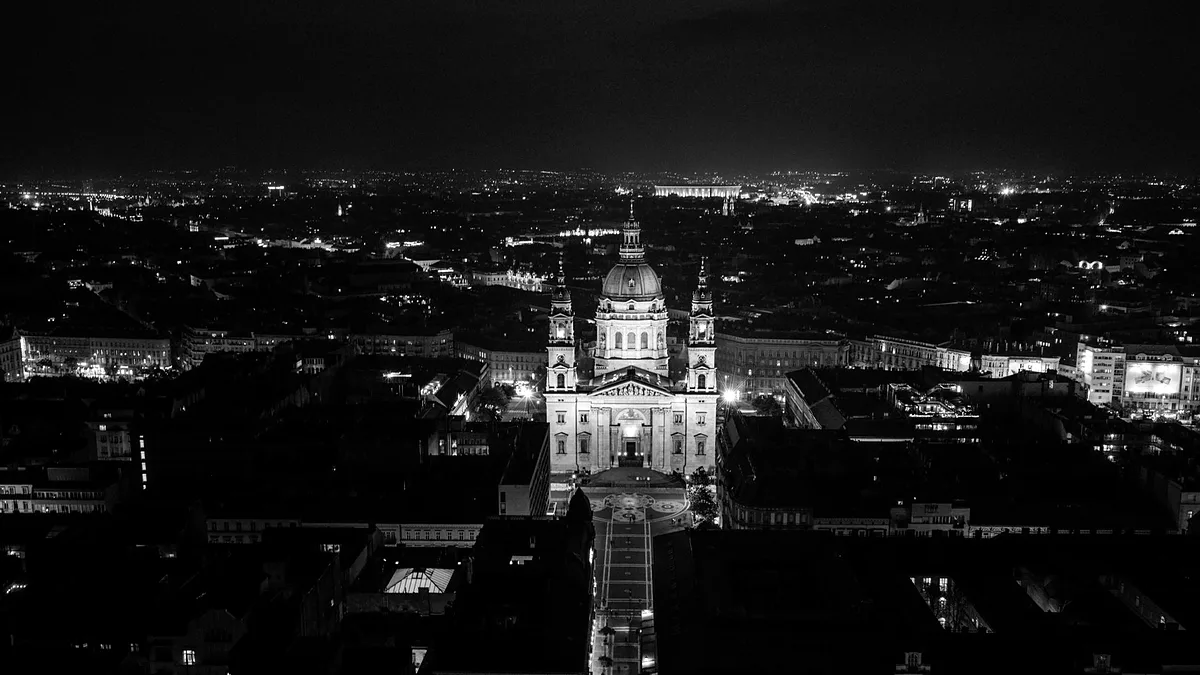
The architectural twin idea works best as a mood match, not a copy. Reykjavik's Hallgrímskirkja rises like a basalt cliff, while Budapest's Parliament, Fisherman's Bastion, and St. Stephen's Basilica deliver Gothic and neo-Renaissance drama on a grand scale. Budapest wins on quantity; Iceland wins on isolation and raw landscape.
The bath details differ, too. Széchenyi has yellow neo-Baroque walls and outdoor pools that steam in cold air. Gellért adds Art Nouveau mosaics, and Rudas keeps a 16th-century Ottoman dome. Iceland's Blue Lagoon is milky silica water in a black lava field, while Sky Lagoon gives you an infinity edge over the North Atlantic.
Street life differs. Reykjavik is a small capital with low-rise houses, wool shops, and a compact downtown you cross in 20 minutes. Budapest is a big European city with trams, ruin bars, and a Danube waterfront that demands at least two days of walking. If you want silence, Iceland has it. If you want a city you can sink into, Budapest does.
Weather is the honest trade-off. Iceland's weather changes fast, with wind, rain, and summer temperatures often in the 10–15°C range (50–59°F). Budapest has proper seasons: hot summers near 30°C (86°F), cold winters near freezing, and long spring and autumn walks. Pack layers for both, but Budapest is easier to enjoy without a car.
The Wallet Test: Real Cost Breakdown
Iceland is expensive in a way that sneaks up on you. A mid-range Reykjavik hotel room usually runs ISK 22,000–38,000 (~$160–$275) per night, and a dorm bed costs ISK 7,000–12,000 (~$50–$87). Budapest's mid-range rooms in Districts VII or VIII often land at HUF 25,000–45,000 (~$70–$125), with hostel dorms at HUF 6,000–12,000 (~$17–$34).
Food follows the same pattern. In Iceland, a simple lunch costs ISK 2,500–4,000 (~$18–$29), dinner runs ISK 4,500–8,000 (~$33–$58), and a pint is ISK 1,200–1,800 (~$9–$13). Budapest lunches cost HUF 2,500–4,500 (~$7–$13), dinners HUF 6,000–12,000 (~$17–$34), and a local beer HUF 800–1,500 (~$2–$4).
Excursions show the biggest gap. Blue Lagoon admission starts around ISK 8,000–12,000 (~$58–$87) and needs booking; Sky Lagoon is similar. A Golden Circle bus tour runs ISK 10,000–15,000 (~$72–$108). Budapest's Széchenyi Baths cost about HUF 7,500–9,500 (~$21–$27), and Gellért or Rudas are in a similar range. You can soak daily in Budapest for less than one Blue Lagoon ticket.
Transport adds up in Iceland. The Flybus from Keflavík to Reykjavik costs about ISK 3,500–4,000 (~$25–$29), and a rental car runs ISK 12,000–20,000 (~$87–$145) per day before fuel. In Budapest, the 100E airport bus is HUF 2,200 (~$6), and a 72-hour transit card is about HUF 5,500 (~$15). The city center is walkable, so you can skip taxis.
Skip the obvious traps. In Iceland, skip the airport duty-free rush unless you need supplies; Reykjavik's Happy Hour is the budget move. In Budapest, skip restaurants with picture menus on Váci utca and check bath tickets online for weekday discounts. Small choices save more than big splurges.
Crowds, Authenticity, and Tourist Footprint
Iceland's crowd problem is seasonal and concentrated. In July, the Golden Circle, South Coast, and Blue Lagoon can feel like a coach-tour conveyor belt, and Reykjavik's small center fills fast. In winter, aurora hunters arrive, but weather cancellations are common. The country is not ruined, but popular sights need timing.
Budapest has its own tourist zones. District VII's ruin bars are packed on weekends, the Castle District is busy by midday, and Váci utca is best avoided for meals. Step into District VIII's Palotanegyed, District IX, or District XI and the city feels local again. The baths are shared with residents, especially early morning and after work.
Authenticity is not binary. Iceland's nature is genuinely wild, but the visitor infrastructure is built for tourists. Budapest's thermal culture is a living habit, not a museum piece, though some baths now lean heavily on visitors. Your best move in both places is to book the famous spot once, then spend the rest of your time in lower-key local options like Lukács Baths or a neighborhood pool in Reykjavik.
Book ahead for the big names. Blue Lagoon and Sky Lagoon sell out in peak season, and Budapest's Széchenyi can have long queues on sunny weekends. Go early, go late, or pick a weekday. If you hate crowds, avoid July in Iceland and late December in Budapest.
How to Experience the Best of Budapest
Where to stay
First-timers should base in District V (Belváros) for walkable access to the Danube, Parliament, and metro hubs. District VII (Erzsébetváros) suits nightlife and ruin bars but can be noisy; request a courtyard room. District VIII's Palotanegyed is better value and calmer, while District XI (Újbuda) puts you near Gellért Baths and local markets.
Use transit instead of taxis. The airport bus 100E runs to Deák Ferenc tér in about 30 minutes for HUF 2,200 (~$6). Metro lines M1–M4 and trams 2, 4, and 6 cover most sights; tram 2 along the Danube is a cheap sightseeing ride. A 72-hour travel card costs about HUF 5,500 (~$15).
Signature activities that rival Iceland
Book one grand bath and one local bath. Széchenyi is the postcard neo-Baroque experience, open daily around 7 a.m.–8 p.m.; arrive before 10 a.m. to avoid groups. Rudas has Ottoman domes and mixed or single-sex days depending on the schedule, so check before you go. Lukács is quieter, often full of locals, and a good rainy-day soak.
Walk the Danube Promenade at sunset, ride tram 2, and tour the Parliament if you want the architectural hit. Fisherman's Bastion is best at opening time, before the selfie crowds. For a different side of the city, visit Memento Park or take a day trip to Szentendre by HÉV suburban rail.
Ruin bars are part of the city's nightlife, but they are not the whole story. Szimpla Kert is the famous one; go early or on a weekday if you want space. For a quieter evening, try a wine bar in District VIII or a ruin bar away from the main Kazinczy utca strip.
What to eat
Order goulash soup, pörkölt, chicken paprikash, and túrós csusza at a neighborhood étkezde rather than a tourist menu. Lángos is best from a market stall, not a sit-down restaurant. Drink local Egri Bikavér or Tokaji, and finish with a chimney cake if you want the classic sweet.
The Great Market Hall is worth a visit for paprika and sausages, but it is closed Sundays. For dinner, look in Districts VII, VIII, and IX away from Váci utca. A lunch menu (napi menü) often costs HUF 2,500–4,000 (~$7–$11) and is the best value in the city.
Who Should Still Choose Iceland?
Choose Iceland if your trip is about landscape first. Glaciers, volcanic craters, black-sand beaches, ice caves, and the Ring Road are not replicated in Budapest. Photographers, hikers, and travelers chasing the aurora or midnight sun should pay for the original.
Iceland also wins if you want isolation. Budapest is a capital city with traffic, noise, and nightlife. If your ideal day is a silent drive between waterfalls, Iceland is worth the extra spend. If your ideal day is a thermal soak followed by a ruin bar and a cheap dinner, Budapest is the smarter buy.
Frequently Asked Questions
Is Budapest a good alternative to Iceland for thermal baths?
Yes, if you want city baths and lower prices. Budapest has Ottoman and neo-Baroque baths with real thermal water. Iceland has natural geothermal pools in lava fields, which is a different experience.
How much cheaper is Budapest than Iceland?
Daily costs are often 40–60% lower. A mid-range day in Budapest can cost HUF 35,000–60,000 (~$100–$170), while Iceland often runs ISK 35,000–60,000 (~$255–$435) for similar comfort.
Can you see the northern lights or midnight sun in Budapest?
No. Hungary does not sit under the aurora belt, and Budapest has normal daylight hours. For those sky events, Iceland is the correct destination.
When is the best time to visit Budapest instead of Iceland?
April–May and September–October give mild weather and fewer crowds. Budapest's baths work year-round; summer is hot, and winter is cold but festive. Iceland's best weather is June–August, while aurora season runs September–March.