
The Quick Verdict
Swap Mykonos for Bodrum and you trade a Greek postcard for a Turkish harbor town that happens to own a crusader castle, a 2,400-year-old theater, and a food scene that costs half as much. In winter the trade gets sweeter: Bodrum stays open enough to feel like a real place, while Mykonos pulls down the shutters and lets the wind do the talking.
What you lose is the specific Cycladic look — the blue domes, the white cubes stacked like sugar lumps, the international crowd that turns Chora into a catwalk at 1 a.m. Bodrum has whitewashed walls too, but they come with wooden balconies, palm trees, and laundry lines rather than curated minimalism.
What you gain is 40–60% off your daily spend, a market culture that predates tourism by centuries, and history you can reach in flip-flops. If you want the Aegean outside July and August, Bodrum is the smarter booking.
Unlimited High-Speed International Travel eSIM
Connect in seconds across 180+ destinations. Instant QR code activation with zero roaming surcharges.

The Scorecard at a Glance
Peak season here means July–August for Mykonos and June–September for Bodrum. The winter figures assume you travel in November or March and accept that some venues close.
| Feature | Mykonos | Bodrum |
|---|---|---|
| Average Daily Cost (Stay + Meals) | €250–450 / ~$270–490 mid-range in August; €70–120 in winter, when much is shut | ₺6,000–9,000 / ~$150–225 mid-range in August; ₺2,500–4,000 / ~$60–100 in winter |
| Atmosphere & Aesthetic | Cycladic white cubes, windmills, polished glamour, beach clubs with resident DJs | Whitewashed houses with wooden balconies, a waterfront castle, palms, working harbor energy |
| Crowd Density & Seasonality | Packed June–September; cruise waves hit Chora mid-morning; near-deserted in winter | Busy July–August with Turkish and European visitors; comfortable in May, June, September, October |
| Flight & Transit Accessibility | JMK is 4 km from Chora; ferries from Athens take 3–5 hours, from Paros or Santorini 2–3 hours | BJV is 35 km out with direct flights from Istanbul, London, and Berlin; 45-minute ferry to Kos |
| Best For | Honeymooners, beach club crowds, photo-first travel | Food-led travelers, budget-conscious couples, history buffs, families |
Scenery & Atmosphere: How Similar Are They Really?
Honestly, they look related rather than identical. Mykonos is the polished sibling: cube houses painted chalk white, bright blue doors, and the windmills at Kato Mili catching the last light. Chora is a maze built to confuse pirates, and it still confuses everyone — that's the charm.
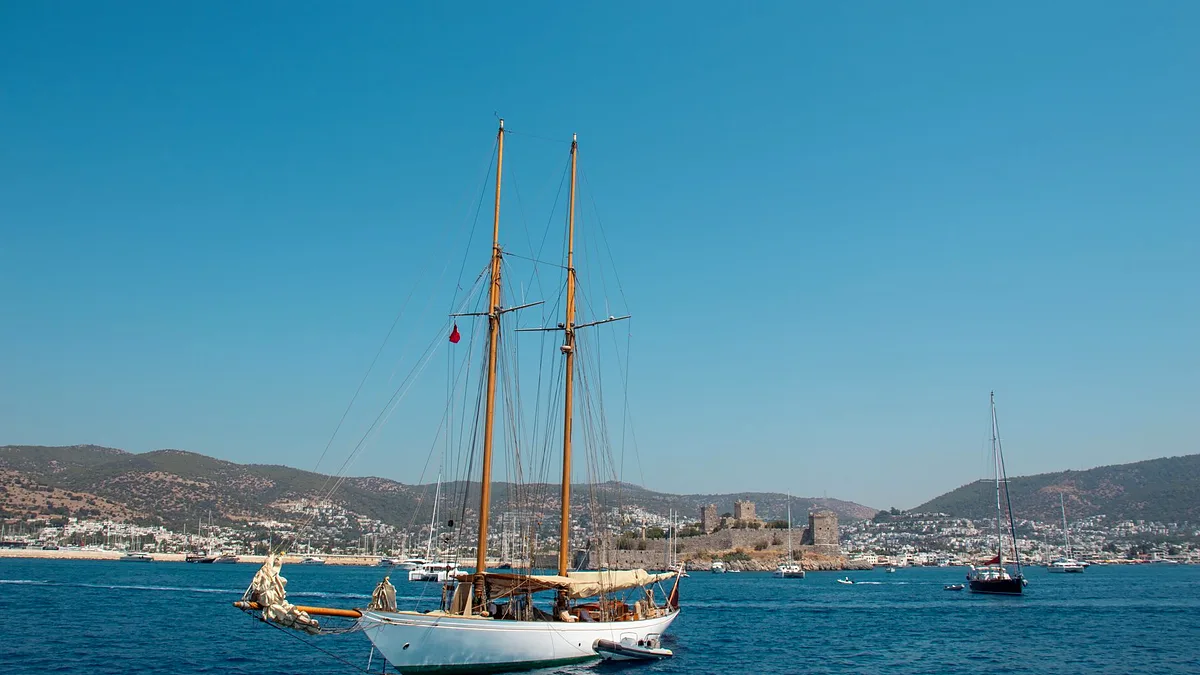
Bodrum is the same whitewash with a Turkish accent. Houses in the old town climb the hill behind the harbor, bougainvillea spills over stone walls, and the Castle of St. Peter sits right at the waterline, which no Cycladic island can match. The palm-lined promenade and the constant hum of fishing boats give it a working-town feel.
The landscapes differ too. Mykonos is dry, bare, and wind-scoured — beautiful in a stark way, especially up at Agios Sostis. Bodrum is greener, with pine-covered hills, sheltered bays, and peninsulas that hide a new beach every ten minutes.
Where Bodrum genuinely wins is depth of texture. One morning you walk past Myndos Gate, where Alexander the Great's army broke through in 334 BC, and the next you're eating grilled sea bass by the marina. Mykonos has Delos next door, which is spectacular, but the island itself is mostly scenery.
The Wallet Test: Real Cost Breakdown
Figures below are for two people unless noted, converted at roughly ₺40 to $1 and €1 to $1.08. Turkish prices shift with inflation, so treat these as ballpark and check menus before you sit down.
Mykonos
- Hotel: A decent mid-range room in Chora runs €250–450 (~$270–490) a night in July. Winter drops to €70–120, but roughly a third of the island is closed.
- Meals: Gyros from a walk-up counter costs €6–8. A taverna dinner with wine lands at €45–65 per person. Anything with a sea view adds about 30%.
- Drinks: Cocktails are €18–25. A beach club sunbed runs €60–150 in minimum spend before you've ordered a thing.
- Excursions: The Delos day trip — ferry plus site entry — is about €40 all in. Car rental is €50–80 a day in high season.
Bodrum
- Hotel: A boutique room in Bodrum Center costs ₺6,000–9,000 (~$150–225) in August. In winter the same room is ₺2,500–4,000 (~$60–100).
- Meals: A full Turkish breakfast is ₺400–550 per person (~$10–14). A meyhane dinner with raki, mezze, and fish comes to ₺2,500–3,500 for two (~$60–88).
- Drinks: Efes beer is ₺120–180 (~$3–5). Cocktails in Yalıkavak are ₺350–500 (~$9–13).
- Excursions: A full-day gulet boat trip with lunch is ₺1,200–1,800 (~$30–45). Castle museum entry is around ₺550 (~$14). The ancient theater is free.
Run the math on a week: Mykonos in August will eat €3,500–5,000 for a couple. Bodrum in the same month lands closer to €1,600–2,400, flights excluded. That gap is a second holiday.
Crowds, Authenticity, and Tourist Footprint
Mykonos receives well over a million visitors a season against a resident population of roughly 10,000. In August, Chora's lanes move at the speed of a queue, and cruise ships drop a wave of day-trippers between 10 a.m. and 4 p.m. It isn't ruined, but you feel the pressure on your wallet and your patience.
Bodrum is busy in its own way — mostly Turkish holidaymakers from Istanbul and Ankara, plus British and German package tourists. Peak weeks in July and August fill the peninsula, and Bar Street gets loud enough to rattle windows. Step one street back or drive 20 minutes to Gümüşlük and the crowd thins fast.
Winter flips the picture completely. Mykonos becomes a windswept village with a handful of tavernas and empty beaches — atmospheric, but you're choosing solitude over service. Bodrum keeps its markets, schools, ferry links, and a year-round restaurant scene, so you can live normally instead of camping in a resort.
Here's the honest downside of Bodrum: the coastline is heavily built up and some bays are wall-to-wall hotels. If you want untouched Aegean, head further south to Datça or Bozburun.
How to Experience the Best of Bodrum
Where to Stay
Bodrum Center works best for a first visit — walkable to the castle, marina, and bazaar, with plenty of mid-range hotels. Gümüşlük suits couples chasing sunsets and seafood, about 25 minutes west. Bitez has a calm, shallow bay and is the family pick, while Yalıkavak is where the yachts and designer shops live if you want the Mykonos luxury feel at 60% of the price.
Do These Instead of Beach Clubs
- Walk the ramparts at the Castle of St. Peter and see the shipwreck galleries inside the Museum of Underwater Archaeology.
- Catch sunset from the Hellenistic theater above town — free entry, best light around 7:30 p.m. in summer.
- Take a blue cruise from the harbor, 10:30 a.m. to 5 p.m., with lunch and swimming stops included.
- Hop the 45-minute ferry to Kos for a Greek island fix. Bring your passport; expect €25–35 each way.
- Drive to Gümüşlük and wade out to Rabbit Island through ankle-deep water over the sunken city of Myndos.
What to Order
Start with a serpme kahvaltı spread — olives, white cheese, menemen, honey, and endless tea. Then work through midye dolma, deniz börülcesi dressed in lemon and garlic, kabak çiçeği dolması, and whatever fish the boats brought in that morning. Finish with Bodrum mandarins in winter or a scoop of dondurma in summer.
Skip Bar Street's overpriced cocktails and drink at a meyhane instead. That's where the food and the conversation actually are.
Who Should Still Choose Mykonos?
Go with Mykonos if the aesthetic is the whole point. If you've dreamed of Little Venice at sunset, a table at a beach club with a DJ, and that specific white-and-blue backdrop in every photo, Bodrum will feel like a substitute rather than the real thing.
Choose Mykonos for the party scene as well. Scorpios, Nammos, and the south-coast clubs run a level of production Bodrum hasn't matched. And if island-hopping is the plan — Paros, Naxos, Santorini, Ios are all short ferry rides away — the Cyclades network is unbeatable.
It also wins on summer access from Western Europe, with direct flights from dozens of cities. Finally, don't book Bodrum expecting Greek island isolation in July; the peninsula is one of Turkey's busiest summer destinations.
Frequently Asked Questions
Is Bodrum cheaper than Mykonos?
Yes, substantially. Expect to spend 40–60% less on hotels, meals, and drinks at a comparable standard. A couple spending a week in Bodrum in August will typically pay €1,600–2,400 versus €3,500–5,000 in Mykonos.
Which is better in winter, Bodrum or Mykonos?
Bodrum. It keeps a year-round population, open restaurants, and working ferry links, while Mykonos largely shuts down from November to March. Both are mild and occasionally rainy, with daytime temperatures around 13–17°C.
Can you day-trip from Bodrum to a Greek island?
Yes. Ferries link Bodrum and Kos in about 45 minutes for roughly €25–35 each way. Bring your passport and book ahead in July and August, when the afternoon return sells out.
Does Bodrum have the same white-and-blue architecture as Mykonos?
Partly. Bodrum's old town is whitewashed with blue trim, but you'll also see wooden balconies, stone ruins, and palm trees. It reads as Aegean with a Turkish accent rather than pure Cycladic.