
Quick Route Overview
This five-day Verona plan is built for travelers who would rather see the city properly than sprint through it. Expect 8–12 km of walking a day, one day trip out of town, and afternoons with enough room for a real lunch instead of a sandwich eaten while jogging.
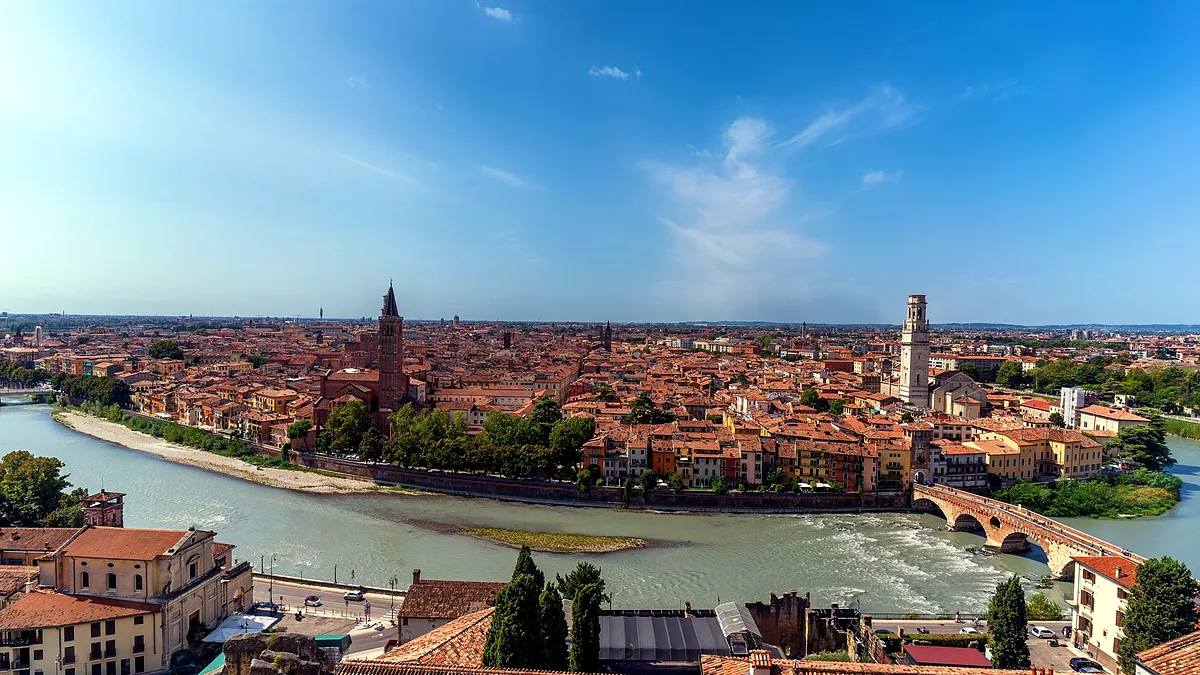
Every day is grouped by neighborhood, so you cross the Adige only when it makes sense. Verona's historic center is tiny — the Arena to the far edge of Veronetta is a 25-minute walk — which means routing matters far more than transport.
- Duration: 5 full days (4 nights minimum)
- Best season: Late April–June and September–mid-October
- Recommended base: Città Antica, between Piazza Bra and Piazza delle Erbe — or Veronetta across the river for quieter, cheaper rooms
- Transit method: Feet for 90% of the trip; ATV city buses for the station and Valpolicella; regional trains for day trips
Day 1: The Arena Loop — Piazza Bra to Piazza delle Erbe
Morning
Start at Piazza Bra at 8:30, before the tour groups land. Walk the outside of the Arena di Verona first (free), then buy a ticket to go inside — €10 / ~$11 USD, covered by the VeronaCard. The 1st-century amphitheater holds 15,000 people and still hosts the city's biggest nights; 20 minutes on the stone steps is plenty.
Unlimited High-Speed International Travel eSIM
Connect in seconds across 180+ destinations. Instant QR code activation with zero roaming surcharges.

Follow the Liston promenade toward Via Mazzini and stop for coffee at Pasticceria Flego (Via Mazzini 22), a Veronese institution. Espresso at the bar is about €1.30 / ~$1.40; sitting at a table roughly doubles it.
Afternoon
Continue up Via Mazzini to Piazza delle Erbe, the old Roman forum, and ride the lift up Torre dei Lamberti (€6 / ~$6.50, free with the VeronaCard) for the rooftop view. Lunch means bigoli all'ubriaco — thick pasta cooked in Valpolicella wine — at €12–15 / ~$13–16 in any honest osteria one street back from the piazza. Skip the places with photo menus facing the square.
Evening
Visit the Casa di Giulietta courtyard (free, gates close around 19:30) or pay €6 to stand on the balcony — late afternoon, once the day-trippers thin out, is the only sane window. Sunset works best from the Liston side of Piazza Bra, where the Arena turns pink. Dinner at Osteria Sottoriva on Via Sottoriva runs €30–35 / ~$32–38 per person with wine, followed by a riverbank walk to Ponte Pietra for the view.
Route Efficiency Tip: Everything on Day 1 sits along a 900-meter line — Piazza Bra, Via Mazzini, Piazza delle Erbe, Casa di Giulietta. Don't split it up; this is the one day you can leave the map in your pocket.
Day 2: The East Bank — Roman Ruins, Gardens and the Big View
Morning
Cross Ponte Pietra at 9:00 and start at the Teatro Romano (€5 / ~$5.50, or VeronaCard), a 1st-century theater with a museum stacked up the hillside behind it. It's rarely crowded before 11:00, and the Adige view from the top terrace is the best free sight in Verona.
Have coffee in Veronetta afterwards; the bars along Via XX Settembre pour a €1.20 espresso with none of the center's theater.
Afternoon
Walk 10 minutes east to Giardino Giusti (€7–10 / ~$8–11), a 16th-century Italian garden with a cypress avenue and a small hedge maze — the calmest hour you'll spend in the city. Lunch in Veronetta: a pizza slice or a plate of pasta on Via XX Settembre costs €8–15 / ~$9–16, and the neighborhood is noticeably cheaper than the Arena side.
Evening
Climb the staircase from Ponte Pietra to Castel San Pietro around 19:00 — free, 10 minutes uphill, and the classic sunset shot over rooftops and towers. Dinner at Osteria La Fontanina near Piazzetta Fontanina, two minutes from the bottom of those stairs (€40–50 / ~$43–54 with wine, so book ahead), or a neighborhood pizzeria for €25 / ~$27. Nightcap on Via Sottoriva, five minutes away.
Route Efficiency Tip: Keep the whole east bank in one block. Teatro Romano and Ponte Pietra are two minutes apart, Giardino Giusti is 10 minutes east, and Castel San Pietro is directly above the bridge — no bus required all day.
Day 3: Day Trip — Sirmione and the South Shore of Lake Garda
Morning
Take a regional train from Verona Porta Nuova to Desenzano del Garda (25–30 minutes, €5 / ~$5.40), then bus LN026 or a €15 taxi for the last 10 minutes into Sirmione. Arrive by 9:30 and head straight for the Castello Scaligero, the moated 13th-century fortress guarding the old town (€8 / ~$8.60 to climb the towers).
Then walk the perimeter road out toward Jamaica Beach, where locals actually swim — the water stays shallow and clear 20 meters out.
Afternoon
Grotte di Catullo (€10 / ~$11) is the real reason to come: ruins of an enormous Roman villa on the tip of the peninsula, with olive trees and lake on three sides. Lunch on Via Vittorio Emanuele — grilled lake fish or casoncelli at €16–22 / ~$17–24. A gelato and 40 minutes on the rocks beats the thermal spa, which swallows half a day and needs advance booking.
Evening
Catch the 17:30 train and you're back in Verona by 18:15. Keep dinner cheap and close — pizza and a beer near Porta Nuova or the Arena for €15–18 / ~$16–20 — because this is the most transit-heavy day of the route.
Route Efficiency Tip: Buy your return train ticket at the machine in the morning; the Desenzano queue at 18:00 moves painfully slowly. Prefer a direct ride? ATV bus 164 runs from Verona to Garda town in about 50 minutes (€3.50) — slower but no changes.
Day 4: Scaliger Verona — Castles, Churches and San Zeno
Morning
Start at Castelvecchio at 9:30 (museum €6 / ~$6.50, closed Mondays), the 14th-century brick fortress of the della Scala family, then walk its fortified bridge, Ponte Scaligero, for the postcard river shots. From there it's a 15-minute riverside walk north to Basilica di San Zeno (€3 / ~$3.30), the city's finest Romanesque church and the one most often linked to Shakespeare's play.
Afternoon
Lunch in the San Zeno quarter, where a panino and a spritz costs €9–12 / ~$10–13 — this is a residential area, so prices drop fast. Walk back east to Basilica di Sant'Anastasia (€3 / ~$3.30) and the Arche Scaligere, the flamboyant Gothic tombs of the della Scala rulers, free to view from the railing. Finish at Piazza dei Signori with a coffee at Caffè Dante; Juliet's Tomb near Ponte Garibaldi is an optional €6 add-on if you have energy left.
Evening
Sunset from the Adige embankment by Castelvecchio's bridge, five minutes from the center. Dinner at Antica Bottega del Vino on Via Sottoriva, a historic enoteca where a proper meal with Amarone lands around €45–55 / ~$49–60 per person. Skip dessert there and grab gelato at Gelateria Savoia on the walk home.
Route Efficiency Tip: Day 4 runs cleanly west to east: Castelvecchio, San Zeno, Sant'Anastasia, Piazza dei Signori. If your legs give out, several ATV city lines cut through the center and along the river — a single ticket is €1.50.
Day 5: Valpolicella Wine Roads, Then the Arena at Night
Morning
Take ATV bus 21 or 22 from Verona toward San Pietro in Cariano or Negrar (30–35 minutes, €2 / ~$2.20) with a tasting booked at Cantina Valpolicella Negrar or Villa Mosconi Bertani (€20–35 / ~$22–38, reservation essential, both closed some weekdays). This is Amarone country — you'll taste Valpolicella Classico, Ripasso and Amarone in a single sitting. Don't drive: spitting is normal and nobody will be offended.
Afternoon
Be back in the center by 14:30 for a last loop: the shops on Via Mazzini, the market stalls on Piazza delle Erbe, and a tramezzino at a bar for €4–6 / ~$4.30–6.50. If wine isn't your thing, swap the morning for Soave — a 25-minute train (€3.30) to a walled village with a castle and one excellent white wine.
Evening
Between June and early September, the Arena di Verona Opera Festival is worth planning the whole trip around. Tickets start near €25 / ~$27 for the stone gradinata and pass €200 for the front rows; book two to three months ahead on the official site. No opera on your dates? Finish with dinner at Trattoria al Pompiere and a slow lap of Piazza dei Signori.
Route Efficiency Tip: If you're catching an evening train, store bags at Porta Nuova (about €6 per bag) instead of hauling them to Valpolicella and back.
Getting Around Verona
Verona has no metro and doesn't need one. The historic center is a 2 km-wide knot of pedestrian streets, and every sight on Days 1, 2 and 4 sits within a 25-minute walk of the next one.
For the station and longer hops, buy ATV tickets in the app or at a tabaccheria: €1.50 / ~$1.60 for 90 minutes, roughly €4.50 for a day pass. Validate on board — inspectors do issue fines, and 'I didn't know' is not a defense.
From Verona Villafranca Airport (VRN), the Aerobus 199 drops you at Porta Nuova in 15–20 minutes for about €7 / ~$7.60. Regional trains from Porta Nuova cover Lake Garda, Soave, Vicenza and Mantua for under €10 each way.
Don't rent a car for the city. The ZTL cameras around the center will find you, and Arena-area parking costs more than a week of bus fares. If your hotel sits inside the pedestrian zone, ask them to register your plate before you drive in.
Estimated Daily Budget Breakdown
Figures are per person per day, assuming two people sharing a double room. Verona is cheaper than Venice or Florence for food and roughly level with them on high-season hotels.
| Travel Style | Accommodation | Food & Drink | Transit & Sights | Total / Day |
|---|---|---|---|---|
| Budget Backpacker | €35–55 / ~$38–60 (hostel dorm or shared B&B) | €30–40 / ~$32–43 | €10–18 / ~$11–20 | €75–113 / ~$81–122 |
| Comfortable Mid-Range | €110–160 / ~$119–173 (3-star or boutique guesthouse) | €55–80 / ~$59–86 | €25–40 / ~$27–43 | €190–280 / ~$205–302 |
| Boutique Splurge | €250–400 / ~$270–432 (design hotel, river view) | €120–180 / ~$130–194 | €60–120 / ~$65–130 (opera tickets included) | €430–700 / ~$464–756 |
Add the VeronaCard (about €20–25 for 24–48 hours) only if you're hitting three or more paid sights within two days — it covers the Arena, Torre dei Lamberti, Teatro Romano, Castelvecchio and San Zeno.
Frequently Asked Questions
Do I need to book Arena opera tickets in advance?
Yes, and earlier than you'd expect — June and July performances sell out months ahead, weekends first. Book on the official Arena di Verona site; third-party resale prices are punishing.
Where can I store luggage in Verona?
Porta Nuova station has a staffed deposit near the main hall, around €6 per bag for five hours. App-based lockers near Piazza Bra exist but cost more — the station wins if you're arriving or leaving by train.
When is the best time to visit Verona?
Late April to June and September to mid-October deliver 20–26°C days with manageable crowds. July and August are hot (35°C is normal), packed and expensive — though they're also the only months with the opera festival.
Is Verona walkable, or do I need a car?
It's one of the most walkable cities in Italy, and a car is a liability rather than a help. Use trains for day trips to Lake Garda, Soave, Vicenza or Mantua, all under an hour away.