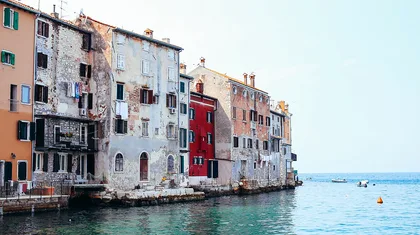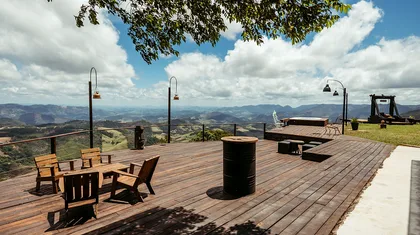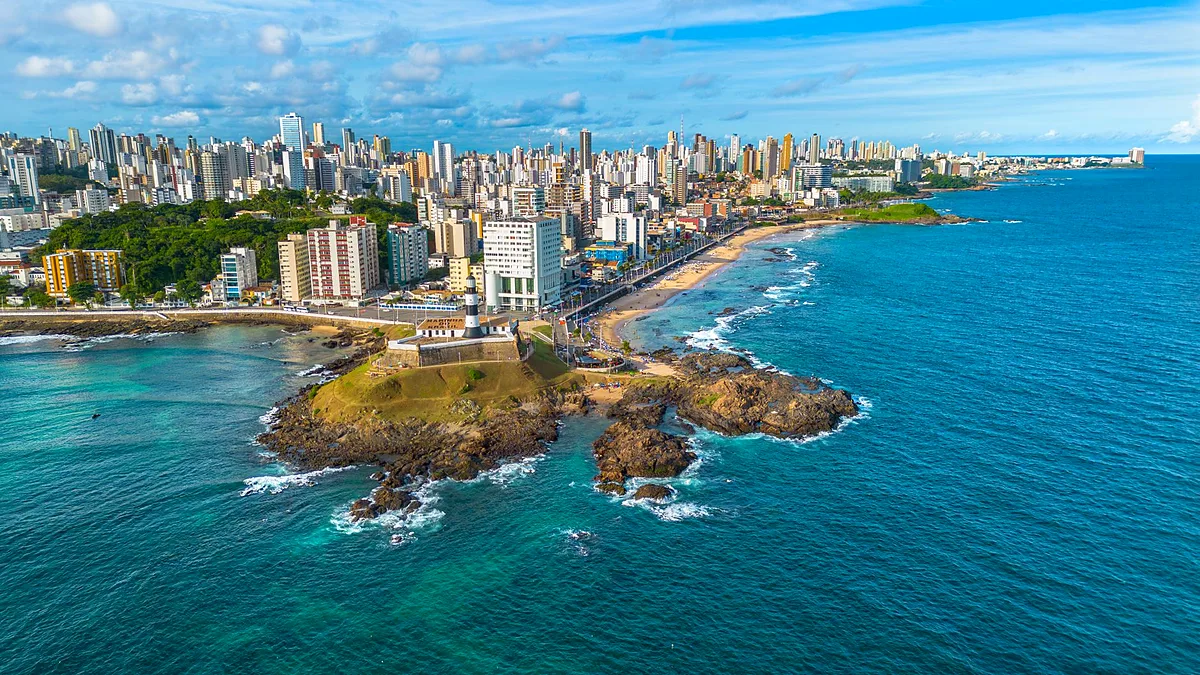

Salvador sits on a ridge above a bay, and those steep ladeiras between the upper and lower city will quietly eat a whole day. This five-day route keeps you inside one neighborhood at a time, sends you downhill when it counts, and puts galleries where your energy actually is.
It is built for late autumn, which in Bahia means May: sunset around 5:15pm, short heavy showers, and 24–30°C (75–86°F). Mornings are for museums, afternoons are for markets and studios, and every evening ends at a viewpoint within walking distance of dinner.
Quick Route Overview
This plan suits travelers who care about contemporary and popular art, don't mind stairs, and would rather see four things properly than eight things badly. Pace is moderate: two or three sites before lunch, a long sit-down meal, one anchor sight after.
Unlimited High-Speed International Travel eSIM
Connect in seconds across 180+ destinations. Instant QR code activation with zero roaming surcharges.

Base yourself in Santo Antônio Além do Carmo or the northern Pelourinho if you want to walk everywhere. If you'd rather have a beach outside your door, Barra works fine — you'll just spend more on rides.
- Duration: 5 days, 4 nights
- Best season: Late autumn (May) — thinner crowds, lower rates, passing rain
- Recommended base: Santo Antônio Além do Carmo (walkable, calm) or Pelourinho (central, noisier)
- Transit method: Walking plus Uber/99 for longer hops; metro only for the airport side; Elevador Lacerda for the hill
- Typical spend: R$250–800 per day (~$46–148 USD)
Day 1: Pelourinho Without the Backtracking
Morning
Start at Terreiro de Jesus at 8:30am, before the tour vans arrive. Grab coffee and a pão de queijo from one of the small cafés on Largo do Cruzeiro de São Francisco (R$12 / ~$2) and walk the square while it's empty.
Then work the two heavyweights on the same block: the Catedral Basílica and the Igreja e Convento de São Francisco, whose interior is gold leaf and blue azulejo tile. Entry is R$10 (~$2) and it opens around 8am on weekdays.
Afternoon
Lunch at Cantina da Lua on Terreiro de Jesus, a Pelourinho fixture where the plate of the day runs about R$55 (~$10). Simple food, cold beer, tables you can sit at for an hour.
Walk five minutes to Casa do Benin on Rua da Gamboa de Cima for Bahia–West Africa textiles and ceremonial pieces, then the Museu da Misericórdia on Rua da Misericórdia. Most of these close at 5pm, so pick two, not three.
Evening
The terrace beside the Elevador Lacerda on Praça Tomé de Souza gives you the bay, the lower city and the sunset in a single frame. Ride the elevator down and back up for the novelty — it's free now, but keep a coin just in case.
Dinner at Senac Pelourinho on Largo do Pelourinho, where a three-course Bahian menu costs around R$70 (~$13) and the moqueca is the real thing. On Sundays, stay for the Olodum drum rehearsal at Largo Tereza Batista (about R$30 / ~$6, usually from 8pm).
Route Efficiency Tip: Everything on Day 1 sits inside a 600-metre circle. Don't leave Pelourinho between 8:30am and 8pm — you'd burn R$20 in Ubers and 40 minutes for nothing.
Day 2: Santo Antônio Studios and the Ladeira Down
Morning
Walk up the Ladeira do Carmo from Pelourinho — 15 minutes, steep, cobbled — or take a 6-minute Uber (R$12 / ~$2) if it's raining. You land at Largo do Santo Antônio, the quiet hilltop square with the Igreja de Santo Antônio Além do Carmo and views over the port.
From there, work down Rua Direita de Santo Antônio, where restored colonial houses hold artist studios and small galleries. Hours are loose: most run Thursday to Sunday, 11am to 6pm, and several are appointment-only. Knock and ask — you'll often get a coffee and a look at a half-finished canvas.
Afternoon
Lunch in the neighborhood: Pasta del Muro does fresh pasta from R$60 (~$11), and the smaller Bahian kitchens on Rua Direita serve moqueca for two around R$140 (~$26) with rice, farofa and pirão.
In the early afternoon, walk down the ladeira (12 minutes, all downhill) to Comércio and the Cidade da Música da Bahia in the old customs house. It's free, genuinely well made, and explains samba de roda and axé better than any label in the city. Closed Mondays, otherwise roughly 10am–6pm.
Evening
Take a short Uber (R$12) back up to Santo Antônio for sunset from the Largo, where the sun drops behind the bay and the container port lights up after it goes.
Dinner on Rua Direita — pick a terrace, order a cold Antarctica and something grilled. This is one of the calmest, best-lit neighborhoods in the center after dark.
Route Efficiency Tip: Climb the ladeira once, descend once, ride back up for sunset. Reverse that order and you'll hike the same hill three times.
Day 3: MAM, Vitória and the West-Facing Beach
Morning
Uber to the Museu de Arte Moderna at Solar do Unhão on Avenida Contorno (R$20 / ~$4, 15 minutes). A 17th-century sugar estate with a modern gallery bolted on, it's the best single art stop in Salvador — around R$10 (~$2), closed Mondays.
The building does half the work: ramp tower, stone arches, an old wharf where fishing boats still tie up. Give it two hours, including the candomblé collection in the side wing.
Afternoon
Lunch at the museum café, or walk 20 minutes south along the water into Vitória for something more substantial. Then hit Avenida Sete de Setembro, where two museums sit within 300 metres of each other.
The Museu de Arte da Bahia is the big one, with Brazilian painting from the colonial period onward. Two doors down, the Museu Carlos Costa Pinto holds glassware, silver and a strong collection of Bahian jewellery. Both are cheap (R$10 / ~$2) and quiet on weekday afternoons.
Evening
Walk 15 minutes to Porto da Barra, one of the few Brazilian beaches facing west. The sunset here is the postcard, and you can swim while you watch it.
Dinner in Barra along Rua Marquês de Caravelas or Rua Afonso Celso runs R$90–130 (~$17–24) for two courses and a drink. Afterwards the Farol da Barra is lit and the square around it is busy but manageable.
Route Efficiency Tip: Day 3 runs in one line down Avenida Contorno — Unhão, Vitória, Barra. Never reverse it, or you'll meet outbound traffic around 6pm.
Day 4: Cidade Baixa, Bonfim and Rio Vermelho
Morning
Start at Mercado Modelo in Comércio around 9am, before the cruise crowds. It's touristy, but the top floor has real craft stalls and haggling is expected.
Uber to the Feira de São Joaquim (R$12), the market where the city actually shops, and look for ceramics, hammocks and straw work on the northern edge. Ten minutes further on is the Igreja do Senhor do Bonfim — tie a fitinha ribbon with three knots and three wishes.
Afternoon
Continue north to Ribeira for lunch on the seafront, where a plate of fried fish with farofa at a beachfront bar costs R$50–70 (~$9–13). The colonial waterfront is crumbling and beautiful.
The afternoon stays slow on purpose: swim, walk the old market building, and spot the murals going up on side streets. This is the least polished stretch of the route, and that's the point.
Evening
Head back south and time your arrival at Bonfim for 4:30pm — the church sits on a hill facing west, and the light across the bay beats anything in the center.
Then continue to Rio Vermelho. Stop at the Casa de Iemanjá on the waterfront, eat acarajé at Largo de Santana (Dinha and Cira are the two famous stalls, R$25–35 / ~$5–7 with vatapá and caruru), then pick a bar on Rua da Paciência.
Route Efficiency Tip: Run this as one sweep — Comércio, São Joaquim, Ribeira, Bonfim, Rio Vermelho. If you're running late, cut Ribeira, not Bonfim.
Day 5: Abaeté, Itapuã and a Barra Farewell
Morning
Uber to Lagoa do Abaeté (R$45 / ~$8, 30 minutes) and arrive by 8am. The dark-water lagoon ringed by white sand is at its best before the tour vans, and the little Vinicius de Moraes house nearby connects the poet to the neighborhood.
Then ride 10 minutes to Itapuã beach, where fishing boats still go out and the crowd stays local until noon. Coffee and tapioca from a kiosk costs R$15 (~$3).
Afternoon
Eat before you leave — a beach kiosk on Itapuã does a decent moqueca for around R$70 (~$13). Then head back toward Barra (Uber R$60 / ~$11, 30 minutes) for the Museu Náutico inside the Forte de Santo Antônio da Barra, at the foot of the lighthouse. Entry is about R$10 (~$2), closed Mondays.
Evening
Sunset at the Farol da Barra, then a final dinner in the neighborhood. The airport is 40 minutes and roughly R$90 (~$17) by Uber, or take the metro from Lapa if you're staying centrally.
Early flight? Swap the Barra afternoon for a lazy Itapuã day instead — the airport is only 15 minutes from there.
Route Efficiency Tip: Want one more art stop? The 8am ferry from Terminal Marítimo de São Joaquim to Itaparica costs R$14 (~$3) and takes an hour; email Instituto Sacatar a week ahead about a studio visit.
Getting Around Salvador
Uber and 99 are cheap and everywhere in the center and along the coast. A hop between Pelourinho and Barra runs R$18–25 (~$3–5), which usually beats two bus fares once you count the waiting.
The metro is clean and fast but doesn't reach the historic center. The closest useful stations are Campo da Pólvora and Lapa, both a 15-minute walk or short ride from Pelourinho, and Line 2 connects Acesso Norte to the airport. Fares are about R$5 (~$0.90).
The Elevador Lacerda links Comércio to Praça Tomé de Souza, and the Plano Inclinado Gonçalves does the same job a few blocks north. Both are free or nearly free, and both save you a punishing climb.
Walking is fine in Pelourinho, Santo Antônio, Vitória and Barra by day. At night, stay on lit streets and skip the empty stretches of Comércio and the Ladeira da Montanha — take a R$15 Uber instead of proving a point.
Skip the rental car. Parking in the center is a nightmare and the one-way system will cost you more time than it saves.
Estimated Daily Budget Breakdown
Figures are per person per day, assuming double occupancy for hotels and a dorm bed for the backpacker row. Conversion uses roughly R$5.4 to $1 USD.
| Travel Style | Accommodation | Food & Drink | Transit & Sights | Total / Day |
|---|---|---|---|---|
| Budget Backpacker | R$110 (~$20) | R$90 (~$17) | R$50 (~$9) | R$250 (~$46) |
| Comfortable Mid-Range | R$420 (~$78) | R$200 (~$37) | R$110 (~$20) | R$730 (~$135) |
| Boutique Splurge | R$1,200 (~$222) | R$450 (~$83) | R$220 (~$41) | R$1,870 (~$346) |
Two things blow the budget: Ubers after midnight and restaurants facing the main Pelourinho squares. Walk one block off the square and prices drop by a third. Carry R$150–200 in small notes too — acarajé stalls, small ateliers and the Feira de São Joaquim run on cash or Pix.
Frequently Asked Questions
Do I need to book tickets in advance?
Not for the museums. MAM, MAFRO, the Museu de Arte da Bahia and Cidade da Música are all walk-in. Book ahead for Olodum rehearsals in high season, private studio visits in Santo Antônio, and anything involving Instituto Sacatar on Itaparica.
Is the historic center safe at night?
Pelourinho and Santo Antônio are busy and well-policed in the evenings, and fine for dinner and live music. Comércio, the area around the bus terminal and the empty ladeiras between the two city levels are not — take a short Uber rather than walking those after dark.
Is May a bad time because of the rain?
May is one of Salvador's wetter months, but the rain arrives in bursts of 20 to 40 minutes rather than all-day drizzle. Mornings are usually clear, so book museums early and keep beach plans flexible. Rates are lower and the Pelourinho is far quieter than in January or February.
Where can I leave luggage on the last day?
Most pousadas hold bags after checkout at no charge, and there are lockers at the airport and at Shopping Barra. If you're heading to Itapuã or Abaeté before your flight, leave bags at the hotel and collect them on the way — the airport is 15 minutes from Itapuã.