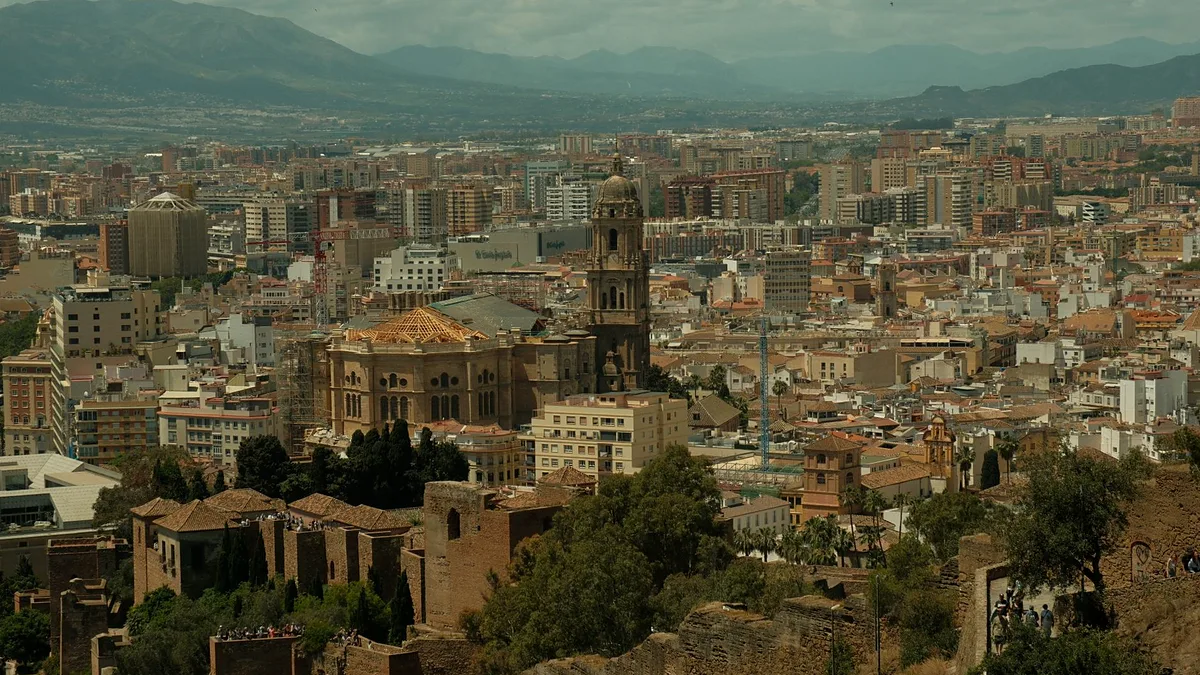

Málaga gets treated as an airport with a cathedral attached. People land, grab a rental car and drive west to the Costa del Sol without ever seeing the city. That's a mistake. There's a Roman theatre, a Moorish fortress on a hill, a Picasso museum inside a 16th-century palace, and a fried-fish culture that could keep you busy for a week.
This five-day route runs at a moderate pace: two or three sights a day, a real lunch break, one day trip, and evenings that end with a small glass of sweet Málaga wine. It's walkable almost the whole way, so you won't burn hours on buses.
Quick Route Overview
Best for: curious travelers who'd rather eat at a market counter than a seafront tourist menu, don't mind a hill or two, and want the city plus one Andalusian day trip. Not for: anyone planning to lie on a beach for five straight days — though Day 3 comes close.
Unlimited High-Speed International Travel eSIM
Connect in seconds across 180+ destinations. Instant QR code activation with zero roaming surcharges.

The plan keeps you based in the Centro Histórico, with two eastward pushes toward the port and beaches, and one full day out in Ronda. You cover every major sight without backtracking once.
- Duration: 5 days / 4 nights
- Best season: Mid-March to June and late September to October. May is the sweet spot. August hits 35–38°C (95–100°F) and the Feria crowds take over.
- Base: Centro Histórico, ideally between Plaza de la Merced and Calle Granada. Soho, just west of the port, is cheaper and still 10 minutes on foot from everything.
- Transit: Your feet, a few EMT city buses, and the C1 Cercanías train for the airport.
Day 1: Romans, Moors and a Market Breakfast (Centro Histórico)
Morning
Start at Casa Aranda on Calle Herrería del Rey 2, frying churros since 1932. A plate with thick chocolate costs about €4 (~$4 USD), and locals are in and out by 8:30.
Walk five minutes to the Mercado de Atarazanas, open Monday to Saturday roughly 7:00–14:00 and closed Sundays. The Nasrid arch at the entrance is the genuine 14th-century gate; the ironwork around it is 19th-century. Order a coffee at a counter and just watch the fishmongers work.
Then drift down Calle Larios to Plaza de la Constitución and turn up Calle Granada, the old Moorish spine of the city.
Afternoon
The Alcazaba opens around 9:00 and costs €3.50. Buy the combined ticket with Gibralfaro for €5.50 now and use it on Day 3. Entry is free on Sundays after 14:00, which also means long queues.
The Roman theatre at its base is free and takes ten minutes to see. Lunch at El Cortijo de Pepe on Plaza del Carbón, where a round of tapas and two drinks lands around €18–22 (~$19–24 USD).
After lunch, the cathedral: €5 basic entry, €10 if you want the rooftop walk. It's closed to visitors on Sunday mornings for mass.
Evening
For sunset, ride the lift to a rooftop bar — the AC Hotel Málaga Palacio near the port has one and a drink runs €8–10. For a free version, walk to the end of Muelle Uno and watch the light drop behind the port.
Dinner at La Tranca on Calle Carretería 92, a tiled old bar where vermouth is €2.50 and tapas are €3–4. El Pimpi on Calle Granada is more famous and more expensive — worth one drink on the terrace, not a full meal.
Finish with a slow lap of the Palmeral de las Sorpresas along the water.
Route Efficiency Tip: Everything on Day 1 sits inside a 12-minute walking radius. Do not take a taxi today.
Day 2: Picasso, Street Art and the Waterfront
Morning
Book the 10:00 slot at the Museo Picasso Málaga (Calle San Agustín 8, open 10:00–19:00, closed Mondays, €13 / ~$14 USD). Book online — the walk-up queue is genuinely painful by 11:00.
Afterwards, coffee on Plaza de la Merced (€1.60) and, if you want the deep cut, the Fundación Picasso Casa Natal across the square where he was born (€4, closed Mondays).
Afternoon
Walk 10 minutes into Soho for lunch. The small bars around Calle Tomás Heredia do a menú del día for €13–16 (~$14–17 USD), usually three courses with a drink.
Then the Soho murals — free, self-guided, with the biggest pieces on Calle Casas de Campos and Calle Tomás Heredia. Add CAC Málaga (free, closed Mondays) or the Centre Pompidou Málaga on Muelle Uno (€9, closed Tuesdays) if you still have legs.
Evening
Sunset by the La Farola lighthouse at the port entrance, then dinner on Muelle Uno. Kaleido and Beluga run €25–35 per person; the chiringuitos behind the port do the same fish for €15.
Nightcap on the water, then walk home through the lit-up old town.
Route Efficiency Tip: Day 2 is one straight line west to east — Picasso, Soho, port. Don't reverse it in the afternoon heat.
Day 3: Castle, Sand and Sardines
Morning
Take bus 35 from Paseo del Parque up to Gibralfaro (€1.40), or walk the pine-shaded path up from the Alcazaba in about 25 steep minutes. The castle costs €3.50, or nothing if you bought the €5.50 combined ticket on Day 1.
Coffee on the Parador terrace afterwards, with the whole city, port and coastline laid out below you.
Afternoon
Walk back down to Playa de la Malagueta. Lunch at one of the chiringuitos: a plate of pescaíto frito for two with drinks comes to €25–30 (~$27–32 USD). Then swim, then do absolutely nothing for an hour.
Evening
Take bus 11 from Paseo de Reding east to Pedregalejo, about 15 minutes. This is where espetos happen: sardines skewered on cane and grilled over old boat hulls. They cost €2–2.50 each, or €14–16 for a mixed plate.
Sunset over the bay from the paseo marítimo, then a taxi back for €10–12, or bus 11 until late.
Route Efficiency Tip: Never pair Gibralfaro with the Alcazaba on the same morning — it's a lot of stairs in a lot of sun. Also note espetos are best May to September; off-season chiringuitos still serve fried fish.
Day 4: Ronda Day Trip
Morning
Renfe Media Distancia runs from María Zambrano to Ronda in about two hours, €13–19 each way, but only three or four departures a day — buy the return when you buy the outbound. The ALSA bus is cheaper (around €10), takes 1h45 and has more departures.
From Ronda station it's a 15-minute walk to the Puente Nuevo and the Mirador de Aldehuela, the free viewpoint that gives you the postcard shot.
Afternoon
The Plaza de Toros costs €10 with the museum inside. Lunch at Tragatá on Calle Nueva, a modern take on Andalusian cooking for €22–28 per person.
Then the Baños Árabes (€3.50, closed Mondays) and Santa María la Mayor (€6). A glass of Ronda red in any bar on Calle Nueva is €3.
Evening
Take the late-afternoon train or bus back and keep dinner light — tapas in El Ejido at El Trillo, around €15 per person, since you ate properly at lunch.
Alternatives if Ronda doesn't appeal: Nerja and Frigiliana by bus (about 1h30), or Antequera by AVE in 25 minutes for €9–15.
Route Efficiency Tip: Ronda is the one day to skip a sit-down dinner in Málaga. You'll roll back in around 20:30.
Day 5: Museums, Mint Tea and Sweet Wine
Morning
The Museo Carmen Thyssen on Calle Compañía (€10, closed Mondays) holds around 230 works of 19th-century Andalusian painting — 90 minutes is plenty. Alternatively, the Tabacalera museums: Museo Ruso (€8) and Museo Automovilístico (€10), both closed Mondays.
Then Calle Calderería, the old Moorish quarter, for mint tea in a tetería (€2.50) and one last wander through the whitewashed alleys.
Afternoon
The Hammam Al Ándalus near the port does a 90-minute bath and massage from €40–50, and you should book two or three days ahead.
For lunch, Antigua Casa de Guardia on Alameda Principal 18 has been pouring from the barrel since 1840. A small glass of sweet Moscatel is €2, and they chalk your bill on the bar in front of you.
Evening
Last sunset from a rooftop or the port. Farewell dinner: José Carlos García on Muelle Uno for a splurge (tasting menu roughly €110–140 per person), or Uvedoble Taberna near the cathedral for €30–35.
Nightcap is helado de turrón from Casa Mira for €3.50. Ice cream counts.
Route Efficiency Tip: Flying out tonight? María Zambrano station has lockers for €3–5, and the C1 train reaches the airport in 12 minutes for €2.30, every 20 minutes.
Getting Around Málaga
Walk. The historic center is flat and takes 20 minutes end to end, and the seafront promenade runs for miles.
For longer hops, EMT buses cost €1.40 a ride, or buy a bonobús card for a small discount. Bus 11 goes to Pedregalejo and El Palo, bus 35 climbs to Gibralfaro, and the C1 Cercanías connects Centro-Alameda and María Zambrano to the airport in 12 minutes for €2.30.
Ignore the metro — Málaga's two lines head west to the university and are no use to visitors. Skip the rental car too: parking in the center runs €20+ a day and the old town is largely pedestrian.
Taxis are cheap for short runs (€8–12 across the center). The city is safe, but keep an eye on your bag on Calle Larios and inside Atarazanas market, where crowds are dense.
Estimated Daily Budget Breakdown
| Travel Style | Accommodation | Food & Drink | Transit & Sights | Total / Day |
|---|---|---|---|---|
| Budget Backpacker | €30–45 (~$32–48) | €30–40 (~$32–43) | €12–18 (~$13–19) | €75–100 (~$80–107) |
| Comfortable Mid-Range | €90–130 (~$96–139) | €55–75 (~$59–80) | €20–30 (~$21–32) | €165–235 (~$177–251) |
| Boutique Splurge | €200–320 (~$214–342) | €110–160 (~$118–171) | €40–70 (~$43–75) | €350–550 (~$375–589) |
Prices spike hard during Semana Santa (Easter week) and the Feria de Agosto in mid-August, when mid-range rooms can double. Outside those windows, Málaga is noticeably cheaper than Seville or Barcelona.
Honest warning: Málaga runs on a long drought and summer water restrictions are real. Tap water is safe to drink, but many locals still order bottled. Also, tapas are not free here the way they are in Granada — you pay €2–4 per plate.
Frequently Asked Questions
Do I need to book tickets in advance?
Yes for the Museo Picasso (especially the first morning slot), the Hammam Al Ándalus, and anything involving the Caminito del Rey, which sells out weeks — sometimes months — ahead. The Alcazaba, Gibralfaro and cathedral are fine to walk into. Note that most museums close on Mondays.
Where can I leave my luggage?
María Zambrano train station has paid lockers (roughly €3–5 per day), and the airport has storage too. In the center, apps like Radical Storage and Nannybag have tie-ups with shops and cafés for about €5 per bag per day. Most hotels will hold bags free on arrival or departure day.
When is the best time to visit, and how brutal is August?
March to June and late September to October are ideal, with May the standout. August regularly hits 35–38°C, the city fills with Spanish holidaymakers, and some family-run restaurants shut for the month. If you do come in August, copy the locals: sights before 11:00 and after 19:00, long lunches indoors, beach in between.
Should I add Granada or the Caminito del Rey?
Granada is 1h30–2h each way by bus or train, so treat it as an overnight, not a day trip — five days in Málaga plus a rushed Alhambra visit helps nobody. The Caminito del Rey is genuinely doable: 50 minutes by train to El Chorro, but you must pre-book the timed entry and the shuttle bus, and it's not for anyone uneasy with heights.