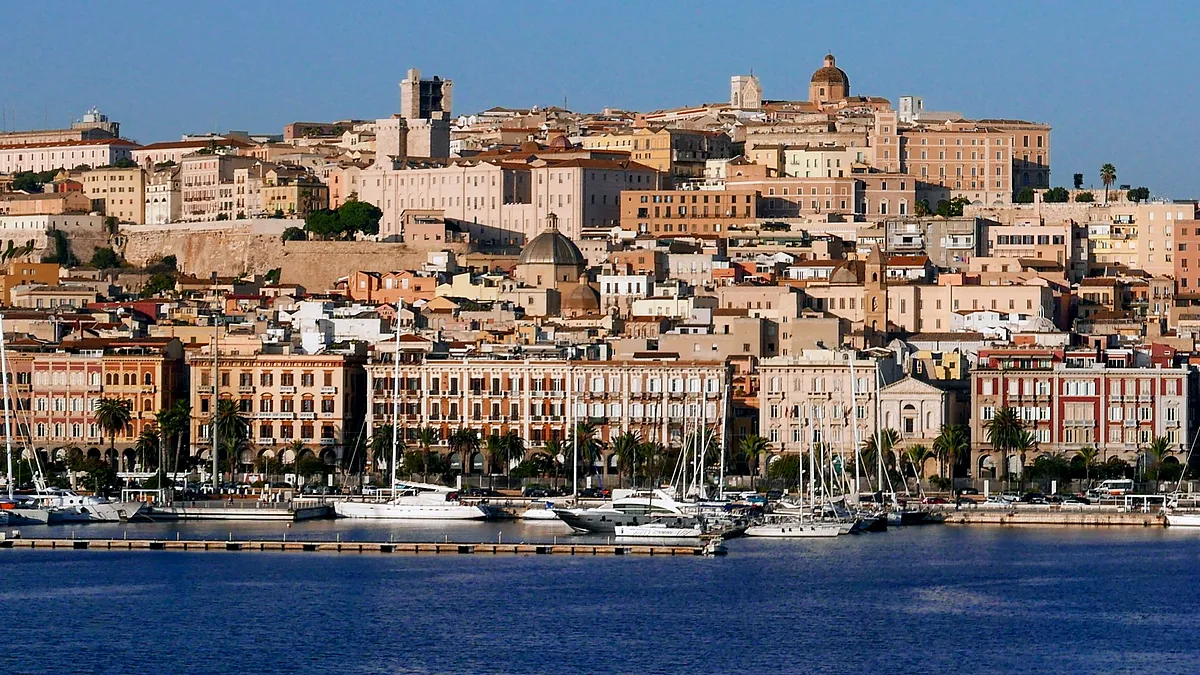

Cagliari is a city you can walk across in forty minutes and still not finish in five days. Everything worth seeing sits within a few kilometres of the port, but the good stuff hides behind unmarked doorways, up 300-step staircases and inside market halls that shut at 2pm sharp. This route is built for people who would rather eat one proper Sardinian lunch than tick off six monuments.
What follows is a day-by-day plan that keeps you in one neighbourhood at a time, so you never waste an afternoon on buses. Prices are what I paid on a recent summer trip, converted roughly to USD at €1 = $1.09.
Quick Route Overview
This itinerary suits curious, food-first travellers who are comfortable walking 10,000 to 15,000 steps a day and don't mind an early alarm for the fish market. It is not a beach-holiday plan — you get one full sea day, on Day 4, and even that involves a hill climb. Couples and solo travellers will get the most out of it; families with very young kids should trim Day 3.
Unlimited High-Speed International Travel eSIM
Connect in seconds across 180+ destinations. Instant QR code activation with zero roaming surcharges.

Book accommodation early if you're travelling in July or August, when Italian holidaymakers arrive in force and hotel rates in Cagliari roughly double.
- Duration: 5 days (roughly 4 full sightseeing days plus arrival and departure)
- Best season: Late May to mid-June, or September to early October — warm sea, half the crowds, lower prices
- Where to stay: Marina (closest to the port and restaurants) or Stampace (quieter, better value, 10 minutes' walk to everything)
- Getting around: On foot plus CTM city buses. You only need a car or a tour on Day 5.
Day 1: Land in Marina, Climb to Castello
Morning
From Elmas Airport, the train to Cagliari station takes about 7 minutes and costs €1.30 (~$1.40) — buy at the machine on the platform. Drop your bags and walk 15 minutes along Via Roma to the Marina district, the old sailors' quarter pressed against the port.
Start with a standing espresso at a bar onVia Sardegna — €1.20 (~$1.30) if you drink it at the counter, closer to €2.50 if you sit down. Sitting is the single most expensive decision you'll make all week in Cagliari.
Afternoon
Climb Via dei Genovesi into Castello, the walled upper town. Entry is free; the walk is the attraction. Pause at the Torre dell'Elefante (about €4 / ~$4.40, open daily roughly 10:00–18:00) and the Cattedrale di Santa Maria, which is free to enter and pleasantly cool at midday.
Lunch: a plate of fregola with clams at a Marina trattoria runs €14–18 (~$15–20). If you are jet-lagged, keep it light and save your appetite.
Evening
Walk the Bastione di Saint Remy terrace around 19:30 for the free sunset view over the rooftops and the Golfo degli Angeli. Stay for an aperitivo at the café tucked under the arches — a spritz is about €6 (~$6.50).
Dinner in Marina at a fish-focused spot like Sa Piola: expect €35–45 (~$38–49) per person with wine. Finish with a mirto liqueur, usually poured free.
Route Efficiency Tip: Marina and Castello are stacked vertically, so do them in one go. Don't come back up the hill twice — the climb is short but steep, and midday heat makes it feel twice as long.
Day 2: Market Morning in Stampace and Villanova
Morning
Be at the Mercato di San Benedetto by 8:30. The fish hall is the reason to come: tuna the size of car doors, sea urchins, and vendors shouting prices in Campidanese dialect. It runs Monday to Saturday, roughly 7:00–14:00, and it is free to wander.
Grab breakfast inside the market — a cornetto and cappuccino for about €2.50 (~$2.70). Then walk 10 minutes south into Stampace, the grid of low lanes west of Castello.
Afternoon
Stampace is where Cagliari gets quiet. Visit the Cripta di Santa Restituta (about €5 / ~$5.50), a rock-cut crypt under the church of Sant'Efisio, then loop east to the Villa di Tigellio, a free set of Roman ruin fragments sitting oddly between apartment blocks.
Lunch in Villanova at Su Cumbidu on Via Napoli: malloreddus alla campidanese and a quarter of house wine, roughly €22–28 (~$24–30) all in. It's a plain room with paper tablecloths and it fills with locals by 13:30.
Evening
Wander Villanova's Via San Giovanni, a pedestrian lane of yellow-and-ochre houses, and stop at the church of San Michele with its tiled dome. This is a residential neighbourhood, so the evening feels like a real city rather than a set piece.
Dinner at a Villanova pizzeria — Framento or similar — is €12–16 (~$13–17) for a proper wood-fired pizza. Walk it off along Corso Vittorio Emanuele back toward Castello.
Route Efficiency Tip: Do the market and Stampace in the same morning. San Benedetto sits at the bottom of Via Sant'Avendrace, a 12-minute walk from the crypt — no bus required.
Day 3: Museums, Romans and the Tuvixeddu Necropolis
Morning
Head to the Cittadella dei Musei in Castello, the cluster of museums inside the old arsenal. The Museo Archeologico Nazionale is the star — its collection of Nuragic bronzetti is worth the trip on its own. Entry is about €10–12 (~$11–13); a combined ticket covering several sites costs a little more.
Allow two hours. The Pinacoteca next door is small and skippable if you're short on time.
Afternoon
Walk down to the Anfiteatro Romano on the edge of Villanova — a Roman amphitheatre half-swallowed by the hillside, usually free or a couple of euros to enter. Then cross to the Orto Botanico (about €5 / ~$5.50), a shaded garden that's the best place in the city to sit still at 2pm.
Lunch nearby at Cucina.eat in Stampace: a daily plate plus water for around €15 (~$16).
Evening
Take bus 5 or walk 25 minutes uphill to Parco di Monte Urpinu for the widest view of the gulf, the salt flats and Poetto's long white curve. Go around 19:45; the light is best then and the park stays open late in summer.
Dinner back down in Stampace at a small osteria — burrida (dogfish in walnut sauce) and a glass of Vermentino, about €30 (~$33).
Route Efficiency Tip: The Cittadella, the amphitheatre and the botanical garden form a rough triangle within 800 metres. Do them in that order so you're always walking downhill.
Day 4: Poetto, Flamingos and the Devil's Saddle
Morning
Catch the PF or PQ bus from Via Roma out to Poetto — about 20 minutes, €1.30 (~$1.40), running frequently in summer. The beach stretches for 8 kilometres; get off near the sixth stop (the "sesto" area) where the sand is widest and the beach bars start.
A sunbed and umbrella at a lido runs €15–20 (~$16–22) for the day. Free public stretches sit between the lidos if you'd rather keep the money for lunch.
Afternoon
Walk west along the sand to the Molentargius salt flats, entering from the Via La Palma side. The flamingo colony here is resident and visible year-round — bring binoculars or use the free viewing screens. The park visitor area is free and open daily.
Lunch at one of the beach restaurants along Poetto: a seafood pasta and a beer is around €20–25 (~$22–27). Then, if you have energy, climb the Sella del Diavolo from the Calamosca side — a 30 to 40 minute rocky path, free, with the best coastal view in Cagliari.
Evening
Stay on the beach for sunset at La Paillote, where a spritz costs about €8 (~$8.70) and the crowd is a mix of locals finishing a swim and visitors who got the memo.
Take the bus back into town and eat simply: a plate of pani carasau, cheese and cured meat with a Cannonau red, around €18 (~$20).
Route Efficiency Tip: Poetto, Molentargius and the Sella del Diavolo all sit at the eastern end of the city. Book them as one day — going back to the centre and out again wastes two hours of bus time.
Day 5: A Day Trip, Then a Farewell Dinner
Morning
Pick one. Option A is the UNESCO Nuragic complex of Su Nuraxi at Barumini, about an hour's drive inland — no convenient public transport, so book a guided tour (€60–80 / ~$65–87 including entry) or hire a car for the day.
Option B is Nora, the Roman city on a headland near Pula: CTM buses run from Cagliari to Pula in about 50 minutes for a few euros, and the site entry is around €8 (~$8.70). It's the easier, cheaper choice.
Afternoon
Whichever you choose, be back in the city by 16:00. Use the leftover hours for the things you missed — the Basilica di San Saturnino, one of Sardinia's oldest churches, is free and takes 20 minutes.
Last shopping stop: pick up bottarga, pane carasau and amaretti from a Via Roma delicatessen. Expect €10–15 (~$11–16) per item.
Evening
For a final dinner, go properly Sardinian. Trattoria Villanova or a Castello wine bar both land around €40–55 (~$44–60) per person. If you want the splurge, Dal Corsaro in Castello is Cagliari's Michelin-starred table, with tasting menus starting around €130 (~$142) — book weeks ahead.
End with a slow walk along the Bastione terrace. It's free, it's the best view in the city, and it's the right way to say goodbye.
Route Efficiency Tip: Do your day trip on Day 5 only if you have a late flight. If you're flying out mid-afternoon, swap Day 5 and Day 4 so the beach day lands last and nothing is at risk.
Getting Around Cagliari
CTM runs the city buses and the metro line from Piazza Repubblica toward Monserrato. A single ticket costs about €1.30 (~$1.40) and covers 90 minutes of travel including transfers; a day pass is around €2.50–3.00 (~$2.70–3.30). Buy from tabacchi shops or the TuttoCittà app rather than the driver.
Honestly, you'll walk most of this itinerary. The historic centre is compact and safe at night, though the staircases between Marina, Stampace and Castello are steep and uneven — wear shoes with grip, not sandals with smooth soles.
Skip the rental car unless you're committed to Barumini or the interior. Parking in Castello and Marina is a nightmare and ZTL cameras will find you. For the airport, the train from Cagliari station is faster and cheaper than a taxi, which runs €25–30 (~$27–33).
Estimated Daily Budget Breakdown
| Travel Style | Accommodation | Food & Drink | Transit & Sights | Total / Day |
|---|---|---|---|---|
| Budget Backpacker | €35–55 (~$38–60) | €25–30 (~$27–33) | €8–12 (~$9–13) | €70–95 (~$76–104) |
| Comfortable Mid-Range | €95–130 (~$104–142) | €45–60 (~$49–65) | €15–25 (~$16–27) | €155–215 (~$169–234) |
| Boutique Splurge | €200–320 (~$218–349) | €110–160 (~$120–174) | €40–70 (~$44–76) | €350–550 (~$382–600) |
Figures assume a double room split between two people and include one paid museum or site per day. Add €60–80 (~$65–87) if you're doing the Barumini tour on Day 5.
Frequently Asked Questions
Do I need to book museums and sites in advance?
For the Cittadella museums and the Torre dell'Elefante, no — turn up and buy at the desk. Book Dal Corsaro, any Michelin-adjacent restaurant, and the Barumini guided tour at least two to three weeks ahead in July and August. Trenino Verde heritage train seats sell out early in season, so reserve those as soon as your dates are fixed.
Where can I leave luggage on the last day?
Cagliari Centrale station has a staffed deposit point, and most guesthouses in Marina will hold bags after checkout if you ask the night before. Airport lockers exist but cost more and force you back out to Elmas early.
Is five days too long for Cagliari?
Not if you use Day 5 for the interior. If you only want city time, four days is plenty and you can spend the fifth on a boat trip to the coves around Villasimius instead. Five days becomes thin only if you try to stay inside the historic centre the whole time.
When should I avoid visiting?
Two windows. Mid-August, when Italy's Ferragosto holiday makes beaches and restaurants genuinely packed. And late July, when daytime temperatures push past 35°C and the historic centre's stone staircases turn into a furnace between 12:00 and 16:00. Late May and September are the sweet spots.