
Quick Route Overview
This four-day route suits travelers who would rather see three places properly than seven through a van window. It assumes you sleep in Chachapoyas, walk at a normal human pace, and don't mind spending a whole morning staring at a wall of carved stone while the tour groups come and go behind you.
You need basic fitness for the climb inside Kuelap and the Gocta trail, but nothing technical. Longest transfer is about two hours each way, and most afternoons finish with a coffee and a view rather than a bus seat. June through August is the dry "winter" here — dusty, bright, cold after dark, and the sharpest light for photos.
- Duration: 4 days / 3 nights (add a fifth night in Leymebamba if you have it)
- Best season: June–September for dry trails and clear views; April–May and October–November are greener but muddier
- Base: Chachapoyas, within four blocks of the Plaza de Armas — Jr. Amazonas, Jr. Ortiz Arrieta, Jr. Libertad
- Transit method: Fly Lima–Jaén (about 1h20), then a 3.5–4 hour van or transfer; locally, shared vans, taxis, and the Kuelap cable car
Day 1: Land, Breathe, and Eat Your Way Into Chachapoyas
Morning
Most arrivals come through Jaén, where a driver meets the flight for the climb up to Chachapoyas (roughly S/60–80 / $16–22 per person shared, more for a private car). Chachapoyas sits at about 2,335 m, so your first job is nothing at all: check in, drink a mate de coca, and walk ten minutes to the Plaza de Armas for coffee.
Unlimited High-Speed International Travel eSIM
Connect in seconds across 180+ destinations. Instant QR code activation with zero roaming surcharges.

Cafés on the second floor around the plaza serve Chachapoyas-grown beans from Rodríguez de Mendoza province for around S/7–10 (~$2–3). Then wander the Mercado Central, four blocks away, for fresh juice, queso mantecoso, and the first smell of smoked cecina.
Afternoon
Lunch at El Batán del Tayta near the plaza: order a juane (rice, chicken and egg steamed in a bijao leaf) plus a bowl of sopa de quinua for about S/25–35 (~$7–10). It's the right first meal — filling, mild, and cheap.
Then take a taxi 15 minutes to Huancas (S/25–30 / ~$8 round trip) to watch the town's potters work clay the way their grandmothers did. Continue five minutes further to the Sonche Canyon mirador, where a S/5 community fee buys you a 900 m drop and total silence.
Evening
Be back in town by 5:30 pm and catch the light from any rooftop terrace facing the plaza's palm trees. Dinner is cecina ahumada with tacacho and a small glass of anisado at one of the small family restaurants on Jr. Libertad, around S/30–40 (~$8–11).
Skip the second pisco sour. Altitude doesn't forgive enthusiasm on night one.
Route Efficiency Tip: Huancas and Sonche Canyon share one road north of the city — book the same taxi to wait for you at both stops instead of paying for two separate runs.
Day 2: Kuelap — The Fortress in the Fog and Dust
Morning
Shared vans to Nuevo Tingo leave from the transport stops near the city's bus terminal starting around 6:30 am, take about 75 minutes, and cost S/12–15 (~$3–4). Stops shift, so ask your hotel to point out the right corner the night before — local intel beats any app here.
From the Tingo base station, the Telecabinas cable car crosses the valley in about 20 minutes (roughly S/25 / ~$7 round trip), then a 15-minute uphill walk puts you at the gate. Site entry is about S/20 (~$5.50) for foreign adults. Aim to be inside by 9:30 am; the stone lanes are narrow and the big groups arrive late morning.
Afternoon
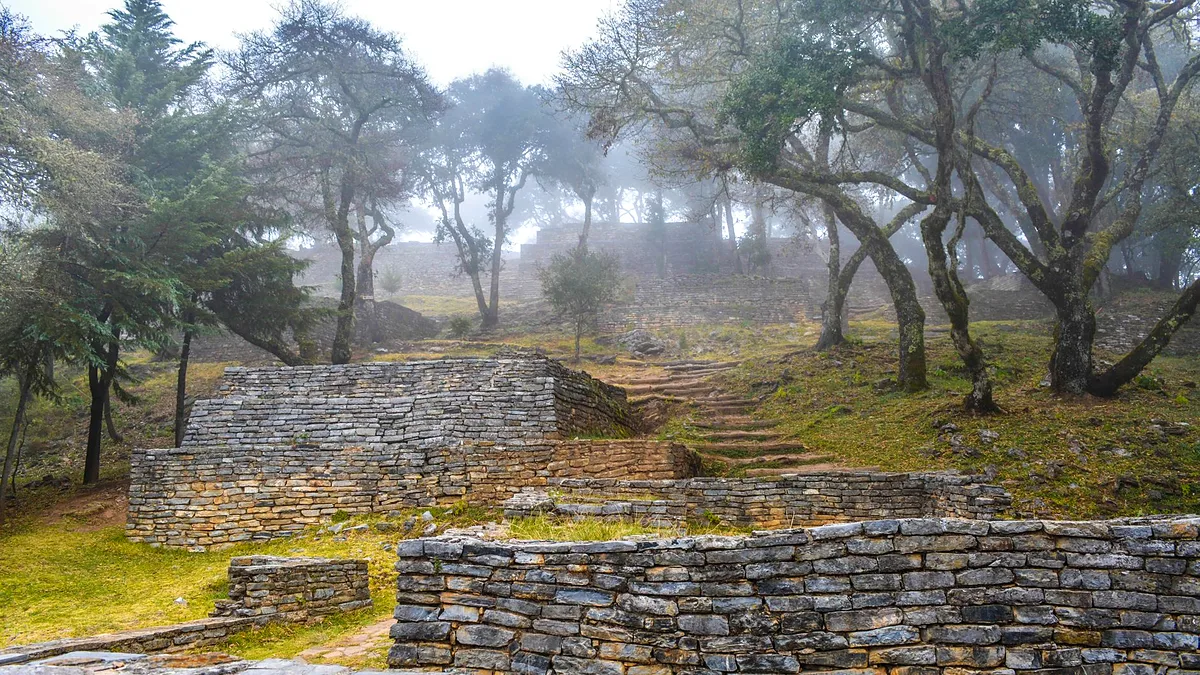
Budget two to three hours inside. Walk the full perimeter, then stand in the circular tower called El Torreón and look down the 20-metre walls. A licensed guide at the entrance costs roughly S/70–90 (~$19–25) for a group — worth splitting three ways for the archaeology of the Chachapoya people, who built this around AD 500.
Lunch back down in Tingo: trucha frita with rice and salad runs S/20–25 (~$5–7) at the small restaurants beside the base station. The interpretation centre there is small but explains the site better than most signage on top.
Evening
Back in Chachapoyas by 5 pm. Have a light dinner near the market — a caldo de gallina or grilled trout for S/15–20 (~$4–5) — and sort your photos. This is the night to do laundry, since the next two days start early.
Route Efficiency Tip: Do not let anyone sell you a "Kuelap plus Gocta" day tour. It's six hours in a van and ninety rushed minutes at one of South America's most important ruins. Pick one.
Day 3: Karajía — Coffins on a Cliff, Then Underground
Morning
Leave at 6:45 am for Cruzpata, a two-hour drive south through Lámud. A shared van plus local connection costs around S/30–40 (~$8–11) each way; a guided transfer is S/180–250 (~$49–68) for a small group and saves a lot of waiting.
From Cruzpata it's a 40-minute walk (or a horse for about S/30 / ~$8) to the Karajía sarcophagi — seven clay figures wearing skull-shaped heads, standing in a rock alcove above a ravine. Entry is S/10 (~$2.70). They are much smaller than photos suggest, and that's exactly why they're worth the walk.
Afternoon
Next stop is the Quiocta caverns, the entrance half an hour away. Entry is S/10 (~$2.70) and you will get muddy from the ankle down; boots and a headlamp are loaned on site for a few soles. The stalactites are lit, the passage is 500 m, and the walk back up is steeper than it looks.
Lunch in Lámud, the quiet provincial capital of the area, where a set menu of soup, trout and chicha de jora costs S/12–18 (~$3–5).
Evening
Return to Chachapoyas by 5:30–6 pm, rinse the mud off your shoes, and eat somewhere simple on Jr. Amazonas — a plate of cuy or grilled chicken for S/25–35 (~$7–10).
Route Efficiency Tip: Karajía, Quiocta and Lámud sit on one southern road loop. Ask for them in that exact order and you'll never double back. If it rained hard the night before, drop Quiocta — the cave floor floods and guides turn people around anyway.
Day 4: Gocta Falls, or a Museum Morning Instead
Morning
Take the 7 am van to Cocachimba (about one hour, S/10–15 / ~$3–4) for the Gocta waterfall hike. Community entry is S/10 (~$2.70), the trail is 2.5 hours each way, and horses can be hired for the return if your knees object. Start early — by 11 am the mist thickens and the falls disappear into cloud.
If you'd rather not do a five-hour hike, take the alternative: a long morning at the Leymebamba museum, three hours south, where 219 mummified Chachapoya remains and their quipus are kept in a climate-controlled room. It needs a full day and a hire car, so decide the night before.
Afternoon
Lunch at one of the lodges facing the falls in Cocachimba — a decent trout or chicken plate runs S/35–45 (~$10–12), and the terrace view is the actual reason to sit down. Catch the 3:30–4 pm van back to Chachapoyas.
Evening
Last dinner in town: book a table for local river fish and a bottle of Peruvian white, roughly S/70–90 (~$19–25) for two. Take a final slow loop of the Plaza de Armas, then pack — the Jaén van for the airport leaves around 4–5 am for morning flights.
Route Efficiency Tip: Cocachimba is northeast, the opposite direction from Karajía. Never stack Gocta and Karajía on the same day, no matter what a tour poster promises.
Getting Around Kuelap
There's no Uber here and no rental car chains worth using — the mountain roads are unpaved in sections and night driving is genuinely risky. Shared vans and taxis are the system, and they're cheap.
- To Nuevo Tingo: shared van, S/12–15 (~$3–4), 75 minutes, from about 6:30 am
- Cable car: about S/25 (~$7) round trip, running roughly 8 am–5 pm with the last uphill cabin mid-afternoon
- Taxis in Chachapoyas: S/5–8 (~$1.50–2) around town; agree the price before you get in
- Guided transfers: S/180–250 (~$49–68) per group for full-day routes like Karajía
Walking in Chachapoyas is safe and easy by day, though pavements are uneven and the altitude makes stairs feel longer than they are. Carry small bills — many drivers and market vendors have no change for S/100.
Estimated Daily Budget Breakdown
| Travel Style | Accommodation | Food & Drink | Transit & Sights | Total / Day |
|---|---|---|---|---|
| Budget Backpacker | S/45–60 (~$12–16) | S/55–70 (~$15–19) | S/50–70 (~$14–19) | S/150–200 (~$41–54) |
| Comfortable Mid-Range | S/130–180 (~$35–49) | S/110–140 (~$30–38) | S/90–130 (~$24–35) | S/330–450 (~$89–122) |
| Boutique Splurge | S/400–550 (~$108–149) | S/220–300 (~$59–81) | S/150–250 (~$41–68) | S/770–1,100 (~$208–297) |
Prices assume two people sharing and roughly S/3.70 to the US dollar. The splurge row reflects lodges like Gocta Andes Lodge in Cocachimba rather than anything in Chachapoyas itself, where top-tier rooms cap out lower.
Trip Planning Essentials & FAQs
Do I need to book Kuelap tickets in advance?
Not strictly, but do it anyway in June–August. Buy at the Nuevo Tingo base station or through the official Telecabinas Kuelap site a few days ahead, and take the earliest slot you can bear. The cable car also shuts for maintenance or high winds with no notice, which is another reason to keep Day 2 flexible and swap it with Day 3 if needed.
Where can I leave luggage?
Every hotel in Chachapoyas will store bags for free between check-out and your night van, and the bus terminal has attended counters for around S/5 per bag. Don't haul a suitcase to Kuelap — the cable car allows it, but the final stone path really doesn't.
When is the best time to visit?
June to September gives you dry trails, blue skies and nightly temperatures near freezing. February and March are the wettest months, when the Gocta trail turns to slick clay and Quiocta often closes. April, May and October are the sweet spot for green landscapes if you don't mind occasional afternoon rain.
Is altitude a problem, and do I need to acclimatize?
Chachapoyas is moderate at 2,335 m, but Kuelap sits near 3,000 m and the walk to the gate will leave you puffing. Give yourself Day 1 before the ruins, drink more water than feels necessary, and skip the heavy drinking. Serious altitude sickness is rare here — breathlessness and a headache are the normal experience.
One honest warning: ATMs in Chachapoyas are few and regularly empty, especially at weekends. Bring enough cash in soles for three days, and treat card machines as a bonus rather than a plan.