
Quick Route Overview
This route is built for travellers who would rather see eight things properly than twenty in a blur. It suits couples, solo slow travellers and anyone with decent walking shoes and a low tolerance for 5am wake-ups. Expect two sight clusters a day, a long lunch with a view, and a sunset from a rock every single evening.
Hampi's ruins cover roughly 26 square kilometres of boulder country, split by the Tungabhadra River. Day 1 stays entirely on foot in the Sacred Centre. Day 2 moves by auto through the Royal Quarter and ends across the river. Day 3 heads south to Vittala Temple, then east to Anegundi and Sanapur Lake.
- Duration: 3 days, 2 nights (add a fourth night if you want a rest day)
- Best season: November to February — dry days around 22-30°C, cool nights near 15°C
- Recommended base: Hampi Bazaar for walking distance to everything; Kamalapur (6 km away) if you want quiet and a pool
- Transit method: Your feet, auto-rickshaws, one scooter, and a coracle basket across the river
Day 1: The Sacred Centre, Entirely on Foot
Morning
Start at Virupaksha Temple at 7:30am, before the tour buses arrive and while the temple elephant Lakshmi is still being walked to the river. Entry is free; a camera fee of about ₹50 (~$0.60 USD) applies. Walk the 750-metre colonnade of Hampi Bazaar next, then take filter coffee (₹50 / ~$0.60) on the rooftop at Gopi Guesthouse and watch the boulders turn gold.
Unlimited High-Speed International Travel eSIM
Connect in seconds across 180+ destinations. Instant QR code activation with zero roaming surcharges.

Climb Hemakuta Hill from the bazaar steps around 9:30am. It is a fifteen-minute walk up and holds a scatter of small shrines, plus the best wide-angle view of the Virupaksha gopuram you will get all trip. Go early — by 11am the rock is a hot plate.
Afternoon
Lunch at Mango Tree, tucked below the bazaar steps under a mango canopy. A full thali with a banana lassi lands at ₹280-350 (~$3.50-4 USD), and the kitchen runs from about 8:30am to 9pm. Then walk north for ten minutes to the Krishna Temple.
The cluster continues without a road crossing: Lakshmi Narasimha, a monolithic seated figure with its original roof gone, sits 200 metres on. Badavilinga, a three-metre Shiva linga standing in a sunken water channel, is another 100 metres beyond. All three are free to enter.
End the afternoon on the Tungabhadra ghats behind Virupaksha Temple, where pilgrims bathe and the river runs flat and slow. Bring water; there are no shops on this stretch after 4pm.
Evening
Be at the base of Matanga Hill by 4:45pm in December or 5:15pm in February. The climb takes 20-25 minutes on uneven stone steps and is not for flip-flops. Winter sunset falls between 5:55pm and 6:25pm, and this is the single best view in Hampi.
Dinner back down at Gopi rooftop or the Mango Tree: dal, rice, a vegetable curry and a cold drink for ₹400-600 (~$5-7 USD). Walk home through the bazaar — it is lit and perfectly safe, though you will be offered autos you do not need.
Route Efficiency Tip: Everything on Day 1 sits within 1.5 km of your bed. Do not hire a vehicle. Buy your water and snacks before 5pm because the small shops near the bazaar shut soon after sunset.
Day 2: The Royal Quarter and the Far Bank
Morning
Take an auto from Hampi Bazaar to the Royal Enclosure at 8:15am — 10 minutes, ₹200-250 (~$2.50-3 USD). Start with the Queen's Bath, an ornate pavilion built around a sunken pool with real plumbing. Mahanavami Dibba follows, the stepped platform from which kings watched the Dasara processions.
Hazara Rama Temple is a five-minute walk away and holds the best narrative carvings on the site: rows of friezes showing processions, dancers and battle scenes. Aim to be out of this zone by 11am, when the light goes flat and the stone starts radiating heat.
Afternoon
Lunch at Hotel Mayura Bhuvaneshwari near Kamalapur — a clean KSTDC buffet at roughly ₹450 (~$5.50 USD), with air conditioning and clean toilets. It is not exciting food, but it is the practical stop out here and the garden is shady.
After lunch, the Underground Shiva Temple sits 5 minutes away by auto, a cool sunken shrine you reach by descending steps. Then head to the Zenana Enclosure for the Lotus Mahal and the Elephant Stables, an elegant row of eleven domed chambers. Give this 3-4:30pm slot the whole time it needs; the long shadows are what makes the photographs.
On tickets: the main ASI ticket is roughly ₹40 (~$0.50 USD) for Indian nationals and ₹600 (~$7 USD) for foreign visitors, and covers Vittala Temple, the Zenana Enclosure and the Elephant Stables on the same day. The Royal Enclosure carries a small separate fee.
Evening
Head to the coracle ghat at Hampi Bazaar by 4:30pm and cross the Tungabhadra in a round basket boat — ₹50-100 (~$0.60-1.20 USD) per person, about 90 seconds of water. Walk up to the boulders behind Virupapur Gaddi (Hippie Island) for sunset over the rice fields.
Coracles stop around 5:30pm, so plan the return over the Kamalapur bridge instead. Dinner at Laughing Buddha or Funky Monkey costs ₹400-650 (~$5-8 USD) for a curry and a drink, then an auto back to Hampi Bazaar is ₹400-500 (~$5-6 USD) and takes about 20 minutes.
Route Efficiency Tip: Day 2 covers 6 km of road across three clusters. Get your auto driver's phone number and agree on a fixed full-day rate of ₹900-1,200 (~$11-14 USD) up front rather than paying each leg separately.
Day 3: Stone Chariot, Coracles and Anegundi
Morning
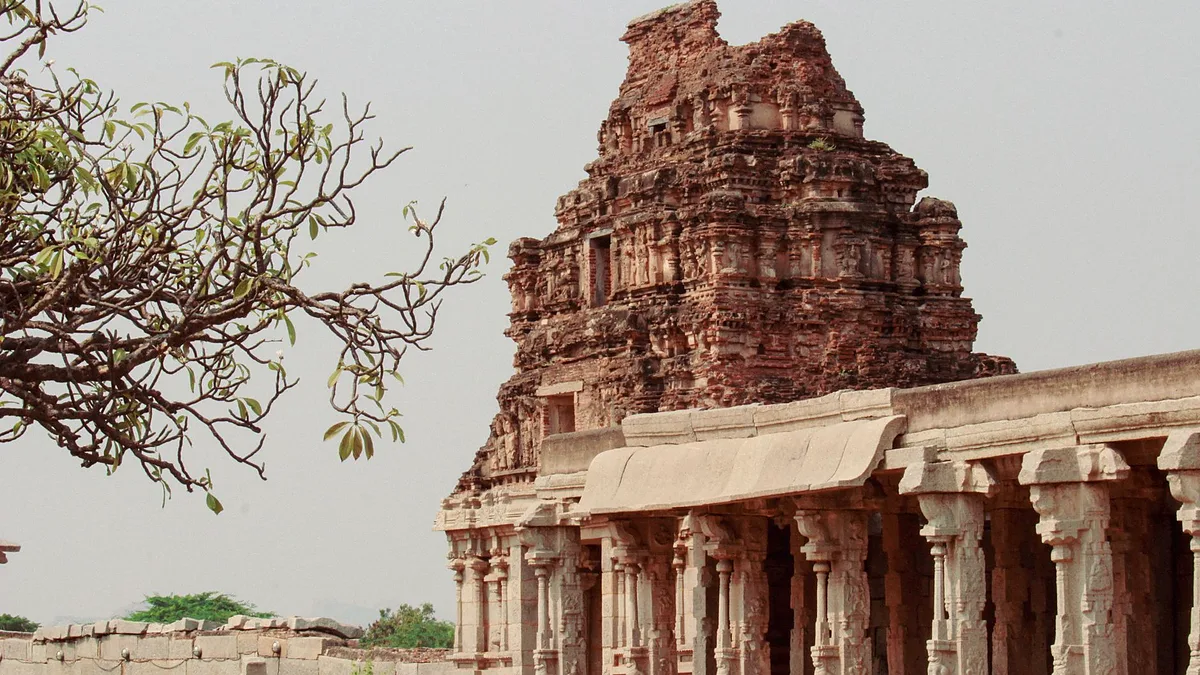
Be at the Vittala Temple ticket gate for the 8:30am opening — 10 minutes from Hampi Bazaar by auto, or a 30-minute walk. A battery shuttle covers the last kilometre (around ₹20 / ~$0.25 USD). The Stone Chariot is the obvious draw, but spend your real time on the musical pillars of the Ranga Mantapa and the reversed sandalwood-tree carving on the gopuram.
You will be barefoot on stone for a while. Carry socks and a cloth bag for your shoes. Expect 75-90 minutes here, and no more than that before the day heats up.
Afternoon
Drive east to Anegundi — about 40 minutes by auto from Vittala via the Kamalapur bridge. Hire a half-day auto for this run at ₹1,200-1,500 (~$14-18 USD); a one-way drop will strand you, as return autos are thin here.
Coracle rides on Sanapur Lake run ₹200-300 (~$2.5-4 USD) per person for 20 minutes. The water sits inside a granite bowl and is the calmest hour of the whole trip. Lunch at one of the riverside cafés near Sanapur: ₹300-400 (~$4-5 USD) for pasta, toasties or a decent dal chawal.
If you have energy left, walk the old fort gate and temple lanes of Anegundi village itself. It is the older settlement of the region and far quieter than the main site.
Evening
Head back by 4:30pm. If you are departing, Kamalapur and Hosapete are on the way — the bus to Hosapete is ₹25-30 (~$0.35 USD) and takes 40 minutes, and the station is 13 km from Hampi. If you have one more night, catch a final sunset from the Hampi Bazaar ghats, where the light hits the Virupaksha tower side-on.
Last dinner: keep it simple at Mango Tree or the rooftop at Gopi, around ₹500 (~$6 USD). Order the banana pancake once, for reasons of closure.
Route Efficiency Tip: Vittala Temple and Anegundi are both east of the main site but on opposite banks. Do them in that order on the same day — a return to Hampi Bazaar in between adds an hour of driving for nothing.
Getting Around Hampi
There is no metro here and no ride-hailing coverage worth relying on. Hampi is a village inside an archaeological zone, so your options are autos, bicycles, scooters and your own legs.
- Autos: ₹200-300 for short hops between clusters; ₹900-1,200 (~$11-14 USD) for a full 8-hour day. Always fix the price before the wheels move.
- Scooters: ₹400-600 (~$5-7 USD) per day plus fuel. Fill up at Kamalapur or Hosapete — there is no petrol pump in the ruins area.
- Bicycles: ₹150-200 (~$2 USD) per day from the bazaar. Excellent on the flat tarmac between clusters, hopeless on the stone paths.
- Arriving: Hosapete is the railhead (13 km). An auto to Hampi Bazaar is ₹350-450 (~$4-5.50 USD). Hubballi is the nearest useful airport at about 165 km.
- Walking: Day 1 is genuinely walkable. Everywhere else, the gaps are 2-6 km on exposed roads with no shade — do not attempt midday walks.
One honest warning: the boulder terrain is uneven, and rolled ankles are the most common Hampi injury. Wear closed shoes with grip and carry a torch if you plan to walk after dark.
Estimated Daily Budget Breakdown
Figures are per person, per day, and include a winter-season buffer.
| Travel Style | Accommodation | Food & Drink | Transit & Sights | Total / Day |
|---|---|---|---|---|
| Budget Backpacker | ₹900-1,600 (~$11-19) | ₹600-900 (~$7-11) | ₹500-700 (~$6-8) | ₹2,000-3,200 (~$24-38) |
| Comfortable Mid-Range | ₹4,000-7,000 (~$48-84) | ₹1,500-2,500 (~$18-30) | ₹1,200-1,800 (~$14-22) | ₹6,700-11,300 (~$80-136) |
| Boutique Splurge | ₹22,000-34,000 (~$260-410) | ₹3,500-6,000 (~$42-72) | ₹2,500-4,000 (~$30-48) | ₹28,000-44,000 (~$335-530) |
The splurge row reflects heritage-style resorts around Kamalapur, where a long lunch and a pool afternoon are the point. On the budget end, Hampi Bazaar guesthouses are cheap and basic — thin mattresses, solar hot water that runs out by 9am, and no air conditioning needed in December.
Frequently Asked Questions
Do I need to book Hampi tickets and hotels in advance?
For monuments, no — ASI tickets are bought at the gate and there is no timed entry. Hotels are a different story between 20 December and 5 January, and during Hampi Utsav (usually late January or early February), when the bazaar fills up and rates double. Book that window two months ahead. Outside those dates, a week is plenty.
Where can I store luggage in Hampi?
Almost every guesthouse will hold your bags free or for ₹100-200 (~$1.50-2.50 USD) a day, even after checkout. Hosapete railway station has a paid cloakroom if you are arriving or leaving by train and want to travel light for the day.
When is the best time to visit, and when should I avoid it?
November to February is the sweet spot, with cool mornings and dry days. Skip April to June, when temperatures pass 40°C and the granite boulders hold heat well into the night. July to September is green and photogenic but slippery, and the coracle rides on Sanapur Lake often pause if the water is high.
Is a guide worth the money?
For the Royal Enclosure and Vittala Temple, yes. ASI-approved guides wait at both gates and charge ₹1,500-2,500 (~$18-30 USD) for a half day, and the carvings make far more sense with someone pointing out the story panels. For Day 1, skip it and wander — the Sacred Centre is self-explanatory and you will want the quiet.
What should I skip?
Climbing Matanga Hill between 10am and 3pm, the aggressive guide touts working the bazaar approach road, and Daroji Bear Sanctuary unless you have a spare morning — the bears are far off and sightings are hit-and-miss. Also skip the sunset crowd at Hippie Island if you want silence; the Hampi-side ghats are emptier and just as good.