
Quick Route Overview
This is a three-day route for people who would rather see four things properly than eleven badly. It runs at an unhurried pace, assumes you sleep in or near AlUla Old Town, and builds in a real siesta every afternoon because the desert sun does not negotiate. If you like old stones, good coffee and long lunches, you are the right traveller for this.
One thing to get straight before you book anything: Hegra is a single archaeological site about 20 km north of AlUla town, not a place you can wander into. It is Saudi Arabia's first UNESCO World Heritage Site, access is by official tour only, and you cannot drive yourself in. So this itinerary treats AlUla as your base, gives Hegra a full morning, and spends the other two days on the oasis, the older Dadanite sites and the rock formations that frame the whole valley.
- Duration: 3 days (2 nights minimum; 3 nights is much kinder)
- Best season: October to April. November to February is the sweet spot at roughly 7–22°C.
- Recommended base: AlUla Old Town or Al Manshiyah just south of it — walkable to dinner, 20–25 minutes from Hegra. The Ashar Valley resorts are lovely but 25 minutes from everything.
- Transit method: hired car or a driver. There is no metro and no useful public bus network for visitors.
Day 1: Old Town, the Oasis, and Elephant Rock at Sunset
Morning
Start with coffee, not a car. Joontos in AlUla Old Town opens around 7 am and does a proper Saudi coffee with dates for SAR 25–35 (~$7–9). From there, walk the mud-brick lanes of the old town, a quarter that was abandoned in the 1980s and has been carefully restored since 2020.
Unlimited High-Speed International Travel eSIM
Connect in seconds across 180+ destinations. Instant QR code activation with zero roaming surcharges.

Climb to the AlUla Castle at the top of the settlement for a free panorama over the palm belt. Then drop into Madrasat Addeera, the old girls' school turned arts centre, where local women run palm-weaving and pottery workshops for SAR 80–150 (~$21–40) if you want to join in.
Afternoon
Lunch at Tawlet Fayza, a Lebanese home-kitchen-style spot in the old town. Order the mezze spread for two and you will land around SAR 120–150 (~$32–40). Then walk it off on the Oasis Trail, a marked route through roughly 2.3 million palms and citrus orchards behind the old town — free, flat, and about 4 km for the full loop.
Carry your own water. There are very few shops inside the oasis and the shade is deceptive.
Evening
Drive 15 minutes north to Elephant Rock (Jabal AlFil) for sunset. It is free, it gets busy on weekends, and there is a café plus a row of fire pits where locals sit with tea. Give it 45 minutes, then head back into town.
Dinner at Somewhere in the old town — casual, wood-fired, around SAR 90–130 (~$24–35) a head. Finish with a slow walk through the lit lanes, which are at their best after 9 pm once the tour groups have gone.
Route efficiency tip: Everything on Day 1 except Elephant Rock sits inside a one-kilometre radius. Park once near the old town and stay on foot. Save the car for the evening.
Day 2: Hegra — Tombs, Railways and Qasr al-Farid
Morning
Book the 8:30 or 9 am Hegra tour. Every visit starts at the Winter Park visitor hub just north of the old town, where you transfer to a shuttle — private cars are not allowed inside the site. The classic two-hour tour costs SAR 95 (~$25) per person; the Vintage Land Rover version runs SAR 300–350 (~$80–93).
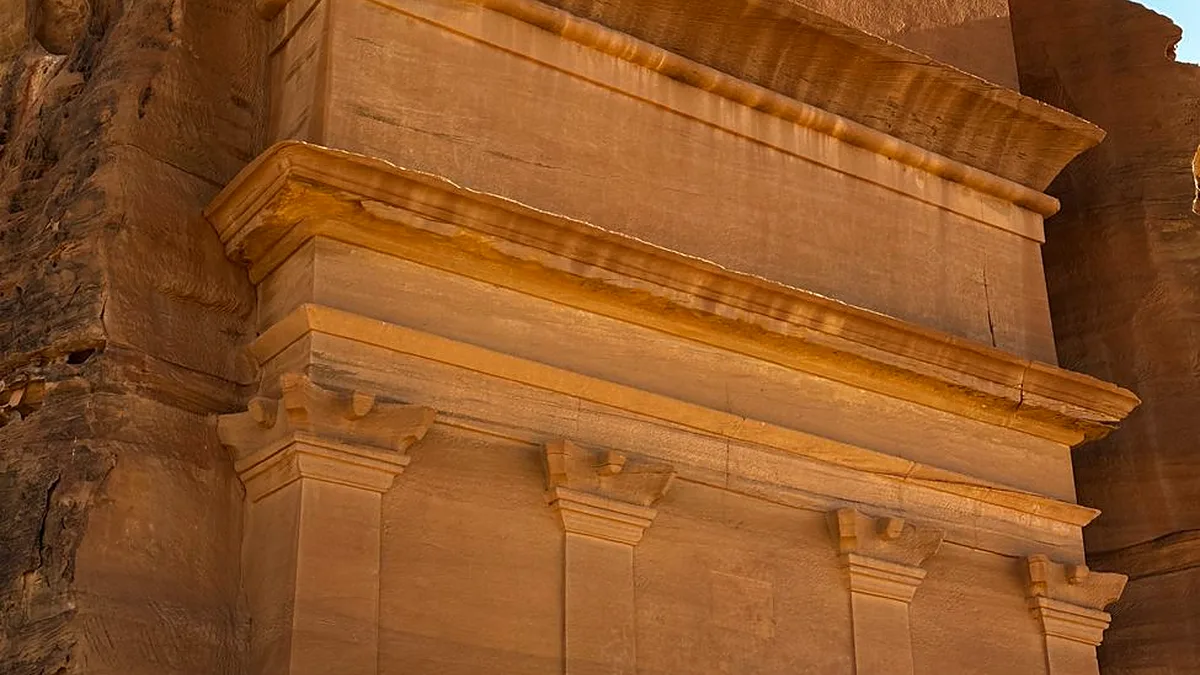
You will see Jabal AlBanat, the largest cluster with 131 tombs cut into a single outcrop, plus the restored Hijaz Railway station and fort from the 1900s. The high point is Qasr al-Farid, a 22-metre tomb carved from one boulder and left unfinished — the Nabataean masons simply stopped, and nobody is entirely sure why.
Hegra holds 111 monumental tombs, the biggest Nabataean necropolis after Petra, and it is almost entirely unshaded. Hat, closed shoes, two litres of water, no drones. The tour is scripted and fairly brisk; if you want more time at Qasr al-Farid, the Land Rover option lingers longer.
Afternoon
You will be dusty and warm by 11:30. Drive 10 minutes east to Maraya, the mirrored concert hall holding the record as the world's largest clad building — the exterior is free to walk around and photograph. Lunch at Tama at Habitas AlUla nearby runs SAR 130–180 (~$35–48) per person; book ahead in winter.
Then go back and do nothing for two hours. Genuinely. The light is flat and the sites are crowded at midday.
Evening
Around 4:30 pm, head west up to the Harrat Uwayrid viewpoint — a 30-minute drive on a paved but steep road to the edge of a black lava field. Sunset there is the best free show in AlUla. Bring a jacket; the temperature drops fast once the sun is down.
Dinner back in town at Suhail for modern Saudi cooking (SAR 180–250 / ~$48–67 per person) — check it is open, since AlUla's restaurant scene changes fast. On a budget, grilled chicken and rice at any of the small spots along the main road costs about SAR 40 (~$11).
Route efficiency tip: Hegra and Maraya sit on the same northbound road, so pair them. Harrat is on the opposite side of town — do it as one evening run, never as a midday detour.
Day 3: Dadan, Jabal Ikmah and the Older Story
Morning
Hegra gets the attention, but the Dadanite kingdom came first — and Dadan and Jabal Ikmah, both about 15 minutes north of town, are where that story becomes legible. They are also tour-access only, departing from the same Winter Park hub; a combined ticket is around SAR 95 (~$25).
At Dadan you will see the Lion Tombs cut high into a red cliff, plus the foundations of a city that traded incense across Arabia from roughly the 8th century BCE. At Jabal Ikmah, a short drive away, hundreds of Dadanitic inscriptions cover the rock faces — a UNESCO Memory of the World site, and effectively an open-air archive.
Afternoon
Lunch at one of the small Saudi restaurants near the old town for SAR 45–70 (~$12–19) — mandi, jareesh, fresh bread. Then take the slow option: a late coffee at Pink Camel and an hour in the shaded northern section of the oasis you did not reach on Day 1.
If you skipped Madrasat Addeera earlier, this is the moment for a workshop. If you have energy to burn, the AlUla Adventure Hub zipline over the old town costs around SAR 150–200 (~$40–53), but it is a different kind of trip.
Evening
Close the trip with the Gharameel stargazing tour — a 90-minute drive into the desert to a field of wind-carved rock pillars, with dinner cooked over coals and some of the darkest sky in the country. Tours run SAR 200–300 (~$53–80) and get you back around 9:30 pm.
If your flight leaves early, skip Gharameel and stay local instead: dinner at Tawlet Fayza, one last walk through Old Town, an early night. AlUla airport is 25–30 minutes southeast of town and check-in is quick.
Route efficiency tip: Dadan and Jabal Ikmah share the northern road with Hegra. In theory you could stack them onto one morning, but two full sites before lunch is a lot of standing in the sun.
Getting Around Hegra and AlUla
AlUla has no metro, no rideable bus network and no realistic walking option between sites. Distances look tiny on a map until you remember it is 20 km of open desert between the old town and Hegra.
- Hired car: SAR 180–300 per day (~$48–80); fuel is about SAR 2.33 a litre. Bring an International Driving Permit — rental desks ask for it.
- Ride-hailing: Careem works, but supply thins after 6 pm and around sunset viewpoints. Expect 15–25 minute waits.
- Private driver: SAR 400–600 (~$107–160) for a half day. Worth it if you would rather not think about parking.
- Airport taxi: SAR 80–120 (~$21–32) to the old town, roughly 25–30 minutes.
- Inside Hegra: shuttle buses only, included in your ticket price.
Walking is safe day and night, including for solo women, and the old town and oasis are genuinely pleasant on foot. Just do not attempt to walk along the highway.
Book every ticketed site through experiencealula.com. Slots release weeks ahead, December to February sells out first, and there is no gate-sales option at Hegra.
Estimated Daily Budget Breakdown
Prices are per person per day, based on two people sharing a room. AlUla is expensive by Saudi standards — the low end here is not a hostel-dorm experience, because that market barely exists yet.
| Travel Style | Accommodation | Food & Drink | Transit & Sights | Total / Day |
|---|---|---|---|---|
| Budget Backpacker | SAR 350 (~$95) | SAR 90 (~$24) | SAR 220 (~$59) | SAR 660 (~$176) |
| Comfortable Mid-Range | SAR 850 (~$227) | SAR 180 (~$48) | SAR 450 (~$120) | SAR 1,480 (~$395) |
| Boutique Splurge | SAR 2,800 (~$747) | SAR 450 (~$120) | SAR 900 (~$240) | SAR 4,150 (~$1,107) |
Frequently Asked Questions
Do I really need to book Hegra in advance?
Yes, and not the day before. Tickets release on experiencealula.com weeks ahead, the best morning slots vanish first between December and February, and there is no ticket counter at the site. If your dates are fixed, book before you book flights.
What is the best time of year to visit?
October to April. November to February is coolest and busiest, with cold nights around 5–10°C, so pack a jacket. June to September is punishing — 40°C and above — and most outdoor touring is cut back or shifted to early mornings. Ramadan shifts restaurant hours and the tour calendar; check before you lock dates.
Where can I leave luggage on arrival or departure day?
AlUla airport has limited storage, so your hotel is the reliable choice — most will hold bags before check-in and after checkout if you ask in advance. The Winter Park visitor hub can also hold bags during a morning tour, but confirm when you book. A day room at a mid-range hotel costs around SAR 250 (~$67) if you want a shower before a night flight.
How much walking is involved at Hegra?
Less than you would expect. The shuttle does the long distances and you walk short, flat stretches of maybe 200–400 metres at each stop. The ground is uneven, though, and there is no shade, so sturdy shoes and a hat matter more than fitness.