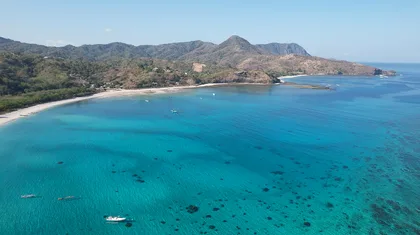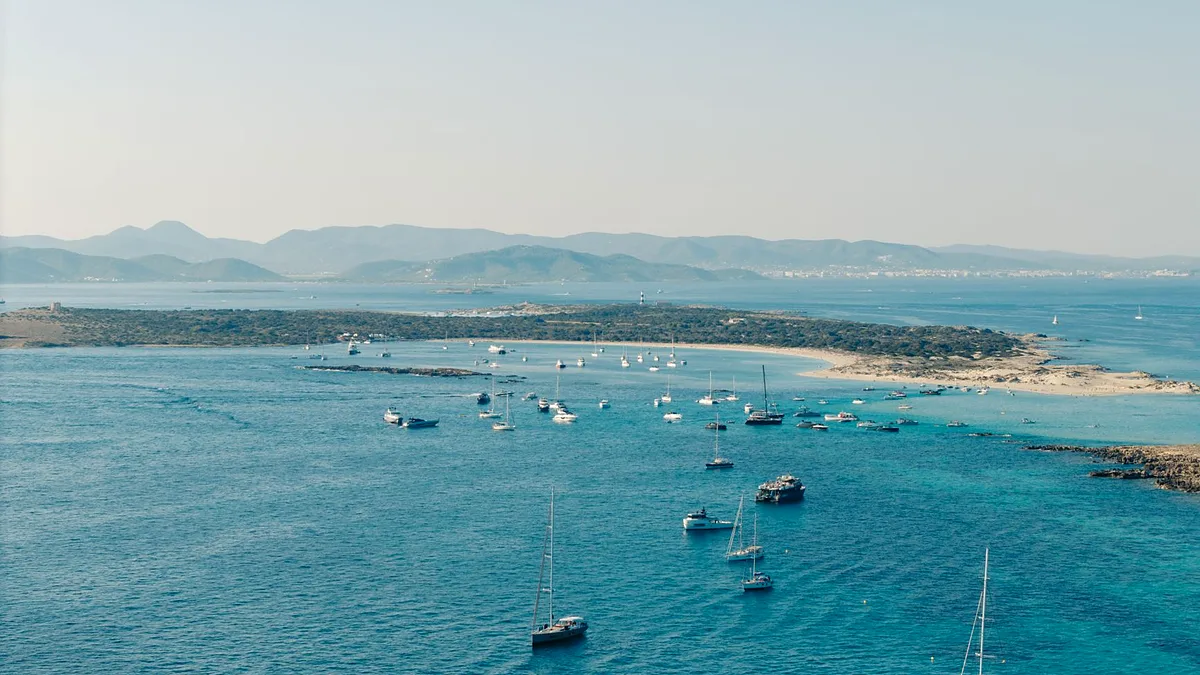

Formentera is 20 km long, flat as a table and small enough to cross by bicycle before lunch. That's exactly why three days works so well here — long enough to slow down, short enough that you never feel rushed. This route goes after the island's culture and its kitchen, not just its sand.
You'll ride dry-stone paths, eat fish in a working fishing hamlet and stand on 100-metre cliffs while the sun drops. Everything below uses real bus lines, realistic prices and honest notes on what isn't worth your time.
Quick Route Overview
This plan suits travellers who'd rather spend an afternoon at a windmill and a craft market than tick off beach clubs. Expect 15–25 km of cycling on two days, one bus-heavy day and a couple of early starts. If you want pure beach time, cut Day 2 short and double up on Migjorn.
Unlimited High-Speed International Travel eSIM
Connect in seconds across 180+ destinations. Instant QR code activation with zero roaming surcharges.

Distances are tiny, but Formentera is not an island you do fast. Summer car numbers are capped, so bicycles plus the three local bus lines genuinely solve it.
- Duration: 3 days, 2–3 nights (add a night if you want a rest day).
- Best season: Mid-May to late June, or September to mid-October. July and August are hot, crowded and roughly 40% pricier.
- Best base: Sant Francesc, the capital — central, all three bus lines pass through, and the best restaurants are here. Es Caló is a quieter alternative.
- Getting around: Bicycle for Days 1 and 3, bus line L3 for the La Mola plateau.
- Daily budget: €85–115 budget, €190–270 mid-range, €420–670 boutique.
Day 1: La Savina, Sant Francesc and the Cap de Barbaria Cliffs
Morning
Fast ferries leave Ibiza town's Estació Marítima roughly every hour from 07:00, take 30 minutes and cost €22–30 one way (€45–55 return in high season). Book with Balearia or Trasmapi a few days ahead in July and August; in May you can usually just turn up.
At La Savina port, start with a cafè amb llet and a slice of flaó — the island's mint-and-cheese tart — at one of the port cafés for about €4 / ~$4.30. Then take bus L1 to Sant Francesc (10 minutes, €1.60 / ~$1.75, every 30 minutes) or walk the flat 2 km if you're travelling light.
Drop your bags and head to the fortified church of Sant Francesc Xavier. Built in the 18th century with walls thick enough to shelter the whole village from pirate raids, it's free to enter and takes 20 minutes. The small ethnological display next door (€2, mornings, Tuesday to Saturday) explains the island's salt, fishing and dry-farming history.
Afternoon
Have lunch on Plaça de la Constitució, where a three-course menú del dia with bread and a drink runs €16–22 / ~$18–24. Look for arròs de la terra (baked rice with pork and seafood) rather than the paella aimed at day-trippers.
Pick up your bike afterwards — €12–16 per day for a city bike, €28–35 for an e-bike, with a €50–100 deposit. Rent in Sant Francesc rather than La Savina: the choice is better and you skip the port scrum.
Ride the Camí Vell de Sant Francesc southwest for about 7 km. The road runs between dry-stone walls, fig trees and half-abandoned well houses, and it's the easiest introduction to the island's inland landscape.
Evening
Cap de Barbaria is where you want to be at sunset. The 1972 lighthouse sits behind a flat, treeless plateau and the cliffs drop 70–90 metres into the sea. Bring a windbreaker and water, and watch your step — there's no railing and no café at the point.
Ride back to Sant Francesc before dark; the last few kilometres have no street lighting. Dinner means a small place off the square: grilled fish or a plate of ham with local wine, roughly €25–35 / ~$27–38 per person.
Route efficiency tip: keep everything today in the southwest quadrant — port, capital, cliffs. Don't be tempted to just pop to Illetes; you'll cross the island twice for nothing.
Stiff tramuntana wind or grey skies? Swap Cap de Barbaria for Cala Saona, 5 km west of Sant Francesc, which faces the same sunset with a bar within walking distance.
Day 2: The La Mola Plateau, the Craft Market and Es Caló
Morning
Take bus L3 from Sant Francesc up to El Pilar de la Mola — 30 minutes, about €2 / ~$2.20, departing every 30–60 minutes depending on season. Sit on the right for the climb through the Sa Pujada pass.
First stop is the whitewashed church square and the restored Molí Vell de la Mola windmill, which ground flour until the 1960s and still runs milling demonstrations in summer. Coffee and an ensaïmada at one of the two village bars costs about €4.
On Wednesdays and Sundays the Mercat Artesanal de la Mola takes over the esplanade from roughly 16:00 to 21:00 (May–October). Bring cash and small notes. Some stalls sell genuinely island-made leather and ceramics, plenty sell imported tat — spend on the former.
Afternoon
Walk or cycle the 1.5 km out to the La Mola lighthouse, built in 1861 and standing on cliffs that drop more than 100 metres. On clear days you can see Ibiza's silhouette across the water, and the viewing platform is free.
Lunch in El Pilar: the family-run restaurants along the main road serve a set menu for €16–22 / ~$18–24. Expect heavy, honest cooking — pork stews, roasted vegetables, rabbit — not delicate food.
Then walk down the Camí de sa Pujada, the medieval flagstone path that drops 3.5 km from the plateau to Es Caló in about 45 minutes. Leave the bikes at the top and take the bus back up, or arrange a one-way drop; this path is far better downhill.
Evening
Es Caló de Sant Agustí is a fishing hamlet of white boat sheds and one tiny cove. Settle in at the pier for sunset — it faces west and stays almost empty compared with the beaches.
Dinner at Fonda Platé, a village institution serving fish straight off the boats; expect €25–40 / ~$27–43 with wine. The harbour-side terraces are cheaper but less consistent.
Catch the L3 back to Sant Francesc. The last bus leaves Es Caló around 20:30–21:00 in July and August and much earlier in May or October, so check the timetable at the stop the moment you arrive — this is the most common way people get stranded here.
Route efficiency tip: the plateau is one road with three stops — village, market, lighthouse. Do them in that order, then let the old path carry you down to the coast. Never backtrack uphill in the afternoon heat.
Skip: the market if you're not there on a Wednesday or Sunday and you'd rather swim. Without stalls it's a 15-minute stop.
Day 3: Ses Illetes, Migjorn Sands and a Sant Ferran Nightcap
Morning
Get to Ses Illetes early, ideally before 09:30. It sits inside the Ses Salines natural park, and the water owes its glassy turquoise to the Posidonia seagrass meadows offshore — a UNESCO World Heritage site since 1999.
From Sant Francesc it's a 20-minute bike ride, or a seasonal beach shuttle from La Savina in July and August. There's no shade, no fresh water and paid car parking, so bring supplies; bikes park free.
Coffee and a bocadillo back at La Savina port costs €5–7, then ride east along the coast road towards Migjorn.
Afternoon
Migjorn is 5 km of pale sand with a string of chiringuitos behind it. Eat at one of them — grilled fish, squid or a big salad for €15–25 / ~$16–27 — then do absolutely nothing for two hours.
Late afternoon, head inland to Sant Ferran, the village where the 1960s hippy wave actually landed. The church and square take ten minutes; the real draw is Fonda Pepe, pouring cold beer since 1968 and still hosting free guitar sessions on the terrace.
If your dates land in late July, the Festes de Sant Ferran fill the streets with music and local wine.
Evening
Finish at Es Pujols, 3 km east, where the promenade faces west and the sunset comes free. Grab a table on the sand side for grilled prawns and a bottle of vino de la terra, around €30–40 / ~$32–43 per person.
For a cheaper ending, eat at a bar in Sant Ferran for €15–20 and take your nightcap back to Fonda Pepe. Taxis are scarce after 23:00, so plan to ride or walk.
Route efficiency tip: today is a north–south–east arc — Illetes, then Migjorn, then Sant Ferran and Es Pujols. Do it in that order and you'll ride 18–22 km with the wind mostly behind you.
Honest downside: Migjorn has no natural shade, and the chiringuitos charge beach-club prices for a plastic chair. Bring a towel and an umbrella, or budget for the loungers.
Getting Around Formentera
Formentera has no airport, no Uber and only a couple of dozen taxis. The island runs on bicycles and three bus lines, and both work well outside July and August.
- Buses: L1 (La Savina–Sant Francesc), L2 (La Savina–Es Pujols–Sant Francesc) and L3 (Sant Francesc–Sant Ferran–Es Caló–El Pilar de la Mola). Single fares run €1.60–2, and a day pass costs around €6–10 if you're hopping on and off.
- Bikes: The best way to see the island. €12–16 per day for a city bike, €28–35 for an e-bike, less on multi-day rentals. Book online for July and August — the main shops in Sant Francesc sell out by mid-morning.
- Cars: Rental numbers are capped in summer and most agencies want bookings weeks ahead. You don't need one for this itinerary.
- Walking: Safe everywhere, including at night, but rural roads have no lighting and no pavements. Carry a phone torch.
- Taxis: Budget €12–25 for a typical cross-island hop, and expect a queue at the port when ferries arrive.
A Balearic tourist tax of roughly €2–4 per person per night is added to hotel bills, and most hotels close from November to March.
Estimated Daily Budget Breakdown
Figures are per person per day, assuming two people share a room in shoulder season (late May, late September). Add 30–40% in August.
| Travel Style | Accommodation | Food & Drink | Transit & Sights | Total / Day |
|---|---|---|---|---|
| Budget Backpacker | €35–55 | €30–40 | €15–20 | €85–115 / ~$90–122 |
| Comfortable Mid-Range | €110–160 | €55–75 | €25–35 | €190–270 / ~$200–287 |
| Boutique Splurge | €280–450 | €100–160 | €40–60 | €420–670 / ~$445–710 |
Budget accommodation means a hostal or guesthouse room — camping here is effectively restricted, so don't plan on pitching a tent. Splurge money goes furthest at places like Gecko Hotel & Beach Club on Migjorn or the seafront hotels around Es Pujols.
Frequently Asked Questions
Do I need to book the ferry and bike rental in advance?
In July and August, yes to both — ferries sell out at weekends and decent bikes disappear by 10:00. In May, June, September and October you can usually book a ferry a day ahead and rent a bike on the spot.
Can I visit Formentera without a car?
Easily. Buses, bikes and your feet cover every stop on this itinerary, and the longest single ride is about 9 km. Cars become a liability in summer, when parking at Illetes and Cala Saona fills by mid-morning.
Where can I leave luggage on arrival?
Most guesthouses in Sant Francesc and Es Caló will hold bags before check-in if you ask when booking. La Savina is a working port rather than a town, so don't count on finding lockers there.
When is the best time to go?
Mid-May to late June and September to mid-October. The sea is warm, buses run full summer schedules until early October, and prices sit 30–40% below August. Winter is quiet and beautiful, but half the restaurants and most hotels shut.