
Quick Route Overview
This itinerary is for travelers who would rather spend an hour in one museum than tick off five photo stops. The pace is moderate, roughly 8,000 to 11,000 steps a day, with two proper sit-down meals, a coffee break that is not rushed, and enough slack to sit out a November drizzle.
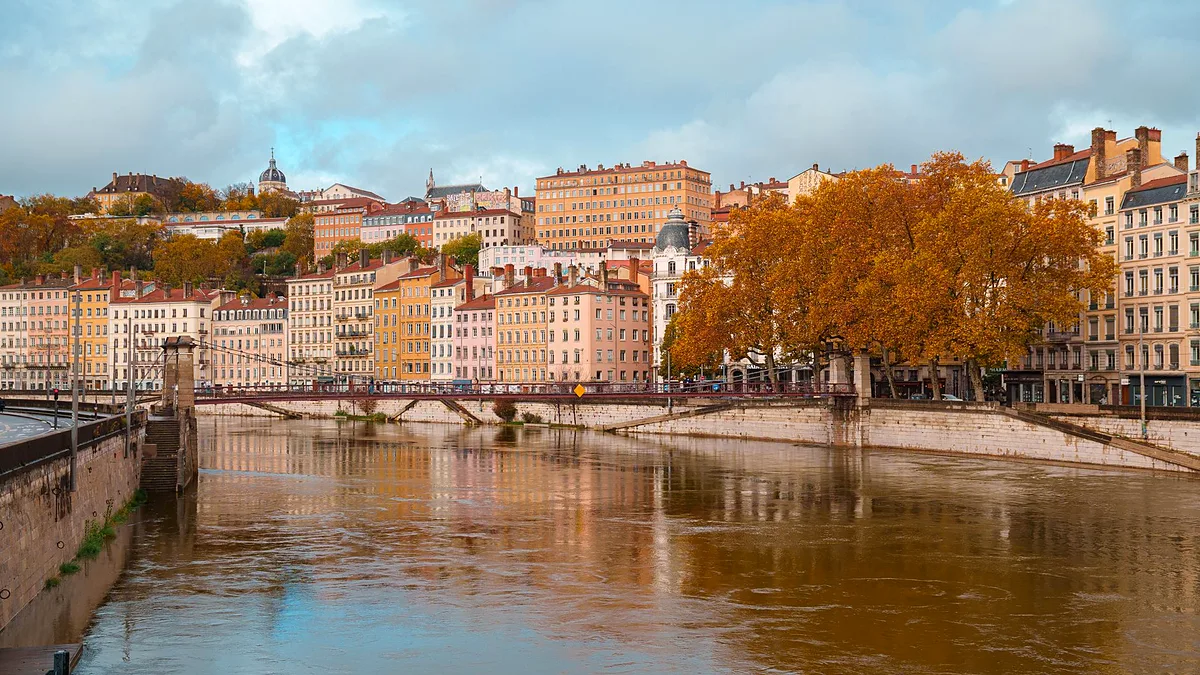
Late autumn is Lyon's quiet sweet spot. Crowds thin after the Toussaint holidays, bouchon tables free up, and Beaujolais Nouveau lands on the third Thursday of November, which turns every wine bar in the city into a party for one night.
- Duration: 2 full days (arrive the evening before if you can)
- Best season: Late October to late November, cool and quiet, with Beaujolais Nouveau mid-month
- Recommended base: Presqu'île near Cordeliers, or Vieux Lyon if you want cobblestones at your door
- Transit method: TCL metro and funiculars; almost all of Day 1 is walkable
- Daily spend: €75 to €690 (~$81 to $745) depending on style
Day 1: Fourvière Hill, Vieux Lyon and the Saône
Morning
Start at Cordeliers (metro A) and walk five minutes to Slake Coffee House on rue de l'Annonciade for a flat white (€4 / ~$4.30), because you will want the fuel before the hills. From there it is a ten-minute downhill walk into Vieux Lyon through the Saint-Jean quarter.
Unlimited High-Speed International Travel eSIM
Connect in seconds across 180+ destinations. Instant QR code activation with zero roaming surcharges.

Begin at Cathédrale Saint-Jean-Baptiste (free, open daily, roughly 8am to 7pm). The astronomical clock in the nave performs at 12pm, 2pm, 3pm and 4pm, so time your visit around one of those if you enjoy small mechanical theatre.
Then work the traboules, the covered passageways that let silk workers cross streets and courtyards without getting wet. Start with the Tour Rose at 16 rue du Bœuf; plenty of others are private and keypad-locked, so either join the tourist office walk (about €15 / ~$16) or download the official traboule map before you set off.
Afternoon
Ride the F1 funicular from Vieux Lyon station up to Fourvière on a standard TCL ticket (€2 / ~$2.20). The basilica is free, and the terrace hands you the whole city in one frame: red roofs, both rivers, and the Alps when the air is clear.
Walk six minutes behind the basilica to the Roman theatres, still used for summer concerts and free to wander. Eat lunch back down in the old town, where Bouchon Les Lyonnais on rue de la Bombarde runs a €24 (~$26) menu of quenelle, lentil salad and praline tart.
Spend the early afternoon at Musée Gadagne (1 place du Petit Collège, closed Monday and Tuesday, €8 / ~$9). It covers Lyon's history and its Guignol puppet tradition in about 90 minutes, which is the right size for a post-lunch brain.
Then take a slow walk along the Saône quays with a praline tart from any bakery counter on rue Saint-Jean. This is your scenic pause, so do not schedule anything on top of it.
Evening
Cross Pont Bonaparte to Place Bellecour for sunset, which lands around 5pm in November. The Ferris wheel does not always run in late autumn, but the square's emptiness at dusk is the point.
For dinner, pick Café Comptoir Abel (25 rue Guynemer, expect €40 to €45 / ~$43 to $49 with wine) for a wood-panelled, old-school room, or Chez Paul on rue Major Martin back in Vieux Lyon for something smaller and louder. Book either at least three days ahead.
Finish with a nightcap on rue Saint-Jean, where stone walls and low lighting do most of the work.
Route Efficiency Tip: Everything on Day 1 sits inside a 1.5km circle. Ride the funicular up and walk back down through the Roseraie gardens instead of paying for two funicular rides.
Day 2: Croix-Rousse Silk, Market Halls and the Lumière Brothers
Morning
Take metro C from Hôtel de Ville up to Croix-Rousse. It is a rack railway, and the three-minute climb is worth the fare on its own. The boulevard market runs Tuesday to Sunday, roughly 7am to 1:30pm, and it is where locals actually shop.
Breakfast there costs around €8 (~$8.60): a wedge of Saint-Marcellin, a slice of saucisson and a coffee. Then walk five minutes to the Mur des Canuts, a huge painted fresco on boulevard des Canuts that explains the neighborhood's silk-weaving past in a single image.
Loop down to the Cour des Voraces at 9 rue Imbert-Colomès, the most photographed traboule in the city, with six flights of stone stairs. If you happen to be there on a Saturday between 2pm and 6pm, the Jardin Rosa Mir on rue des Fantasques is a strange little shell-and-cactus garden worth the detour.
Afternoon
Walk down the Montée de la Grande-Côte, a steep street of independent shops and bookshops, to Place des Terreaux. Lunch is at Les Halles de Lyon – Paul Bocuse (102 cours Lafayette, closed Mondays, most stalls winding down by early evening).
Budget €18 to €22 (~$19 to $24) for six oysters and a glass of white, or a slice of praline brioche if the weather has turned. It is a market rather than a restaurant, so you perch wherever there is space.
Take metro D to Monplaisir–Lumière for the Institut Lumière (25 rue du Premier-Film, closed Mondays, around €8 / ~$9). The Lumière brothers ran the first commercial film screenings here, the museum sits in their actual house, and the cinema next door shows classics most evenings.
Evening
Head back toward the river for sunset along the Berges du Rhône, which are flat, wide and full of joggers pretending it is not cold. Then eat at Daniel et Denise (156 rue de Créqui, about €38 / ~$41) for a Michelin-recommended bouchon that still feels like a neighborhood room.
Close the trip with a glass of Beaujolais in a wine bar around Place des Terreaux or rue de la Martinière. If you are here on the third Thursday of November, expect free pours and loud strangers.
Route Efficiency Tip: Day 2 runs downhill and across the city in one line: Croix-Rousse, then Terreaux, then the Halles, then Monplaisir. Do not double back up the hill, because metro C is slow and only worth riding once.
Getting Around Lyon
TCL runs the metro (lines A, B, C and D), trams, buses and two funiculars, and a single ticket costs €2 (~$2.20) with unlimited transfers for one hour. A book of ten rides is around €17, and a one-day pass is about €6.50, worth it the moment you make more than three trips.
The two-day Lyon City Card (roughly €39 / ~$42) bundles transport with museum entry and pays for itself on Day 2 if you visit both the Institut Lumière and a major museum.
Metro service stops around 12:30am and is replaced by night buses; the funiculars count as normal metro rides. Walking between Vieux Lyon and the Presqu'île takes 10 to 15 minutes and is safe, though as in any city, keep your phone in your pocket around Part-Dieu after dark.
Skip the rental car entirely. Parking on the Presqu'île is expensive and the historic districts are largely pedestrian.
Estimated Daily Budget Breakdown
Figures are per person, in euros with approximate US dollars, and assume late-autumn rates.
| Travel Style | Accommodation | Food & Drink | Transit & Sights | Total / Day |
|---|---|---|---|---|
| Budget Backpacker | €35–55 (~$38–59) | €30–40 (~$32–43) | €10–14 (~$11–15) | €75–110 (~$81–119) |
| Comfortable Mid-Range | €110–160 (~$119–173) | €65–90 (~$70–97) | €18–25 (~$19–27) | €195–275 (~$211–297) |
| Boutique Splurge | €260–420 (~$281–454) | €140–200 (~$151–216) | €40–70 (~$43–76) | €440–690 (~$475–745) |
Frequently Asked Questions
Do I need to book bouchons and museums in advance?
Bouchons yes: three to seven days ahead for dinner, longer for weekend tables, since most hold only 25 to 35 covers. Museums rarely need booking outside school holidays, and the Institut Lumière and Musée des Confluences are walk-in friendly midweek.
Where can I leave luggage on arrival or departure day?
Gare Part-Dieu and Gare Perrache both have self-service lockers, roughly €5 to €9 (~$5.40 to $9.70) per large bag per day. If they are full, luggage-storage apps have partner cafés and hotels across the Presqu'île, so book a slot the night before.
What happens if it rains for two days straight?
Lyon is built for it: the traboules, the Halles, Passage de l'Argue, Musée Gadagne, Musée des Beaux-Arts and the Institut Lumière are all indoors. Swap the Croix-Rousse market for a long lunch and you will barely notice the weather.
Is late autumn a good time to visit?
Yes, with caveats: expect 4 to 12°C, short daylight, and a handful of restaurants closing Sunday and Monday. The upside is thin crowds, lower hotel rates and Beaujolais Nouveau, though you should avoid 5 to 8 December unless packed streets are your idea of fun, since that is the Fête des Lumières.