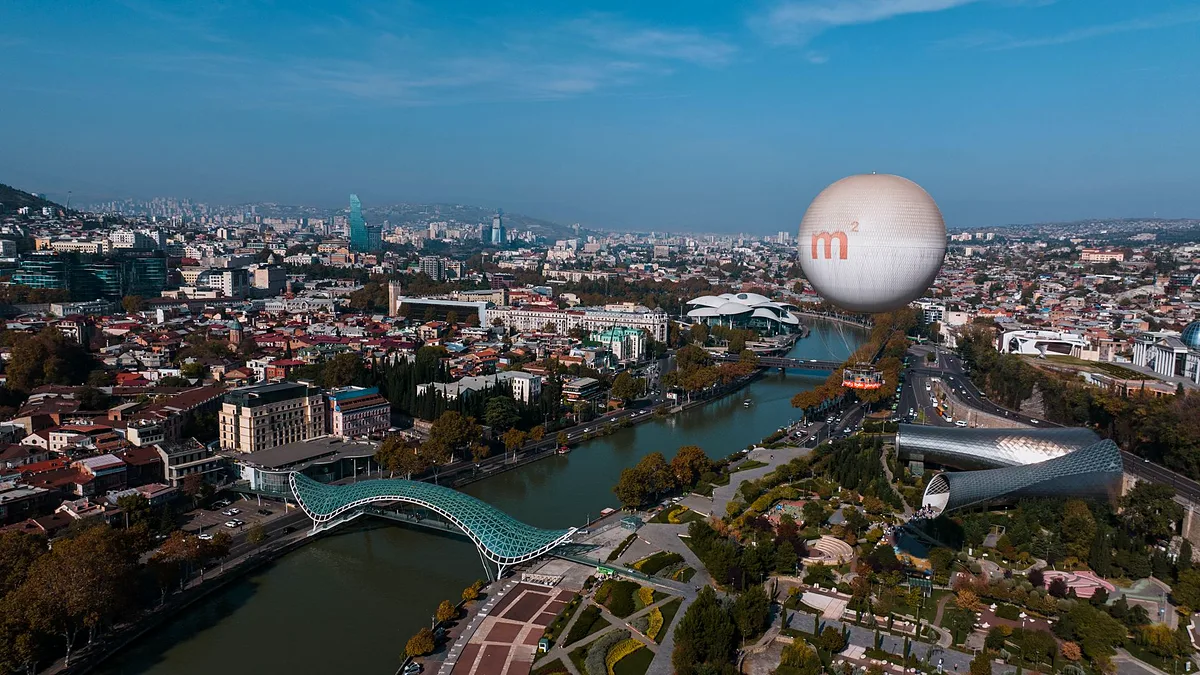

Tbilisi is one of the last European capitals where a private spa room, a serious glass of qvevri wine and a taxi home cost less than a mid-range dinner in Berlin. The city stacks Byzantine churches, Soviet concrete and 19th-century merchant houses on top of each other, and most of the best views cost nothing at all.
The trick is knowing where to spend. Blow 150 GEL on one memorable meal, keep everything else cheap, and Tbilisi starts to feel genuinely luxurious on a $50-a-day budget. Here is exactly where that money goes furthest.
Tbilisi at a Glance (Budget-Luxury Edition)
- Best time to visit: Late April to mid-June and mid-September to late October. Expect 20–27°C, and cheaper hotel rates than July's peak.
- Realistic daily budget: 130–180 GEL (~$48–67) per person if you book one private bath or tasting and eat like a local the rest of the day.
- Local transport style: Metro and buses at 1 GEL (~$0.37) a ride with a Metromoney card; Bolt rides across the center for 6–12 GEL.
- General vibe: Rough-edged, extremely hospitable, wine-forward, and best explored on foot once you learn the staircases.
1. A Private Sulfur Bath in Abanotubani
The brick domes of Abanotubani have been steaming since the 5th century, and the water still comes out of the ground at roughly 40°C. What surprises most visitors is the price: a private room with your own marble tub at Bathhouse №5 runs about 80–120 GEL (~$30–44) per hour for two people, towel rental extra.
Unlimited High-Speed International Travel eSIM
Connect in seconds across 180+ destinations. Instant QR code activation with zero roaming surcharges.

You get a tiled room, a hot sulfur pool, a cold tap and a lockable door. It feels less like a spa and more like borrowing a very old, very warm bathroom from a wealthy relative. The sulfur smell fades within an hour, and the sleep afterwards is superb.
- Neighborhood: Abanotubani, just below Narikala Fortress on the old town side.
- Cost: 80–150 GEL (~$30–55) for a private room; public baths around 5 GEL (~$1.85). A kise scrub adds 20–30 GEL.
- Best time: Weekday mornings, 9–11am, before tour groups arrive.
- Getting there: Metro to Avlabari (1 GEL), then a 5-minute downhill walk.
Insider tip: Bring your own towel, flip-flops and shampoo. The scrub is performed by a large man with a rough glove and it is worth every lari — but ask for it when you book the room, not after you're already wet.
2. Sololaki's Crumbling Art Nouveau Balconies
Sololaki is the old merchant quarter wedged between Rustaveli Avenue and the old town, and it holds some of the strangest architecture in the Caucasus. Lace-iron balconies, carved wooden staircases, faded stencil ceilings and facades peeling down to the brick are all still lived in by ordinary families.
There is no ticket and no entrance gate. Walk Kote Abkhazi, Leo Kiacheli, Machabeli and Sulkhan-Saba streets slowly, look up constantly, and accept that most of the best courtyards are private property.
- Neighborhood: Sololaki, centered on Sulkhan-Saba Street and Tabidze Street.
- Cost: Free. Budget 15 GEL (~$5.50) for a coffee stop.
- Best time: 5–7pm, when low sun hits the facades sideways.
- Getting there: Metro to Liberty Square, then walk uphill two blocks.
Insider tip: Stop at Café Littera on Machabeli Street, tucked in the courtyard of the Literature Museum. Coffee is around 7 GEL (~$2.60) and the garden is one of the quietest places in the center.
3. Chronicles of Georgia — Free Brutalist Monument
Thirty-meter concrete columns rise above the Tbilisi Sea reservoir at Temka, carved with kings, queens and scenes from Georgian history. Built by Zurab Tsereteli and never quite finished, it is the most photogenic slab of Soviet-era ambition in the country, and entry is free.
Go for the scale and stay for the emptiness. There is no café, no gift shop and often no one else there at all, just wind, wild grass and a view back over the reservoir.
- Neighborhood: Temka, northeast of the center, beside the Tbilisi Sea.
- Cost: Free. A Bolt from Rustaveli is 12–16 GEL (~$4.50–6).
- Best time: One hour before sunset. There is zero shade at midday.
- Getting there: Bolt or taxi is simplest, roughly 20 minutes from the center.
Insider tip: There are no toilets and no shops. Use the bathroom before you leave and carry water — the nearest convenience store is a 15-minute walk back toward the highway.
4. Wine Tasting in a Basement Cellar
Georgia has been fermenting wine in buried clay qvevri for 8,000 years, and Tbilisi lets you taste the good stuff for the price of a supermarket bottle back home. A guided flight of three wines at a serious shop usually costs 25–45 GEL (~$9–17), and bottles start around 18 GEL.
Try 8000 Vintages on Kote Abkhazi Street for a wide national selection, or Vino Underground on Bambis Rigi for natural and small-producer pours. Both are run by people who will happily explain the difference between Rkatsiteli and Mtsvane without any sales pressure.
- Neighborhood: Old town, Kote Abkhazi and Bambis Rigi streets.
- Cost: Tastings 25–45 GEL (~$9–17); glasses 8–15 GEL (~$3–5.50).
- Best time: 5–8pm, after the lunch rush and before dinner service.
- Getting there: Metro to Liberty Square, then all on foot.
Insider tip: Skip any wine bar on Kote Abkhazi with photo menus and a host standing outside. Two doors further in, the same glass costs half as much and tastes twice as good.
5. Fabrika — A Soviet Sewing Factory That Became a Living Room
Fabrika occupies a huge former sewing plant on Egnate Ninoshvili Street, and it works as a hostel, coworking space, bar, gallery and vintage market at the same time. Entry is free and nobody minds if you just wander the courtyard.
The real draw is the crowd: remote workers, Georgian designers and travelers who came for two nights and stayed for three weeks. Coffee is around 7 GEL (~$2.60) and a local draught beer runs 8–10 GEL (~$3–3.70).
- Neighborhood: Chugureti, on Egnate Ninoshvili Street.
- Cost: Free entry; drinks 7–12 GEL (~$2.60–4.50). Hostel beds from about 60 GEL.
- Best time: 7pm onward, when the courtyard fills up. Quietest in the morning.
- Getting there: Metro to Marjanishvili, then a 4-minute walk.
Insider tip: The back bar is cheaper than the front one for identical drinks. Cash is accepted everywhere here, which is not always true in the old town.
6. The Mtatsminda Funicular and the View Above Rustaveli
The funicular climbs from a small station off Chonkadze Street to Mtatsminda Park, 770 meters above the city. The ride takes about three minutes, the cabin is a restored 1905 original, and the view from the top covers the whole bowl of Tbilisi.
Park entry is free, which means the ticket price buys you the view rather than an attraction. Walk to the ridge behind the Ferris wheel for the cleanest angle over the churches and the river.
- Neighborhood: Mtatsminda, directly above Rustaveli Avenue.
- Cost: About 10 GEL (~$3.70) each way. Payment is by Metromoney card only.
- Best time: Arrive an hour before sunset and walk down afterwards.
- Getting there: Lower station on Chonkadze Street, a 4-minute walk from Rustaveli metro.
Insider tip: Do not queue for a return ticket at peak time. Walk down through the Mtatsminda Pantheon instead — it takes about 20 minutes and passes the graves of Georgia's most famous writers.
Where to Eat and Drink Nearby
Sakhli №11 — Sololaki
A low-ceilinged basement on Gerontevi Street serving the food Georgians actually cook at home. Mains run 18–28 GEL (~$7–10), and dinner for two with a decent bottle lands near 110 GEL (~$41). Book ahead by phone for Friday and Saturday.
Zodiaqo — Old Town
No frills, no English menu photos, no nonsense. Khinkali cost about 1.3 GEL (~$0.50) each, a full meal is 20–25 GEL (~$8–9), and the chakhokhbili is the reason locals keep coming back. Hold khinkali by the top knot, bite, and drink the broth inside.
Barbarestan — Chovelidze Street
Your one deliberate splurge. This is a restored 19th-century apartment with a menu drawn from a 1914 Georgian cookbook, and tasting menus start around 120 GEL (~$44) per person without wine. Reserve at least a week out; the courtyard tables go first.
Practical Logistics and Budget Tips
Transit
Buy a Metromoney card at any metro station for 2 GEL (~$0.75), then load it up. Rides are 1 GEL, and transfers within 90 minutes cost 0.5 GEL, which makes the metro-plus-bus combination genuinely cheap. Bolt is everywhere and usually beats arguing with a street taxi on price.
From the airport, bus 37 runs to Station Square for 1 GEL and takes about 40 minutes. A Bolt into the center is 30–40 GEL (~$11–15), so it is only worth it if you land after midnight.
Money
Cards work almost everywhere, but carry 50–100 GEL in cash for bathhouses, the Dry Bridge flea market and small bakeries. Use TBC or Bank of Georgia ATMs to avoid the 3% fee some others charge. A 10% tip is now standard in sit-down restaurants.
What to Skip
Skip the "traditional Georgian feast and folklore show" packages sold around Rustaveli — you pay 90 GEL for food worth 30. Skip the Narikala cable car queue on weekends and walk up through the old town instead; it takes 15 minutes.
Also skip the wine shops clustered right beside Sioni Cathedral. They sell the same Saperavi as the cellars two blocks away at nearly double the price.
Frequently Asked Questions
Is Tbilisi expensive for tourists?
No — it is one of the cheapest capitals in Europe for food, wine and transport. A comfortable day including one paid attraction usually lands between 130 and 180 GEL (~$48–67).
What is a realistic daily budget for a luxury-on-a-budget trip?
Plan on 150 GEL (~$55) per person if you mix one splurge per day with local restaurants and public transport. Add 60–80 GEL if you want a private sulfur bath and a serious tasting on the same day.
Do I need cash in Tbilisi?
Mostly no, but small amounts help in bathhouses, markets and neighborhood bakeries. Withdraw 100 GEL from a Georgian bank ATM on arrival and you will be covered.
When is the best time to visit Tbilisi on a budget?
Late April to June and September to October bring mild weather and lower hotel rates than the July peak. September also overlaps with the Rtveli grape harvest, when cellar tastings get livelier and cheaper.