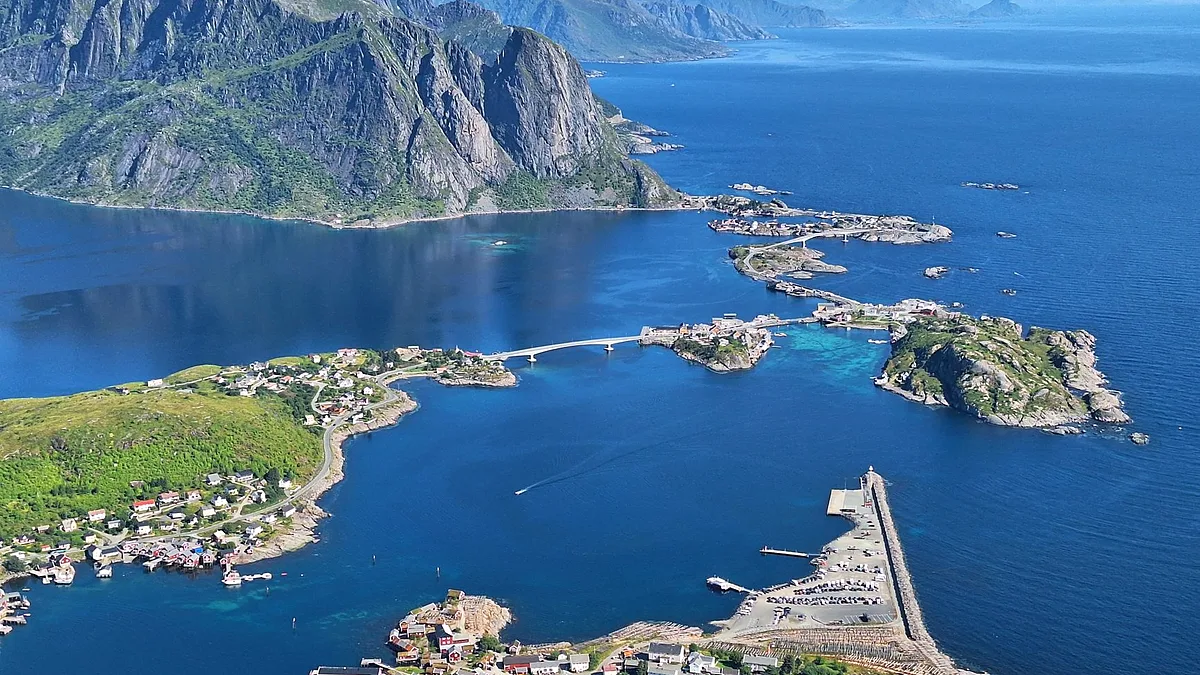

Lofoten sells itself with the same three photos: red rorbuer over black water, shark-tooth peaks, a fishing boat coming home at midnight. All of it is real. What those photos leave out is the archipelago's art scene — roughly two dozen small galleries and craft studios spread across six islands, most of them no bigger than a living room.
That's the boutique side of Lofoten. Glassblowers, wool dyers, printmakers, one contemporary art hall inside a converted fish-oil factory. No queues, no audio guides. You get the artist, a card machine, and usually a kettle.
This guide covers the studios worth building a day around, where to eat between them, and the honest parts: seasonal hours, tank-sized rental cars, and the two stops I'd quietly skip.
Unlimited High-Speed International Travel eSIM
Connect in seconds across 180+ destinations. Instant QR code activation with zero roaming surcharges.

Lofoten at a Glance
- Best time to visit: Mid-June to late August for full opening hours. Late September brings smaller crowds and studios that open by appointment.
- Typical daily budget: 1,200–2,000 NOK (~$110–$190) per person, covering a simple cabin, groceries, one paid gallery and fuel.
- Getting around: A rental car is close to essential. The Lofotekspressen bus links the main towns along the E10 but won't reach studios like Vikten.
- Vibe: Slow, weather-driven, quietly ambitious. Opening hours are suggestions and the light is the main event.
KaviarFactory, Henningsvær
A 1950s cod-liver-oil factory turned contemporary art space, run by collector Venke Hoff. The building alone justifies the detour: rusted steel tanks, a wooden pier, and a wall of windows facing the harbour. Exhibitions lean international and often video-heavy, so you might catch a Korean installation artist one summer and a Norwegian photographer the next.
It's the only place in Lofoten where you'll stand in front of genuinely challenging work, and the scale of the old factory makes even a sparse show feel generous. Give it 45 minutes, more if the video piece hooks you.
- Neighbourhood: Henningsvær, on Austvågøy, at the far end of the village.
- Cost: Around 150 NOK (~$14) for adults; under-18s free.
- Best time of day: Weekday early afternoon, roughly 12:00–14:00, before the midday tour groups arrive.
- Getting there: Drive the E10 to Rørvik, then follow the road into Henningsvær (about 10 minutes). Bus 722 from Svolvær takes around 40 minutes.
Insider tip: Check the exhibition programme on the door before you pay. If it's a heavy video installation and you wanted painting, keep your 150 NOK and spend it at Glasshytta instead. The café shuts earlier than the gallery, so coffee first.
Glasshytta Vikten
A working glassblowing furnace in a boat shed on the wild west side of Flakstadøy, a short detour off the E10 between Ramberg and the Nusfjord turn. Walk in and you're three metres from an 1,100°C furnace while someone pulls a molten gather into a bowl.
Nobody rushes you and nobody performs. The shop at the front sells tumblers, bowls and one-off pieces, and the prices are fair for hand-blown work. This is the studio that most often ends up in people's luggage.
- Neighbourhood: Vikten, Flakstadøy, at the foot of the waterfall.
- Cost: Free to visit. Pieces run 300–3,500 NOK (~$27–$320).
- Best time of day: Late morning on a weekday, when the furnace is hottest and the benches are being worked.
- Getting there: About 15 minutes by car from Ramberg. No practical bus service, so this one needs wheels.
Insider tip: Ask for extra bubble wrap and carry glass in your hand luggage if you can. The tumblers survive checked bags most of the time, not all of the time.
Svolvær's Free Gallery Row
Two free art stops sit within 200 metres of each other on Svolvær's harbourfront. Galleri Dagfinn Bakke shows the painter's own Lofoten landscapes and fishing-village scenes — commercial, yes, but genuinely good, and the originals are priced accordingly. A few doors away, Nordnorsk Kunstnersenter runs changing exhibitions by artists from across northern Norway.
Together they take an hour and cost nothing, which makes them the smartest rainy-day stop in town. The Kunstnersenter also has the better shop for prints and small works under 1,000 NOK (~$95).
- Neighbourhood: Central Svolvær, five minutes' walk from the Hurtigruten pier.
- Cost: Free entry to both.
- Best time of day: 10:00–11:00, before the Hurtigruten crowd comes ashore.
- Getting there: Walkable from anywhere in Svolvær. All local buses stop at Svolvær sentrum.
Insider tip: In summer the coastal express docks in the early evening and the harbour fills within 20 minutes. Morning is the difference between a quiet room and a scrum.
Lofoten Wool, Vestvågøy
A working farm that turns local wool into yarn and knitwear, doing the shearing, plant-dyeing and spinning themselves. The farm shop smells of lanolin and woodsmoke, and the shelves are stacked with skeins in undyed greys and plant-dyed rusts you won't find in Oslo.
Even if you don't knit, the jumpers and mittens are the best-made souvenir in the islands — and unlike the airport versions, you can meet the person who made them.
- Neighbourhood: Haug on Vestvågøy, on the road toward Napp, about 15 minutes from Leknes.
- Cost: Free to visit. Yarn 90–180 NOK (~$9–$17) a skein; sweaters 2,500–4,500 NOK (~$230–$410).
- Best time of day: Summer afternoons. Outside June–August, visits are by appointment.
- Getting there: Short drive from Leknes on the E10; some Lofotekspressen services pass the turn-off.
Insider tip: Check their Facebook page the morning you plan to go. A roadside sign does not mean the door is unlocked, and a wasted 40-minute drive is a common rookie mistake.
Galleri Espolin & Lofotmuseet, Kabelvåg
Kabelvåg was the old trading centre of Lofoten, and its museum cluster covers both art and fishing history in one stop. Galleri Espolin holds the graphic work of Kaare Espolin Johnson, whose prints of Arctic light and heavy sea are basically the visual DNA of northern Norway.
Next door, Lofotmuseet is an open-air village of rorbuer, boathouses and a reconstructed Iron Age longhouse. It's the one place where the history behind all those red cabins actually gets explained.
- Neighbourhood: Kabelvåg, 10 minutes west of Svolvær.
- Cost: Lofotmuseet around 150 NOK (~$14); a combined ticket with Espolin runs about 200 NOK (~$19).
- Best time of day: Right at the 11:00 opening, on a weekday.
- Getting there: Local bus from Svolvær takes about 15 minutes; by car it's a straight run on the E10.
Insider tip: Buy the combined ticket even if you only came for the art. The upgrade costs a few kroner and the longhouse is the best thing on the site.
Nusfjord
A preserved 19th-century fishing village squeezed into a narrow bay, and the most intact of its kind in Norway. It's privately managed and charges an entrance fee, which annoys some visitors. Pay it anyway: the wooden drying racks, the old cod-liver-oil works and the small studios tucked into the boathouses are the real thing, not a recreation.
Come early or late and you'll have the whole bay to yourself. Midday in July it belongs to the coaches.
- Neighbourhood: Flakstadøy, about 20 minutes from Ramberg.
- Cost: Village entry 100 NOK (~$9.50); individual studios and cafés charge separately.
- Best time of day: Before 10:00 or after 16:00.
- Getting there: Turn off the E10 near Ramberg and follow the signs for roughly 6 km.
Insider tip: If you've already done Lofotmuseet in Kabelvåg, skip the small village museum here. You'd be paying twice for similar displays and the view is free.
Where to Eat & Drink Nearby
Anita's Sjømat, Sakrisøy
A yellow wooden shack on the water between Reine and Hamnøy, serving the fish burger that everyone photographs. Expect 165 NOK (~$16) for the burger and around 195 NOK (~$18) for the fish soup. It's counter service with picnic benches, so dress for wind.
Børsen Spiseri, Svolvær
Set in an 1828 trading post on the pier, with low beams and the original merchant's office upstairs. The bacalao is about 350 NOK (~$33) and worth ordering once. Book a window table two days ahead in July, or you'll be seated by the kitchen door.
Fiskekrogen, Henningsvær
Reliable fish and chips at roughly 265 NOK (~$25), plus a decent Arctic char in season. It opens at noon and fills fast after the gallery crowd finishes at KaviarFactory. For a nightcap, the Lofotpils taproom in Svolvær pours a tasting flight for about 150 NOK (~$14).
Practical Logistics & Budget Tips
- Fly smart: Leknes (LKN) and Svolvær (SVJ) both take small props via Bodø. Evenes (EVE) is cheaper but adds a three-hour bus or drive.
- Car costs: Expect 800–1,300 NOK (~$75–$125) a day in summer. Book months ahead and check whether unlimited mileage is included — some cheap rentals cap it.
- Bus back-up: Lofotekspressen covers the E10 spine; Svolvær to Leknes is roughly 200 NOK (~$19). Useful for one-way moves, not for studio-hopping.
- Food savings: Rema 1000 and Kiwi in Leknes and Svolvær are your friends. A small shop-bought lunch saves 200 NOK a day. Wine and beer are only sold at Vinmonopolet, with limited hours.
- Fuel up early: Stations thin out west of Leknes, and card-only pumps sometimes reject foreign cards.
What to skip: the troll and Viking souvenir megastores along the E10, and any 'cod-liver-oil tasting' experience priced above 300 NOK — the studios sell the same bottles for less. Also skip the midnight-sun kayak tours if you've never paddled; the water is 10°C and the wind doesn't care about your Instagram plan.
Honest heads-up: July traffic around Henningsvær and the Reine viewpoint is genuinely slow, and several galleries close the moment the season ends in late August. If art is your reason for coming, aim for June or early September and confirm hours the day before.
Frequently Asked Questions
When is the best time to visit Lofoten's galleries and studios?
Mid-June to late August guarantees the widest opening hours across all the islands. Late September is quieter and cheaper, but smaller studios switch to appointment-only.
How much does it cost to visit Lofoten's art galleries?
Three of the stops here are free, and the paid ones run 100–200 NOK (~$9.50–$19) per person. A full day of galleries, including coffee, usually lands under 500 NOK (~$47).
Do I need a car to see Lofoten's craft studios?
For the E10 towns like Svolvær and Kabelvåg, buses and walking are fine. Studios such as Vikten and the wool farm at Haug are effectively car-only, so rent for at least two days.
Can you buy original art in Lofoten?
Yes, and directly from the makers at every stop in this guide. Prints start around 1,000 NOK (~$95), glass from 300 NOK (~$27), and paintings from Galleri Dagfinn Bakke are priced in the tens of thousands.