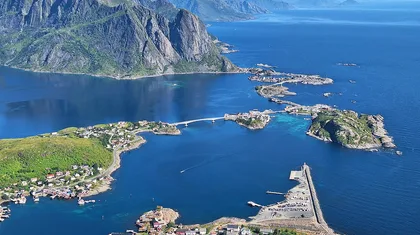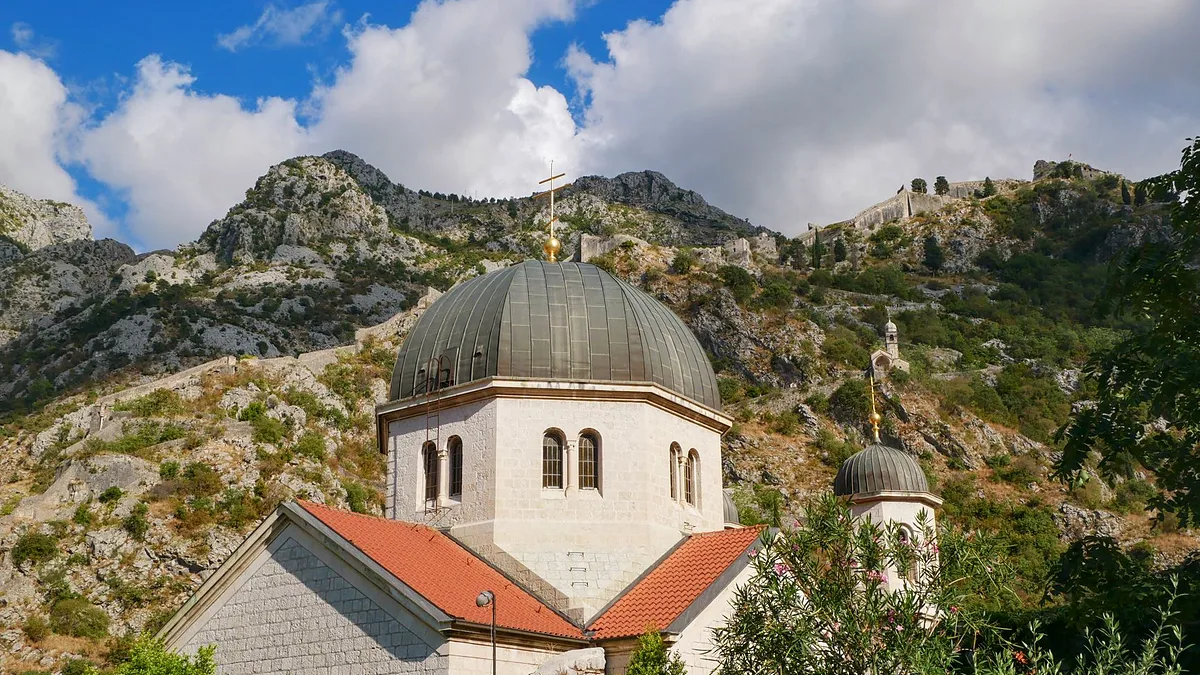

Kotor's Old Town is a walled triangle squeezed between a mountain and the bay, home to about 4,500 people and roughly one cat per square metre. Most visitors see it in ninety minutes: off the cruise tender, through the Sea Gate, a photo at the clock tower, back on board. That is a waste, because the real thing here is the craft.
For five centuries this was a maritime city-state with its own navy, its own goldsmiths and its own stone carvers. Wars and the 1979 earthquake took plenty, but the survivors still work behind those doors — filigree jewellers, a family-run cat museum, a navy archive locals still march for every August.
This guide is for people who would rather stand at a jeweller's bench for an hour than queue for a selfie. Bring cash, wear shoes with grip, and set an alarm.
Unlimited High-Speed International Travel eSIM
Connect in seconds across 180+ destinations. Instant QR code activation with zero roaming surcharges.

Kotor at a Glance
- Best time to visit: May–June and September–October. July and August bring three to five cruise ships a day, though the streets empty fast after 4pm.
- Daily budget: €45–70 (~$50–76 USD) for budget travellers, €90–140 (~$98–152 USD) mid-range, before fortress tickets and boat trips.
- Getting around: The Old Town is 350 metres wide and entirely pedestrian. Local buses run the bay road; taxis are cheap for short hops if you agree the fare first.
- Money: Euro. Cards work in restaurants and supermarkets; the small workshops are cash-only.
- Vibe: Slow mornings, limestone that turns honey-coloured around 6pm, no cars, and a church bell every fifteen minutes.
1. St. Tryphon's Cathedral and Its Silver Treasury
Consecrated in 1166, St. Tryphon's is the oldest cathedral on this stretch of coast, and it looks it. The two towers don't match because the 1667 earthquake flattened one and the rebuild ran short of money — the result is more honest than any perfect façade.
For craft lovers, the treasury upstairs matters more than the nave. It holds reliquaries, votive crosses and hand-hammered silver given by sea captains over four centuries, much of it made in Kotor's own workshops. Look closely at the wirework on the smaller crosses: that is filigree, the town's signature trade, worked here long before anyone thought to sell it to visitors.
- Where: Trg Sv. Tripuna, dead centre of the Old Town, two minutes from the Sea Gate.
- Cost: €4 (~$4.30 USD) for cathedral and treasury.
- Best time: 8–10am, or the last hour before evening closing.
- How to get there: On foot only. Enter at the Sea Gate and follow the main street.
Insider tip: Pay at the small desk inside the door and keep your ticket for the treasury. This is an active church — step out quietly if a service begins.
2. The Maritime Museum in Grgurina Palace
The Grgurina Palace is a 17th-century baroque townhouse with a creaking stone staircase, and it has housed the Maritime Museum since 1900. Three floors of ship models, sea charts, captain's logs and portraits of men who sailed to Constantinople and back before engines existed.
One room belongs to the Bokelj Navy, a sailors' fraternity founded in 809 that still parades each August. Fair warning: the labels are thin and a few displays haven't been touched since the 1980s. It's still the best €5 you'll spend on a rainy afternoon.
- Where: Trg Bokeljske mornarice, north end of the Old Town near the Gurdic gate.
- Cost: €5 (~$5.40 USD) adult.
- Best time: Midday heat or rain; roughly 9am–8pm in summer, shorter out of season.
- How to get there: Five-minute walk from the Sea Gate — follow the fortress signs, the museum sits just before them.
Insider tip: The top-floor windows give you the best free view of the Old Town rooftops anywhere. There's also a small bookshop by the entrance selling locally printed charts.
3. Filigree Workshops Along Njegoševa Street
Filigree is fine silver or gold wire twisted into lace, and Kotor has been making it since the Venetian period. Walk Njegoševa — locals just call it Glavna ulica — and the lanes off Trg od Brašna, and you'll pass workshops where a jeweller sits at a bench with a saw and a lamp.
Half the shops with "filigran" on the sign are reselling imported work. So look for a bench, tools and metal dust, then ask politely: "Da li se pravi ovdje?" (Is it made here?). A real goldsmith will happily explain the piece.
- Where: Njegoševa Street and the alleys around Trg od Brašna and Trg od Salate.
- Cost: Free to browse. Filigree earrings €25–45 (~$27–49 USD), pendants €60–120, a proper bracelet €150 and up.
- Best time: Late morning, when the cruise crowd is up at the fortress and shopkeepers have time to talk.
- How to get there: Two minutes on foot from any gate.
Insider tip: Ask to see the bench, not the window. And carry cash — card machines in the smaller ateliers are rare.
4. Trg od Brašna: Pima, Drago and the Stone Carvers
Flour Square was the old grain market and still holds the best run of stone carving in town. Pima Palace has a carved balcony and a family coat of arms over the door; Drago Palace next door keeps Gothic windows and a dragon relief above the entrance. Both are 17th-century rebuilds, raised by masons working the soft limestone from the Dobrota quarries.
The stone is the story: soft enough to carve when it leaves the ground, hard enough to hold an edge for centuries. Everything you're walking on, and most of what you're leaning against, is that same rock.
- Where: Trg od Brašna, mid-town between Trg od Oružja and Trg od Mlijeka.
- Cost: Free — it's a public square.
- Best time: 7–9am, before the cafés set out their chairs.
- How to get there: Ninety seconds' walk from the Sea Gate.
Insider tip: Compare the stone on each palace's ground floor with the upper floors — pre-1667 work is rougher and greyer, the baroque rebuild smoother and warmer. The Cats Museum is two minutes away if you have kids in tow (€2 / ~$2.20 USD).
5. The San Giovanni Fortress and Our Lady of Remedy
The walls climb from the rooftops to 260 metres above the bay, built and rebuilt by Illyrians, Byzantines and Venetians across a thousand years. The walk is 1,350 steps and takes most people 45 to 60 minutes one way.
Halfway up sits the Church of Our Lady of Remedy, raised in 1518 by survivors of the plague. It's a plain little building with a view that justifies the whole climb, and plenty of people stop there and turn around.
- Where: Entry gate on the northern edge of the Old Town, past the Church of St. Mary.
- Cost: €15 (~$16 USD) in season, cash at the gate.
- Best time: Start by 7am in summer. There is no shade above the halfway point.
- How to get there: Follow the fortress signs from Trg od Salate; the turn-off is easy to miss.
Insider tip: Carry 1.5 litres of water per person — nothing is sold at the top. Older guidebooks still list this walk as free; the entry fee is recent, so budget for it, and skip the climb entirely after heavy rain.
6. St. Luke's Church and the Bokelj Navy Heritage
St. Luke's (Sveti Luka) dates from 1195 and served both Catholic and Orthodox families for centuries — you can still see two altars under one roof. It's small, dim and completely unbothered by tourism.
Two minutes away, St. Nicholas (Sveti Nikola), finished in 1909, is the town's grand Orthodox church, with a gilded iconostasis and a collection of icons and silver. This is where the Bokelj Navy gathers before its August procession.
- Where: St. Luke's is on Trg Sv. Luke; St. Nicholas is a minute north, near the fortress path.
- Cost: Free; leave €1–2 (~$1–2 USD) in the donation box.
- Best time: Weekday mornings, roughly 9am–noon, or again 5–7pm.
- How to get there: Walk — both sit inside the walls.
Insider tip: If you're in town on 23 August, stay for Bokeljska noć. The navy marches in 18th-century uniform with a brass band, the whole bay turns out, and beds sell out weeks ahead — book early or sleep in Budva.
7. Njeguši: The Smokehouse Village Above the Bay
Twenty-five hairpin bends above Kotor sits Njeguši, a village of stone houses where families still cold-smoke pork for months and pack cheese in olive oil. This is food heritage that has never been repackaged for anybody.
You'll see hams hanging in the rafters and farm gates selling cheese, honey and rakija by the bottle. It's a two-hour stop, and the drive up the old Austrian road is half the reason to go.
- Where: Njeguši village, on the Lovćen road, about 25 km from Kotor.
- Cost: Free to wander; a ham-and-cheese plate with bread runs €8–12 (~$9–13 USD).
- Best time: Late morning, before the tour buses roll in around noon.
- How to get there: No useful public bus. Take a taxi (agree €40–50 return with an hour's wait) or drive; the road is narrow but paved.
Insider tip: Eat the ham here rather than buying it to take home — EU countries don't allow meat products in luggage from Montenegro. Bring cash; nobody up here takes cards.
Where to Eat and Drink Nearby
Cesarica
A tiny seafood room near St. Tryphon's with about eight tables and a menu that shifts with the boats. The black risotto and grilled sea bass are the safe bets. Mains run €14–22 (~$15–24 USD), and service slows to a crawl in August — go at 6pm or after 9.30pm.
Konoba Portun
Twenty minutes' walk north along the bay in Dobrota, this is where locals take visitors who want a proper long lunch. Order the mussels buzara and whatever whole fish is on the ice. Around €35–45 (~$38–49 USD) for two with house wine.
The Pekara Outside the Sea Gate
For breakfast under €4, look for the word PEKARA and join the local queue. Burek with cheese or meat is about €2 (~$2.20 USD), and a coffee from the machine next door sets you up for the fortress climb. Go before 9am, while the trays are still hot.
Practical Logistics and Budget Tips
Getting In and Around
Kotor has no train and no airport. Buses run the bay road to Tivat (€2 / ~$2.20 USD, 25 min), Perast (€1.50, 20 min) and Budva (€3.50, 45 min); pay the driver in cash. Tivat airport is a 25-minute taxi ride (€25–30) or a bus plus a short walk.
For Dobrota and Prčanj, local buses stop along the main road every 15–20 minutes for about €1. Buy nothing at the port-side kiosks — the supermarket two streets in is half the price.
Money and Opening Hours
Bank on €45–70 (~$50–76 USD) a day in hostels with bakery lunches, and €90–140 (~$98–152 USD) for a mid-range hotel plus one restaurant meal. Keep about €50 in cash for workshops, church entries, buses and the fortress.
Several churches and small museums close for a few hours at midday and run shorter hours out of season. An October afternoon is not a July afternoon.
What to Skip
- Eating on Trg od Oružja: The square inside the Sea Gate adds a cruise premium of 30–40% for average food. Walk two streets deeper.
- "Handmade" lace on racks: Imported and machine-made. If it isn't being made in front of you, assume it isn't made here.
- Blue Cave boat trips on a windy day: €30–40 (~$33–43 USD) for a rough ride or a cancellation. Check the forecast first.
- Fortress plus cable car in one day: The cable car is €20 (~$22 USD) for a view of the same bay. Pick one and save the other.
Beat the Cruise Crowds
Check the port schedule online the night before. With three or more ships in, do the fortress at 7am and the museums at 4pm, when the tenders start heading back. With no ships, the town is yours and the light is best after 6pm.
Frequently Asked Questions
Are Kotor's artisan workshops cash only?
Mostly, yes — the smaller goldsmiths and craft shops don't take cards. There are ATMs just inside the Sea Gate and on the road outside, so withdraw before you start shopping.
Is the €15 Kotor Fortress climb worth it?
If you start before 8am and the ground is dry, yes — the view over the bay is the best in Montenegro. If it's raining, above 30°C, or you're short on time, spend that money on a boat to Our Lady of the Rocks instead.
What is the quietest time to visit Kotor Old Town?
Before 9am and after 6pm, year-round. July and August are busiest between 10am and 4pm while cruise groups are ashore, and May, June, September and October are calmer and cheaper all round.
How long do you need in Kotor?
Two full days covers the fortress, the museums, two workshops and a half-day trip to Perast or Njeguši without rushing. One day gets you the Old Town and the walls, but you'll skip the craft entirely.