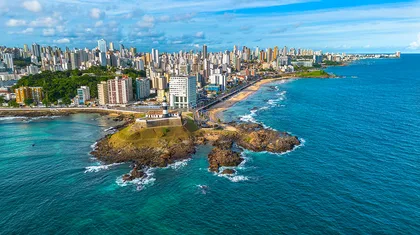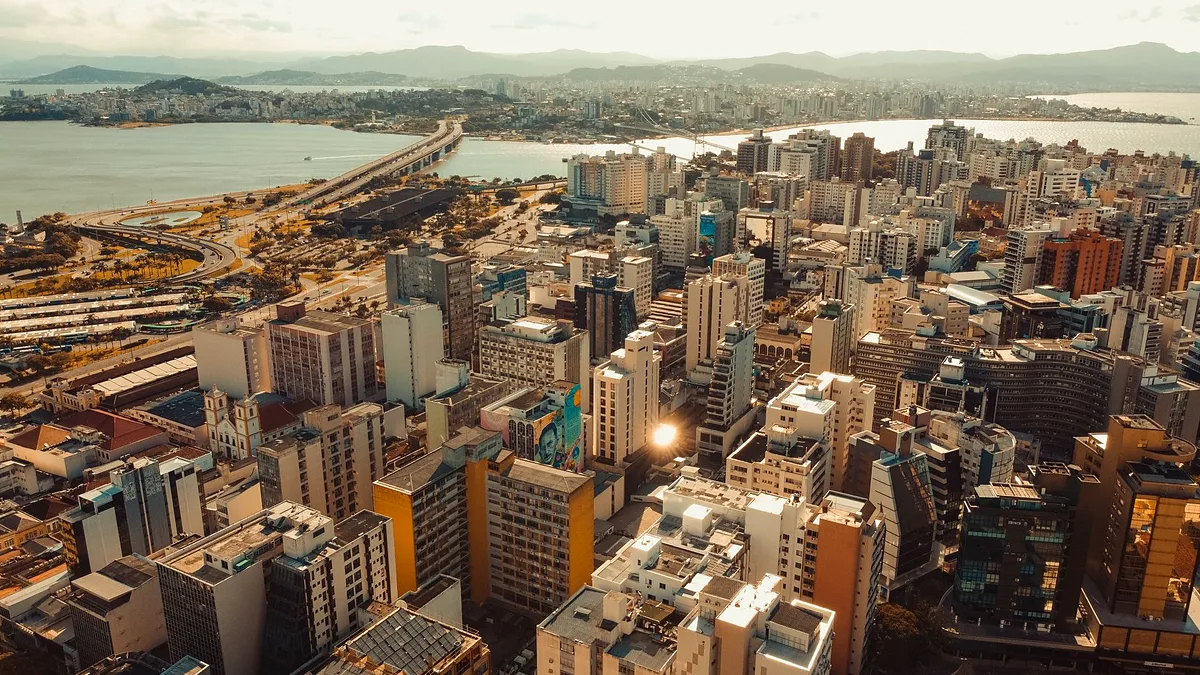

Florianópolis in July looks nothing like the postcards. The lagoon turns grey, the wind comes across the water hard enough to lean into, and the beach clubs of Jurerê sit with their shutters down. What's left is the version islanders actually prefer: a compact art scene, cheap oysters, and a handful of bars you can't simply walk into.
This guide is for the rainy-Tuesday crowd. Every place below is checked against winter opening hours, because several galleries cut back to four days a week from June to August and a few close entirely around the São João holiday.
Expect 8–20°C, sudden drizzle, and long indoor afternoons. Plan around that and Florianópolis beats its summer self.
Unlimited High-Speed International Travel eSIM
Connect in seconds across 180+ destinations. Instant QR code activation with zero roaming surcharges.

At a Glance
- Best time to go: mid-July to late August. Fewer people, lower prices, a full exhibition calendar.
- Daily budget: R$180–350 / ~$33–65 USD for a gallery day with two meals. Add R$150–250 / ~$28–46 USD for a club night.
- Getting around: no metro on the island. Consórcio Fênix buses cost R$6.00 / ~$1.10, Uber works well for short hops, and a rental car helps if you're heading north.
- Vibe: quiet, damp, slightly insular. Locals stay in the Centro and around Lagoa; the beaches empty out.
1. Instituto Collaço Paulo, Centro
A private art institute in a restored townhouse a short walk from Praça XV, and the closest thing the island has to a serious collection. The walls carry Brazilian modernism alongside Santa Catarina names you won't find in São Paulo's big galleries, hung with a lot of breathing room.
It's free, it's practically empty on weekday mornings, and the staff will actually talk to you. In winter the reading room fills with art students escaping the rain.
- Neighborhood: Centro, five minutes on foot from Praça XV de Novembro.
- Cost: free entry. Occasional talks and workshops R$20 / ~$4 USD.
- Best time: Tuesday to Thursday, 10am to noon.
- Getting there: a 12-minute walk from the TICEN bus terminal, or R$35 / ~$6.50 USD by Uber from Lagoa.
Insider tip: Ask the front desk whether the reserve room is open. It holds works that don't fit the main rotation and is usually shown only on request.
2. Fundação Cultural Badesc, Centro
This is the island's most consistent contemporary programme, tucked into a townhouse on Rua Visconde de Ouro Preto with a courtyard that smells of wet stone in July. Exhibitions change roughly every six weeks and lean toward experimental work from southern Brazil.
Entry is free, the rooms are small enough to see properly in forty minutes, and the Thursday-night openings are the closest the Centro gets to a social scene in winter. Expect cheap wine in plastic cups and a lot of people in black coats.
- Neighborhood: Centro, Rua Visconde de Ouro Preto, 46.
- Cost: free. Openings free, sometimes with a R$10 / ~$2 USD donation jar.
- Best time: weekday afternoons for quiet viewing; Thursday from 7pm for openings.
- Getting there: walkable from anywhere in the Centro. Buses along Avenida Beira-Mar Norte stop nearby.
Insider tip: Exhibitions come down fast. Check the foundation's Instagram the morning you plan to go, because install weeks mean closed doors.
3. Museu Victor Meirelles, Centro
The colonial house where painter Victor Meirelles was born, now a small museum of his work plus temporary shows from Santa Catarina artists. It's the kind of place you can see properly in under an hour, which makes it a good rain shelter between errands.
Upstairs rooms are creaky and the lighting is old-fashioned, and that's exactly why it works. It feels like a house, not an institution.
- Neighborhood: Centro, Rua Rafael Bandeira, 141.
- Cost: free, though a voluntary contribution of R$10 / ~$2 USD is welcome.
- Best time: Tuesday to Saturday, 10am to 6pm. Closed Sundays and Mondays.
- Getting there: a five-minute walk uphill from the Mercado Público.
Insider tip: Combine it with lunch at the Mercado Público and you've filled a wet morning without a single taxi.
4. MASC at the CIC, Agronômica
The Santa Catarina Museum of Art holds the state's main modern collection, and in winter it's blissfully quiet. Rooms run from mid-century landscape painting to installation work, with a strong showing of artists who worked between Florianópolis and Porto Alegre.
The same complex, the Centro Integrado de Cultura, also houses a cinema and a theatre, so a rainy day here can stretch from 10am to dinner. Cinema tickets are cheap and the programme leans arthouse.
- Neighborhood: Agronômica, Avenida Governador Irineu Bornhausen, 4200.
- Cost: museum free. Cinema R$12–24 / ~$2–4.50 USD.
- Best time: Tuesday to Sunday, 10am to 6pm. Check the cinema schedule before you go.
- Getting there: bus toward Agronômica or a R$20 / ~$4 USD Uber from the Centro. Free parking if you drive.
Insider tip: The café inside closes early in winter, sometimes before 4pm. Eat first at the Mercado and treat this as the afternoon.
5. The Atelier Row in Sambaqui
Sambaqui, the village just north of Santo Antônio de Lisboa, has been a pottery settlement for generations, and several ceramists still work from home studios along the lanes behind the church. Most are open by appointment only; a few keep Saturday hours between June and August.
You'll see wood-fired pieces, Azorean-style tableware, and work that costs a fraction of what the same thing goes for in São Paulo. Bring cash, because card machines fail out here more often than anyone admits.
- Neighborhood: Sambaqui, along the road toward the north of the island.
- Cost: free to browse. A two-hour wheel-throwing session runs R$120–180 / ~$22–33 USD.
- Best time: Saturday mornings. Many studios close Sunday and Monday.
- Getting there: car is easiest. Buses toward Sambaqui run but drop you a 15-minute walk from the main lane.
Insider tip: Message at least two days ahead on Instagram. Turning up unannounced in winter usually means closed gates.
6. P12 and the Jurerê Guest-List Circuit
Jurerê Internacional is empty in July and that's the honest reality, but the club scene doesn't die, it just moves indoors. P12 runs a reduced winter calendar, mostly Friday and Saturday events, with a door policy that runs on lists rather than queues.
On the right night it's excellent, with good sound and a crowd that knows each other. On the wrong night it's a half-empty room and a R$100 taxi home.
- Neighborhood: Jurerê Internacional, in the north of the island.
- Cost: R$80–200 / ~$15–37 USD on the list, more for special guests.
- Best time: check the day's lineup before committing. Fridays are more reliable than Saturdays in winter.
- Getting there: Uber is the sensible option. Budget R$70–90 / ~$13–17 USD each way from Lagoa.
Insider tip: Add your name to the list at least 24 hours before, and screenshot the confirmation. Wi-Fi at the beach end of Jurerê is patchy.
7. Back-Room Bars in Lagoa da Conceição
Winter nightlife shrinks to a few rooms around Rua Henrique Veras, which is the best thing about it. Small bars here run vinyl listening nights, live samba, and one-off parties that circulate by word of mouth rather than through a public calendar.
None of this is officially members-only, but the good nights operate like it. Follow two or three local venues, introduce yourself once, and you'll start getting invited to things that never appear online.
- Neighborhood: Lagoa da Conceição, around Rua Henrique Veras and its side streets.
- Cost: no cover most weeknights, R$20–40 / ~$4–7 USD on busier ones.
- Best time: Wednesday to Saturday, after 9pm. Mondays and Tuesdays are dead.
- Getting there: buses toward Lagoa drop at the terminal; from there it's a short walk.
Insider tip: Arrive before 10pm in July. Rooms are small, the cap fills fast, and there's no standing area outside where you won't freeze.
Where to Eat and Drink Nearby
Ostradamus, Ribeirão da Ilha
An oyster house on the fishing waterfront, and one of the few places where the local product is treated seriously. A dozen native oysters runs R$80–110 / ~$15–20 USD, and the fried whole fish feeds two.
Go at lunch. The water is still visible, the kitchen is calmer, and the prices are the same.
Box 32, Mercado Público, Centro
A bar stall inside the covered market that has been doing the same thing for decades. Order the bolinho de camarão and a chopp, and you'll spend around R$60 / ~$11 USD a head.
It's noisy and you'll share a counter with strangers, which is the point. Best around 1pm on a weekday.
The cafés of Rua Henrique Veras, Lagoa
Lagoa's café strip does proper coffee and big brunches at R$35–50 / ~$6.50–9 USD, and most of them let you sit for two hours with a laptop. Perfect for the four o'clock drizzle.
Practical Logistics and Budget Tips
Getting around
There is no metro. Pick up a Cartão Fênix card at the TICEN terminal and you'll pay R$6.00 / ~$1.10 per ride instead of fiddling with cash on the bus. For anything under three kilometres in the Centro, walking beats both.
If you're visiting Sambaqui, Ribeirão da Ilha and Jurerê in the same trip, rent a car. Winter rates start around R$110–150 / ~$20–28 USD a day.
Realistic costs
- Pousada in the Centro, winter rate: R$220–320 / ~$40–60 USD
- Coffee: R$12–18 / ~$2.50–3.50 USD
- Museum or gallery entry: mostly free
- Lunch: R$45–70 / ~$9–13 USD
- Dinner with wine: R$120–180 / ~$22–33 USD
June to August is low season here, so rooms drop 30–40% from summer prices. Book a week out and negotiate by phone, not through the platforms.
What to skip
Skip Jurerê beach clubs at midday in winter. They're open, but you'll pay summer prices for an empty deck and a closed pool. Also skip the Joaquina dunes in fog, which is most of July.
One more warning: several galleries close on Mondays and Tuesdays off-season, and more than one website hasn't been updated since summer. Call before crossing town.
Frequently Asked Questions
Are museums in Florianópolis free?
Several are: MASC, the Museu Victor Meirelles, Fundação Cultural Badesc and Instituto Collaço Paulo all charge nothing for general entry. Small voluntary contributions or paid workshops are optional.
Do you need a car in Florianópolis in winter?
Not for the Centro or Lagoa, where Uber and buses cover everything you'll need cheaply. You do want a car for the northern villages like Sambaqui and for Ribeirão da Ilha, where buses are slow and infrequent.
What is there to do in Florianópolis when it rains?
Work the gallery circuit in the Centro, then catch an arthouse screening at the CIC, which stays open through the afternoon. Back it up with a long market lunch at the Mercado Público and the day is handled.
Are Florianópolis clubs members-only?
Genuinely members-only venues are rare. What exists is a list culture: beach clubs and smaller bars in Lagoa run guest lists that effectively work like membership, and getting on one usually means messaging ahead or being introduced by a regular.