
The Quick Verdict
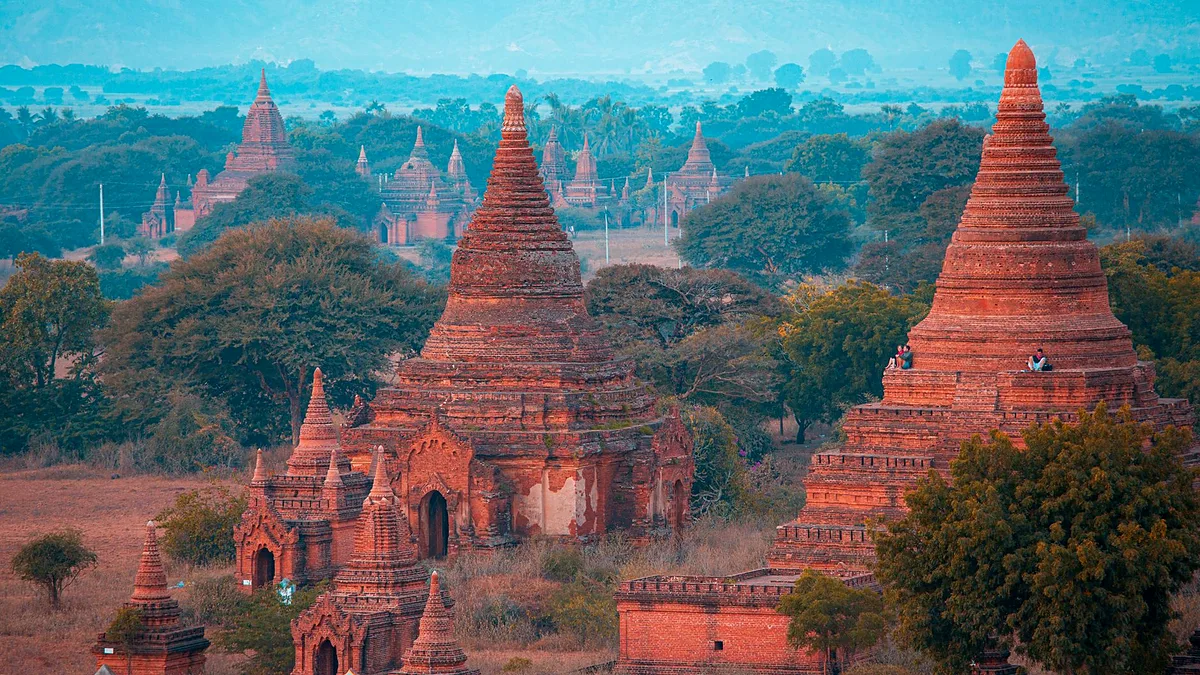
Bagan is not the Maldives with different wallpaper. There is no lagoon, no snorkeling, and nothing on stilts over water. What you get instead is the other half of the same photograph: a dead-flat horizon at 6 a.m., a few hundred silhouettes rising out of the dust, and that specific silence you came for.
If the thing you actually want is that sunrise, Bagan does it for roughly one-eighth of a resort bill — call it $50 a day versus $700. You trade water, comfort, and zero-effort logistics for 2,000-odd brick temples, a living culture, and a real ethical question about visiting Myanmar right now, which I'll cover straight.
Side-by-Side Comparison Scorecard
These numbers assume two people sharing, peak-ish season, and mid-range choices in each place.
Unlimited High-Speed International Travel eSIM
Connect in seconds across 180+ destinations. Instant QR code activation with zero roaming surcharges.

| Feature | Maldives | Bagan |
|---|---|---|
| Average Daily Cost (Stay + Meals) | $350–900 at a resort; $100–160 on a guesthouse island like Maafushi or Dhigurah | $45–75 all in |
| Atmosphere & Aesthetic | One island, one view, blue-on-blue. Engineered calm, thatch and teak villas, infinity edges. | A dry plain of brick spires, terracotta, ox carts, thanaka paste, palm-sugar smoke. Hot, dusty, loud with birdsong at dawn. |
| Crowd Density & Seasonality | Peak December to April. Resorts sell out; Malé hotels jam. Guesthouse islands busy but manageable. | Peak November to February. Arrivals are a fraction of the 2019 high, so it is quiet — sometimes eerily so. |
| Flight & Transit Accessibility | Direct flights from major hubs to Velana (MLE), then a $300–600 seaplane or a $5–10 public ferry. | Fly to Nyaung-U (NYU) via Yangon or Mandalay, or take a 9-hour bus from Yangon. Then e-bike or taxi. |
| Best For | Divers, honeymooners, families who want zero decisions. | Photographers, history obsessives, budget travelers, slow travelers. |
Scenery and Atmosphere: How Similar Are They Really?
Less similar than the brochures imply, and more similar than they look. The Maldives is one compositional idea executed perfectly: white sand, turquoise shelf, dark blue drop-off, a line of thatched roofs on stilts. You stand still and it rearranges itself with the light.
Bagan is the opposite. It is a landscape you move through — roughly 40 square miles of dry-zone plain scattered with brick stupas, a few restored to gleaming white, most left the color of old terracotta. You drive it on an electric scooter at 20 mph, dust in your teeth, watching the temples change shape as the sun drops.
Where the architecture actually rhymes
Both places built from whatever was underfoot. In Malé, the 17th-century Hukuru Miskiy is cut from coral blocks pulled off the reef, with a lacquered wood ceiling inside. In Bagan, the 12th-century Ananda Temple is baked brick and stucco, its corridors vaulted and its niches stacked with glazed Jataka plaques. Different materials, same instinct.
The real shared DNA is the silhouette. Thatbyinnyu at 61 meters, backlit, delivers the same shape of pleasure as a water villa's roof ridge against a dawn sky. Bagan just gives you 2,000 variations instead of one.
What Bagan cannot fake is water. No swim, no reef, no snorkel, no cold drink at a pool edge. If your idea of a holiday includes being wet, this is the wrong swap, and no amount of temple photography will fix it.
The Wallet Test: Real Cost Breakdown
Kyat prices in Myanmar swing a lot, so treat these as bands rather than gospel. Plenty of Bagan businesses quote in US dollars anyway.
| Item | Maldives (resort) | Maldives (guesthouse island) | Bagan |
|---|---|---|---|
| Room per night | $450–1,200 | $60–110 | $20–45 guesthouse; $60–120 mid-range; $180–350 top-end |
| Breakfast | Usually included | $4–6 | Usually included |
| Lunch | $35–55 | $8–12 | 3,000–5,000 kyat (~$1.50–2.50) |
| Dinner | $45–80 | $10–15 | 5,000–9,000 kyat (~$2.50–4.50) |
| Beer or cocktail | $18–26 | Not sold on inhabited islands | Myanmar Beer 2,000–3,000 kyat (~$1–1.50) |
| Signature splurge | Seaplane $400–600 return | Speedboat transfer $30–50 | Hot-air balloon $330–380 per person |
| Local transport | $0 — you don't leave | $5–10 ferry | E-bike 8,000–12,000 kyat per day (~$4–6) |
| Entry fees | Green tax roughly $6–12 per night | Same | 25,000 kyat zone ticket (~$7–12) |
Run the totals. A Bagan day lands between $45 and $75 including a decent room, three meals, a scooter, and a beer at sunset. The cheapest credible Maldives day, on a guesthouse island with ferry transfers, is $100–160. A resort day starts at four figures once you add the seaplane.
The splurge math is interesting too. A Bagan balloon flight costs $330–380 for an hour over the temples at dawn. The Maldives equivalent is the seaplane transfer, which costs more and exists mainly to get you to the hotel.
Crowds, Authenticity, and Tourist Footprint
The Maldives runs on enclave tourism. Resort islands are leased, fenced by water, and staffed largely by migrant workers who commute in from Malé and beyond. You can spend a week there and never have a real conversation with a Maldivian outside of room service.
Guesthouse islands like Dhigurah, Fulidhoo, and Thoddoo break that pattern, but they come with rules: no alcohol, modest dress in the villages, and a fenced bikini beach that marks exactly where you are allowed to be yourself. It is honest, and it is a little strange.
Bagan's tourist footprint has collapsed. International arrivals to Myanmar fell off a cliff after 2021 and have not recovered; where 2019 saw hundreds of thousands of visitors to the zone, recent seasons have been a trickle. The upside is that Ananda at 8 a.m. may be you and three other people.
The downside is harder to sit with. Empty hotels mean guides, drivers, and lacquerware sellers are hurting. And your money flows into an economy run by a military government. Some travelers boycott entirely; others go and deliberately spend at family-run businesses. Both positions are defensible, but pick one on purpose.
Practical note: climbing on Bagan's famous temples was banned in 2018. Sunrise and sunset are now watched from a handful of designated mounds and hotel rooftops. Ask your hotel which ones are open — the list shifts.
The Honest Caveat: Safety, Money, and Getting In
Read your own government's advisory properly before you book. The US State Department has Myanmar at Level 4 (Do Not Travel), and the UK advises against all travel to significant parts of the country. Bagan and the Mandalay region are calmer than the border states, but conditions change fast and internal flights get cancelled.
Buy insurance that explicitly covers medical evacuation, and do not rely on ATMs in Bagan — bring clean, unmarked US dollar notes plus enough kyat for your stay. Power cuts and internet shutdowns happen. None of this means skip Bagan; it means go prepared rather than romantic.
How to Experience the Best of Bagan
Where to stay
- Nyaung-U: the budget base, ten minutes from the airport, and home to the best cheap restaurants. Guesthouses run $20–45 and you will want a bike.
- Old Bagan: riverfront and closest to the big temples. The colonial-era Bagan Thande Hotel sits under an enormous tamarind tree at $80–140; Thiripyitsaya Sanctuary Resort is the splurge at $150–260.
- New Bagan: a resettlement town from the 1990s with mid-range rooms at $30–60, a quieter feel, and good local kitchens. Best value if you are staying four nights or more.
The things that rival a Maldives sunset
- Sunrise at Bulethi or the Nyaung Lat Phat Kan mound. Arrive by 5:30 a.m.; mist sits low over the plain until about 6:15.
- Ananda Temple at opening. Four standing Buddhas in a Greek-cross plan, built in 1091. The light down the west corridor is the shot.
- A balloon flight, October to March only. $330–380 per person for roughly an hour — the single best reason to set an alarm in Southeast Asia.
- Myinkaba village lacquerware workshops. Families still use the yun-de technique of engraving through layers of colored lacquer. Buy direct; a good bowl is $15–40.
- Mount Popa day trip. Ninety minutes away, 777 steps up a volcanic plug, monkeys everywhere. Go early and wear shoes you can leave at the bottom.
What to order
Start with mohinga, the fish-and-noodle soup Myanmar eats for breakfast — 1,500 to 2,500 kyat from a street stall. Laphet thoke, the tea leaf salad, is the dish that makes people book return flights: fermented leaves, fried garlic, peanuts, lime.
For dinner, order a Burmese curry set and rice arrives with five or six small dishes you did not ask for. The Moon in Nyaung-U does a strong vegetarian version, Weather Spoon's covers both Burmese and burgers, and San Thi Dar in New Bagan is the cheapest honest meal in town.
Who Should Still Choose Maldives?
Anyone whose holiday is defined by water. The Maldives has whale sharks off South Ari Atoll year-round, manta rays in Hanifaru Bay from roughly May to November, and reef diving that Bagan cannot gesture at. If you dive, the swap does not work.
Choose the Maldives if you are honeymooning, traveling with grandparents or toddlers, or you simply want a week where nobody has to decide anything. Bagan in April hits 40°C, temple floors are uneven, and the dust gets into everything.
And remember the third option: a Maldivian guesthouse island. Maafushi, Dhigurah, and Thoddoo give you the same lagoon for $60–110 a night, with $5 ferries and $10 dinners. Not Bagan-cheap, but a genuine middle path that the usual Maldives-is-expensive advice ignores.
Frequently Asked Questions
Is Bagan a good substitute for the Maldives?
For sunrise photography, silhouette architecture, and the feeling of standing somewhere ancient, yes — arguably better. For beaches, swimming, snorkeling, or lying still with a drink, no. The two share a mood, not a landscape.
How much cheaper is Bagan than the Maldives?
Roughly eight to twelve times cheaper per day than a resort: $45–75 versus $350–900. Against a Maldivian guesthouse island, Bagan still wins by about half, mostly because rooms and food cost so little once you are there.
What is the best time to visit Bagan?
November through February, when it is cool, dry, and clear and balloon season runs into March. March to May is punishing heat, and the June-to-October monsoon greens the plain but cancels plenty of flights and balloon rides.
Is Bagan safe to visit right now?
Bagan itself has been calmer than Myanmar's conflict zones, but several Western governments still advise against travel to the country. Check your foreign ministry's current advisory, buy evacuation-covering insurance, carry cash, and go with your eyes open instead of assuming it is fine.