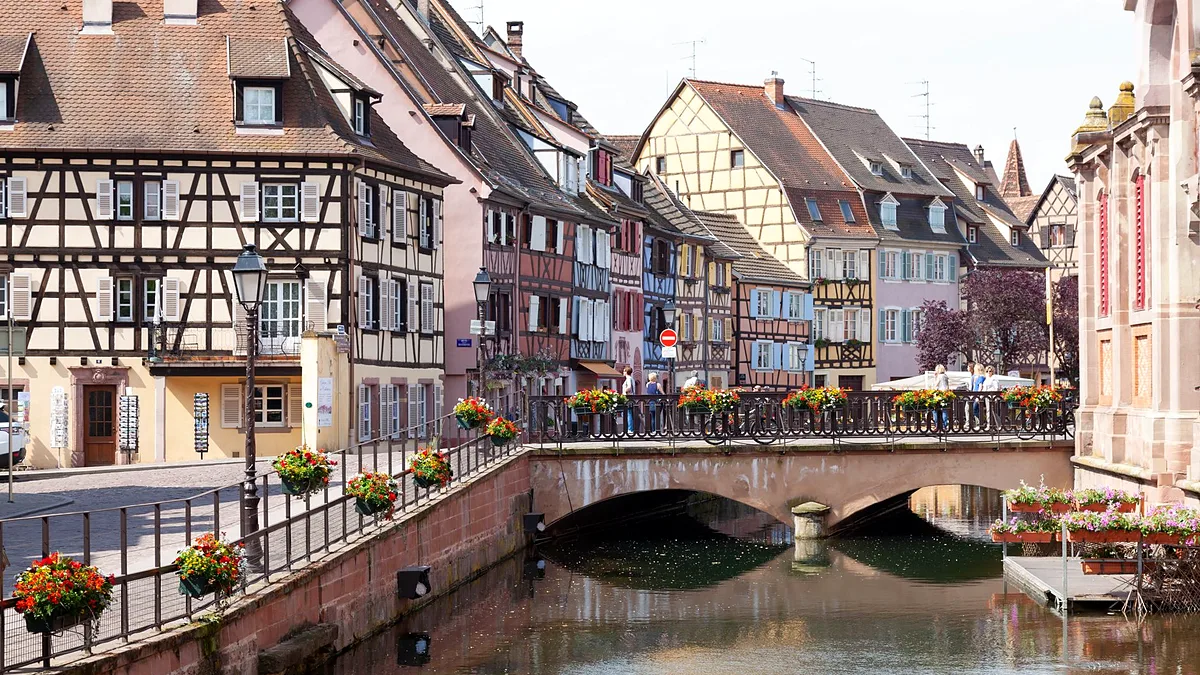

Colmar squeezes several million visitors a year into a medieval centre you can walk across in twenty minutes, and almost all of them funnel down the same two streets. By 11am the Quai de la Poissonnerie in La Petite Venise is a slow-moving line of selfie sticks. Two blocks in any direction, the crowd simply evaporates.
This guide is about that quieter Colmar. The small museums, the appointment-only studios, the cellar rooms where you sit down with a winemaker instead of queueing for a photo. Nothing here needs a black card. You just need to know which door to knock on, and when.
One thing to understand up front: Alsace does not do velvet-rope clubs. Its version of a private club is a family cellar with a tasting table, or a wine brotherhood that has been meeting since the 14th century. Lower the expectation of bottle service, raise it for Riesling, and you will have a much better trip.
Unlimited High-Speed International Travel eSIM
Connect in seconds across 180+ destinations. Instant QR code activation with zero roaming surcharges.

Colmar at a Glance
- Best time to visit: mid-May to late June, or September to mid-October. Christmas market season (late November to 23 December) is beautiful and absolutely packed.
- Daily budget: €90–€150 (~$97–$162 USD) per person for a mid-range day: museum tickets, two proper meals, a tasting, and coffee.
- Getting around: on foot. The old town is flat and roughly 1.5 km across. The TRACE bus network covers the edges, and bikes are easy to rent near the station.
- Vibe: half-timbered, wine-soaked, and surprisingly quiet once you leave the three main tourist streets.
1. Musée Unterlinden: The Cloister That Beats the Postcard
Most people come for the Isenheim Altarpiece and leave in under an hour, which is a mistake. The museum sits inside a 13th-century Dominican convent, and the best part is the walk between the old cloister and the sleek underground gallery added in 2015. It is one of the few places in Colmar where you can stand in near-total silence on a busy August afternoon.
Entry is genuinely worth the money, and the guided tours (usually one or two a day, bookable at the desk) add real context to Grünewald's panels that the labels alone do not. If you only do one paid attraction in Colmar, do this one.
- Neighbourhood: Rue d'Unterlinden, old town, a 4-minute walk from the Koïfhus (Old Customs House).
- Cost: €14 (~$15 USD) adult, €11 reduced, under-18s free.
- Best time: 3–6pm on a weekday, when the coach groups have gone. Closed Tuesdays.
- Getting there: 8 minutes on foot from Gare de Colmar, or any TRACE bus stopping near Place Rapp.
Insider tip: Skip the €4 audio guide. The free paper leaflet explains the altarpiece properly, and the money is better spent on a glass of Riesling afterwards.
2. Musée Bartholdi: Three Floors of One Man's Obsession
Frédéric Auguste Bartholdi was born in this house on Rue des Marchands, and the museum in his birthplace is small, slightly chaotic, and far more fun than it has any right to be. You get plaster models of the Statue of Liberty, letters, furniture, and the sense of a man who was absolutely certain of his own greatness.
It takes about 45 minutes and costs less than a round of drinks. Come here when the Petite Venise crowd peaks, because almost nobody turns off into this doorway.
- Neighbourhood: 30 Rue des Marchands, right in the shopping artery of the old town.
- Cost: €6 (~$6.50 USD) adult, free for under-12s.
- Best time: 2–4pm, when the museum is quietest and the streets are not.
- Getting there: a 2-minute walk from Place de l'Ancienne Douane; no transport needed.
Insider tip: The museum closes over lunch (roughly 12–2pm). Tourists turn up at 12:05pm, find the door locked, and assume it is shut for the day. It is not.
3. Musée du Jouet: Colmar's Oddest Little Collection
Housed in a converted 19th-century building on Rue Vauban, this toy museum is unashamedly nostalgic. Model trains, tin cars, dolls from the 1900s onwards, and a lot of local toys made in Alsace when toymaking was a real regional industry. It is the kind of place adults enjoy more than children do.
It is also the best rainy-day option in Colmar, and it sits far enough from the river that you will have whole rooms to yourself. Give it an hour.
- Neighbourhood: 40 Rue Vauban, in the northern old town, 6 minutes from the covered market.
- Cost: €7.50 (~$8 USD) adult, around €5 for children.
- Best time: weekday mornings, or any wet afternoon.
- Getting there: walkable from anywhere in the centre; TRACE buses stop at the nearby boulevard.
Insider tip: Winter hours are noticeably shorter than summer hours. Check the door sign or call ahead between November and March before making the walk.
4. Cellar Doors That Only Open With a Reservation
This is Colmar's real private-club circuit, and it costs about the price of a cocktail. The city owns its own wine estate, Domaine Viticole de la Ville de Colmar, and tastings there run through a proper cellar rather than a shop counter. Ring ahead 48 hours and you will usually get a table, a walkthrough of the vintages, and a winemaker who will happily argue about terroir.
For something more intimate, the small family domaines on the western edge of town often host tastings in a vaulted room that holds eight people. These are not tourist experiences with a gift shop attached. They are working cellars, and you will be poured wines that never leave Alsace.
- Neighbourhood: the wine estates cluster on the western side of Colmar, 15–20 minutes on foot from the Koïfhus, or a short bus ride.
- Cost: €12–€20 (~$13–$22 USD) per person for a guided tasting, often waived if you buy two or three bottles.
- Best time: late morning or 5pm, and always by appointment. Avoid Saturday afternoons in harvest season.
- Getting there: easiest by bike or bus, since the estates sit past the ring road.
Insider tip: Say yes to the Gewurztraminer even if you think you dislike it, but ask for a dry one. The sweet versions sold to tourists have unfairly ruined the grape's reputation.
5. Gallery-Hopping the Rue des Clefs and Rue des Marchands
Colmar does not have a gallery district, which is exactly why browsing here feels like a small adventure. Between the souvenir shops on Rue des Clefs and Rue des Marchands, a handful of tiny galleries and antique dealers show contemporary painting, Alsatian folk art, and ceramics, usually with the owner sitting at a desk in the corner.
Several local painters and printmakers run studios that open by appointment only, advertised on a card in the window and nowhere online. Wander, look for open doors, and walk in. Nobody will pressure you, and prices for small works start around €60.
- Neighbourhood: the grid between Rue des Clefs, Rue des Marchands, and Grand Rue.
- Cost: free to browse. Small prints from €40–€80 (~$43–$87 USD).
- Best time: 10am–12pm, before the shops fill, or after 4pm.
- Getting there: right in the centre; five minutes from anywhere.
Insider tip: Most places close between 12pm and 2pm, and again on Sundays. Do not plan a gallery morning for Monday, when many owners take their day off.
6. Confrérie Saint-Étienne: Alsace's Real Private Club
Fifteen kilometres from Colmar, in the village of Kientzheim, sits the Château de la Confrérie Saint-Étienne, home to a wine brotherhood that has been inducting members since the Middle Ages. It is not a bar and it is not a museum. It is a members' institution with a cellar, a library, and a tasting room, and visitors can book guided tastings.
If you want the closest thing Alsace has to a private members' club, this is it. The drive or taxi out takes 20 minutes, the visit takes about 90, and you will leave knowing more about Riesling than most restaurant sommeliers.
- Neighbourhood: Kientzheim, on the Route des Vins, roughly 15 km northwest of Colmar.
- Cost: €15–€25 (~$16–$27 USD) per person for a booked tasting; check current schedules directly.
- Best time: weekday afternoons, by reservation only.
- Getting there: no direct train. Take a taxi (around €35 each way) or rent a bike and ride the wine route.
Insider tip: Do not turn up without a booking, even in summer. It is a working institution, not a walk-in attraction, and the door really will be closed.
Where to Eat and Drink Nearby
Wistub Brenner
Rue Turenne, in the heart of La Petite Venise, and the rare riverside spot that locals still rate. The tarte flambée is thin and smoky, the baeckeoffe is properly slow-cooked, and mains run €16–€24 (~$17–$26 USD). Book a table for 7pm and ask for one away from the window; the riverside seats are the ones everybody photographs and nobody enjoys in July.
Jadis et Gourmande
A bakery and tea room on Rue des Marchands that does kougelhopf, quetsche tarts, and good coffee for €3–€6 (~$3–$6.50 USD). It is the right stop for a mid-afternoon pause, and the savoury lunch plates are around €12. Go before 11am or after 3pm; midday is a scrum.
La Maison des Têtes
The splurge, on Rue des Têtes, in a 1609 townhouse covered in carved faces. Lunch menus start around €45 (~$49 USD) and the full tasting goes well past €95. It is a proper occasion restaurant, so skip it if you are chasing budget and save it for a return trip.
Practical Logistics and Budget Tips
Getting Around
Colmar's old town is flat and pedestrianised, so buy nothing and walk. If you are staying outside the ring road, a single TRACE bus ticket costs under €2 (~$2.20 USD) and a day pass is around €4. The train station is a 15-minute walk from La Petite Venise, and bike rentals near the station run €10–€15 per day.
What It Costs
Three museums plus one tasting comes to roughly €40 (~$43 USD), which is the best value in town. Ask at the tourist office whether a combined museum ticket is cheaper than buying individually; it often is. Skip paid parking in the centre (€2–€3 per hour) and use the car parks on the edge of town.
What to Skip
The little tourist train is slow, expensive, and shows you nothing you cannot walk to in ten minutes. The souvenir shops on Rue des Marchands sell the same magnets at three different prices. And La Petite Venise itself is a 200-metre stretch of the Lauch, not a district, so do not build an afternoon around it.
Go to the river at 8:30am with a coffee, photograph it empty, and spend the rest of the day in the museums and cellars. That is the whole strategy.
Frequently Asked Questions
Are there private clubs in Colmar open to visitors?
Not in the nightclub sense, but the wine brotherhoods and family domaines operate like members' clubs and welcome booked visitors. Reserve at least 48 hours ahead and treat it as a tasting appointment, not a walk-in bar.
How much do Colmar's small museums cost?
Expect €6–€14 (~$6.50–$15 USD) per adult, with children usually free or heavily reduced. The three municipal museums are small, so two in one day is comfortable without feeling rushed.
When is La Petite Venise actually quiet?
Before 9:30am and after 6pm, plus most of January and February outside school holidays. Midday in July and August is the worst possible timing, and the Christmas market weeks are busier still.
Do you need to book wine tastings in Colmar?
Yes, even at the larger estates, especially at weekends. Walk-ins sometimes work at the city's own domaine, but the small family cellars are working spaces and expect a phone call or email first.