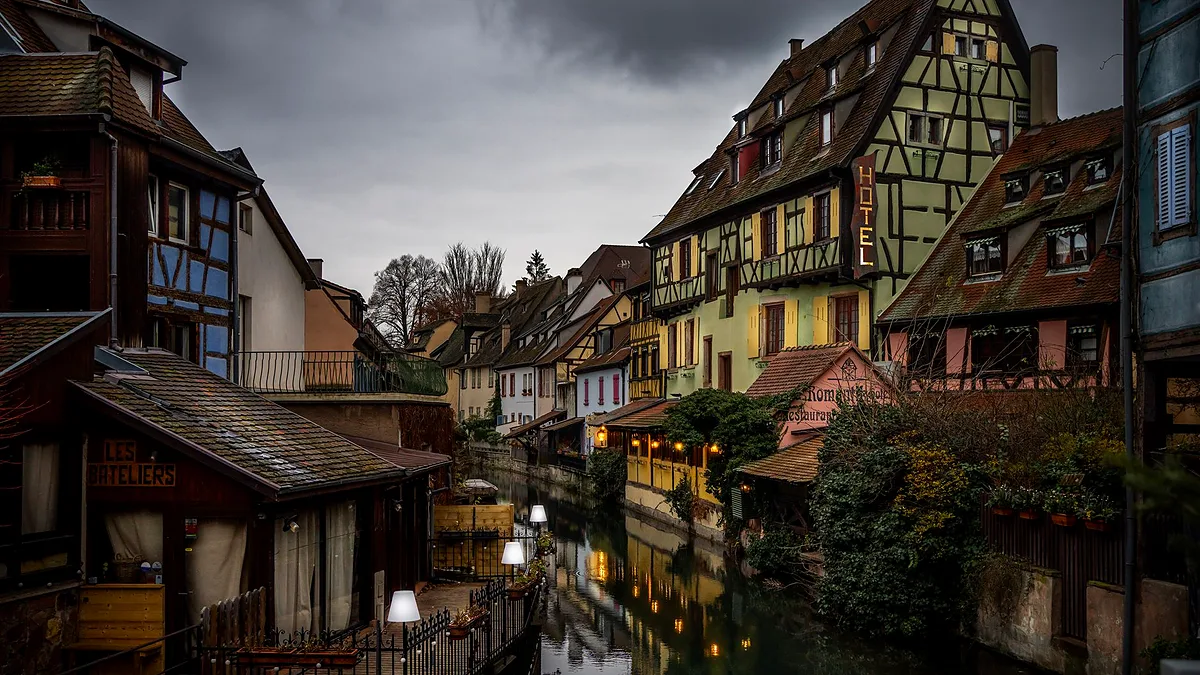

Colmar does not need another romantic label. In winter, the town earns attention because the old center still works: canal edges frost over, timber houses lean into the Lauch, and museum cloisters stay open when the Christmas stalls go quiet. The real draw is the mix of artisan food, small museums, and heritage buildings that survived wars and floods.
This guide is built for travelers who want craft and history, not just photos of Little Venice. You will get specific stops, honest costs, and timing that keeps you ahead of tour groups.
At-a-Glance Snapshot
- Best time to visit: January to February for quiet winter light; late November to December for Christmas markets, but book early.
- Typical daily budget: €90–€160 / ~$100–$175 USD per person, midrange, with museum entries and one sit-down meal.
- Local transport style: walk the compact old town; use Trace buses from the station or for longer hops.
- General vibe: cold, compact, craft-led, and best when you slow down instead of chasing every photo stop.
Musée Unterlinden: The Cloister That Anchors Colmar's Craft Story
Start here because Unterlinden explains how Colmar made, sold, and prayed. The former Dominican convent holds the Isenheim Altarpiece, medieval sculpture, and a cloister that feels hushed even when the ticket desk is busy. It is not a folk-craft museum, but it gives context to the woodwork, painting, and religious commissions that shaped Alsace.
Unlimited High-Speed International Travel eSIM
Connect in seconds across 180+ destinations. Instant QR code activation with zero roaming surcharges.

Give it two hours, more if you like religious art. The underground galleries connect old stone with modern exhibition rooms, and the walk from the cloister to the Little Venice canal is short.
- Neighborhood: Place Unterlinden, central old town.
- Cost: about €13 adult / ~$14 USD; under-18s often free; check temporary-show rates.
- Best time: weekday at 10:00 or after 15:30, when school groups thin out.
- Getting there: 15-minute walk from Gare de Colmar, or Trace bus toward centre-ville and get off at Théâtre.
Insider tip: Go straight to the Isenheim Altarpiece before the crowd builds, then double back to the cloister. Many visitors do the opposite and spend their best energy in the shop.
La Petite Venise and Quai de la Poissonnerie in Winter
Little Venice is the image most people carry home, and in winter it is at its best before the tour buses arrive. The Quai de la Poissonnerie looks across the Lauch to half-timbered houses, small bridges, and water that reflects gray sky instead of summer crowds. It is free, short, and best treated as a 20-minute walk rather than a full sight.
Come for the working neighborhood feel, not a theme-park ride. Some canalside shops close on Monday and Tuesday, and winter boat rides are cold and often limited.
- Neighborhood: La Petite Venise, south of the old center.
- Cost: free to walk; boat trips vary, usually €8–€12 / ~$9–$13 USD, if running.
- Best time: 8:00–9:30 on a weekday, especially January and February.
- Getting there: 10-minute walk from Musée Unterlinden via Rue des Marchands; or bus to Ancienne Douane and walk 5 minutes.
Insider tip: Stand on the small bridge by Quai de la Poissonnerie for the classic view, then walk one block back to Rue de Turenne for coffee. Do not block the bridge for a long photo session; locals use it to cross.
Collégiale Saint-Martin and the Rue des Marchands Heritage Walk
The Collegiate Church of Saint-Martin is Colmar's quiet giant, with Gothic arches and a roof that changes color with the weather. Outside, the Rue des Marchands gives you a compact heritage walk: Maison Pfister, Maison des Têtes, and older shopfronts stacked under modern signs. This is where you see how commerce and craft shaped the town center.
Do not rush the street. The ground floors are shops now, but look up at the carved beams, corner windows, and painted facades from the 16th and 17th centuries.
- Neighborhood: Old town, Place Saint-Martin and Rue des Marchands.
- Cost: church free, donations welcome; Maison des Têtes exterior free.
- Best time: 9:00–11:00 for soft light and fewer shoppers.
- Getting there: 4-minute walk from Place Unterlinden; 8 minutes from Little Venice.
Insider tip: Step into the church, then walk the north side of Rue des Marchands where the facades catch morning light. Most people photograph only the Maison Pfister corner and miss the carved details farther down.
Musée Bartholdi: The Sculptor's Birthplace and Plaster Workshop
Frédéric Auguste Bartholdi was born in Colmar, and this small museum in his family home shows the workshop side of a famous sculptor. You will see plaster models, drawings, and studies for monuments, including work linked to the Statue of Liberty. It is a focused visit, not a grand museum, and that is why it works.
The rooms are tight, so go when you are not already tired. It pairs well with the Rue des Marchands walk because the address is right in the old town.
- Neighborhood: 30 Rue des Marchands, old town.
- Cost: about €5 adult / ~$5.50 USD; reduced rates for students.
- Best time: early afternoon, after the lunch rush.
- Getting there: 3-minute walk from Collégiale Saint-Martin; look for the courtyard entrance.
Insider tip: Ask at the desk for the English handout if you do not see it; labels are not always complete. Skip the museum if you only want big-name sights, but come if you care about process and model-making.
Musée du Jouet: Toy Making and Alsatian Workshop Heritage
Colmar's toy museum is a reminder that Alsace had a serious manufacturing and craft tradition beyond wine and textiles. The collection covers dolls, trains, mechanical toys, and local production, with enough detail to interest adults who like design. It is also a good winter stop when rain or snow makes the canal walk short.
Families will get more out of it, but the museum does not talk down to adults. Look for the temporary displays on repair and small-batch production.
- Neighborhood: 40 Rue Vauban, north of Little Venice.
- Cost: about €7 adult / ~$8 USD; children around €5 / ~$5.50 USD.
- Best time: weekday after 14:00 or a rainy morning.
- Getting there: 8-minute walk from Quai de la Poissonnerie; Trace bus stop nearby at Vauban.
Insider tip: Check the workshop calendar before you go; hands-on sessions fill on weekends. If you are traveling without kids and have limited time, choose Unterlinden or Bartholdi first.
Marché Couvert: Food Artisans Under One Roof
The covered market is where Colmar's food craft becomes lunch. Stalls sell Munster cheese, charcuterie, pretzels, tarte flambée, and seasonal produce, and the building stays useful in winter when outdoor markets are thin. It is not a museum, but it is a heritage site of daily work.
Go hungry and buy in small amounts from several stalls. The seating is limited, so treat it as a standing lunch or take food to the canal.
- Neighborhood: 13 Rue des Écoles, old town, near Place de la Cathédrale.
- Cost: free entry; lunch €8–€15 / ~$9–$16 USD.
- Best time: 8:30–11:00 for the best selection; avoid 12:30–13:30.
- Getting there: 5-minute walk from Collégiale Saint-Martin; walk from Little Venice in 10 minutes.
Insider tip: Buy a pretzel and a wedge of Munster early, then circle back for a hot tarte flambée at lunch. Many stalls close on Sunday afternoon and some close Monday.
Where to Eat and Drink Nearby
Colmar's best food is traditional and filling, which suits winter. Book dinner in Little Venice or the old town, and keep lunch simple at the covered market.
Wistub Brenner
This Little Venice winstub is a reliable stop for choucroute, baeckeoffe, and tarte flambée. It gets crowded, so reserve a table or arrive at opening.
- Address: 1 Rue Turenne, Little Venice.
- Budget: mains €18–€26 / ~$20–$28 USD; lunch menu around €22–€28 / ~$24–$30 USD.
- Try: tarte flambée and a local Riesling.
Le Fer Rouge
A traditional winstub on Grand Rue with sturdy Alsatian plates and a warm room. It is not the cheapest, but portions are honest and the service moves fast.
- Address: 52 Grand Rue, old town.
- Budget: mains €20–€30 / ~$22–$33 USD; tarte flambée €10–€14 / ~$11–$15 USD.
- Try: the daily special and kougelhopf if available.
Marché Couvert Stalls
For a cheap lunch, build a meal from cheese, charcuterie, bread, and a pretzel. It is the best value in the old town and works well on a cold day.
- Address: 13 Rue des Écoles.
- Budget: €8–€15 / ~$9–$16 USD.
- Try: Munster, smoked pork, and a soft pretzel.
For edible souvenirs, Maison Alsacienne de Biscuiterie on Rue des Marchands sells bredele and small-batch biscuits; small bags run €5–€12 / ~$5.50–$13 USD.
Practical Logistics and Budget Tips
Colmar is compact, but the cobblestones are uneven and winter ice can slow you down. Wear boots with grip, and plan one indoor stop for every two outdoor stops.
Transit and walking
- Train: Strasbourg to Colmar takes about 30 minutes; Basel about 45 minutes. The station is a 10–15 minute walk to the old town.
- Buses: Trace buses cover the center and suburbs; a single ticket is around €1.80 / ~$2 USD. You will rarely need one inside the old town.
- Parking: Do not drive into the pedestrian center. Use Parking Lacarre or Parking Montagne Verte and walk in.
Costs and money-saving
- Museums: €5–€13 / ~$5.50–$14 USD each; ask about combined tickets if you plan two or three.
- Coffee and snacks: €2.50–€5 / ~$3–$5.50 USD; sit-down service can cost more.
- Lunch: €10–€18 / ~$11–$20 USD at market stalls or bakeries; dinner mains €18–€30 / ~$20–$33 USD.
What to skip
Skip the restaurants on Grand Rue with photo menus and staff waving you in; quality is uneven and prices are higher. Skip the Little Venice boat if it is below freezing unless you really want the water view. And do not try to see Colmar in one afternoon during December; the Christmas markets slow every street.
Frequently Asked Questions
Is Colmar walkable in winter?
Yes, the old town is compact and most sights are within 20 minutes on foot. Wear shoes with grip because cobblestones get slick, and keep a tram or bus ticket as backup for heavy rain.
Are artisan workshops open in January?
Some small shops close in early January, but museums and the covered market stay open. Check the Colmar tourist office website or ask at your hotel for current artisan open days before you plan a workshop visit.
How much does Musée Unterlinden cost?
Adult admission is about €13 / ~$14 USD, with free entry for under-18s and reduced rates for students. It is usually closed on Tuesday, so confirm hours before you go.
When is Little Venice quietest?
Weekday mornings before 9:30 are best, especially from January to February. In December, go before 9:00 if you want photos without the market crowds.