
The Quick Verdict
Bratislava is the sharper deal, not a copy of Vienna. Swap the two and you keep the Habsburg bones — baroque squares, coffee houses, a castle on a hill, the Danube — while cutting your daily spend by roughly half. What you lose is scale: world-class museums, an opera calendar that matters, and the hum of a two-million-person capital.
If your trip is built around the Kunsthistorisches Museum, a night at the Staatsoper and long walks down the Ringstrasse, pay Vienna's prices and don't second-guess it. If you want a long weekend of old streets, €2.80 beers and wine-country day trips, Bratislava gets you about 80% of the atmosphere for 50% of the money. The two cities are 60 minutes apart by train, so a split trip is often the smartest answer.
Side-by-Side Comparison Scorecard
| Feature | Vienna | Bratislava |
|---|---|---|
| Average Daily Cost (Stay + Meals) | €170–240 (~$185–260) for a mid-range double plus three meals | €85–120 (~$92–130) for the same standard |
| Atmosphere & Aesthetic | Imperial and monumental; 19th-century Ringstrasse grandeur at big-city scale | Compact baroque old town with Habsburg leftovers and socialist-era edges; walkable in 20 minutes |
| Crowd Density & Seasonality | Around 16 million overnight stays a year; July–August and Christmas market season are heavy | Much lighter; coach parties arrive 10am–5pm, stag weekends Thursday–Saturday |
| Flight & Transit Accessibility | Vienna Airport (VIE) is a long-haul hub; single metro ticket €2.60 | Bratislava Airport (BTS) is mostly Ryanair; 65-minute train to Vienna, buses from €5 |
| Best For | Museums, opera, first-timers, proper luxury hotels | Budget weekends, wine trips, a cheap base for Central Europe |
Scenery & Atmosphere: How Similar Are They Really?
Both cities spent centuries under the same crown, and it shows in the details: the same cream-and-ochre facades, the same courtyard passages, the same habit of taking cake at four in the afternoon. Vienna was the imperial capital, so everything is built to impress at a scale that still feels slightly absurd. Bratislava was the coronation town, and it kept the ceremony without the square footage.
Unlimited High-Speed International Travel eSIM
Connect in seconds across 180+ destinations. Instant QR code activation with zero roaming surcharges.

Vienna's Ringstrasse is a statement — the opera, the parliament and the museums lined up along a boulevard built to announce an empire. Bratislava's old town does a similar job in miniature: Michael's Gate, Hlavné námestie, the pink Primate's Palace, all inside a 15-minute walk.
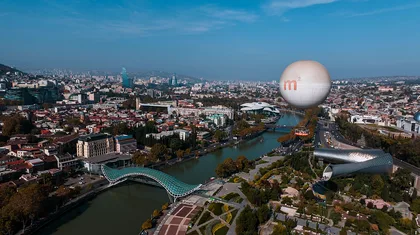
The big visual difference is what sits next to the pretty parts. Bratislava wears its twentieth century openly, from the UFO Bridge and its flying-saucer restaurant to the concrete slabs of Petržalka across the river, the densest housing estate in Central Europe. Some visitors find it jarring; others find it more honest than Vienna's spotless postcard.
Vienna hides its rough edges better. The city is immaculate, and even the U-Bahn stations feel like someone cared. That polish is real, but it also means you rarely stumble onto anything unplanned. In Bratislava you will, and that is the trade.
The Wallet Test: Real Cost Breakdown
Prices below are 2025 estimates for central locations in each city. Slovakia uses the euro, so there is no exchange-rate guesswork between the two.
- Mid-range double room: Vienna €150–190 (~$165–205) in Innere Stadt or Neubau; Bratislava €75–105 (~$82–115) in Staré Mesto.
- Hostel dorm bed: Vienna €32–45; Bratislava €18–26.
- Coffee: a Wiener Melange runs €4.50–5.50; a Bratislava cappuccino is €2.50–3.20.
- Beer, half litre: €4.80–5.50 in Vienna, €2.50–3.20 in Bratislava.
- Lunch main course: €16–22 in Vienna versus €9–12 in Bratislava.
- Dinner for two with a bottle of local wine: €85–110 versus €45–60.
- Big museum ticket: Kunsthistorisches €21 versus Slovak National Gallery €5–10.
- 24-hour transit pass: Vienna €5.80; Bratislava around €4.80.
A realistic sample day makes the gap obvious. In Bratislava: €80 room, €35 of food, €12 of drinks, €10 for a castle exhibition, €5 transit — about €142 (~$156). The same day in Vienna: €165 room, €60 food, €20 drinks, €21 museum, €6 transit — roughly €272 (~$299).
Transport between the two is cheap enough that it never decides anything. RegioJet and ÖBB trains from Wien Hauptbahnhof to Bratislava hl. st. take about 65 minutes and cost €11–18, while Slovak Lines buses from Vienna's Erdberg terminal run hourly for €5–8. The Twin City Liner catamaran covers the Danube run in 75 minutes for €25–35, which is a sightseeing trip and a transfer in one.
Crowds, Authenticity, and Tourist Footprint
Vienna absorbs roughly 16 million overnight stays a year, and it shows at the obvious places. Café Central has a permanent queue, the Belvedere's Klimt room is a scrum by 10am, and Schönbrunn sells out its Grand Tour slots in high season.
It stays manageable if you move against the flow — Café Sperl instead of Central, the Leopold Museum instead of the Belvedere, Schönbrunn at 8.30am opening. But you will share Vienna with a lot of people, and its most famous spots feel like infrastructure rather than discovery.
Bratislava's crowd problem is smaller and far more specific. Coach parties from Vienna arrive around 10am and leave by 5pm, and Thursday to Saturday the pubs around Michalská fill with stag and hen groups. Outside those windows the old town is genuinely quiet — on a Tuesday morning in April you can have Kapitulská or Panenská almost to yourself.
It is also a working city, not a museum. Around 440,000 people live here, and neighbourhoods like Ružinov and Karlova Ves have nothing to do with tourism at all. That is where the value sits: a lunch menu at a Ružinov pub costs €7 and comes with soup.
How to Experience the Best of Bratislava
Where to stay
Base yourself in Staré Mesto, ideally around Zámocká, Panenská or Grösslingová — you will walk everywhere and pay €80–110 for a good double. Ružinov is cheaper and more local, 15 minutes by tram, while Petržalka is worth two nights only if concrete housing estates genuinely interest you.
What to do that actually rivals Vienna
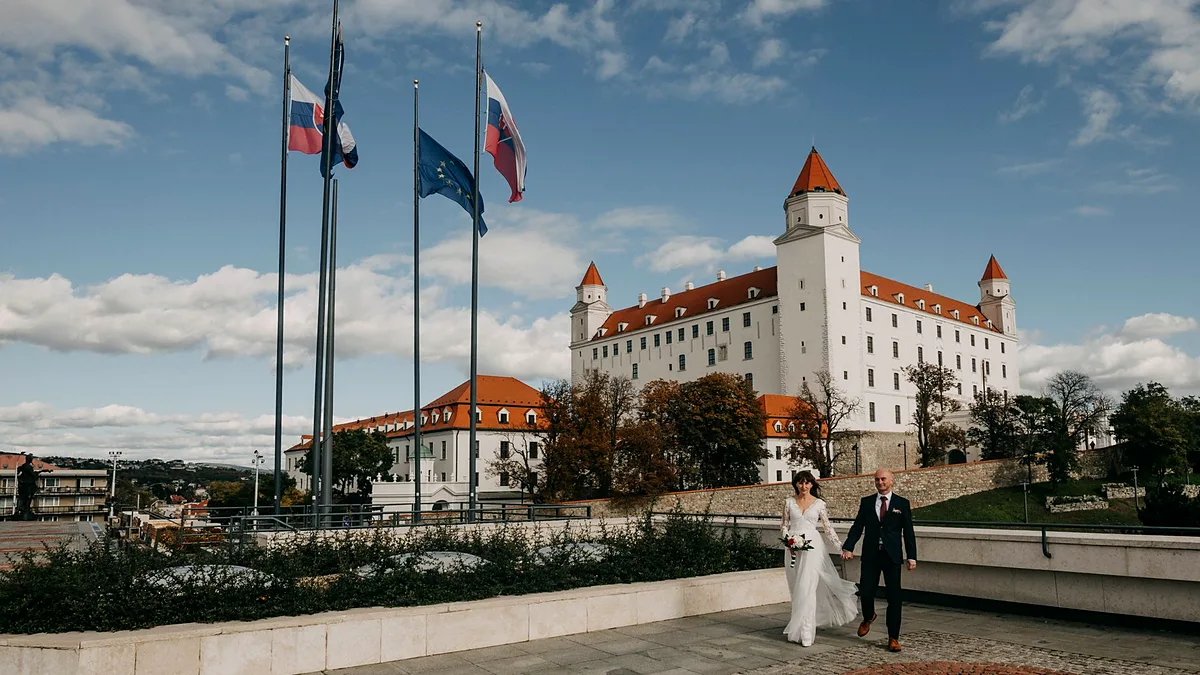
- Bratislava Castle at dusk. The climb through Zámocká takes ten minutes, the courtyard and terraces are free, and the view over the UFO Bridge beats anything you would pay for.
- St Martin's Cathedral. Hungarian kings were crowned here for nearly 300 years. Entry is a couple of euros, but opening hours are short on Sundays, so check first.
- Devín Castle. A ruined fortress where the Morava meets the Danube, 20 minutes by bus 29 or a summer boat. Entry is around €8 (~$9).
- The UFO observation deck. €9.50 for the lift and the view. The bar upstairs is overpriced; the deck is not.
- Wine country. Pezinok and Modra sit 30–40 minutes away by bus, and Small Carpathian cellars pour Frankovka and Veltlínske zelené at prices Vienna's Grinzing heurigen cannot touch.
What to order
Bryndzové halušky — potato dumplings with sheep cheese and bacon — is the national dish at €9–12, and heavy enough that you may skip dinner. Also look for kapustnica (sauerkraut soup), vyprážaný syr (fried cheese with tartare sauce) and lokše, thin potato pancakes.
Slovak Pub on Obchodná is cheap, busy and fine for a first taste; Modrá Hviezda on Beblavého does a better version for maybe €6 more. Drink Kofola instead of Coca-Cola at least once, and finish with a shot of borovička. Skip the €15 fixed-menu “traditional” lunches on Hlavné námestie — same food, plus tourist tax.
Who Should Still Choose Vienna?
Choose Vienna if museums are the point of the trip. The Kunsthistorisches, the Albertina and the opera house have no real equivalent in Bratislava, and no amount of cheap beer makes up for missing them.
Choose it too if you are flying long-haul and only have three days. Vienna Airport is a proper hub, the city has hotels for every budget, and the first-timer circuit — Stephansdom, Hofburg, Schönbrunn — is genuinely worth doing once.
Families with small children will also have an easier time: the zoo at Schönbrunn, the Prater's Ferris wheel and a transport network that handles prams without drama. Bratislava is fine, just thinner on rainy-day options.
And if you want a Christmas market the size of a city square, or a concert calendar worth planning a year around, the extra spend is justified. Bratislava's markets are pleasant and small; Vienna's are an event.
Frequently Asked Questions
Is Bratislava significantly cheaper than Vienna?
Yes — roughly 40–50% cheaper on accommodation, food and drink. A comparable mid-range day costs about €140 in Bratislava versus €270 in Vienna.
Can you visit Bratislava as a day trip from Vienna?
Easily. Trains leave Wien Hauptbahnhof roughly hourly and take about 65 minutes for €11–18. But a day trip only covers the old town; two nights is what makes the trip worthwhile.
Is Bratislava worth visiting on its own, or just as a Vienna substitute?
It stands alone for a two-to-three-day break, especially with Devín Castle and the Small Carpathian wine villages added in. It is not a replacement for Vienna's museums, so do both if your schedule allows.
How do you get from Vienna to Bratislava?
Train from Wien Hbf (65 minutes, €11–18), bus from Erdberg (60–75 minutes, €5–8), or the Twin City Liner catamaran on the Danube (75 minutes, €25–35, April to October).